
 Budi Mulyono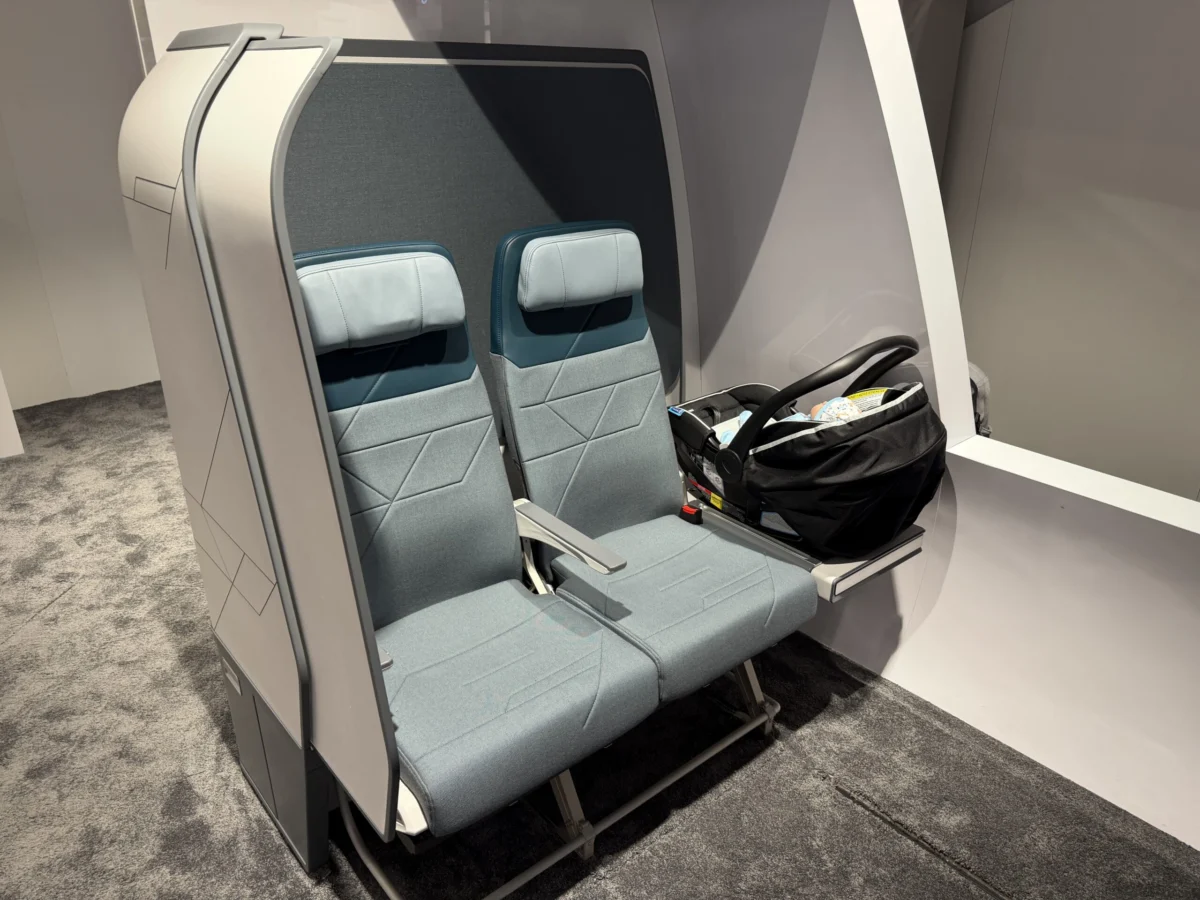
Technical Innovation and the Physics of Fuselage Tapering
The fundamental challenge addressed by Collins Aerospace involves the geometric realities of aircraft design. In widebody aircraft such as the Airbus A350 or the Boeing 787 Dreamliner, the fuselage maintains a consistent width for the majority of the cabin length. However, as the aircraft narrows toward the tail, the cabin floor area shrinks. This "tapering" effect often forces airlines to transition from a high-density seating arrangement—such as a nine-abreast 3-3-3 configuration—to a narrower eight-abreast or seven-abreast layout in the final few rows.
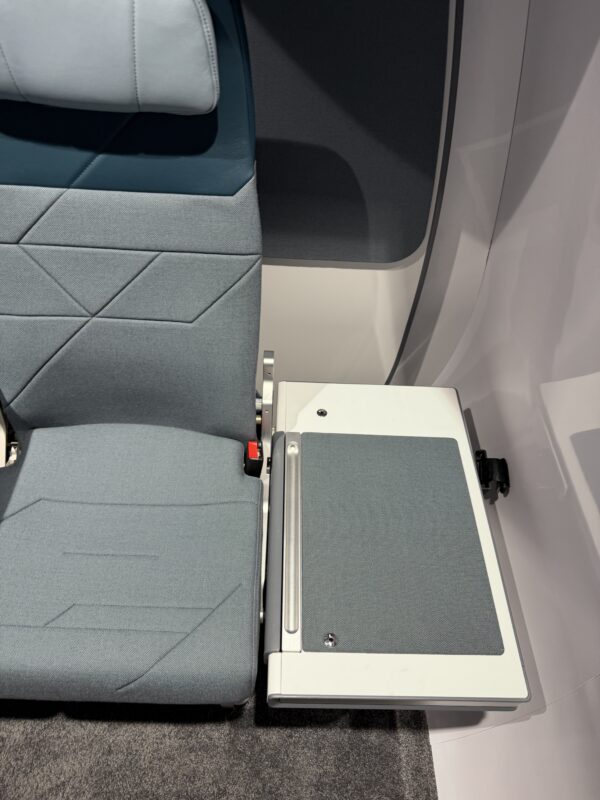
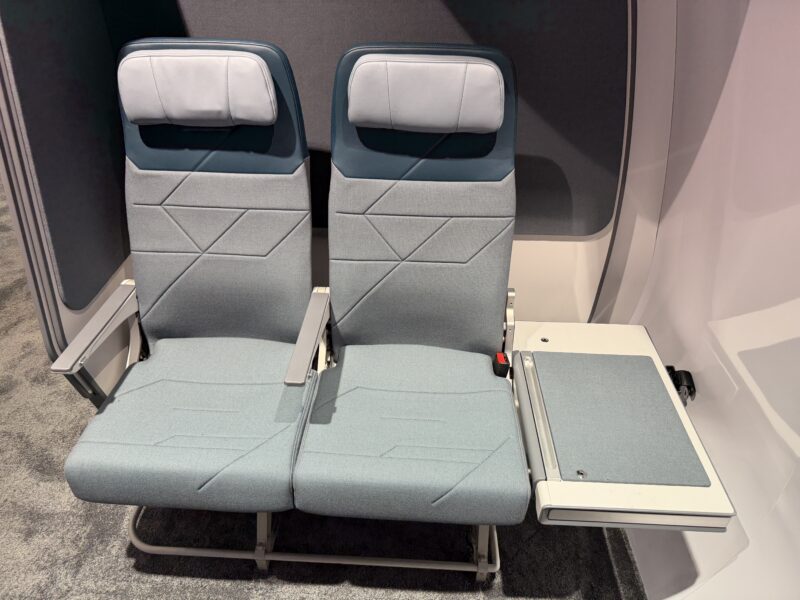
Historically, this transition leaves a significant gap between the outboard seat and the interior cabin wall. This space is frequently left empty or used for minor storage, as it is too narrow for an additional seat but too large to ignore. The SkyNook solution utilizes a convertible console system that deploys into this void. By integrating a multi-functional furniture unit into the side wall and the seat assembly, Collins Aerospace has created a versatile "nook" that can be adapted for various passenger needs.
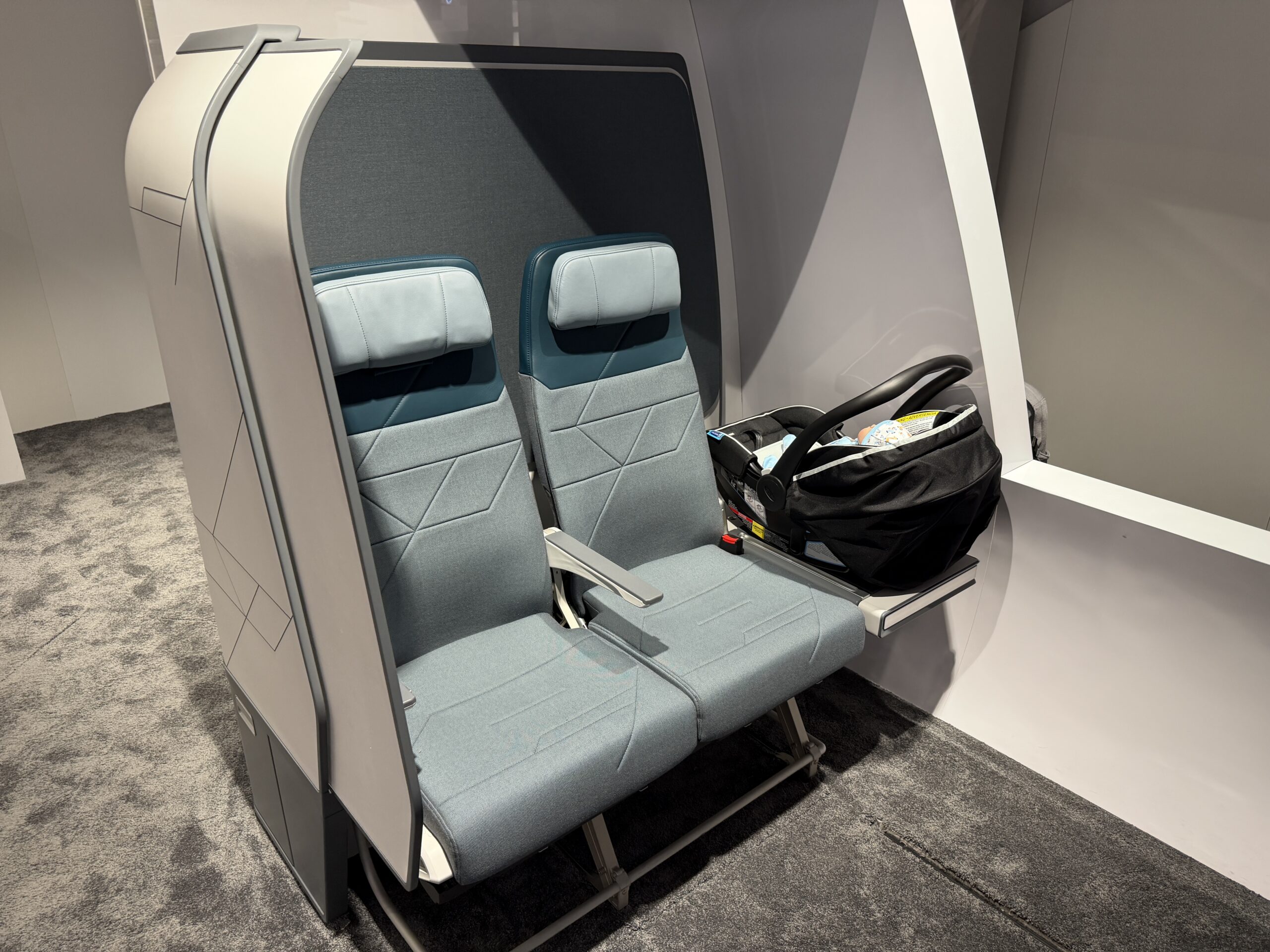
The deployment mechanism is designed for ease of use, featuring a one-handed maneuver that allows passengers or cabin crew to extend the SkyNook table unit from its stowed position. When deployed, the console provides a stable, flat surface that is significantly larger than a standard economy class tray table. This surface is engineered to support a variety of attachments and use cases, ranging from infant bassinets to specialized pet carriers.
A Chronology of Development and Recognition
The journey of the SkyNook from a conceptual design to a Crystal Cabin Award winner reflects a multi-year effort by Collins Aerospace’s Cabin Experience Design team.
- 2023–2024: Initial research phases focused on passenger pain points in the rear of the cabin, specifically for families and passengers traveling with service animals.
- 2025: Prototyping began, focusing on the mechanical integrity of the deployment system and ensuring compliance with rigorous FAA and EASA safety standards regarding head injury criteria (HIC) and emergency egress.
- Early 2026: The SkyNook was finalized as a candidate for the Aircraft Interiors Expo, the world’s leading marketplace for airlines and manufacturers.
- May 2026: The SkyNook was officially showcased at AIX 2026. It received immediate acclaim for its "circular economy" approach to cabin space—reclaiming lost value without increasing the aircraft’s weight significantly.
- Award Recognition: During the AIX 2026 gala, the SkyNook was announced as a winner of the Crystal Cabin Award, an honor often described as the "Oscars" of the aviation interior industry. Judges cited the product’s flexibility and its direct answer to the growing demand for "premiumized" economy offerings.
Versatility in Use: From Nurseries to Mobile Offices
The SkyNook is not a single-purpose tool but a flexible platform. Collins Aerospace has highlighted several key configurations that demonstrate the system’s utility across different passenger demographics.
Family and Infant Care
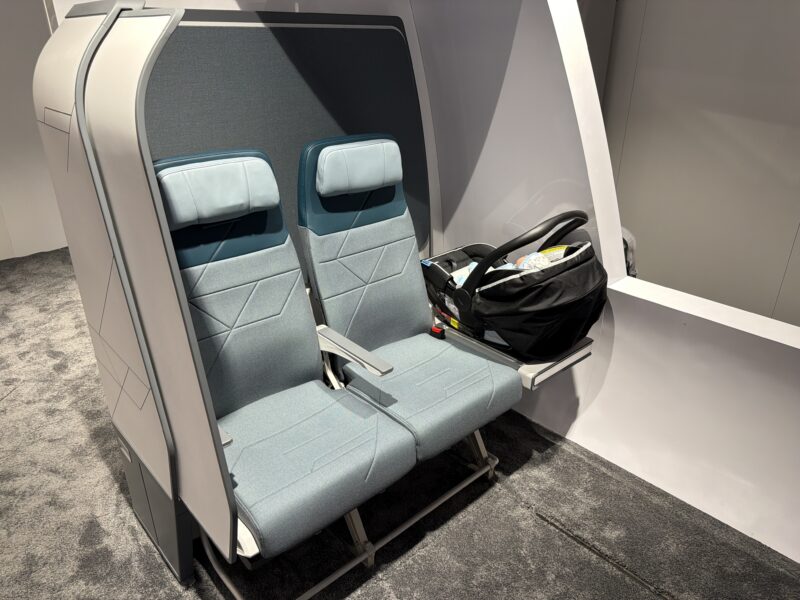
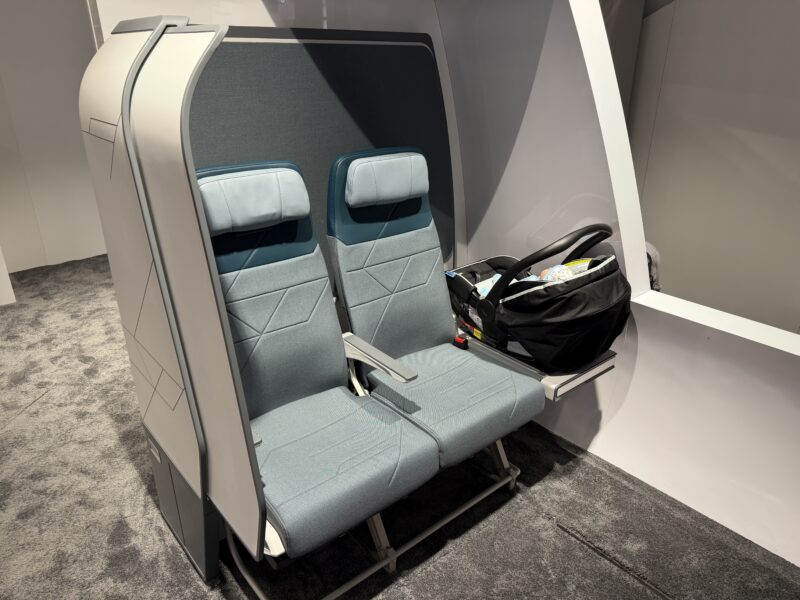
One of the primary applications for the SkyNook is as a dedicated space for infants. Traditionally, bassinet positions are restricted to bulkhead rows, which are limited in number and often come with a premium price tag. The SkyNook allows airlines to offer a "second-tier" bassinet location at the rear of the aircraft. The console is designed to safely secure a standard airline cot or car seat, providing parents with a stable area to manage childcare without encroaching on their own seating space.
Assistance and Service Animals
With the rise in passengers traveling with service animals or small pets in the cabin, the SkyNook provides a designated area that keeps animals off the floor and out of the aisle. The "pet carrier" configuration allows the animal to remain at eye level with the passenger, reducing stress for both the pet and the owner while ensuring the aisle remains clear for cabin crew movements.
The "Economy Office" and Sensory Retreat
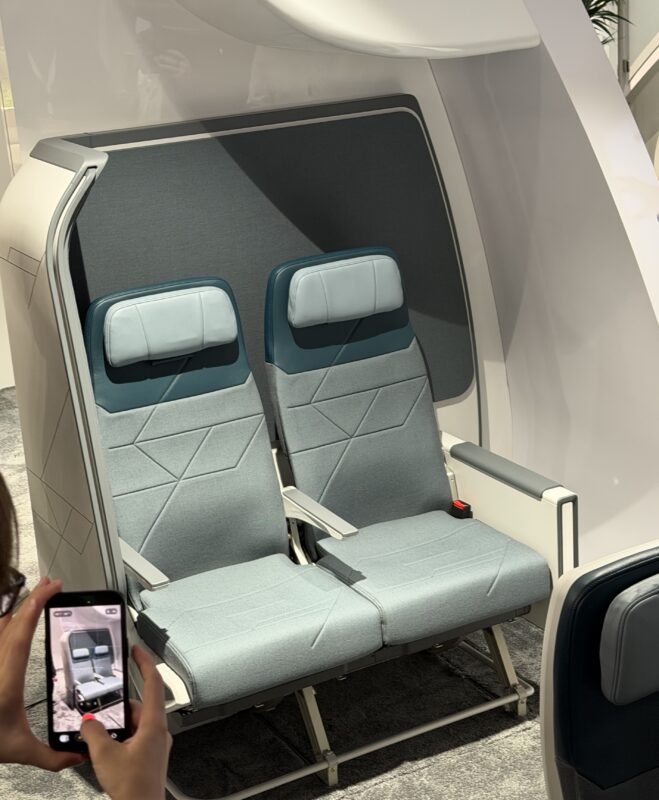
For the business traveler relegated to the economy cabin, the SkyNook transforms a standard seat into a functional workspace. The extended surface area can accommodate a laptop, documents, and a meal simultaneously. Furthermore, the inclusion of a deployable privacy divider provides a visual and acoustic barrier. This is particularly relevant for neurodivergent passengers or those with sensory processing sensitivities who may find the high-density environment of a widebody aircraft overwhelming. The divider helps dampen noise from the nearby galleys and lavatories, turning the seat into a "semi-private suite."
Official Statements and Design Philosophy
Jeffrey McKee, Director of Customer Experience Design at Collins Aerospace, emphasized that the SkyNook is the result of a philosophy that views every cubic centimeter as an opportunity. "Our team of cabin experience designers are persistent in their dedication to iterating and reimagining cabin solutions that leverage every square inch of space to improve air travel for passengers, airlines, and crew members," McKee stated during the AIX presentation.
He further noted that the SkyNook is an example of "human-centric design," stating, "SkyNook exemplifies this commitment, transforming a frequently overlooked area into a serene retreat that maximizes functionality, comfort, and flexibility for families, passengers with service animals, or those with sensory considerations."
Industry analysts have reacted positively to the debut. Market experts suggest that by adding a "door" or a more substantial divider to the SkyNook-equipped seats, airlines could effectively market these as "Economy Plus" or "Economy Suite" products. This creates a new ancillary revenue stream from seats that were previously considered the least desirable on the aircraft due to their proximity to the tail and lavatories.
Market Impact and Implementation Data
The addressable market for the SkyNook is substantial, as it is designed for compatibility with the world’s most popular long-haul aircraft. According to technical specifications provided by Collins Aerospace, the system is offerable on the following platforms:
- Airbus A330 and A350 families
- Boeing 787-8, 787-9, and 787-10 Dreamliners
Data from aviation consultancy firms suggests that widebody fleets are expected to grow by 3.5% annually over the next decade. As airlines take delivery of new A350s and 787s, the competition for passenger loyalty in the economy cabin is intensifying. The SkyNook provides a low-weight, high-impact method for airlines to differentiate their product without the massive capital expenditure required for a full cabin redesign.
For airlines, the financial implications are clear. A standard widebody aircraft may have four to eight "tapered" seats at the rear. If an airline can charge a $50 to $100 premium for a "SkyNook-enabled" seat on a long-haul flight, the ROI (Return on Investment) for the hardware could be realized within the first year of operation. Additionally, by providing more bassinet-capable seats, airlines can better accommodate families, a demographic that is increasingly looking for comfort-oriented features in the post-pandemic travel era.
Broader Implications for the Aviation Industry
The success of the SkyNook at the Crystal Cabin Awards signals a broader trend in aviation: the "democratization of comfort." For years, innovation was focused almost exclusively on the First and Business Class cabins. However, as the "Premium Economy" segment becomes the most profitable per square foot for many carriers, the focus is trickling down into the standard Economy cabin.
The SkyNook addresses a critical psychological component of air travel: the dread associated with the "back of the bus." By turning the last rows into a "private retreat" or a "functional office," Collins Aerospace is helping airlines mitigate the negative perceptions of rear-cabin seating.
Furthermore, the design aligns with sustainability goals. By utilizing existing "dead space" rather than adding more rows or heavier structures, the SkyNook allows for increased utility without a significant increase in fuel burn. The modular nature of the console also means it can be retrofitted into existing fleets during mid-life cabin refreshes, extending the lifespan of current aircraft interiors.
As of mid-2026, several major international carriers have reportedly expressed interest in the SkyNook system, with some entering the early stages of configuration testing. If adopted widely, the SkyNook could become a standard feature of the modern long-haul economy experience, proving that even the most overlooked corners of an aircraft can be transformed into valuable assets for both the passenger and the provider.




 Anjar Salim
 Chandra Hamzah
 Tatiana Tantri Indah Sari

