
 Walid Sujud Trenggono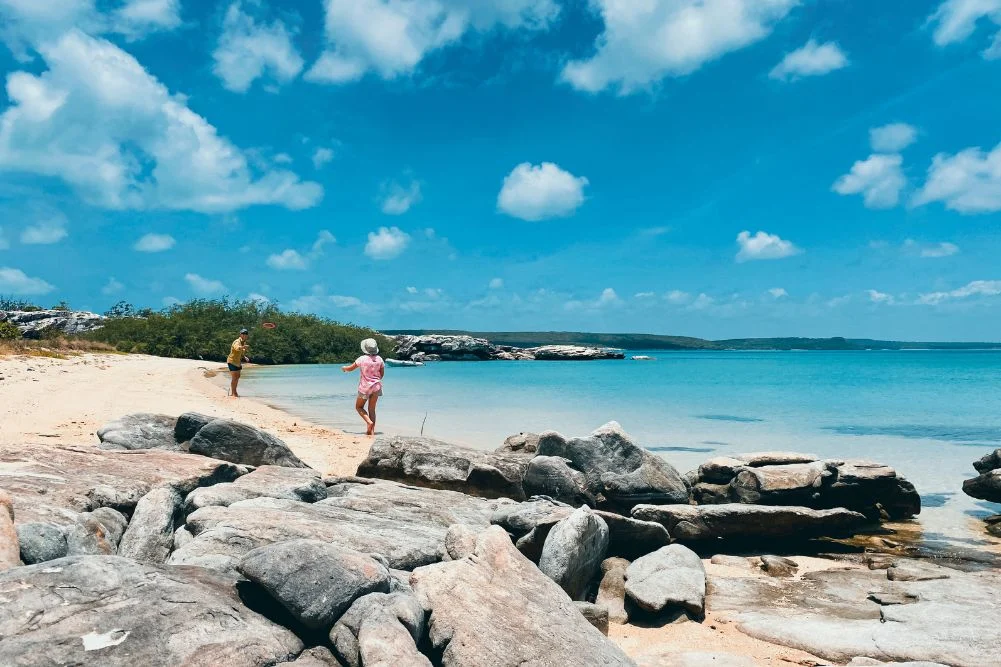
The Gove Peninsula, situated on the northeastern tip of Arnhem Land in Australia’s Northern Territory, represents one of the most culturally significant and historically complex regions in the Southern Hemisphere. Far from the popularized narrative of Australian history beginning with European arrival, the Gove Peninsula, and specifically the township of Nhulunbuy, offers physical and oral evidence of international commerce and cross-cultural exchange that predates the British First Fleet by more than a century. Today, this remote region serves as a vital hub for Indigenous art, eco-tourism, and a unique model of land management overseen by the Yolngu traditional owners.
The Makassan Exchange: A Century of Pre-Colonial Trade
The historical narrative of the Gove Peninsula is inextricably linked to the Makassan seafarers from the port of Makassar in Sulawesi (modern-day Indonesia). Historically, this relationship represents one of Australia’s earliest recorded instances of international trade. Each year, beginning as early as the mid-1600s, Makassan fleets consisting of up to 60 perahu (wooden sailing vessels) utilized the northwesterly monsoon winds to sail to the Australian coast.
The primary objective of these voyages was the harvest of trepang, or sea cucumber, a prized delicacy in Chinese markets. Upon arrival, the Makassans established seasonal camps along the coastline, including at Garanhan (Macassan Beach). The interaction between the Makassans and the local Yolngu people, specifically the Lamamirri clan, was characterized by a sophisticated system of mutual benefit. The Yolngu granted the seafarers access to their waters and assisted in the harvest and processing of the trepang. In exchange, the Makassans provided dugout canoes, metal tools such as knives and axes, cloth, tobacco, and rice.
This exchange had a profound impact on Yolngu technology and culture. The introduction of the dugout canoe allowed for more efficient hunting of dugong and turtle, while the Makassan language left a lasting imprint on the local dialect. Many Yolngu men reportedly joined the return voyages to Sulawesi, traveling over 1,600 kilometers across the Arafura Sea, leading to deep genealogical and cultural ties that persist to this day. This era of harmonious trade continued until 1906, when the Australian government imposed heavy duties and restricted non-European trade, effectively ending the Makassan voyages.
The Wurrwurrwuy Stone Arrangements: History Set in Stone
The physical legacy of the Makassan era is most vividly preserved at the Wurrwurrwuy stone arrangements near Nhulunbuy. Unlike much of the world’s ancient stone art, which often focuses on spiritual or mythological themes, the Wurrwurrwuy arrangements are documentary in nature. Constructed by Yolngu elders in the late 19th century, these arrangements serve as a permanent historical record of the Makassan visits.
The site features stones meticulously laid out to depict the internal structures of Makassan ships, including the masts, rudders, and galley areas. Other arrangements illustrate the infrastructure of the trepang industry, such as the stone fireplaces used for boiling the sea cucumbers and the elaborate fish traps employed by the visitors.
Historians, including Campbell Macknight, who documented the site in the 1960s, note that the arrangements were a deliberate effort by Yolngu leaders like Mungurrawuy Yunupingu to ensure that future generations understood their ancestors’ role as international traders. The site is now protected under the Heritage Act, providing a rare empirical link to Australia’s pre-colonial maritime history.
Artistic Sovereignty at Buku-Larrnggay Mulka
The cultural heart of the region is the Buku-Larrnggay Mulka Centre in Yirrkala, located approximately 19 kilometers from the Nhulunbuy town center. This institution is more than a gallery; it is a community-controlled archive and a working studio for Yolngu artisans. The center has gained international acclaim for its commitment to preserving traditional techniques while fostering contemporary innovation.
A primary medium at the center is the use of gunga (pandanus spiralis). The leaves are harvested, stripped, and dyed using natural pigments derived from roots and bark before being woven into intricate baskets, mats, and sculptures. Traditionally, these weavers produced nganiyal, conical mats used for protection against the elements and insects. Today, these items are recognized as high-fine art, sought after by collectors globally.
The Mulka Museum, housed within the center, contains some of the most significant ethnographic treasures in Australia. Among these are the "Church Panels" from 1962. These two large-scale works, painted on masonite with natural ochres, represent the Dhuwa and Yirritja moieties (the two halves of the Yolngu social and spiritual world). Originally placed in the local Methodist church, these panels were a formal statement of Yolngu land ownership and spiritual authority at a time when the Australian government began granting mining leases on their traditional territory without consent.
Environmental Stewardship and Eco-Tourism on Bremer Island
As the region transitions from a heavy reliance on the mining industry toward a more diversified economy, eco-tourism has emerged as a sustainable alternative. Bremer Island, known as Dhambaliya to the Yolngu, exemplifies this shift. Located a short boat ride from the Gove Peninsula, the island is largely uninhabited, save for a small family outstation and the Banubanu Beach Retreat.
The environmental significance of the region is underscored by its status as a critical habitat for marine life. Four species of sea turtles—the Green, Flatback, Hawksbill, and Olive Ridley—utilize the beaches of Bremer Island for nesting. Furthermore, the nearby East Bremer Islets comprise the Higginson Important Bird Area (IBA). This site supports globally significant populations of Bridled Terns and Roseate Terns and serves as the only known breeding colony for Common Noddies in the Northern Territory.
Tourism in these areas is strictly managed by the Dhimurru Aboriginal Corporation. This body ensures that visitor numbers remain low and that environmental impacts are minimized. The Banubanu Beach Retreat, for instance, operates entirely off-grid, utilizing solar power and sustainable water management to provide a luxury experience that aligns with the conservation goals of the traditional owners.
Regional Development and the Transition from Mining
The town of Nhulunbuy was originally established in the 1960s to support a bauxite mine and alumina refinery. For decades, the local economy was dominated by industrial output. However, with the curtailment of the refinery operations in 2014, the region has undergone a significant socioeconomic transformation.
The focus has shifted toward reinforcing Indigenous-led enterprises and infrastructure. The Yolngu people have increasingly asserted their role in the regional economy through the ownership of accommodation facilities, such as the Yanawal Units, and the management of tourism permits.
This transition is not without challenges. The remote location of the Gove Peninsula results in high costs for goods and services. However, data from Tourism NT suggests a growing interest in "authentic" cultural tourism, with visitors seeking deeper engagement with Indigenous history and land. The permit system managed by Dhimurru Aboriginal Corporation provides a revenue stream that is reinvested into land management and the protection of sacred sites, creating a circular economy based on cultural and environmental preservation.
Logistics and Visitor Information
Travel to Nhulunbuy and the surrounding Arnhem Land region requires careful planning due to its remote nature and the legal requirements of land access.
- Access: The region is serviced by Gove Airport (GOV), with regular flights from Darwin and Cairns via Air North and Qantas. Overland travel from Darwin is possible during the dry season via the Central Arnhem Road, though this requires a high-clearance 4WD and a specific transit permit.
- Permits: All visitors to Dhimurru-managed lands must purchase a General Visitor Permit. As of current regulations, a three-day permit is priced at approximately $39 per adult. These permits are essential for accessing popular sites like Macassan Beach, the Wurrwurrwuy stone arrangements, and various recreation areas.
- Seasonality: The region experiences a tropical climate with two distinct seasons. The "Dry" (May to September) is the peak period for tourism, characterized by cooler temperatures (20°C to 30°C) and clear skies. The "Wet" (October to April) brings high humidity and significant rainfall, which may restrict road access.
- Safety: The coastal waters of the Gove Peninsula are inhabited by Estuarine (Saltwater) Crocodiles. Visitors are urged to observe all safety signage and exercise extreme caution near the water’s edge.
Conclusion: A Model for Cultural Preservation
The Gove Peninsula stands as a testament to the endurance of Yolngu culture and the complexity of Australia’s historical narrative. By preserving the sites of the Makassan trade and maintaining the integrity of their artistic traditions at Buku-Larrnggay Mulka, the Yolngu people have ensured that their history is told on their own terms. As the region continues to develop its tourism and economic infrastructure, it offers a compelling model for how modern industry, environmental conservation, and ancient cultural heritage can coexist. For the visitor, the Gove Peninsula provides more than just a destination; it offers a profound reassessment of the Australian story, set against a backdrop of unparalleled natural beauty.


 Anjar Salim
 Chandra Hamzah
 Tatiana Tantri Indah Sari
 Budi Mulyono

