
 Tatiana Tantri Indah Sari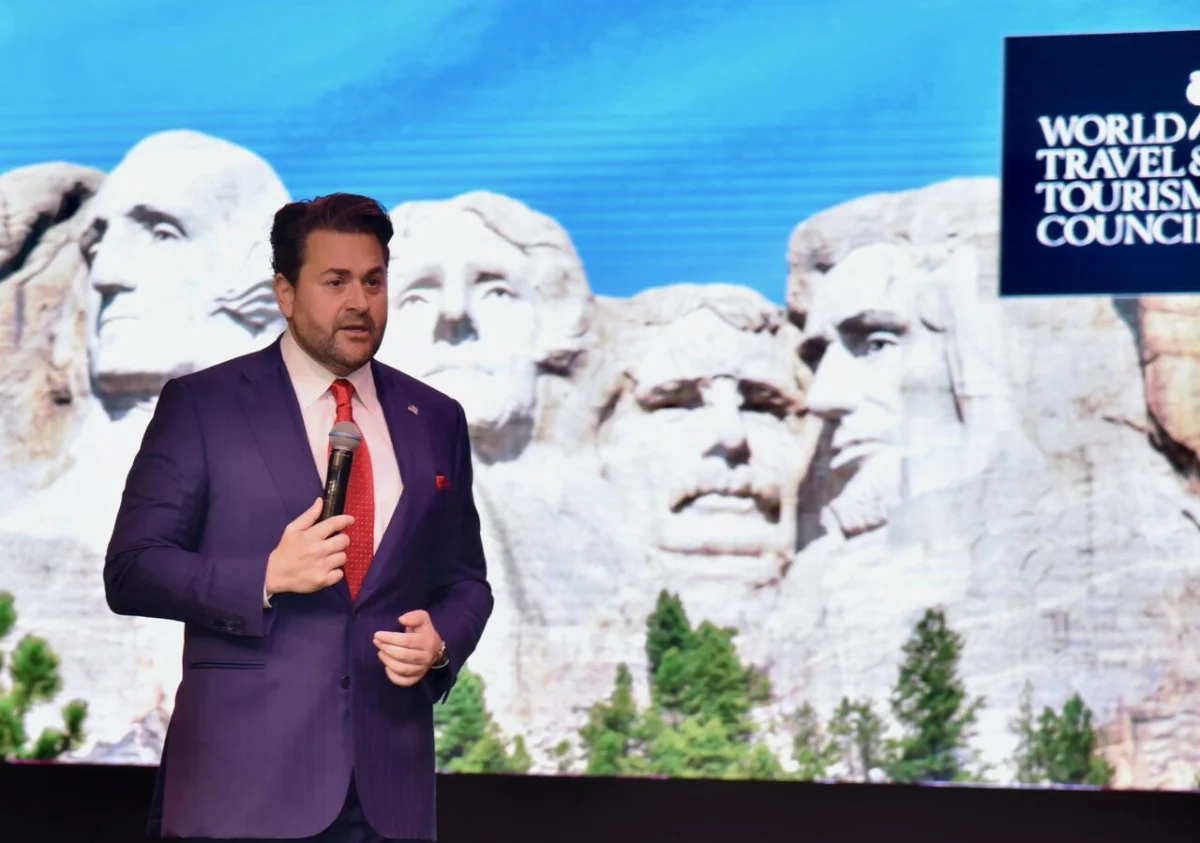
Nick Adams, the Special Presidential Envoy for American Tourism, Exceptionalism and Values, has publicly declared America open and welcoming, simultaneously dismissing any dissenting views as "full of it." This assertive stance was unveiled during his inaugural major international appearance at the World Travel and Tourism Council’s (WTTC) leadership summit in Egypt, marking a significant departure from the cautious diplomacy typically associated with global tourism events. Appointed to his role by President Donald Trump in March, Adams immediately signaled his intent to disrupt conventional diplomatic norms, stating, "I am not a traditional diplomat. I am here to make noise, for America and for the industry." His entrance to the stage, notably to the soundtrack of Michael Jackson’s "Thriller," underscored his intention to command attention and redefine the parameters of international tourism advocacy for the United States.
The Genesis of a New Diplomatic Role
The creation of the Special Presidential Envoy for American Tourism, Exceptionalism and Values in March by President Trump represented a novel approach to promoting U.S. interests on the global stage. While many nations employ tourism envoys or leverage their diplomatic missions for cultural and economic exchange, the specific inclusion of "Exceptionalism and Values" within the title highlights a broader, more ideologically driven mandate. This new role suggests an intent to intertwine the promotion of travel to the U.S. with a narrative of American identity and principles, moving beyond mere economic benefits to encompass cultural and ideological advocacy. Nick Adams, a conservative commentator and author, born in Australia and naturalized as a U.S. citizen in 2021, embodies this shift. His background as a vocal proponent of American conservative thought positions him uniquely to champion a vision of U.S. tourism that is robust, unapologetic, and infused with national pride. His appointment and subsequent public debut are critical in understanding the administration’s strategy for leveraging "soft power" through the travel sector.
Setting the Stage: The WTTC Leadership Summit in Egypt
The World Travel and Tourism Council (WTTC) is a global forum comprising leaders from the travel and tourism private sector. Its mission is to raise awareness of travel and tourism as one of the world’s largest economic sectors, supporting its growth and advocating for policies that enable its expansion. WTTC leadership summits are highly anticipated annual events that bring together CEOs, government ministers, and industry experts from around the globe to discuss pressing issues, future trends, and collaborative strategies for the sector. These gatherings typically emphasize cooperation, sustainability, innovation, and economic recovery, fostering an environment of shared goals and multilateral engagement. Hosting such an event in Egypt, a nation with a rich historical and cultural heritage that heavily relies on tourism for its economy, further amplifies the focus on resilience and the power of travel to bridge cultures and drive prosperity.
Against this backdrop of measured diplomacy and collaborative rhetoric, Adams’ keynote address stood out. Delegates accustomed to carefully worded statements about partnership and mutual understanding were instead presented with a forceful affirmation of American openness, paired with a direct challenge to any narrative suggesting otherwise. This approach, while certainly generating "noise" as Adams intended, also prompted reflection on its potential ramifications for the U.S.’s image and its collaborative efforts within the international tourism community.
An Unorthodox Debut: Adams’ Keynote and Its Message
Adams’ appearance at the WTTC summit was meticulously orchestrated to make an impact. The choice of Michael Jackson’s "Thriller" as his walk-on music immediately signaled an unconventional, attention-grabbing approach, deviating sharply from the more subdued and formal entrances typically observed at such high-level diplomatic and business forums. His opening declaration – "I am not a traditional diplomat. I am here to make noise, for America and for the industry" – served as both a mission statement and a warning. It articulated a clear intent to bypass conventional diplomatic niceties in favor of a more direct, perhaps confrontational, style of advocacy.
The core of Adams’ message revolved around two principal assertions: first, that "America is open and welcoming," and second, that any suggestion to the contrary is "full of it." This binary framing leaves little room for nuance, presenting a bold, unequivocal narrative about the U.S. as a premier global destination. For an industry that thrives on perception, safety, and ease of access, such a direct statement aims to cut through any perceived negative narratives that might deter international visitors. However, it also bypasses the complexities that often influence travel decisions, such as visa policies, perceived political climates, and varying cultural sensitivities. His emphasis on "American Tourism, Exceptionalism and Values" suggests a strategy not just to attract tourists, but to invite them into an experience that reinforces a particular ideological viewpoint of the United States.
Supporting Data: The Economic Imperative of U.S. Tourism
The U.S. travel and tourism industry represents a significant economic powerhouse, underscoring the importance of roles like Adams’. Prior to the global pandemic, the sector was a major contributor to the U.S. economy, supporting millions of jobs and generating substantial revenue. In 2019, for instance, travel and tourism contributed approximately $1.1 trillion to the U.S. GDP and supported nearly 10 million American jobs, according to the U.S. Travel Association. International visitors alone accounted for a substantial portion of this, spending hundreds of billions of dollars annually on lodging, transportation, dining, entertainment, and retail.
The pandemic, however, delivered a severe blow to the industry, leading to unprecedented declines in international arrivals and domestic travel. While domestic tourism has shown signs of recovery, international travel to the U.S. has faced a more protracted rebound compared to some other global destinations. Challenges include lingering perceptions about travel restrictions, visa processing delays, and competition from other nations aggressively vying for tourist dollars. Against this backdrop, an envoy tasked with aggressively promoting U.S. tourism faces the dual challenge of restoring pre-pandemic levels and navigating a competitive global landscape. Adams’s assertive rhetoric can be seen, in part, as an attempt to inject urgency and a strong, confident message into this recovery effort, aiming to re-establish the U.S. as an undisputed leader in global tourism. The strategy, whether conventional or not, seeks to address a tangible economic need by reshaping international perceptions and attracting a larger share of global travelers.
Inferred Reactions and Industry Sentiment
Adams’s unconventional approach is likely to elicit a spectrum of reactions from various stakeholders within the global travel and tourism community, as well as diplomatic circles.
- From the U.S. Tourism Industry: Some segments of the American travel industry might welcome Adams’s directness and perceived patriotism. For businesses struggling to recover from the pandemic, a strong, unequivocal message that America is "open for business" could be seen as a refreshing change from more cautious, bureaucratic pronouncements. They might appreciate a representative who is willing to "make noise" and vigorously advocate for the industry’s interests. However, others might express reservations, concerned that an overly aggressive or politically charged message could alienate potential visitors from certain regions or those who prefer a more neutral, culturally sensitive approach to travel promotion.
- From International Delegates and Governments: The diplomatic community and international tourism bodies, accustomed to consensus-building and multilateral cooperation, might view Adams’s "non-traditional diplomat" stance with a degree of apprehension. Diplomacy often relies on careful wording, respect for diverse perspectives, and a focus on shared benefits. His outright rejection of "cautious diplomacy" and his strong rebuttal of any negative perceptions could be interpreted by some as dismissive or even confrontational, potentially complicating collaborative initiatives or fostering a sense of alienation among partners. Governments of countries with differing political views or those that have experienced strained relations with the U.S. might be particularly sensitive to rhetoric perceived as overtly nationalistic or critical.
- From the Global Traveling Public: The impact on potential travelers would likely be varied. Some might be drawn to the confident, assertive image of America presented by Adams, viewing it as a clear invitation. Others, however, might find the tone off-putting, preferring destinations that emphasize cultural inclusivity, environmental sustainability, or a more relaxed, apolitical travel experience. The effectiveness of his message will ultimately depend on how it resonates with diverse international audiences, whose motivations for travel are often complex and multifaceted.
Broader Impact and Implications
The implications of Nick Adams’ appointment and his inaugural performance extend beyond immediate industry reactions, touching upon the future of U.S. tourism promotion, diplomatic practices, and the global perception of American "soft power."
- Redefining Tourism Diplomacy: Adams’ approach challenges the established norms of tourism diplomacy. Traditionally, tourism promotion is framed as a universally positive endeavor, emphasizing cultural exchange, economic mutual benefit, and global understanding. By injecting explicit "Exceptionalism and Values" and a confrontational tone into this sphere, Adams is effectively politicizing a domain that often strives for neutrality. This could signal a new era where national identity and ideological assertions become more central to tourism strategies, potentially shifting the focus from universal appeal to targeted demographic attraction.
- Impact on Brand USA and Collaborative Efforts: Brand USA, the official destination marketing organization for the United States, typically works to present a diverse and welcoming image of the country to international travelers, often in collaboration with various U.S. states, cities, and private sector partners. Adams’s highly individualized and ideologically charged approach might either complement or complicate Brand USA’s existing efforts. While a strong voice for U.S. tourism can be beneficial, a dissonant message or one that alienates certain international markets could undermine broader, more inclusive marketing campaigns. The challenge will be to integrate Adams’s bold advocacy with the established, collaborative frameworks of U.S. tourism promotion.
- The Intersection of Politics and Travel: The explicit linkage of tourism with "Exceptionalism and Values" underscores an attempt to leverage travel as a tool for ideological projection. This strategy moves beyond merely attracting tourists for economic gain; it seeks to offer an immersive experience of American identity and principles. While this might appeal to certain segments of the global population, it also risks alienating others who may not share those specific "values" or who prefer to keep their travel choices separate from political endorsements. In an increasingly polarized world, such an approach could inadvertently narrow the potential visitor base.
- Future of the "Special Envoy" Role: The effectiveness and longevity of Adams’ role, and the style he has adopted, will likely be subject to ongoing scrutiny. If his approach demonstrably boosts international tourism to the U.S. without significant diplomatic fallout, it could set a precedent for future administrations and even other nations. Conversely, if it leads to strained relations or fails to yield the desired economic results, it might be viewed as an experimental detour from established diplomatic practices. The success of this "noise-making" strategy will ultimately be measured by its tangible impact on U.S. tourism statistics and its broader influence on America’s image abroad.
In conclusion, Nick Adams’ debut as the Special Presidential Envoy for American Tourism, Exceptionalism and Values marks a distinct shift in how the United States intends to promote itself to the world. His rejection of traditional diplomacy in favor of a bold, assertive, and ideologically infused message represents a calculated risk. While it promises to "make noise" and vigorously champion American interests, its long-term success will hinge on its ability to navigate the complex interplay of global economics, international relations, and diverse cultural perceptions in the highly competitive arena of world travel.



 Anjar Salim
 Chandra Hamzah
 Budi Mulyono

