
 Cholid Fahmi Thalib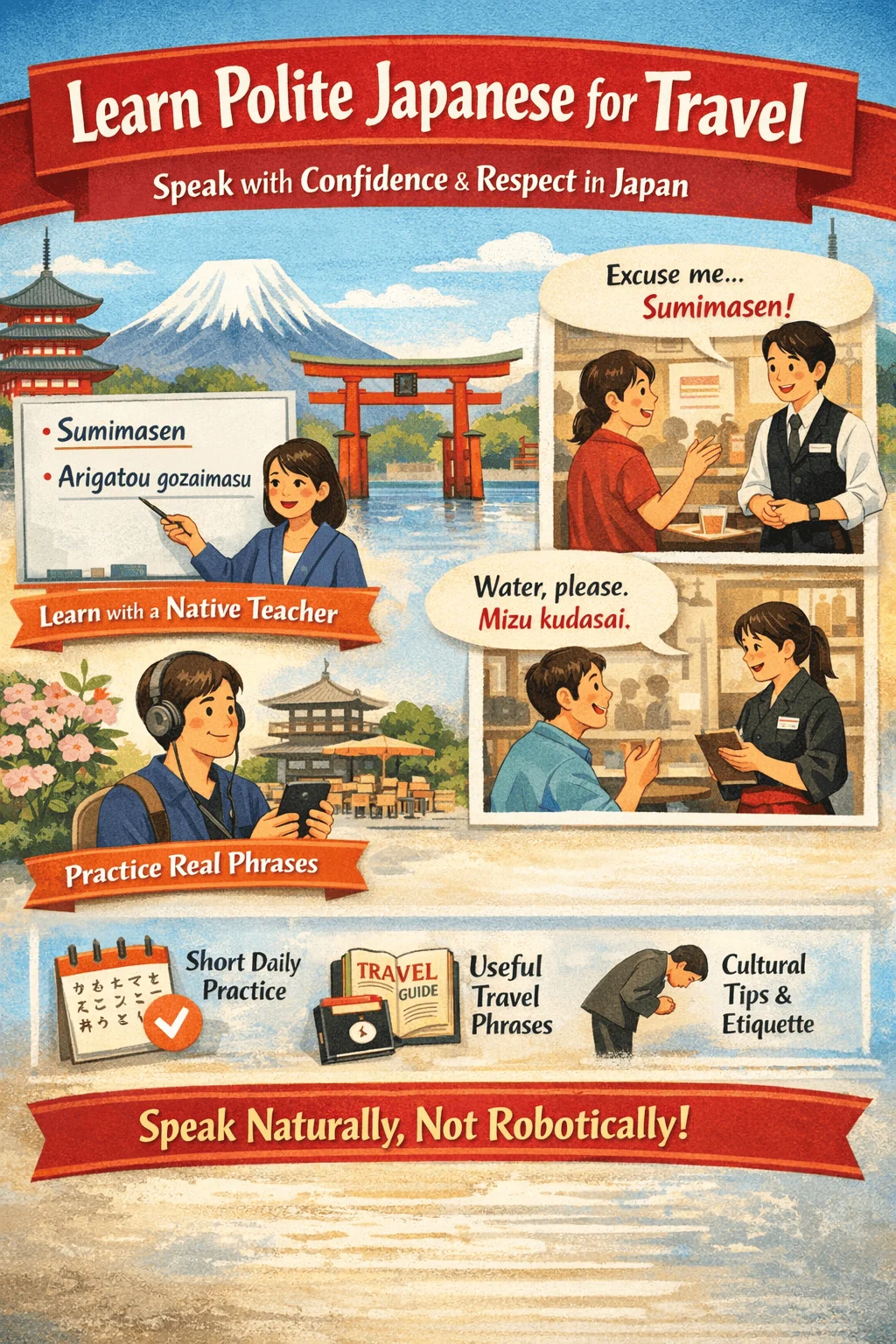
Traveling in Japan presents a unique opportunity to immerse oneself in a culture that places a profound emphasis on respect, politeness, and harmonious social interaction. While the allure of exploring ancient temples, bustling metropolises, and serene natural landscapes is undeniable, a key component to truly enriching this experience lies in the ability to communicate with grace and confidence. For many international visitors, the prospect of learning Japanese can seem daunting, often conjuring images of memorizing extensive phrasebooks and grappling with complex grammatical structures. However, recent insights suggest a more pragmatic and effective approach to acquiring polite Japanese, one that prioritizes real-world application and contextual understanding over rote memorization. This shift in learning strategy aims to equip travelers with the practical linguistic tools needed to navigate everyday interactions, fostering deeper connections and a more authentic appreciation of Japanese culture.
The traditional method of learning a language, particularly for travel, often involves the laborious task of memorizing long lists of phrases and vocabulary. While this can provide a foundational understanding, it frequently leads to stilted, robotic speech patterns and a lack of spontaneity. This approach can inadvertently create a barrier, as learners struggle to adapt memorized phrases to the nuances of actual conversations. The inherent challenge lies in the fact that politeness in Japanese is not merely about using specific words, but also about understanding the subtle interplay of tone, context, and social hierarchy. Consequently, an over-reliance on phrase lists can result in misapplied politeness, potentially leading to awkward situations or a perception of insincerity.
Emerging pedagogical approaches advocate for a paradigm shift, moving away from exhaustive memorization towards a focus on practical, conversational Japanese. This methodology emphasizes learning through immersion in authentic dialogues and understanding the underlying principles of Japanese etiquette. By prioritizing real-life scenarios, such as ordering food at a restaurant, checking into a hotel, or asking for directions, travelers can acquire phrases that are immediately relevant and applicable. This contextual learning not only accelerates the acquisition of useful language but also provides crucial insights into the cultural significance of politeness. Understanding why certain expressions are used in specific situations is as vital as knowing what to say.
The effectiveness of this approach is further underscored by the growing availability of resources tailored to the needs of travelers. While traditional guidebooks and audio courses offer a starting point, many find significant benefit in personalized instruction. Engaging with a Japanese language teacher specializing in travel preparation can provide invaluable guidance on tone, etiquette, and common social scenarios. These educators can offer targeted lessons that address the specific challenges faced by foreigners, helping them to refine their pronunciation, understand cultural cues, and develop the confidence to engage in spontaneous conversations. This tailored approach ensures that learning is efficient and directly applicable to the traveler’s immediate needs, minimizing the time spent on phrases that may rarely be encountered.
The principle of spaced repetition and consistent exposure, rather than intensive cramming, is central to effective language retention. Short, daily practice sessions, coupled with exposure to polite Japanese in its natural context, allow for better memory consolidation. Hearing polite phrases woven into everyday conversations, even through audio recordings or short videos, helps learners internalize the rhythm and structure of the language. This gradual immersion allows for the natural development of an ear for polite Japanese, enabling learners to respond with genuine confidence rather than relying on pre-rehearsed scripts. This is akin to how a musician learns to improvise by internalizing scales and chord progressions, rather than simply memorizing individual songs.
Key Takeaways for Travelers
The core principle for mastering polite Japanese quickly for travel purposes revolves around strategic focus. Instead of attempting to learn the entire language, travelers are advised to concentrate on high-frequency courtesy phrases, essential greeting patterns, and concise expressions for unexpected or sensitive situations. This targeted approach builds a solid foundation of practical speaking skills, enabling individuals to navigate daily life in Japan with a greater sense of ease and respect, without the burden of memorizing extensive vocabulary.
Mastering Essential Polite Japanese Quickly
The journey to speaking polite Japanese effectively for travel begins with a concentrated effort on the most impactful linguistic tools. This strategy moves beyond the traditional academic approach to language learning, which often emphasizes grammar and vocabulary in isolation. Instead, it champions a functional, communication-centric model designed to yield tangible results in a short timeframe. By concentrating on the building blocks of polite interaction, travelers can quickly gain the confidence to engage with locals in a manner that is both respectful and culturally appropriate. This approach recognizes that for many tourists, the primary objective is not linguistic fluency in an academic sense, but rather the ability to engage in meaningful and polite exchanges that enhance their travel experience.
The core of this strategy lies in identifying and internalizing the phrases that are most frequently used in everyday interactions. These are the linguistic anchors that facilitate smooth transitions between individuals and demonstrate an understanding of Japanese social norms. The emphasis is on practical application, meaning that learners are encouraged to use these phrases in simulated or actual conversations as soon as possible. This active engagement solidifies their understanding and makes the language feel more intuitive and less like a foreign imposition. The goal is to integrate these polite expressions into the traveler’s communicative repertoire so seamlessly that they become second nature, enhancing rather than hindering the travel experience.
Most-Used Courtesy Phrases and Their Functions
At the forefront of practical polite Japanese are a select group of indispensable courtesy phrases that serve as the bedrock of respectful communication. The word sumimasen stands out as exceptionally versatile. Its primary translations include "excuse me" and "sorry," but its utility extends far beyond these simple definitions. In Japan, sumimasen is the go-to phrase for gaining someone’s attention, whether it’s a server in a restaurant or a passerby on the street. It is also the standard way to offer a mild apology for minor inconveniences, such as accidentally bumping into someone or asking for a small favor. Its widespread use and multi-faceted nature make it a crucial phrase for any traveler to master.
Complementing sumimasen is the word kudasai, which translates to "please." While direct English equivalents exist, the Japanese application of kudasai carries a nuance of polite requesting. It is appended to the end of a noun or verb stem to form a polite request. For instance, when ordering a beverage, one might say, mizu kudasai (water, please). This simple addition transforms a direct demand into a courteous solicitation, reflecting the inherent politeness embedded in Japanese social interactions. The correct usage of kudasai signals an awareness of social etiquette and a desire to engage respectfully.
Beyond these foundational terms, other phrases carry significant weight in conveying gratitude and formal requests. Arigatou gozaimasu is the ubiquitous "thank you very much," a fundamental expression of appreciation that is always well-received. Its more formal counterpart, onegaishimasu, is used for more formal requests or when entrusting a task to someone. While seemingly simple, the consistent and appropriate use of these expressions demonstrates a genuine effort to engage with the local culture, often eliciting positive responses from Japanese individuals. The efficacy of these phrases lies in their clear purpose; they are not abstract linguistic constructs but tools for specific social functions, making them easier to remember and apply through practical use.
The art of sounding natural in Japanese politeness involves more than just word choice; it encompasses non-verbal cues and vocal delivery. A soft, measured tone of voice often accompanies polite expressions, and in formal or particularly respectful situations, a slight bow might be offered. In commercial settings such as shops and restaurants, the conscious repetition of simple phrases like sumimasen and arigatou throughout the day helps to normalize their usage. This repeated practice integrates these basic Japanese expressions into the traveler’s daily routine, fostering a sense of comfort and familiarity. Over time, this habitual use strengthens the learner’s confidence and makes polite speech a more organic part of their interaction.
Strategic Greetings for Different Situations
Greetings in Japan are not merely perfunctory exchanges; they are carefully calibrated social signals that acknowledge the time of day, the setting, and the relationship between individuals. Mastering these greetings is essential for making a positive first impression and demonstrating cultural awareness. The standard temporal greetings are straightforward yet crucial: ohayou gozaimasu for the morning, konnichiwa for the afternoon, and konbanwa for the evening. Adhering to these time-specific greetings demonstrates an understanding of local customs and a respect for the rhythm of daily life.
While sayonara is widely known as "goodbye," its usage in contemporary Japan can be perceived as somewhat final or overly formal, particularly among friends and acquaintances. More commonly, individuals will opt for casual farewells such as jaa ne (see you later) or mata ne (see you again). For travelers seeking to maintain a polite and respectful tone in public or professional settings, more appropriate farewells include shitsurei shimasu (excuse me for leaving) or dewa mata (then, again, or see you later, in a slightly more formal context). The key takeaway is that each greeting and farewell serves a specific contextual purpose, and choosing the appropriate phrase helps avoid sounding either overly casual or unnecessarily formal.
The concept of omotenashi, or Japanese hospitality, is deeply ingrained in the nation’s cultural fabric, and greetings are a primary manifestation of this principle. When a local offers a greeting, responding with sincerity, often accompanied by a small smile and a nod, conveys respect and reciprocity. This acknowledgment goes beyond mere linguistic exchange; it signifies an appreciation for the cultural gesture and strengthens the bond between visitor and host. Even in the absence of extensive linguistic fluency, these non-verbal cues can communicate warmth and genuine engagement, bridging potential communication gaps.
Minimal Phrases for Emergencies and Apologies
In the unpredictable nature of travel, having a few concise phrases ready for emergency situations or to express apologies can be a critical asset. These are not phrases for casual conversation but for moments when clear, direct communication is paramount. For urgent assistance, the exclamation tasukete! (help!) is the universal cry for aid. In situations requiring medical attention, knowing how to ask for directions to a hospital, such as byouin wa doko desu ka? (where is the hospital?), can be life-saving. Having these short, impactful phrases memorized and readily accessible can make a significant difference in critical moments.
When it comes to admitting fault or expressing regret for an inconvenience, the versatile sumimasen can be employed again. However, for a more pronounced apology, gomen nasai offers a stronger expression of regret. These phrases are invaluable as they allow travelers to acknowledge responsibility and express remorse without needing to construct elaborate explanations, which might be challenging with limited language proficiency. Their brevity and directness ensure that the message of apology is conveyed clearly and respectfully, maintaining social harmony even in situations of error.
It is advisable for travelers to compile a small list of these essential emergency expressions and polite apologies before their trip. This proactive step ensures that during moments of stress or confusion, the appropriate linguistic tools are at their disposal. The ability to respond clearly and respectfully under pressure, even with a limited vocabulary, demonstrates not only practical communication skills but also a fundamental respect for Japanese language and culture. Such preparedness can alleviate anxiety and foster a sense of competence in navigating unforeseen circumstances.
Effective Learning Methods for Travelers
The pursuit of polite and useful Japanese for travel does not necessitate lengthy, arduous study sessions. A more efficient and enjoyable path involves concentrating on practical expression, real-world application, and the cultivation of simple, consistent habits. By paying close attention to the natural cadence of native speech and understanding the cultural context in which polite language is used, travelers can significantly enhance their ability to communicate with respect and confidence. This approach prioritizes effectiveness and relevance, ensuring that the time invested in learning yields the most beneficial outcomes for the travel experience.
Memorization-Free Techniques for Rapid Results
The modern traveler can bypass the drudgery of extensive vocabulary lists by embracing a learning methodology centered on context. Instead of memorizing isolated words, learners are encouraged to engage with short, authentic conversations. This could involve listening to or practicing dialogues related to common travel scenarios, such as asking for directions, ordering food, or making simple purchases. The repeated exposure to these practical, bite-sized phrases builds memory more effectively than rote memorization and helps learners internalize how polite words function within the flow of actual conversation. This method makes the language feel more accessible and less like an abstract academic subject.
To maximize efficiency, learners are advised to break down their learning objectives into small, manageable goals. For instance, dedicating a few minutes each day to mastering one or two key phrases or focusing on a specific type of interaction can lead to steady progress without feeling overwhelming. This incremental approach ensures that new information is absorbed and retained effectively. Furthermore, the technique of shadow practice, where learners repeat short audio clips aloud as they listen, is highly beneficial. This method not only improves pronunciation and intonation but also helps learners internalize the natural rhythm and flow of polite Japanese without the pressure of memorization. Over time, the ear becomes attuned to the subtle differences between polite and casual forms, fostering a more intuitive understanding.
Leveraging Japanese Writing Systems for Politeness
While fluency in the Japanese writing systems is not a prerequisite for basic polite communication, a foundational understanding can significantly enhance a traveler’s ability to recognize and interpret politeness in various contexts. Beginning with hiragana is recommended, as this phonetic script forms the grammatical endings of many polite words and is fundamental to common expressions. Subsequently, learning katakana is useful for deciphering foreign loanwords that appear on signs, menus, and product labels. A later stage of learning could involve familiarizing oneself with high-frequency kanji, such as those representing basic concepts like day (日 – hi), eat (食 – taberu), or go (行 – iku).
Each of the Japanese writing systems offers clues about the tone and formality of the text. For instance, kanji often appear in more formal or traditional settings, such as official signage in shops or on public transportation. Recognizing these characters in context can help travelers infer the politeness level of the surrounding language, even if they do not know the exact meaning of every character. This visual context acts as a supplementary learning tool, allowing learners to identify polite words and phrases through association rather than direct memorization. Maintaining a small notebook or digital note for useful symbols and phrases encountered during travels can further reinforce this connection between visual memory and real-life application.
Using Technology and Cultural Tools
In the digital age, a plethora of language learning applications and technological tools can significantly aid travelers in refining their Japanese communication skills. Speech recognition software, for example, allows learners to practice pronunciation and receive immediate feedback, helping them to correct errors and improve their accent. Translation tools, such as Google Translate, can be valuable for checking grammar and understanding the intended tone of a phrase, but it is crucial to supplement their use by speaking the phrases aloud to assess their naturalness.
Audio-based learning platforms that offer slow playback options are excellent for enhancing listening comprehension, allowing learners to better discern individual words and sentence structures. These can be effectively paired with short role-playing exercises, simulating common travel scenarios like seeking assistance at a train station or ordering tea at a café. Beyond digital aids, embracing cultural nuances plays an equally important role. Subtle gestures, such as a slight bow, the respectful use of honorifics like -san (a common suffix added to names), and demonstrating patience, all contribute to polite communication. Integrating these cultural habits with basic Japanese phrases creates a more holistic and positive interaction, signaling a genuine effort to connect with the local culture.
In conclusion, speaking polite Japanese during travel is an achievable goal that does not require an exhaustive memorization of vocabulary. The most effective strategy involves a deliberate focus on phrases directly relevant to everyday travel needs, such as greetings, requests, and expressions of gratitude. The key lies in using these phrases in real situations, allowing them to be absorbed into memory naturally through repeated application. Practicing small sets of words and consistently using them throughout a trip, for example, the simple yet impactful arigatou (thank you) or sumimasen (excuse me), helps travelers sound more respectful and facilitates smoother interactions.
Local Japanese individuals often value effort and sincerity more than perfect linguistic accuracy. This understanding can significantly boost a traveler’s confidence, as even small attempts at polite communication are generally well-received. By actively listening to how native speakers converse and observing their tone, gestures, and non-verbal cues, travelers can gain invaluable insights into what sounds natural and appropriate. Over time, these observations and practices help to establish habits that make polite speech an integrated and comfortable part of the traveler’s routine in Japan.
Ultimately, the most effective approach to learning polite Japanese for travel is through practical use, not through rote memorization. By concentrating on meaningful phrases, engaging in real interactions, and maintaining a patient and persistent attitude, travelers can cultivate both comfort and respect. This journey, marked by steady effort and a willingness to learn from experience, leads to richer and more rewarding encounters as one explores the diverse landscapes and vibrant culture of Japan.



 Anjar Salim
 Dwi Wanna
 Budi Mulyono
 Lukman Taruna Persada Ramadan
 Chandra Hamzah
 Gabriela Annisa