
 Cholid Fahmi Thalib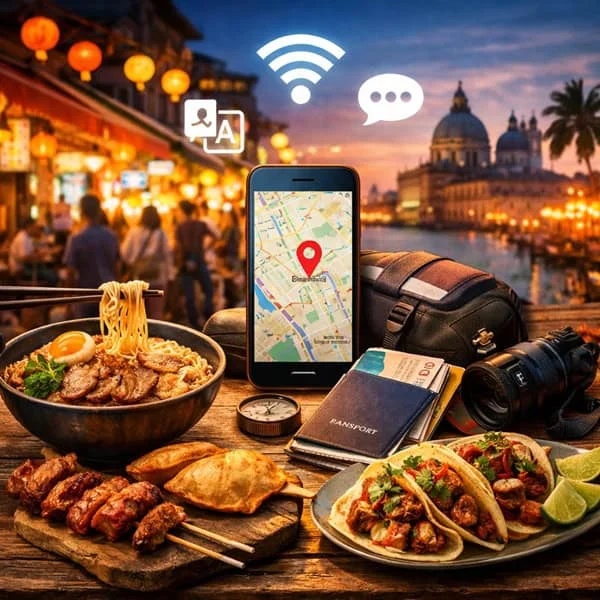
The allure of travel often centers on those serendipitous moments: waking up in an unfamiliar city, savoring a coffee that tantalizes with new flavors, and stumbling upon a neighborhood whose name is a delightful challenge to pronounce. It’s the dream of finding the year’s best meal without a rigid itinerary, a seemingly magical occurrence that often defines the most memorable travel experiences. However, the reality behind these seemingly accidental discoveries is far from random. They are typically the product of subtle, yet crucial, preparation—the kind of "boring" groundwork that rarely makes it into highlight reels but forms the bedrock of successful exploration.
This preparation doesn’t involve meticulously planning every minute or pre-booking every meal weeks in advance. Instead, it encompasses practical skills that empower travelers to navigate the unknown with confidence. This includes the ability to instantly access maps upon exiting a metro station, to decipher menus without resorting to awkward pointing, to share the name of an undiscovered gem with a friend, to present an allergy card effectively, to verify if a seemingly open establishment is truly operational, and to retrieve digital reservations even when unreliable Wi-Fi threatens to derail plans.
For "foodie flashpackers"—a demographic defined by their desire to travel intelligently, dine exceptionally, and maintain flexibility—staying connected emerges as a surprisingly fundamental component of their journey. This is not about being perpetually online, but rather about minimizing background friction to maximize presence in the foreground. When that foreground is a steaming bowl of artisanal noodles, a perfectly crafted street taco, or the intoxicating aroma of a neighborhood bakery, being present is paramount.
The Unique Demands of Culinary Travel
Food-focused travel diverges significantly from conventional sightseeing. It’s a dynamic pursuit that involves navigating a complex web of markets, unassuming side streets, ephemeral pop-up stalls, late-night eateries, charming cafes discovered in passing, and restaurants that may only exist under specific temporal conditions. The cumulative effect of minor logistical hurdles can quickly transform an exciting expedition into a frustrating ordeal.
Consider the common challenges:
- Navigational Ambiguity: When local signage is unfamiliar or non-existent, and street names are unpronounceable, relying solely on instinct can lead to disorientation.
- Language Barriers: Menus, ingredient lists, and casual interactions with vendors can present significant obstacles without translation tools.
- Unreliable Information: Opening hours, daily specials, or even the current status of a particular vendor can be inconsistent, leading to missed opportunities or wasted journeys.
- Logistical Hiccups: Sharing precise locations of discovered eateries or managing digital reservations and payments can become cumbersome without consistent data access.
A degree of connectivity effectively mitigates these issues, transforming potential stressors into opportunities for confident improvisation. Crucially, the objective is not constant digital immersion, but rather reliable access precisely when it is needed most.
The "Flashpacker" Philosophy: Efficiency Meets Freedom
Flashpacking occupies a desirable middle ground, blending the uninhibited spirit of a backpacker with the practical efficiencies of adult travel. The goal is not to complicate travel by introducing unnecessary challenges, but to systematically eliminate mundane obstacles, thereby freeing up valuable time and mental energy for the enjoyable aspects of the experience. When the primary focus is culinary exploration, a streamlined approach to connectivity proves most effective:
- Pre-trip Planning: Securing a reliable data plan before departure, such as an eSIM, ensures immediate connectivity upon arrival.
- Essential Digital Tools: Familiarizing oneself with navigation apps, translation software, and reservation platforms streamlines daily operations.
- Dynamic Information Access: The ability to quickly check real-time updates on opening hours, vendor availability, or local reviews is invaluable.
- Seamless Sharing and Documentation: Effortlessly sending locations, photos, or notes about discoveries to travel companions or for personal record-keeping enhances the experience.
The last point is particularly significant, as culinary plans are inherently the most susceptible to change. The ability to adapt and pivot rapidly in response to new information or spontaneous opportunities is a hallmark of successful food travel.
eSIMs: A Seamless Upgrade for Global Connectivity
For many travelers, the ritual of landing in a new country and navigating the "airport SIM counter shuffle"—a process often characterized by harsh fluorescent lighting, perplexing plan options, hurried SIM card exchanges, and a lingering anxiety about app functionality—is a familiar and unwelcome one. Embedded SIMs, or eSIMs, offer a sophisticated solution that bypasses much of this friction. Instead of physically swapping a SIM card, travelers can activate a digital data plan directly on their compatible devices. For those prioritizing culinary exploration over troubleshooting connectivity issues, eSIMs represent the most straightforward path to remaining connected from the moment they arrive.
Services like SIMOVO’s travel eSIMs provide a quick and uncomplicated method for travelers to establish data access without the traditional complexities associated with physical SIM cards. The underlying principle is to safeguard precious travel time, as the minutes spent searching for connectivity are minutes that could otherwise be dedicated to discovering culinary treasures.
Connectivity as a Catalyst for Enhanced Culinary Discovery
Reliable mobile connectivity fundamentally transforms the way individuals engage with food during their travels, leading to richer and more rewarding experiences:
Encouraging Exploration Beyond the Obvious
When travelers are concerned about getting lost or being unable to find their way back, they tend to gravitate towards familiar, well-trodden paths—tourist hubs and prominently advertised restaurants. While these options can be satisfying, the most authentic and exceptional culinary experiences are often found just off the beaten track. Consistent data access allows travelers to confidently venture down intriguing side streets, knowing they can always reorient themselves, thereby unlocking access to hidden gems and local favorites.
Facilitating the Pursuit of Local Recommendations
Local culinary advice rarely comes in the form of precise street addresses. Instead, it is often delivered through descriptive landmarks, atmospheric cues, or contextual references like "it’s next to the pharmacy with the green sign." With reliable data, travelers can quickly triangulate these recommendations by cross-referencing map data, sending quick clarifying messages, and perhaps even referencing a photo of the storefront, ensuring they can successfully locate the recommended establishment.
Accelerating Menu Comprehension
Translation applications are not a crutch for the unadventurous but a tool for empowering exploration. By reducing the anxiety associated with misinterpreting menu items, travelers are more inclined to order intriguing and unfamiliar dishes. Furthermore, the ability to swiftly look up specific ingredients, regional culinary terms, or the nature of a mysterious sauce transforms potential research detours into brief, informative moments, preserving the flow of the dining experience.
Optimizing Timing for Peak Culinary Experiences
The ephemeral nature of many culinary delights necessitates an awareness of timing. The availability of prime birria may be limited to specific hours, a bakery’s peak freshness might be at 9 a.m., and a bustling night market may not truly come alive until later in the evening. The capacity to rapidly verify operating hours, communicate directly with vendors, or confirm seasonal availability enables travelers to plan their days with a light touch, maximizing their chances of experiencing these culinary moments at their best without resorting to overly rigid schedules.
Building a "Crumb Trail" of Culinary Successes
Every traveler has experienced the profound disappointment of discovering an extraordinary dish and then being unable to relocate it on a subsequent visit. This can be mitigated through effective use of connectivity:
- Saving Locations: Utilizing map applications to bookmark discovered eateries allows for easy recall.
- Taking Notes and Photos: Documenting dishes, ingredients, and the ambiance provides a rich personal reference library.
- Sharing with Networks: Distributing information about exceptional finds within travel groups or social circles can lead to shared discoveries and recommendations.
This systematic approach transforms a single successful food trip into a repeatable framework for future culinary adventures.
A Balanced Connectivity Routine for Uninterrupted Exploration
A common concern is that staying connected will lead to excessive screen time and detract from the present moment. However, this need not be the case. A balanced approach involves integrating technology strategically:
- Morning Briefing: Upon waking, a quick check of the day’s planned culinary destinations, including verifying opening hours and checking for any last-minute changes via local listings or direct messages.
- On-the-Go Navigation and Research: During transit or while exploring, using maps for directions, translation apps for menus, and quick searches for ingredient clarifications.
- Post-Discovery Documentation: Immediately after enjoying a remarkable meal or discovering a noteworthy spot, taking a moment to save the location, jot down key details, or send a message to a companion.
- Evening Review and Planning: At the end of the day, reviewing saved locations, planning for the next day’s culinary pursuits, and responding to any urgent communications.
This rhythm ensures that technology serves as a supportive tool rather than dominating the travel experience.
Traveling with Enhanced Confidence, Not Increased Screen Time
The essence of culinary travel is to feel alive, to experience discovery, and to engage deeply with a destination, rather than merely consuming its offerings. Connectivity does not diminish discovery; rather, it actively protects it. When fundamental needs—navigation, communication, translation, and access to reservations or payment systems—are seamlessly met, travelers are liberated to pursue their primary objectives:
- Engaging with Local Culture: Interacting with vendors, understanding culinary traditions, and appreciating the social fabric surrounding food.
- Experiencing Authentic Flavors: Seeking out dishes that represent the true culinary identity of a region.
- Creating Lasting Memories: Savoring unique tastes and textures that become indelible parts of the travel narrative.
This principle forms the core of foodie flashpacking: establishing structure where it is essential, while embracing freedom in all other aspects. By approaching travel with this mindset, individuals are more likely to encounter those profound "how did we end up here?" meals—the unforgettable experiences that resonate for years—without the often-associated chaos that can accompany unplanned spontaneity. The strategic integration of connectivity ensures that the journey is as rewarding as the destination, transforming every bite into a well-informed adventure.


 Budi Mulyono
 Anjar Salim
 Chandra Hamzah
 Tatiana Tantri Indah Sari

 Lukman Taruna Persada Ramadan