
 Cholid Fahmi Thalib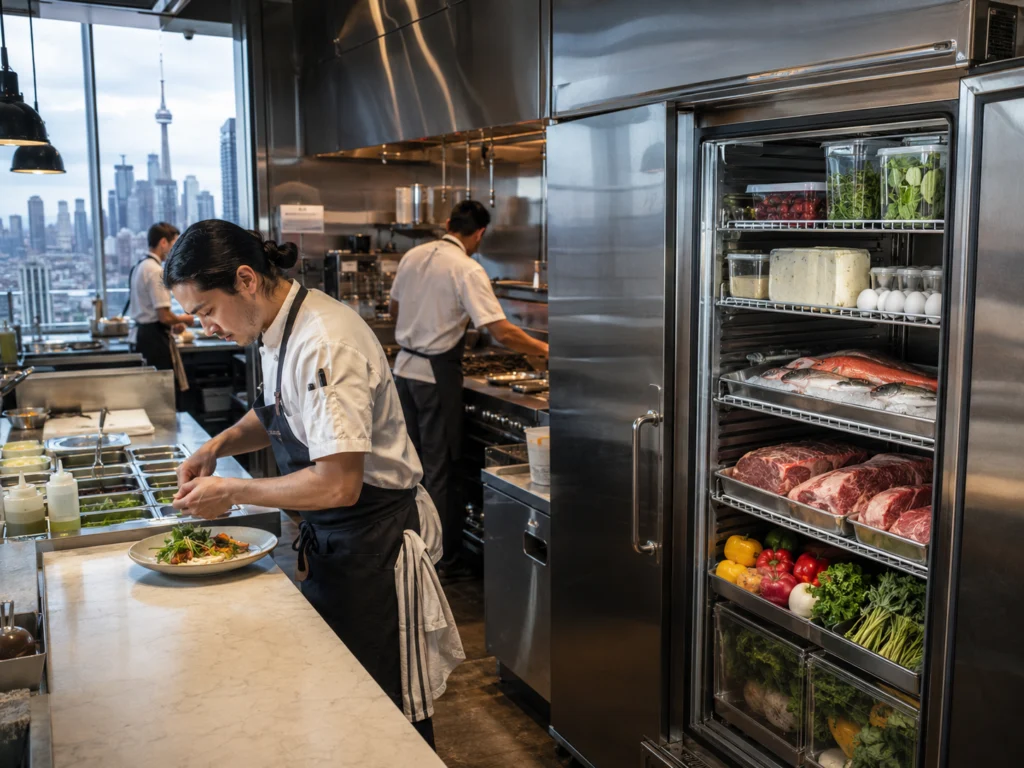
Toronto has firmly established itself as one of North America’s most vibrant and dynamic culinary destinations. Within the span of a single afternoon, a traveler can easily transition from grazing through the bustling stalls of Kensington Market to sampling authentic Cantonese classics in Chinatown, before rounding off the culinary journey with a delicate Portuguese custard tart in Little Portugal. Yet, beneath the veneer of diverse cultural flavors, neighborhood charm, and master artisan craftsmanship lies a critical, highly sophisticated infrastructure that makes this gastronomic ecosystem possible: advanced commercial refrigeration.
While diners celebrate the culinary vision of celebrated chefs and the vibrant atmosphere of the city’s top dining districts, the foundational element preserving the integrity of every meal remains out of sight. Behind every crisp, garden-fresh salad, perfectly seared sustainable fish, and delicate pastry is unglamorous, heavy-duty hardware operating quietly and continuously. Specialized equipment suppliers—ranging from those providing Toronto Commercial Refrigeration to bespoke kitchen designers—outfit the walk-in coolers, specialized prep tables, and humidity-controlled display cases essential for modern high-volume kitchens. For the everyday diner, this mechanical backbone is entirely invisible, yet its results are unmistakable in every single bite.
The Science of Temperature Control in Professional Kitchens
At the core of food safety and culinary quality is strict temperature management, commonly referred to by food scientists and health inspectors as the avoidance of the "temperature danger zone." This critical window spans roughly between 40°F and 140°F (4°C to 60°C), a temperature range where pathogenic bacteria can double in population in as little as 20 minutes.
To prevent this biological hazard, professional commercial refrigeration units are engineered to maintain internal temperatures at or strictly below 40°F. Unlike residential refrigerators, which are designed for domestic use and modest door openings, commercial systems are built to withstand the rigorous demands of a fast-paced restaurant environment. They feature high-horsepower compressors, heavy-duty door seals, and rapid-recovery technology designed to stabilize internal climates even when doors are opened hundreds of times during a peak evening service. This relentless, uninterrupted cold storage ensures that fresh produce, dairy, and raw proteins retain their nutritional value, texture, and structural integrity, explaining why restaurant meals frequently taste markedly fresher than home-cooked equivalents sourced from standard household appliances.
Chronology and Evolution of the Cold Chain in Urban Food Systems
The journey of food preservation has evolved significantly over the past century, transforming from rudimentary ice-harvesting methods into a sophisticated, continuous logistics network known as the "cold chain." Understanding the timeline of this evolution illustrates how modern urban centers like Toronto sustain their massive food demands.
Historically, urban populations relied heavily on daily local agricultural deliveries, consuming perishables immediately due to the lack of reliable cooling technology. The advent of mechanical refrigeration in the late 19th and early 20th centuries revolutionized food distribution, allowing perishables to be transported across states and provinces without spoiling.
By the mid-20th century, commercial kitchens began adopting standardized walk-in coolers and electric freezers, drastically reducing foodborne illness outbreaks and expanding menu possibilities. In recent decades, the chronology of food safety has shifted toward digital integration and energy efficiency. Modern kitchens now utilize smart refrigeration systems equipped with automated temperature data loggers, remote alert notifications for compressor failures, and predictive maintenance diagnostics. This technological progression ensures that the cold chain remains unbroken from the moment agricultural products leave the farm gate to the exact second they are plated for the consumer.
Managing the Unbroken Cold Chain: Industry Best Practices
Maintaining the cold chain within a bustling metropolitan restaurant requires rigid discipline, precise timing, and adherence to established food safety protocols. Industry experts and municipal health authorities outline several mandatory stages that professional culinary teams must execute without exception.
The process commences the moment a refrigerated supply truck arrives at the loading dock. Kitchen staff immediately conduct temperature logs of perishable goods using infrared or probe thermometers. Items failing to meet safety thresholds are rejected on the spot. Once accepted, perishables are transferred into primary walk-in coolers or freezers within minutes, minimizing exposure to ambient kitchen temperatures.
Inside the kitchen, rigorous inventory management techniques—such as the First-In, First-Out (FIFO) method—ensure that older stock is utilized before newer deliveries arrive. All items are clearly labeled with preparation and expiration dates. During active service, line cooks utilize specialized refrigerated prep tables (often called sandwich prep units or low-boy refrigerators) equipped with integrated cold wells. These units maintain ingredients at safe holding temperatures directly at the workstation, bridging the gap between deep storage and final cooking.
Economic and Operational Implications for the Hospitality Sector
The financial viability of a restaurant depends heavily on the reliability of its refrigeration infrastructure. According to hospitality industry analysts, food spoilage resulting from equipment failure accounts for a substantial percentage of preventable restaurant inventory loss.
When a commercial refrigerator or freezer malfunctions—particularly during a high-volume weekend service—the financial consequences can be immediate and severe. Thousands of dollars in premium proteins, artisanal cheeses, and fresh produce can be rendered unusable within hours. Furthermore, a total system failure can force management to halt service entirely, resulting in lost revenue, disappointed patrons, and potential reputational damage.
Consequently, modern restaurant operators view commercial refrigeration not merely as a utility expense, but as a crucial capital investment. Industry leaders increasingly prioritize units engineered for 24/7 reliability, robust warranties, and high energy efficiency. With commercial compressors running continuously, energy-efficient models equipped with variable-speed compressors and eco-friendly refrigerants significantly reduce monthly utility overhead while shrinking the carbon footprint of the establishment.
Perspectives from Culinary Professionals and Industry Experts
Culinary leaders and commercial kitchen designers consistently emphasize that technical skill in cooking is fundamentally dependent on the quality of underlying equipment.
"People often talk about knife skills, heat control on the stove, and flavor profiles as the primary drivers of a great dish," notes James Henderson, a veteran Toronto-based executive chef and restaurant consultant. "However, if your proteins have suffered from inconsistent holding temperatures prior to cooking, or if your produce has lost its crispness due to poor humidity control in storage, no amount of culinary technique can rescue the final product. Reliable refrigeration is the silent partner in every successful kitchen."
Equipment manufacturers and maintenance specialists echo this sentiment, pointing out that preventive maintenance programs have become standard operating procedure for top-tier dining establishments. Regular coil cleaning, door gasket replacements, and refrigerant pressure checks are scheduled routinely to avert catastrophic failures during peak operational hours.
Broader Socio-Economic Impact on Urban Food Tourism
The intersection of advanced refrigeration technology and culinary arts holds profound implications for local economies, particularly in globally diverse cities like Toronto. Food tourism represents a multi-billion-dollar sector that drives hospitality employment, hotel bookings, and international travel.
Cities recognized for their exceptional food culture rely on consumer trust. When travelers explore diverse ethnic enclaves—ranging from Greek neighborhoods on the Danforth to South Asian corridors in Gerrard East—they are placing implicit trust in the safety standards upheld by local proprietors. The widespread adoption of certified commercial refrigeration ensures that high food safety standards are maintained uniformly across both fine-dining establishments and small, independent neighborhood eateries. This baseline of safety allows culinary creativity to flourish, inviting visitors to explore unfamiliar ingredients and diverse cultural dishes with absolute confidence.
Practical Lessons for Home Cooks
While domestic kitchens do not require industrial walk-in coolers, home cooks can adopt professional organizational habits to elevate the quality, safety, and longevity of their ingredients. Culinary educators recommend several straightforward adjustments for home refrigeration:
- Monitor Internal Temperatures: Ensure the home refrigerator is consistently maintained at or below 40°F (4°C) using an independent appliance thermometer.
- Optimize Air Circulation: Avoid overpacking shelves, as restricted airflow prevents the even distribution of cold air, creating localized warm spots where food spoils faster.
- Strategic Food Placement: Store raw meats, poultry, and seafood on the lowest shelf of the refrigerator to prevent accidental juices from dripping onto ready-to-eat foods or fresh produce.
- Implement Rotation Habits: Practice the FIFO method at home by moving older condiments, dairy items, and produce to the front of the shelves, ensuring nothing is forgotten at the back.
Frequently Asked Questions
How can travelers assess whether street food or informal dining establishments handle food safely?
Travelers should look for clear operational indicators, such as a high volume of local patrons, which guarantees rapid ingredient turnover and minimal time spent unrefrigerated. Clean prep surfaces, visible sanitation practices, and food served piping hot or properly chilled are reliable indicators of adherence to food safety standards. If perishable items appear to be exposed to ambient heat for extended periods, consumers should exercise caution and avoid those specific vendors.
What are the primary warning signs that a commercial restaurant is mismanaging its cold chain?
Patrons should observe the overall cleanliness of the establishment, as a well-maintained dining room often correlates with a disciplined kitchen staff. Pay attention to the temperature of served dishes; cold items should be crisp and properly chilled, while hot dishes must arrive genuinely hot rather than lukewarm. If diners have a view into the kitchen, organized prep stations and tidy storage areas signal a professional approach to food safety.
Why does professional restaurant food frequently surpass home cooking in perceived freshness?
The disparity primarily stems from inventory turnover rates and specialized storage technology. Commercial kitchens purchase high volumes of produce and proteins that are consumed rapidly, meaning ingredients rarely sit idle for extended periods. Combined with precise temperature and humidity control systems designed to prevent cellular breakdown in fresh foods, ingredients arrive on the diner’s plate in superior physical condition compared to typical household storage cycles.
What should food enthusiasts prioritize when planning a culinary-focused travel itinerary?
A successful culinary trip balances structured planning with spontaneous exploration. Travelers should research neighborhoods renowned for specific cultural cuisines, seek out local food markets where raw ingredients are traded daily, and blend reservations at acclaimed establishments with visits to bustling, unpretentious local spots. Consulting local residents often yields the most authentic recommendations, transforming a standard vacation into an immersive gastronomic journey.



 Anjar Salim
 Chandra Hamzah
 Tatiana Tantri Indah Sari
 Budi Mulyono
 Lukman Taruna Persada Ramadan
