
 Tatiana Tantri Indah Sari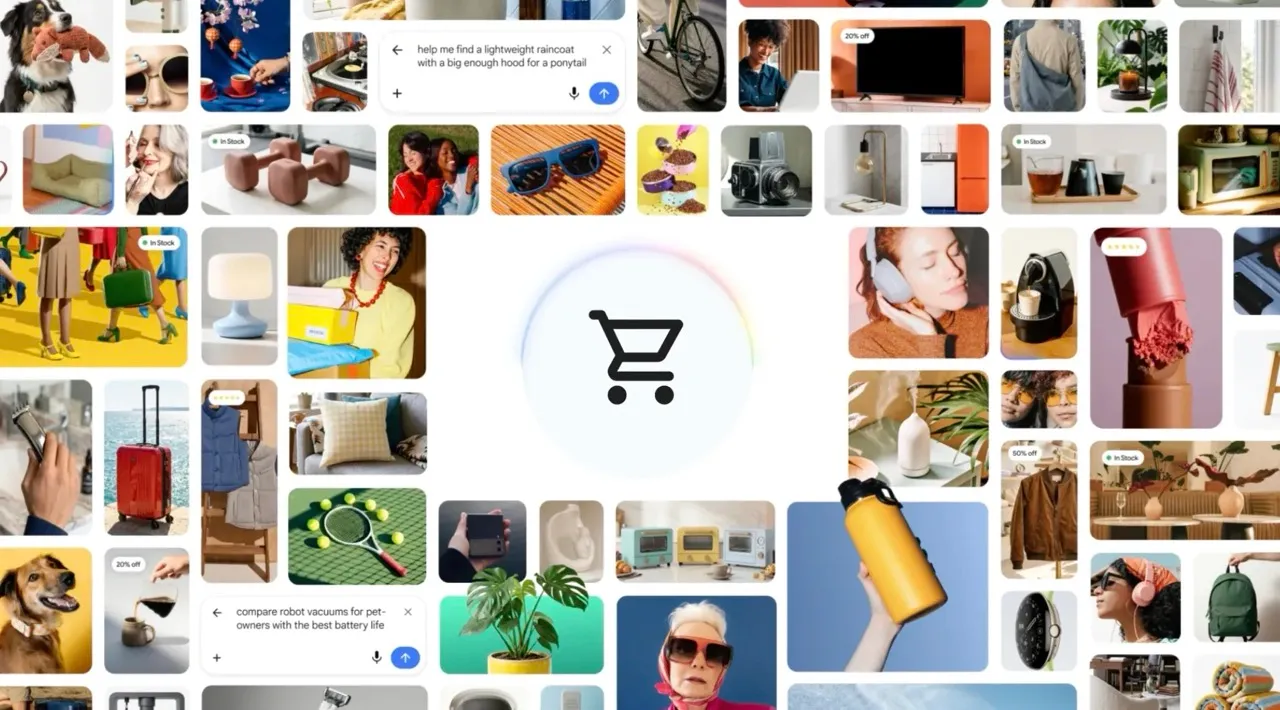
Google on Tuesday publicly committed to extending its agentic commerce infrastructure to the travel sector, specifically targeting hotel booking as the next vertical for its Universal Commerce Protocol (UCP). This significant announcement, made during the company’s annual I/O developer conference, underscores Google’s deepening ambition to transform its search and AI interfaces into direct transactional platforms, moving beyond mere information retrieval to facilitate purchases seamlessly.
The revelation came via a comprehensive blog post authored by Vidhya Srinivasan, Vice President and General Manager of Ads and Commerce. Srinivasan’s communication coincided with a broader wave of shopping-related updates unveiled at the I/O conference, a key event where Google typically showcases its latest advancements in software, AI, and hardware to developers and the wider tech community. The UCP, described as the system empowering AI agents to manage purchases directly within Google’s search and chat interfaces, is poised for a substantial expansion, with Srinivasan explicitly stating, "UCP is expanding to even more verticals, starting soon with hotel booking and local food delivery."
The Universal Commerce Protocol Explained: A Foundation for Agentic AI
The Universal Commerce Protocol represents a cornerstone of Google’s vision for ambient, AI-powered commerce. Introduced previously as a sophisticated framework designed to enable large language models (LLMs) and AI agents to understand user intent, navigate complex purchasing workflows, and execute transactions on behalf of the user, UCP aims to streamline the online shopping experience significantly. Instead of users manually searching for products, comparing prices across multiple tabs, and inputting payment details repeatedly, UCP allows Google’s AI to handle these steps conversationally.
At its core, UCP leverages Google’s advanced AI capabilities, including its flagship Gemini models, to interpret natural language queries, identify relevant products or services, interact with vendor systems, and complete the purchasing process. This involves everything from checking availability and comparing prices to applying discounts and facilitating payment. For consumers, the promise is a frictionless experience, where a simple conversational prompt like "Book a hotel in London for three nights next month" or "Order pizza for delivery to my address" could initiate and complete the entire transaction without ever leaving the Google ecosystem.
Strategic Expansion into Travel and Local Services: A Multi-Billion Dollar Opportunity
The decision to extend UCP to hotel booking and local food delivery is a calculated strategic move, targeting two immense and highly competitive online markets. The global online travel market, which includes hotel bookings, flights, and packages, is projected to exceed $1 trillion by the mid-2020s, according to various industry reports. Similarly, the global online food delivery market is on a rapid growth trajectory, with estimates suggesting it could reach over $400 billion by 2027. By integrating UCP into these verticals, Google aims to capture a larger share of these lucrative transactional flows, shifting from an intermediary that primarily directs traffic to a direct facilitator of commerce.
For hotel booking, the UCP integration means that users could, in theory, ask Google’s AI assistant to find and book a hotel room directly, specifying preferences for location, price, amenities, and dates. The AI agent would then interact with hotel inventory systems, present options, and finalize the reservation. This potentially bypasses traditional online travel agencies (OTAs) like Booking.com and Expedia, which have long dominated the online booking landscape.
Similarly, in local food delivery, UCP would allow users to order meals from restaurants through a conversational interface. The AI agent would handle menu selection, customization, payment, and order placement with the chosen restaurant or an integrated delivery service. This move positions Google in more direct competition with established players such as DoorDash, Uber Eats, and Grubhub.
Google’s Deepening Roots in Travel Technology: A Historical Perspective
Google’s foray into the travel sector is far from new. Over the past decade and a half, the tech giant has steadily built out a comprehensive suite of travel planning tools, often directly integrated into its search results. This journey began with initiatives like Google Flights, launched in 2011 after the acquisition of ITA Software, which provided sophisticated flight search technology. This was followed by the development of Google Hotels, which aggregated hotel listings, prices, and availability from various sources, including direct hotel websites and OTAs.
Later came Google Trips, an app designed to organize travel itineraries, and more recently, the broader Google Travel platform, which serves as a central hub for planning flights, hotels, and activities. These products have consistently aimed to provide a more streamlined and transparent planning experience for users, often by presenting information from multiple providers side-by-side. While these tools have significantly impacted how consumers research travel, they have largely functioned as aggregators and referral engines, guiding users to external websites to complete bookings. The introduction of UCP signifies a fundamental shift, moving Google from a discovery and comparison platform to a direct transactional facilitator.
This strategic evolution reflects Google’s long-term vision of becoming an indispensable part of every step of the user journey, from initial search to final purchase. By owning more of the transaction, Google can gather richer data, offer more personalized experiences, and potentially create new revenue streams beyond its core advertising model, such as commissions on bookings or deliveries.
The Highly Competitive Online Travel Agency Landscape
The online travel agency (OTA) market is characterized by intense competition and significant market consolidation, with Booking Holdings (parent company of Booking.com, Agoda, Priceline) and Expedia Group (Expedia, Hotels.com, Vrbo) holding dominant positions globally. These platforms have invested heavily in technology, marketing, and loyalty programs to attract and retain customers, building vast networks of hotels, airlines, and other travel providers.
Google’s move with UCP is likely to be met with a mix of apprehension and strategic response from these established players. For years, OTAs have relied on Google as a primary channel for customer acquisition through paid search advertising. While Google has always been a "frenemy" in the travel space – both a crucial partner and a formidable competitor – the UCP’s expansion into direct booking capabilities could dramatically alter the power dynamics. OTAs might see a reduction in referral traffic or face increased pressure to differentiate their offerings beyond mere price comparison. Some analysts suggest that OTAs might respond by enhancing their unique value propositions, such as loyalty programs, customer service, or exclusive package deals, which might be harder for a general AI agent to replicate.
For independent hotels and smaller chains, Google’s direct booking capabilities via UCP could offer a double-edged sword. On one hand, it presents a potential avenue to reduce reliance on OTAs, which often charge substantial commissions (ranging from 15% to 30%). Direct bookings through Google could offer a lower-cost acquisition channel and allow hotels to own the customer relationship from the outset. On the other hand, it consolidates more power in Google’s hands, potentially leading to new forms of dependence or commission structures down the line. Concerns about data privacy and control over the customer experience through an AI intermediary are also likely to emerge.
Disrupting the Food Delivery Ecosystem
The online food delivery market has witnessed explosive growth, particularly accelerated by global events in recent years. Dominated by a few major players like DoorDash, Uber Eats, and Grubhub in various geographies, these platforms have built extensive logistics networks, sophisticated apps, and strong brand recognition. They connect millions of consumers with restaurants, offering convenience and a wide selection.
Google has already made inroads into this space with features like "Order Food" directly from Google Search, Maps, and Assistant, allowing users to place orders through integrated partners. UCP takes this a step further by embedding the entire transaction within Google’s AI interface. This means a user could simply converse with Google’s AI to browse menus, customize orders, and pay, all without opening a third-party app.
The implications for existing food delivery platforms are significant. While some might see an opportunity to integrate their services with UCP as a new channel for orders, others may view it as an existential threat. If Google successfully funnels a substantial portion of food delivery orders through its own AI agents, it could reduce the need for consumers to directly engage with incumbent apps, potentially impacting their user base and revenue. Restaurants, much like hotels, could find themselves navigating a new landscape where Google becomes a dominant gateway for customer orders, raising questions about commission rates, data access, and direct customer engagement.
Implications for Industry Players and Consumers
For Consumers: The primary benefit is enhanced convenience and a streamlined user experience. The ability to complete complex transactions like booking a hotel or ordering food through natural language commands, without switching between multiple apps or websites, aligns with the broader trend towards ambient computing. It promises greater personalization as Google’s AI leverages its vast understanding of user preferences and history to offer tailored recommendations.
For Google: The UCP expansion represents a strategic move to deepen user engagement within its ecosystem, turning informational queries into direct transactional opportunities. This could unlock new revenue streams beyond traditional advertising, potentially through commissions on bookings and deliveries. It also strengthens Google’s position as an indispensable platform, further integrating its AI capabilities into daily life and reinforcing its competitive edge against other tech giants.
For Competitors (OTAs, Food Delivery Platforms): The move intensifies competitive pressure. These platforms will need to innovate rapidly, focusing on areas where an AI agent might struggle, such as highly personalized concierge services, unique loyalty programs, or specialized customer support. The emphasis will shift towards providing value beyond simple transaction facilitation.
For Businesses (Hotels, Restaurants): The UCP offers a new channel for customer acquisition. While potentially reducing reliance on high-commission OTAs, it also introduces a new powerful intermediary. Businesses will need to carefully evaluate the costs, benefits, and strategic implications of integrating with Google’s UCP, balancing increased visibility with maintaining brand control and direct customer relationships.
Regulatory Scrutiny and Market Dominance Concerns
Google’s increasing integration into transactional commerce inevitably raises questions from regulatory bodies worldwide. The company has faced extensive antitrust scrutiny in recent years, particularly concerning its search dominance and potential for self-preferencing its own services. Critics argue that by embedding direct booking and ordering capabilities within its omnipresent search and AI interfaces, Google could unfairly disadvantage competing services that rely on organic search traffic or paid advertising to reach customers.
Regulators might examine whether Google is leveraging its dominant position in search to gain an unfair advantage in the travel and food delivery markets. Concerns could include the visibility of UCP-powered transactions compared to competitor listings, the fairness of any commission structures, and access to critical data. Google will need to navigate these regulatory landscapes carefully, ensuring transparency and providing a level playing field for all participants, or risk further legal challenges and fines.
The Future of AI-Powered Commerce
The expansion of Google’s Universal Commerce Protocol into hotel booking and local food delivery is more than just a product update; it signifies a pivotal moment in the evolution of online commerce. It underscores a future where AI agents become increasingly central to how consumers discover, evaluate, and purchase goods and services. This agentic commerce paradigm promises unparalleled convenience, but also brings forth complex questions about market dynamics, data ownership, and the role of intermediaries. As Google continues to refine and expand UCP, the ripple effects will undoubtedly reshape entire industries, pushing both established players and emerging innovators to adapt to a new era of AI-driven transactions. The "starting soon" commitment from Srinivasan sets the stage for a transformative period, where the lines between search, discovery, and direct purchase blur further, all orchestrated by intelligent AI agents.




 Chandra Hamzah
 Budi Mulyono
 Anjar Salim
