
 Gabriela Annisa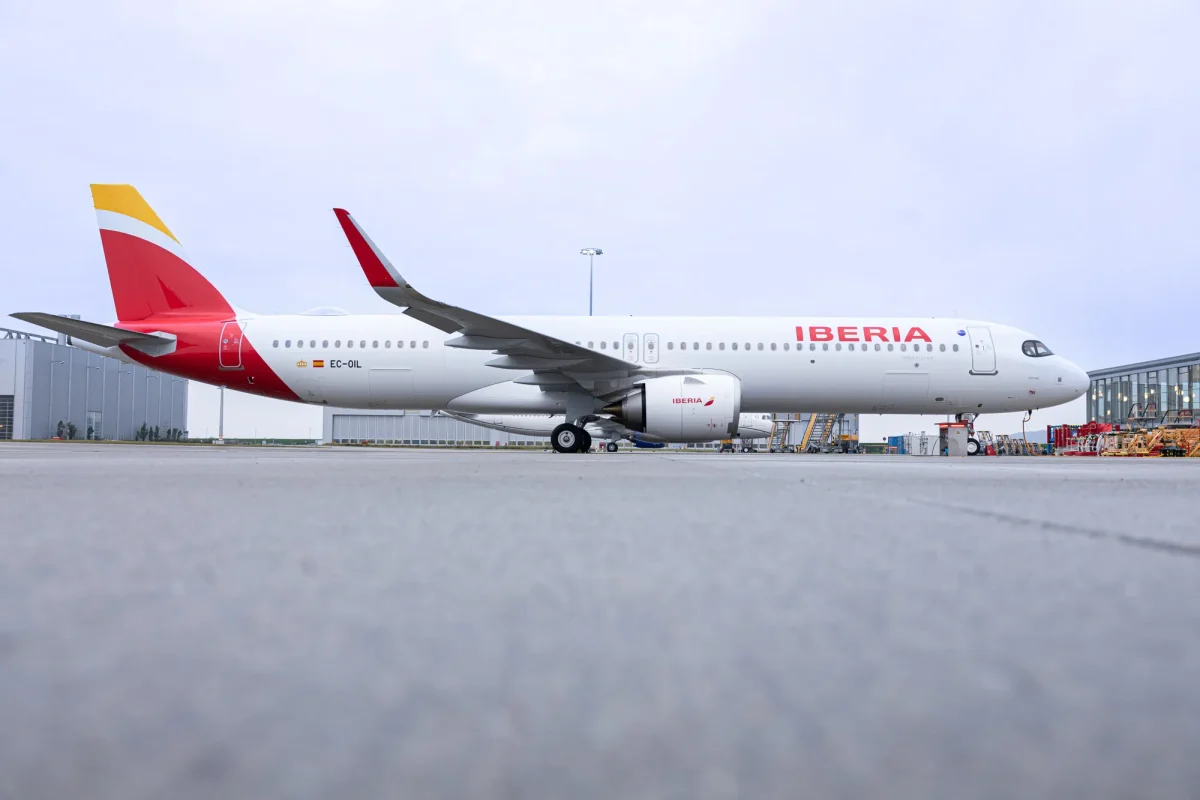
Two major global carriers, Iberia and Singapore Airlines, present contrasting narratives of success and strategic challenges within the fiercely competitive airline industry. While Spain’s flag carrier, Iberia, has completed a remarkable decade-long turnaround, transforming itself into one of the world’s most profitable airlines, Singapore Airlines, despite a strong core performance, grapples with the financial burden of its 25% stake in a loss-making Air India. These distinct trajectories highlight the complex interplay of internal reforms, macroeconomic conditions, strategic investments, and geopolitical factors shaping the airline landscape.
Iberia’s Ascendance: From Dysfunctional to Dominant
The Unsung Turnaround Story of European Aviation
In a testament to strategic resilience and aggressive reform, Iberia, a key component of the International Airlines Group (IAG), has emerged as an unlikely titan of profitability. The Spanish flag carrier recently reported an astounding 16.4% operating margin in 2025, a figure that not only places it among the world’s elite but also remarkably rivals the 16.7% achieved by Europe’s low-cost giant, Ryanair. This achievement marks the culmination of a decade-plus journey that saw Iberia rise from the brink of dysfunction, often compared to the perennial struggles of carriers like Alitalia or the previously government-owned Air India. For many within and outside the industry, Iberia’s profound transformation remains an underappreciated saga, perhaps overshadowed by its larger sister airline British Airways or the sheer scale and complexity of the IAG conglomerate.
A Decade of Transformation: From Crisis to Core Strength
The genesis of Iberia’s dramatic turnaround can be traced back to the early 2010s, a period fraught with peril for the airline. Following its merger with British Airways in 2011 and the subsequent formation of IAG, Iberia was a carrier in crisis. Its operational inefficiencies were legendary: it was heavily overstaffed, burdened by antiquated IT systems, and reliant on fuel-guzzling, four-engine Airbus A340s for its long-haul operations. Compounding these internal woes, the Spanish economy was reeling from the European housing bust, leading to a severe downturn in domestic and regional demand. Simultaneously, ultra-low-cost carriers like Ryanair were aggressively expanding into Spain, relentlessly eroding Iberia’s market share on short-haul routes and further exacerbating its financial distress. The airline posted a crippling negative 7% operating margin in 2012, signaling the urgent need for radical intervention to avert a potential collapse.
The pivotal moment arrived with the appointment of Luis Gallego as CEO. Gallego, described by industry observers as walking into Madrid headquarters "with a giant axe," spearheaded an aggressive restructuring program. This involved deeply unpopular but ultimately necessary measures: substantial cost cuts across all departments, intense battles with powerful unions leading to strikes and widespread unrest, and a critical rationalization of its sprawling and often unprofitable route network. A cornerstone of Gallego’s strategy was a comprehensive refleeting program. The inefficient A340s were progressively retired and replaced with more fuel-efficient, twin-engine Airbus A350s and A330s, dramatically improving operational economics and environmental performance. Furthermore, IAG’s acquisition of Vueling and the launch of Iberia Express – a low-cost subsidiary designed to compete more effectively on short-haul routes – provided crucial tools to defend against the relentless assault of budget airlines and capture market share in a segment Iberia was ill-equipped to serve directly.
Margin Milestones: A Trajectory of Unprecedented Growth
The financial progression of Iberia under this new leadership is a powerful illustration of the turnaround’s success. From a nadir of negative 7% operating margin in 2012, the airline clawed its way back to profitability by 2014, marking a crucial psychological and financial turning point. The recovery continued steadily, with operating margins reaching a respectable 9% by 2019. Had the world paused before the global pandemic, this trajectory alone would have been deemed a significant achievement, demonstrating a return to financial health.
However, Iberia’s post-pandemic performance has been nothing short of extraordinary. Capitalizing on a resurgent global travel demand, the airline reported a robust 14% operating margin in both 2023 and 2024. This consistent strong performance culminated in the aforementioned 16.4% in 2025, firmly establishing Iberia among the most profitable airlines globally. Even more remarkably, the first quarter of the current year, typically a weaker winter period for European carriers, saw Iberia achieve a 9% margin – an almost unheard-of performance for an airline operating a significant long-haul network in Europe during this season. This acceleration well past pre-pandemic levels underscores the deep-seated structural improvements and enhanced market positioning that have insulated the airline from seasonal troughs.
Madrid’s Strategic Advantage: A Hub for Growth
A significant factor contributing to Iberia’s success is its strategic home base: Madrid-Barajas Airport. Unlike many of its Western European counterparts, such as London Heathrow, Paris Charles de Gaulle, or Amsterdam Schiphol, Madrid-Barajas possesses substantial room for growth and expansion. This capacity advantage was a primary driver behind British Airways’ decision to merge with Iberia in the first place, recognizing Madrid as a gateway to future growth opportunities that its own congested Heathrow hub could not offer. This foresight has paid dividends, allowing Iberia to expand its network and capacity without facing the severe slot constraints and infrastructure limitations that plague other major European airports, thus enabling sustained organic growth.
Macroeconomic Tailwinds and the Tourism Boom
Beyond internal reforms and airport capacity, Iberia has benefited immensely from Spain’s economic resurgence. Fifteen years ago, Spain was mired in a deep recession; today, it stands as a star performer within the European Union. In the past year, Spain’s GDP growth rate hovered around 3%, significantly outpacing the European Union average of approximately 1%. A primary engine of this growth has been the nation’s colossal tourism industry, which has experienced an unprecedented boom. Americans, with strong disposable incomes, are flocking to Europe, and Spain has captured a substantial share of this demand, whether for direct visits to cities like Madrid or as a connecting point to the Balearic and Canary Islands, or even onward to other Mediterranean destinations.
Furthermore, recent geopolitical events, such as airspace disruptions in the Middle East and the conflict in Ukraine, have inadvertently favored Western European destinations. Air traffic that might otherwise have flowed through Gulf hubs or towards Eastern Mediterranean/Middle Eastern destinations has been partially diverted towards Western Europe, further bolstering Spain’s already robust tourism sector. This "rich getting richer" phenomenon has allowed Iberia to capitalize on an extended shoulder season, commanding strong yields in periods that previously required heavier discounting. Data suggests that the traditional summer peak (June-August) is now stretching into March, April, September, and October, driven by retirees and empty nesters seeking off-peak travel and a growing awareness of climate change making peak summer travel less desirable in some regions.
The Latin American Crown Jewel: "Madrid is the New Miami"
Iberia’s deep-rooted connection to Latin America is arguably its most valuable strategic asset. The airline commands approximately 20% market share on routes between Europe and Latin America, a testament to its extensive network and historical ties. While the region can be prone to economic volatility, history has consistently proven it to be an incredibly strong performer for Iberia. In the post-pandemic era, this success has been magnified.
IAG often touts "Madrid is the new Miami," highlighting the significant demographic and economic shifts that have benefited Spain. A substantial influx of immigration from Latin America to Spain has not only boosted Spain’s GDP but also fueled robust VFR (Visiting Friends and Relatives) traffic. Concurrently, Latin American tourism to Spain and business investment in both directions have surged. This strong premium demand is evident in the remarkable growth of business and premium economy traffic, which reportedly increased by approximately 30% between 2019 and the present. Iberia has shrewdly optimized its aircraft layouts (LOPAs), particularly on its A350s, to feature densely configured economy cabins to accommodate high volumes of lower-yield immigrant traffic while simultaneously maximizing revenue from its premium cabin offerings. This dual strategy allows the airline to cater to diverse passenger segments profitably.
Expanding Horizons with XLRs and TAP Competition
Iberia continues to innovate its network strategy, particularly with the introduction of the Airbus A321XLR. These new narrow-body aircraft, configured with premium cabins, are enabling Iberia to open new transatlantic routes to the Eastern Seaboard of the United States, including Boston, Washington D.C., and recently, Newark. This expansion allows the airline to tap into new markets with greater operational flexibility and bypass the need for larger, less efficient wide-body aircraft on routes with moderate demand.
Additionally, Iberia is leveraging its growing strength to challenge competitors directly. Despite IAG’s past interest in acquiring TAP Air Portugal, which ultimately did not materialize due to competition concerns from regulatory bodies, Iberia is now directly competing for TAP’s lucrative Brazilian traffic. The airline is actively adding new Brazilian destinations to its summer schedule, utilizing the A321XLRs to serve destinations in Northeast Brazil, further solidifying its presence in the highly contested South Atlantic corridor. This aggressive move demonstrates Iberia’s confidence in its operational model and market position.
Leadership and IAG’s Playbook
The architect of Iberia’s turnaround, Luis Gallego, was duly recognized for his transformative leadership, ascending to the role of Chief Executive Officer of the entire IAG group. Under his strategic oversight, Iberia continues to thrive, now led by CEO Marco Sansovini, who has successfully maintained the airline’s upward trajectory. While some might attribute Iberia’s success to a stroke of luck—being in the right city (Madrid) at the right time—the depth of internal reforms, strategic fleet modernization, and astute market positioning suggest a replicable playbook for IAG. This demonstrates that fundamental changes, coupled with favorable macroeconomic conditions, can yield extraordinary results. Iberia’s booming aircraft maintenance business, consistently high on-time performance (often ranking highly in Cirium’s global lists), and significantly lower unit costs compared to many European long-haul competitors like Air France and Lufthansa, further underpin its robust competitive advantage. Its joint ventures with American Airlines and Japan Airlines also provide crucial network synergies, enabling routes like the one to Tokyo despite Madrid’s westward geographical disadvantage for Asia.
Singapore Airlines: Navigating Global Headwinds and Investment Pitfalls
Strong Core Performance Amidst Regional Disruptions
In stark contrast to Iberia’s long-term transformation, Singapore Airlines (SIA) presents a narrative of strong operational excellence often overshadowed by strategic investment challenges. The first quarter of the calendar year (January-March) saw SIA deliver an impressive performance, with its operating margin surging from 6% in the same period last year to a robust 15%. This significant jump was partly attributed to recent airspace disruptions in the Middle East, which led to some air traffic being diverted away from key Gulf hubs such as Dubai and Doha. As a major competitor for traffic flows between Europe and Australasia, and within Asia to Europe, SIA directly benefited from this shift. Furthermore, the airline continues to capitalize on the sustained strength in premium long-haul demand, a segment for which SIA is globally renowned. The post-pandemic era has seen an extraordinary resurgence in premium travel, and SIA, with its strong brand and premium product offering, has been ideally positioned to capture this demand.
The Air India Albatross: A Costly Strategic Gamble
Despite its strong standalone performance, SIA’s financial results are significantly impacted by its 25% stake in Air India. The Indian flag carrier reported a substantial loss of approximately $2.6 billion, a figure that, while not directly affecting SIA’s operating profits, heavily drags down its net results. This situation is the latest chapter in a long and often regrettable history of equity investments by Singapore Airlines, driven by what analysts describe as a "structural anxiety" about its sole dependence on Singapore as a hub, a city-state with no domestic market. This fundamental concern about its long-term viability without a domestic feeder network or a stronger regional presence has consistently pushed SIA to seek external partnerships.
A History of Regretted Investments: The Quest for Diversification
SIA’s strategic imperative to diversify beyond its single hub has a long and troubled lineage. For decades, the airline has sought to establish footholds in larger, complementary markets to mitigate the vulnerability of relying solely on connecting international traffic, which is highly susceptible to competition from other hubs, notably the aggressive rise of the Gulf carriers in the early 2000s. This anxiety has led to a series of equity investments that, in hindsight, have largely been deemed failures.
Notable examples include SIA’s 49% stake in Virgin Atlantic, an investment that ultimately did not pan out and was later sold to Delta Air Lines. Attempts to forge partnerships or acquire stakes in Australian (e




 Anjar Salim
 Chandra Hamzah
 Tatiana Tantri Indah Sari
 Budi Mulyono
 Lukman Taruna Persada Ramadan
