
 Budi Mulyono
The global travel landscape is currently undergoing a series of significant transformations, ranging from the reclassification of luxury hotel properties and the implementation of advanced biometric border controls to strategic leadership changes within major airline loyalty programs. These shifts are fundamentally altering the value proposition for frequent travelers and the logistical requirements for international movement. As hospitality brands seek to balance operational costs with member expectations, and as governmental bodies prioritize digital security, the following report examines the critical updates affecting the travel industry in the second quarter of 2026.
Hyatt Property Reclassification and the Erosion of Elite Benefits
The World of Hyatt loyalty program, long regarded as the industry standard for the consistent delivery of elite benefits, is facing scrutiny following the reclassification of two of its flagship properties. The Park Hyatt Sydney and the Park Hyatt Tokyo have recently been designated as "resorts" within the Hyatt internal system. This administrative shift is significant because, under the terms and conditions of the World of Hyatt program, resort properties are exempt from the requirement to provide a guaranteed 4:00 PM late checkout to Globalist and Explorist members.
Historically, Hyatt’s competitive advantage has been its rigid enforcement of elite benefits, contrasting sharply with competitors like Marriott International, which allows for broader "resort" and "convention hotel" exclusions. The decision to allow urban, business-centric hotels like those in Sydney and Tokyo to claim resort status suggests a potential policy shift within Hyatt’s corporate headquarters.
Chronology of Loyalty Policy Shifts
For years, Hyatt maintained a transparent award chart and a strict adherence to benefit delivery. However, the program has recently moved toward a more complex pricing model, incorporating peak and off-peak rates. The current portfolio now encompasses a wide range of pricing tiers, with some estimates suggesting over 100 different point variations across the global footprint.
Analysis of Market Implications
Industry analysts note that Hyatt’s primary draw is not its size—possessing approximately 1,500 properties compared to Marriott’s 9,900 and Hilton’s 9,200—but rather the high value of its points and the reliability of its top-tier status. If Hyatt continues to permit "benefit dodging" through property reclassification, it risks alienating its most loyal customer base. The "resort" designation for city-center hotels is viewed by many as a tactical move to increase room turnover efficiency at the expense of member trust. Should this trend proliferate to other urban Park Hyatt or Andaz locations, the incentive for travelers to consolidate their spending with Hyatt over larger competitors may diminish significantly.
Implementation of the European Entry/Exit System (EES)
Travelers to the European Union and the broader Schengen Zone are encountering unprecedented delays following the April 2026 rollout of new biometric border checks. The Entry/Exit System (EES) is an automated IT system designed to register travelers from non-EU countries, including the United States and the United Kingdom, each time they cross an external border of the European territory.
The Registration Process
Under the new regulations, travelers entering the Schengen Zone for the first time must undergo a comprehensive registration process. This includes the collection of biometric data, specifically four fingerprints and a facial image. This data is intended to replace the traditional manual stamping of passports, allowing for more precise tracking of overstays and improved security protocols.
Operational Challenges and Wait Times
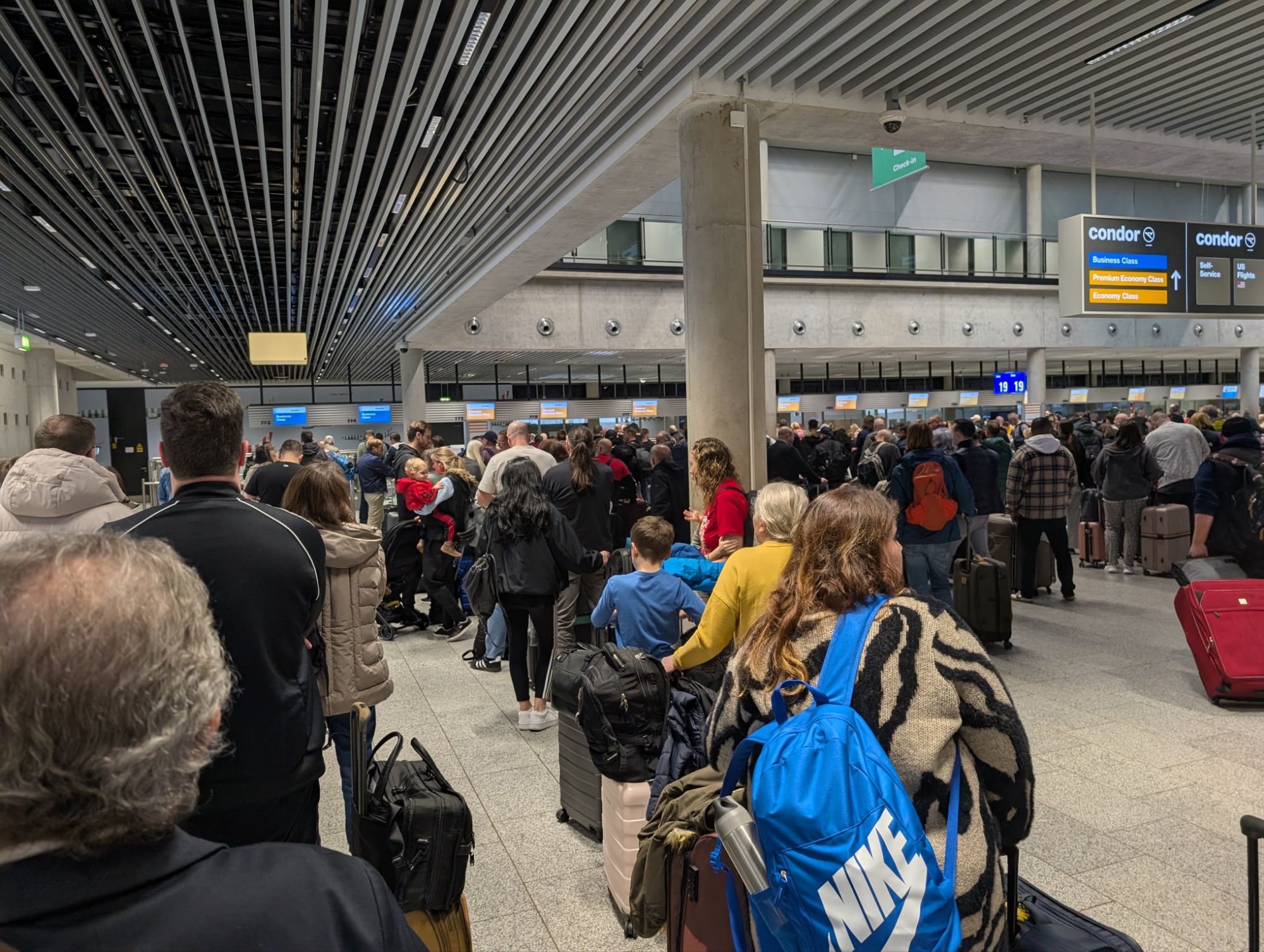
Reports from major hubs such as Paris-Charles de Gaulle (CDG) and smaller regional airports indicate that the transition has been fraught with logistical hurdles. During the initial implementation phase, wait times for passport control have occasionally exceeded four hours.
- Arrivals: The setup of the initial biometric profile is time-consuming, creating bottlenecks at immigration halls that were not designed for such lengthy processing per passenger.
- Departures: Similar registration requirements for first-time exits have led to missed flights, as travelers underestimate the time required to clear security and border checks.
Travelers are advised to arrive at airports significantly earlier than the standard three-hour window and to monitor real-time border wait statistics where available. The impact is expected to be most severe during the peak summer travel season, as millions of tourists encounter the system for the first time simultaneously.
Leadership Transition at Air France-KLM Flying Blue
In a move that has signaled a shift toward consumer-centric program management, Air France-KLM has appointed Tiffany Funk as the new head of its Flying Blue loyalty program. Funk is a well-known figure in the loyalty industry, having previously held senior roles at the travel publication One Mile at a Time and the award search platform point.me.
Strategic Context
The appointment of an industry expert from the consumer advocacy and technical search side is a rarity in the airline world, where loyalty programs are typically led by career airline executives. Funk’s background suggests that Flying Blue may be looking to enhance its user experience, simplify complex redemption structures, and improve the "win-win" dynamic between the airline and its frequent flyers.
Program Background
Flying Blue has recently been aggressive in its expansion, frequently offering transfer bonuses from major credit card partners and introducing "Promo Rewards" that provide significant discounts on award travel. Funk’s expertise in "encyclopedic" loyalty knowledge is expected to be leveraged to maintain Flying Blue’s position as a leading program within the SkyTeam alliance, particularly as airlines face increasing pressure to devalue miles in the face of rising operational costs.
Expansion of Financial Partnerships: Amex and ALL Accor
American Express has expanded its Membership Rewards ecosystem in the United Kingdom by adding ALL Accor Live Limitless as a transfer partner. This partnership allows cardholders to convert their Amex points into Accor points, which can then be used for stays at brands such as Fairmont, Sofitel, Raffles, and Novotel.
Data and Valuation Analysis
The transfer ratio established for the UK market is 3:1 (three Membership Rewards points for one ALL Accor point). To determine the economic viability of this transfer, one must look at the fixed value of Accor points:
- Accor points are valued at a fixed rate of 2,000 points = €40.
- This equates to 2 Euro cents per point (approximately 2.15 US cents).
- At a 3:1 ratio, a traveler is effectively redeeming Amex points for roughly 0.72 US cents each.
Comparative Value in the US Market
While the partnership has not yet been extended to the United States, financial analysts suggest that a 3:1 ratio would be poorly received by American consumers. For example, holders of the Charles Schwab Platinum Card can currently redeem Membership Rewards points for a 1.1 cent-per-point deposit into a brokerage account. Under the UK-style Accor ratio, US members would be losing nearly 50% of their points’ cash-equivalent value. For the partnership to be successful in the US, a more competitive ratio or significant transfer bonuses would likely be required.

Payment Technology and Reward Optimization at Costco
Retail giant Costco has updated its mobile application to allow the integration of any Visa credit card for in-store payments via QR code. While primarily marketed as a convenience feature for members, the update has revealed an unintended benefit for "reward optimizers"—those who strategically use credit cards to maximize points and cash back.
The "Online" Coding Side Effect
Early data from consumer transactions indicates that purchases made in-store using the Costco app’s QR code functionality are frequently coding as "online sales" rather than "warehouse" or "wholesale club" sales. This distinction is critical because several popular credit cards offer higher reward tiers (e.g., 3% or 3 points per dollar) for online shopping, whereas warehouse clubs are often excluded from bonus categories or relegated to a 1% base rate.
Implications for Consumer Behavior
This technological shift represents a growing trend where the line between physical and digital commerce is blurred. If Costco continues to process app-based payments as online transactions, it could lead to a significant shift in how members pay for high-ticket items. However, payment networks and banks often update their Merchant Category Codes (MCCs) to close such "loopholes" once they reach a certain volume of use. For the time being, this development provides a temporary advantage for tech-savvy shoppers.
Conclusion and Broader Impact
The developments across Hyatt, the European border authorities, Flying Blue, American Express, and Costco illustrate a travel and loyalty environment in a state of flux. The trend toward property-level autonomy in hotel loyalty programs (as seen with Hyatt) suggests that "guaranteed" benefits may become increasingly rare. Simultaneously, the digitalization of borders in Europe serves as a reminder that technological advancement often comes with initial procedural friction.

For the consumer, these changes necessitate a more proactive approach to travel planning. Navigating the modern travel landscape now requires not only an understanding of biometric regulations and airport logistics but also a keen eye on the evolving terms of loyalty contracts and the technical nuances of payment processing. As 2026 progresses, the industry will likely see further consolidation of these trends, with data-driven loyalty management and biometric security becoming the new global standards.




 Anjar Salim
 Chandra Hamzah
 Tatiana Tantri Indah Sari
 Lukman Taruna Persada Ramadan
