
 Budi Mulyono
The modern corporate landscape demands a level of mobility that often conflicts with the traditional requirements of professional attire. For the executive navigating a three-day, two-city itinerary, the logistical challenge centers on a single, high-stakes variable: the suit. In an era where airline reliability is frequently scrutinized, the decision to check a garment bag represents a calculated risk that many seasoned travelers are no longer willing to take. Industry data suggests that the shift toward "carry-on only" travel is not merely a preference for convenience but a strategic move to mitigate the professional and psychological costs of baggage-handling failures.
The Strategic Shift to Carry-On Efficiency
The transition from checked luggage to a refined carry-on strategy is rooted in the volatility of global aviation logistics. According to the SITA 2023 Baggage IT Insights report, the rate of mishandled baggage surged globally as travel volumes returned to pre-pandemic levels, with millions of bags delayed, damaged, or lost annually. For a business professional, a lost garment bag in a hub like Atlanta or London on the morning of a board meeting is more than an inconvenience; it is a failure in professional preparation.
Consequently, the framework for the "three-day, one-suit" trip has evolved. This strategy relies on maximizing the utility of the overhead bin while ensuring that high-value wool garments remain pristine. The core of this methodology lies in three specific areas: the selection of the luggage format, the technical execution of the pack, and the post-landing restoration process.
Evaluating Luggage Architecture: The Garment Duffel vs. Traditional Formats
The foundational decision of any business trip is the choice of luggage format. Traditionally, travelers have relied on two standards: the folding garment bag and the upright roller with a built-in "suiter" compartment. However, a third option—the garment duffel hybrid—has emerged as the preferred tool for frequent flyers.
Traditional garment bags, while effective at keeping clothes flat, are often cumbersome in the narrow aisles of modern aircraft and occupy a disproportionate amount of space in the overhead bin. Conversely, many carry-on rollers feature suiter sections that are structurally too shallow for heavy wool suits, leading to compression wrinkles that are difficult to remove without professional pressing.

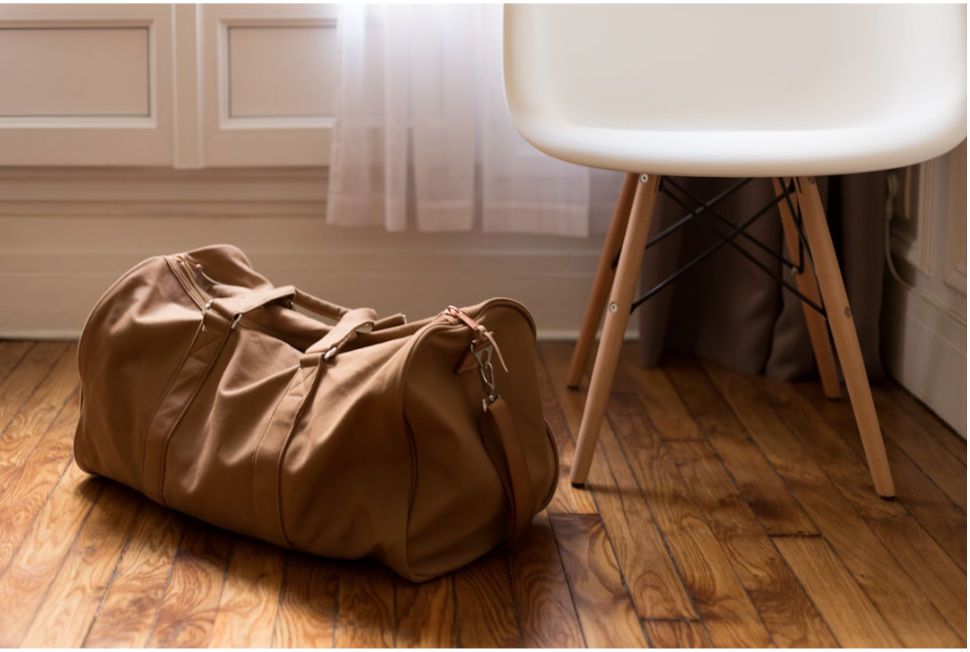
The garment duffel hybrid addresses these deficiencies by utilizing a wrap-around design. In this configuration, the suit is laid flat inside a garment sleeve that then zips up to form the outer shell of a duffel bag. This allows the suit to maintain a larger radius curve rather than a sharp fold, significantly reducing the mechanical stress on the fabric. Once the "shell" is formed, the interior cavity remains available for shoes, toiletries, and secondary clothing layers. This dual-purpose architecture allows the professional to commit their entire carry-on allowance to a single, efficient unit that fits within standard TSA and international sizing constraints.
Technical Execution: The Chronology of the Perfect Pack
Expert packing is less about the volume of items and more about the sequence and orientation of the garments. Professional clothiers and travel experts agree that the "inside-out shoulder" technique is the most critical maneuver for preserving the silhouette of a jacket.
The Suit Preparation Phase
The process begins with the suit laid flat on a clean surface. The trousers should be folded once at the knee, with the pressed creases aligned perfectly to prevent "railroad tracks"—the appearance of multiple, unintended creases. The jacket requires a more sophisticated approach: by tucking one shoulder inside-out and nesting the other shoulder into it, the traveler ensures that the structural padding faces outward. This protects the delicate lapels and the chest canvas from being crushed by the weight of other items.
The "Soft Stuff" Integration
Once the suit is secured within the bag’s primary garment layer, the focus shifts to the internal cavity. For a three-day duration, the standard requirement includes two dress shirts, one casual shirt, a gym kit, and essential toiletries.
The most efficient method for these items is the "roll" technique. Rolling soft cotton items such as underwear, socks, and t-shirts prevents the sharp edges that cause wrinkles and allows these items to be tucked into the peripheral corners of the bag. This creates a stable base that prevents the suit layer from shifting during transit. Dress shoes should be placed in individual dust bags and stuffed with socks to maintain their shape, positioned at the bottom of the bag to keep the center of gravity low.
The Wardrobe Math of Professional Versatility
Efficiency in travel is a function of color theory and fabric selection. For a one-suit trip, the objective is to maximize "mix-and-match" potential. Industry analysts at BCD Travel emphasize that neutral tones—specifically charcoal gray and navy blue—provide the highest ROI for business travelers.

A charcoal suit functions as a neutral canvas that pairs seamlessly with white, light blue, or subtly patterned shirts. This versatility allows the traveler to wear the suit jacket with chinos for a "business casual" dinner on night one, the full suit for the primary meeting on day two, and the trousers with a knit polo for the return flight on day day three. By adhering to a strict palette, the traveler eliminates the need for multiple belts or pairs of shoes, further reducing the weight and volume of their luggage.
Durability Standards and Hardware Integrity
For the professional flying 30 to 50 segments per year, the lifespan of a bag is determined by its hardware rather than its fabric. The stresses of the overhead bin—constant friction, compression, and rapid temperature changes—quickly expose the weaknesses in consumer-grade luggage.
High-performance garment bags are typically characterized by:

- Solid Brass or YKK Zippers: Plastic zippers are prone to stripping when a bag is packed to capacity. Solid metal hardware provides the tensile strength required for long-term use.
- Vegetable-Tanned Full-Grain Leather: Unlike "genuine leather" (which is a lower grade of bonded material), full-grain leather retains the natural strength of the hide. It absorbs the scuffs of travel, developing a patina rather than tearing.
- Lining Materials: Cotton canvas or high-denier nylon linings are preferred over polyester, as they are less likely to pill or snag on the metal hooks of hangers.
Investment-grade luggage often carries a repair warranty rather than a simple replacement window. A five-year or lifetime repair commitment from a manufacturer is a factual indicator of the product’s expected service life in a high-frequency travel environment.
The Ten-Minute Reset: Post-Landing Protocol
The strategy does not end at the hotel check-in desk. Even the most expertly packed suit will experience some degree of fiber compression. The "ten-minute reset" is a standard operating procedure for the elite traveler.
Upon entering the hotel room, the suit must be removed from the bag immediately. It should be transferred to a broad-shouldered wooden hanger; the thin wire hangers provided by most hotels are insufficient for supporting the weight of a wool jacket and can cause "dimpling" in the shoulders. The most effective non-mechanical way to remove travel creases is the steam method: hanging the suit in the bathroom while running a hot shower for five to ten minutes. The moisture relaxes the wool fibers, allowing the natural drape of the fabric to return.

Broader Implications: The Economics of Travel Stress
The move toward carry-on mastery is supported by more than just anecdotal convenience. Research published in the journal Mobilities identifies baggage handling and the fear of lost items as significant contributors to "traveler’s stress," a condition that negatively impacts cognitive performance and decision-making during business engagements.
By eliminating the baggage claim from the itinerary, the professional gains an average of 45 to 60 minutes per trip—time that can be used for rest, meeting preparation, or navigating ground transportation before the peak-hour rush. In the context of a high-level corporate career, the cumulative effect of these saved hours and reduced stress levels represents a significant competitive advantage.
The art of the three-day business trip is therefore a synthesis of engineering, textile science, and disciplined planning. When the bag format is correctly selected and the suit is packed with technical precision, the traveler ceases to be at the mercy of airline logistics and instead arrives at their destination with the professional poise required for high-stakes leadership.




 Anjar Salim
 Chandra Hamzah
 Tatiana Tantri Indah Sari
 Lukman Taruna Persada Ramadan
