
 Walid Sujud Trenggono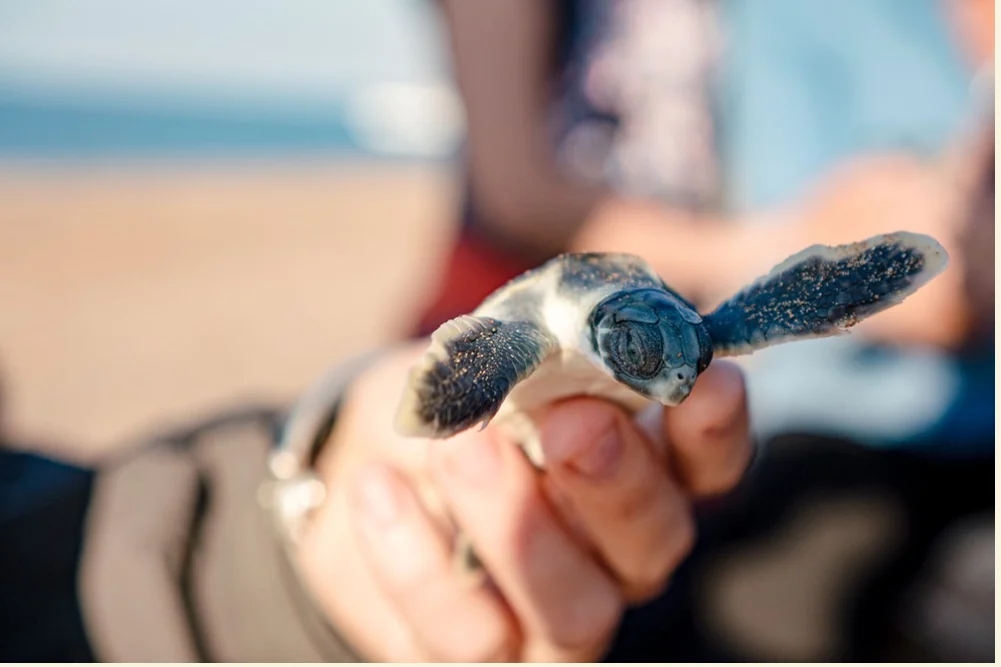
On the remote shores of Bare Sand Island, located approximately 60 kilometers southwest of Darwin in the Joseph Bonaparte Gulf, a critical biological survey is unfolding under the cover of darkness. As the winter solstice approaches, the island—known to its traditional owners as Ngulbitjik—becomes one of the most significant nesting sites for the flatback turtle (Natator depressus). Despite being the only sea turtle species endemic to Australian waters, the flatback remains one of the least understood marine reptiles in the world, currently classified as "data deficient" by both the Northern Territory government and the International Union for Conservation of Nature (IUCN) Red List.
For more than three decades, the all-volunteer research organization AusTurtle has established a seasonal base on this windswept slip of sand and reef. Their mission is to bridge the vast gap in scientific knowledge that prevents the implementation of robust federal and international protection strategies. As global temperatures rise and sea levels threaten low-lying rookeries, the work conducted on Bare Sand Island has moved beyond simple observation, becoming a race against time to document a species before its environment shifts irrevocably.
The Biological Enigma of the Flatback Turtle
The flatback turtle is unique among the world’s seven sea turtle species. While other turtles, such as the green or leatherback, undertake transoceanic migrations that span thousands of miles, the flatback remains primarily within the shallow, coastal waters of the Australian continental shelf. This restricted range makes them exceptionally vulnerable to local environmental changes and industrial developments along the northern Australian coastline.
Physically, Natator depressus is distinguished by its smooth, low-domed carapace with upturned edges, which gives the species its common name. Adult females typically weigh approximately 90 kilograms and measure nearly a meter in length. Their nesting habits are equally distinct; while most sea turtles lay large clutches of small eggs, the flatback lays a smaller clutch—averaging about 50 eggs—but these eggs are significantly larger than those of other species. This evolutionary strategy results in larger hatchlings that are theoretically better equipped to evade the myriad of predators awaiting them in the reef-choked waters of the Northern Territory.
However, the "lost years"—the period between a hatchling entering the sea and returning to its natal beach 30 years later to nest—remain a total mystery to science. Unlike other species that drift on oceanic currents, flatback hatchlings are believed to stay in coastal waters, yet their precise movements and survival rates during these three decades are unknown. Scientists currently estimate a survival rate of one in 1,000, though this figure is largely speculative due to the lack of longitudinal data.
Chronology of a Research Season: The Midnight Watch
The research season on Bare Sand Island begins in May and extends through September, peaking during the winter months when the "halcyon days" provide calmer seas and more predictable nesting conditions. The AusTurtle team operates on a rigorous schedule dictated by the tides, focusing on a four-hour window around high tide when the turtles utilize the elevated water levels to reach the soft dunes.
Each night, teams of scientists and trained volunteers patrol the shoreline. The process is meticulous: when a turtle emerges, researchers wait for the nesting process to begin before approaching. Once the female enters a "nesting trance" while laying her eggs, the team moves in to collect vital statistics. This includes measuring the carapace, checking for existing titanium flipper tags, and applying new tags to unidentified individuals.
Critically, researchers also insert temperature probes into the nests. Because sea turtles exhibit temperature-dependent sex determination (TSD), the heat of the sand dictates the gender of the offspring. "Hotter nests produce females, while cooler nests produce males," explains Andrew Raith, a veteran AusTurtle researcher. "With global temperatures on the rise, we are seeing a dangerous trend toward ‘feminization’ of the population. If the nests become too hot, they simply become unviable, leading to total brood failure."
At dawn, the focus shifts to rescue. Nests that hatched during the night are inspected. Often, the weight of the sand or the collapse of the egg chamber traps the final few hatchlings. Volunteers carefully excavate these "stragglers," which are then kept in a cool, dark environment until they can be safely released under the cover of darkness the following evening, minimizing their exposure to diurnal predators like gulls and birds of prey.
The Kenbi Land Claim and Traditional Stewardship
The conservation efforts on Bare Sand Island do not exist in a vacuum. In 2016, following the longest-running Aboriginal land claim in Australian history—spanning nearly four decades—the Kenbi clan was granted native title over the Cox Peninsula and surrounding islands, including Ngulbitjik. This legal recognition has integrated traditional ecological knowledge with Western scientific methodology.
The Kenbi people hold the island sacred and have a millennia-long history of harvesting turtle eggs as a primary protein source. To an outside observer, the sight of traditional owners digging up nests can seem at odds with conservation goals. However, researchers argue that this relationship is vital for the species’ long-term survival.
"These sea turtles are still here after thousands of years of Indigenous use," Raith notes. "Harvesting a few nests gives the island a tangible value to the local community. It ensures they remain the primary guardians of the land, protecting it from more destructive forces like illegal poaching or industrial encroachment. The impact of traditional harvesting is negligible compared to the existential threat posed by climate change."
The Kenbi clan visits the island throughout the winter, bringing younger generations to teach them about the land and its resources. This cultural continuity ensures that the "data" being collected by AusTurtle is supported by a community that has a vested, multi-generational interest in the health of the flatback population.
Environmental Threats and Ecosystem Implications
The urgency of the AusTurtle mission is underscored by the rapidly changing climate of Northern Australia. The Northern Territory’s flatback populations are particularly "trapped" by geography. Unlike southern species that may migrate further south to find cooler nesting beaches as the planet warms, the NT populations are already at the northernmost limit of the Australian continent. There is no "further north" for them to go to escape the heat.
The potential loss of the flatback turtle would represent more than the extinction of a single species; it would signal the collapse of a complex marine ecosystem. Sea turtles are considered "indicator species," meaning their health reflects the health of the broader environment. They play a crucial role in maintaining healthy seagrass beds and coral reefs. By grazing on algae and sponges, they prevent these organisms from overgrowing and suffocating coral structures. Furthermore, their eggs and hatchlings provide a significant nutrient source for terrestrial and marine predators alike.
"If flatbacks go, you weaken the entire ecosystem," Raith warns. "It won’t just be the turtles that disappear. It will be the invertebrates, the corals, and the apex predators that rely on them. Humans often see themselves as separate from this cycle, but we are inextricably linked to the stability of these marine environments."
Analysis: The Path from "Data Deficient" to Protected
The primary obstacle to securing federal protection for the flatback turtle is the current lack of a "threatened" status, which is stalled by the "data deficient" label. Without comprehensive data on population trends, mortality rates, and migratory paths, policymakers are hesitant to allocate the significant funding required for large-scale conservation zones.
The work at Bare Sand Island serves as the primary data pipeline for this cause. By documenting the return of specific females over decades, AusTurtle is proving site fidelity and population stability. The discovery that the same pairs of turtles often arrive at the beach simultaneously suggests a level of social communication and coordination previously unrecorded in sea turtles, hinting at a sophisticated evolutionary adaptation that warrants further study.
Furthermore, the "no-impact" nature of the Bare Sand Island camp serves as a model for sustainable field research. Operating without permanent structures, running water, or ground-disturbing equipment, the camp proves that high-level scientific data can be gathered without compromising the integrity of the nesting habitat.
Conclusion and Future Outlook
The future of the flatback turtle remains uncertain, balanced between the dedication of citizen scientists and the encroaching reality of a warming planet. The 2024 nesting season has shown consistent numbers, but the increasing nest temperatures recorded by the AusTurtle team remain a point of significant concern.
For the volunteers who spend their nights on the cold sands of Ngulbitjik, the reward is not found in comfort, but in the survival of the 43-gram hatchlings that scramble toward the sea each morning. As the research continues, the hope is that the "data deficient" tag will soon be replaced with a robust conservation framework, ensuring that Australia’s own sea turtle continues its silent, ancient trek across the northern shores for millennia to come.
Through the intersection of rigorous scientific inquiry, traditional Indigenous stewardship, and public volunteerism, Bare Sand Island stands as a beacon of hope for marine conservation in the 21st century. The mission now is to ensure that the "halcyon days" of the flatback turtle do not become a thing of the past.



 Anjar Salim
 Chandra Hamzah
 Tatiana Tantri Indah Sari
 Budi Mulyono

