
 Walid Sujud Trenggono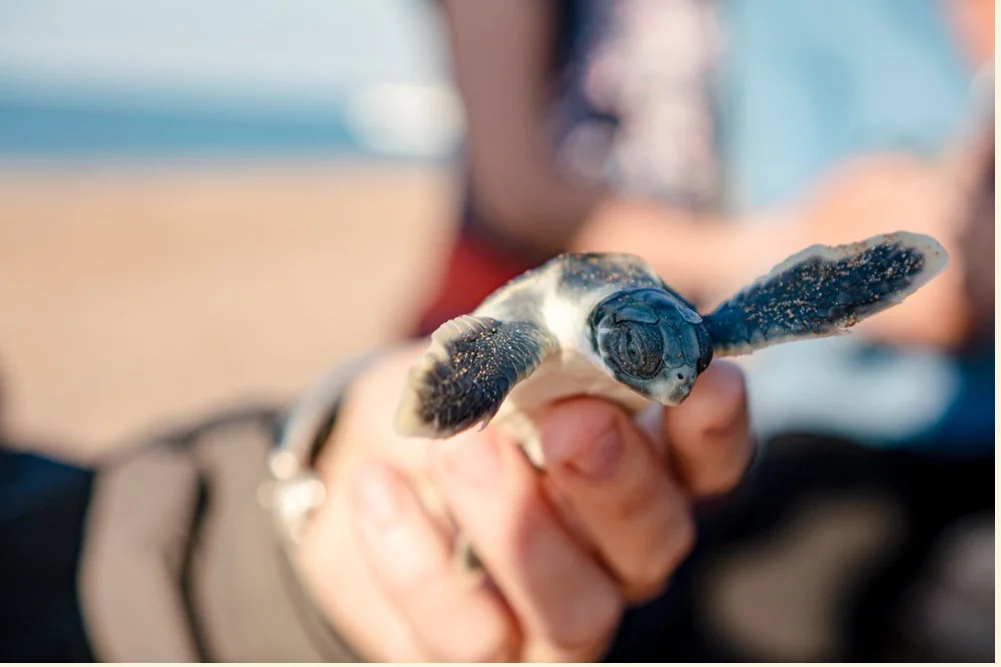
The midnight shoreline of Bare Sand Island, situated on the edge of the Joseph Bonaparte Gulf in the Northern Territory, serves as a critical theater for the survival of the flatback turtle (Natator depressus). Each winter, as the high tide approaches, these marine reptiles emerge from the inky waters to traverse the damp sands of the island’s rookery. Approximately 650 nesting females return annually to this specific stretch of coastline, representing a vital segment of a species that remains one of the most mysterious and understudied marine animals in Australian waters. Unlike other sea turtles that migrate across vast oceanic basins, the flatback is the only species endemic to the Australian continental shelf, making its conservation a matter of national environmental priority.
Despite their consistent presence, the flatback turtle is currently classified as "data deficient" by both the Northern Territory government and the International Union for Conservation of Nature (IUCN) Red List. This designation underscores a significant gap in marine biology; while the nesting habits of the turtles are well-documented on islands like Bare Sand, their lives during the three decades between hatching and their first return to nest—often referred to as the "lost years"—remain largely unknown. To address this knowledge gap, the all-volunteer organization AusTurtle has maintained a research presence on the island for over 30 years, gathering data intended to move the species toward a more definitive conservation status.
Biological Profile of the Natator Depressus
The flatback turtle derives its scientific name, Natator depressus, from its uniquely flattened carapace, which distinguishes it from the more rounded shells of the green or loggerhead turtles. Adult flatbacks typically weigh around 90 kilograms and possess a smooth, olive-grey shell with edges that upturn slightly. Their nesting behavior is characterized by a "safety in numbers" strategy, where clusters of females land simultaneously to minimize the risk of predation.
One of the most remarkable aspects of the flatback’s biology is the size of its eggs. While they lay fewer eggs per clutch than other sea turtles—averaging approximately 50 per nest—the eggs themselves are the largest of any sea turtle species. This evolutionary trade-off results in larger, more robust hatchlings that are theoretically better equipped to survive the immediate threats of the reef, such as predatory fish and birds. However, scientists estimate the survival rate remains a precarious one-in-1,000, a figure that highlights the fragility of the population despite their specialized evolutionary traits.
The AusTurtle Research Initiative and Methodology
The AusTurtle research camp on Bare Sand Island operates as a no-impact, Spartan facility designed to facilitate intensive data collection during the peak nesting months of June and July. The research team, comprised of marine biologists, students, and citizen scientists, works in shifts that coincide with the nocturnal tidal windows. Their methodology is rigorous and non-invasive, ensuring that the nesting process is not interrupted.
Key data points recorded by the team include:
- Carapace Measurements: Tracking the growth and physical health of returning females.
- Flipper Tagging: Identifying individual turtles to monitor nesting frequency and site fidelity.
- Nest Temperature Monitoring: Utilizing digital probes to record the internal heat of the egg chambers, which is a critical factor in determining the sex of the hatchlings.
- Hatchling Success Rates: Conducting post-hatch excavations to rescue "stragglers"—hatchlings trapped beneath collapsed sand—and recording the ratio of successful births to unfertilized eggs.
This longitudinal study is essential for understanding how environmental variables affect reproductive success. By tracking the same individuals over decades, AusTurtle has observed that certain turtle pairs often arrive at the beach simultaneously year after year, suggesting a level of social communication or shared migratory cues that scientists are only beginning to investigate.
Bare Sand Island: A Geographic and Cultural Nexus
Bare Sand Island, known as Ngulbitjik to its traditional owners, is a windswept isle characterized by high dunes and a lack of permanent vegetation. Located approximately 50 kilometers from Darwin, it remains uninhabited by humans for most of the year, save for the seasonal presence of researchers and occasional anglers. The ecosystem is patrolled by apex predators, most notably a territorial three-legged saltwater crocodile known to locals as Graham, who preys on seabirds and turtles along the reef’s edge.
The island’s history is a blend of military utility and Indigenous heritage. Scattered gunnery shells remain on the island, a vestige of an era when it served as a military firing range. However, the cultural narrative of the island was officially recognized in 2016 when, following the longest-running Aboriginal land claim in Australian history, native title was awarded to the Kenbi clan.
For the Kenbi people, Ngulbitjik is a sacred site. Traditional beliefs hold that the island’s seasonal monsoonal pools are spiritually connected to waterholes on the mainland. This cultural connection includes the traditional practice of egg harvesting. Kenbi elders and youth visit the island during the winter to harvest turtle eggs, a source of protein that has been utilized for millennia.
The Intersection of Tradition and Conservation
The practice of Indigenous egg harvesting often sparks debate among conservationists, yet researchers on Bare Sand Island argue that the two interests are not mutually exclusive. Andrew Raith, a veteran researcher with AusTurtle, suggests that the flatback population’s survival rate is largely unaffected by traditional hunting. According to Raith, the long-term presence of both the turtles and the Kenbi people suggests a sustainable equilibrium.
"These people have been using this resource for millennia, and the sea turtles are still here," Raith noted. He argues that by harvesting a limited number of nests, the Kenbi people maintain a vested interest in the health of the turtle population. This "value-based" conservation ensures that the traditional owners remain the primary stewards of the land, protecting the rookery from more invasive threats such as industrial development or unregulated tourism.
Environmental Threats and the Indicator Species Concept
While traditional harvesting is viewed as a manageable factor, the broader implications of global warming present a much more existential threat to the flatback turtle. As an "indicator species," the health of the flatback population reflects the overall stability of the marine ecosystem, including the health of coral reefs, seagrasses, and invertebrate populations.
Climate change poses a three-pronged threat to the species:
- Habitat Loss: Rising sea levels threaten to inundate low-lying nesting beaches like Bare Sand Island, effectively drowning nests before they can hatch.
- Temperature-Dependent Sex Determination (TSD): The sex of a turtle hatchling is determined by the temperature of the sand during incubation. Higher temperatures result in a higher percentage of females. Sustained increases in global temperatures could lead to a "feminization" of the population, where a lack of males makes the population reproductively unviable.
- Migratory Constraints: Unlike species in more temperate zones, the Northern Territory flatbacks are located at the northernmost extent of their range. They cannot migrate further north to escape rising temperatures, and their specialized nesting requirements prevent them from easily relocating to cooler southern shores.
If the flatback population collapses, the ripple effects would be felt throughout the Joseph Bonaparte Gulf. The loss of these turtles would weaken the ecosystem’s ability to regulate algae and sponge growth on reefs, potentially leading to a decline in biodiversity that would affect both commercial fishing and local tourism.
Conclusion and Future Outlook
The work being conducted on Bare Sand Island is a race against time to gather the necessary data to implement more robust federal protections for the flatback turtle. By combining rigorous scientific inquiry with respect for Indigenous land rights, the AusTurtle program provides a model for modern conservation in sensitive environments.
For the volunteers who dedicate their time to the island, the reward is found in the small victories: the recording of a new nesting female, the rescue of a trapped hatchling, and the continued cooperation with the Kenbi traditional owners. However, the long-term survival of the Natator depressus will ultimately depend on global efforts to mitigate the impacts of climate change and a continued commitment to funding the "insomniac science" required to understand this elusive Australian icon.
As the 2024 nesting season concludes, the data collected will be added to a three-decade-long database, providing a clearer picture of a species that, while currently "data deficient," is undeniably central to the heritage and health of Australia’s northern waters. For those interested in the preservation of marine biodiversity, Bare Sand Island remains a beacon of hope and a critical laboratory for the future of the flatback turtle.




 Anjar Salim
 Chandra Hamzah
 Tatiana Tantri Indah Sari
 Budi Mulyono
 Lukman Taruna Persada Ramadan
