
 Walid Sujud Trenggono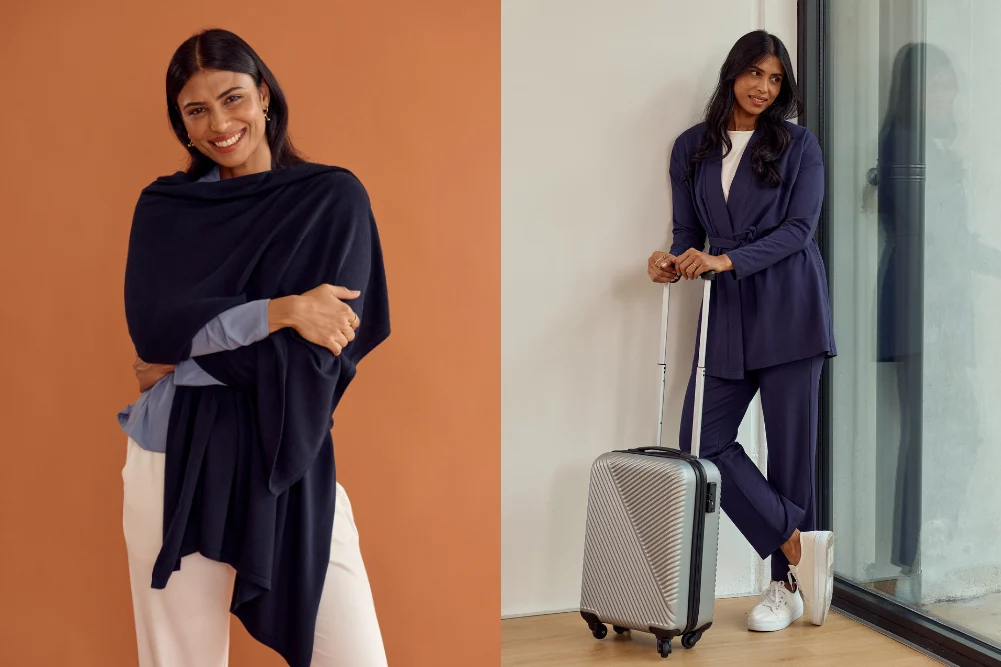
The physical and psychological toll of long-haul travel has long been a point of contention for frequent flyers, yet a shifting paradigm in the textile industry is prioritizing passenger wellness through the strategic selection of apparel. As global air traffic continues its post-pandemic recovery—with the International Air Transport Association (IATA) reporting that total traffic in 2024 is expected to reach historic highs—the demand for specialized travel clothing has surged. Among the leaders in this niche sector is the Australian brand Bamboo Body, which has spent nearly two decades refining the intersection of comfort, sustainability, and aesthetic polish. The necessity of a well-planned travel outfit is no longer viewed merely as a matter of vanity but as a critical component of travel health, circulation management, and thermal regulation.
The Physiological Challenges of High-Altitude Transit
To understand the necessity of specialized travel attire, one must first examine the environment of a modern aircraft cabin. Commercial jets are typically pressurized to an equivalent altitude of 6,000 to 8,000 feet, an environment characterized by significantly lower humidity levels—often dropping below 20 percent. This dry air, combined with fluctuating temperatures that can swing from stifling during boarding to near-freezing during mid-flight cruise phases, places immense stress on the human body’s homeostatic mechanisms.
Furthermore, prolonged immobility in cramped seating poses risks to circulatory health. Medical professionals have long warned of the "economy class syndrome," or deep vein thrombosis (DVT), which can be exacerbated by restrictive clothing that impedes blood flow. Consequently, the transition toward garments with stretchy waistbands, non-restrictive silhouettes, and moisture-wicking properties represents a logical evolution in passenger behavior. For nearly 20 years, Bamboo Body has addressed these specific challenges by utilizing bamboo-derived viscose, a textile celebrated for its unique ability to manage the microclimate between the fabric and the skin.
A Chronology of Travel Fashion: From Formality to Functionalism
The history of travel attire has undergone a radical transformation over the last half-century. In the "Golden Age" of flight during the 1950s and 60s, air travel was a high-status activity that demanded formal wear, including suits, ties, and high-heeled shoes. However, as aviation became democratized and flight durations increased with the advent of long-haul wide-body jets, the impracticality of formal wear became evident.
By the early 2000s, the "athleisure" movement began to take hold, but it often lacked the professional polish required for travelers moving directly from an airport to a business meeting or a high-end hotel. This gap in the market led to the founding of brands like Bamboo Body in Australia. Since its inception approximately 18 years ago, the brand has focused on a "comfort first" philosophy that does not sacrifice style. The timeline of the brand’s growth mirrors a broader global trend: the rise of the "conscious traveler" who demands both performance and environmental responsibility from their wardrobe.
The Science of Bamboo Textiles in Transit
The selection of bamboo as a primary textile for travel is supported by significant material science data. Bamboo fiber is naturally porous, which allows for superior breathability compared to synthetic polyesters or heavy cottons. This porosity facilitates "capillary action," drawing moisture away from the skin and allowing it to evaporate quickly—a vital feature for passengers moving between different climates.
Moreover, bamboo fabric is known for its thermal-regulating properties. In a journalistic analysis of textile performance, bamboo consistently ranks higher than cotton for its ability to keep the wearer cool in heat and warm in cold environments. This is achieved through the cross-section of the bamboo fiber, which is filled with various micro-gaps and micro-holes, providing better ventilation and moisture absorption. For a traveler, this means a single outfit can theoretically handle the humidity of a car park, the air-conditioned chill of a terminal, and the unpredictable temperatures of a 14-hour international flight.
Strategic Layering: The Travel Set and Wrap System
Industry experts suggest that the most effective way to manage travel-induced stress is through a modular clothing system. The "Travel Set" concept, championed by Bamboo Body, involves coordinated pieces that provide a uniform aesthetic while offering the flexibility of pajamas. These sets typically feature relaxed silhouettes and elasticized components that do not pinch or bind during long periods of sitting.
A critical component of this modular system is the "Travel Wrap." Data from passenger surveys frequently cite cabin temperature as a primary source of discomfort. Standard airline blankets are often criticized for being too thin or of questionable hygiene. A generously sized wrap, particularly one blended with recycled cashmere, serves a multi-functional purpose. It functions as a scarf, a shoulder drape, or a full-body blanket. By incorporating recycled materials, brands are also responding to the growing consumer segment that prioritizes the circular economy—a market expected to reach $700 billion by 2030 according to some economic forecasts.
Addressing the "Small Details": The Role of Circulation and Extremities
While much attention is paid to primary garments, the role of accessories in travel health is frequently underestimated. The feet are often the first part of the body to experience discomfort during flight due to peripheral edema, or swelling caused by fluid retention. As shoes are often removed during long flights, the choice of hosiery becomes paramount.
Bamboo-blend socks provide a soft, non-irritating barrier that is gentle on skin that may become sensitive due to dehydration. Because bamboo has natural antimicrobial properties—often attributed to "bamboo kun," a natural bio-agent—it helps in maintaining foot hygiene in the enclosed environment of a plane. Journalistic observation of frequent flyer habits indicates an increasing shift toward packing "cabin kits" that include these specialized socks, emphasizing a holistic approach to transit wellness.
Market Implications and Consumer Sentiment
The shift toward high-quality, sustainable travel wear is reflective of a broader change in the retail landscape. Modern consumers are increasingly moving away from "fast fashion" in favor of "investment pieces" that offer longevity. Bamboo Body’s tenure in the market suggests a sustained demand for clothing that can withstand the rigors of frequent washing and heavy use without losing shape or softness.
Market analysts note that the "travel essentials" category is one of the fastest-growing segments in the apparel industry. This growth is driven by a demographic that values "frictionless travel"—the idea that every element of a journey, from check-in to clothing, should contribute to a seamless experience. In statements regarding the philosophy of travel design, proponents of the brand emphasize that the goal is to arrive "feeling like yourself," a phrase that encapsulates the desire to mitigate the disheveled appearance and physical stiffness traditionally associated with long-distance movement.
Broader Impact: Sustainability in the Skies
The environmental impact of the travel industry is under constant scrutiny, and this extends to the products travelers carry. Bamboo is widely regarded as one of the most sustainable crops in the textile industry; it grows rapidly, requires no pesticides, and uses significantly less water than cotton. By opting for bamboo-based travel wardrobes, consumers are indirectly reducing the environmental footprint of their journey.
Furthermore, the integration of recycled cashmere and other eco-friendly blends into travel wraps and sets aligns with global initiatives to reduce textile waste. As airlines themselves move toward carbon neutrality and sustainable aviation fuels, the "green traveler" is matching these institutional efforts with personal choices in sustainable outfitting.
Conclusion: The Future of the Passenger Experience
As we look toward the future of global mobility, the distinction between "activewear," "sleepwear," and "streetwear" continues to blur. The modern travel outfit, as exemplified by the collections at Bamboo Body, represents a sophisticated hybrid designed for the unique rigors of the 21st-century journey. By focusing on the science of textiles, the physiology of the human body in flight, and the logistical needs of the traveler, the industry is successfully transforming the airport terminal from a place of endurance into a space of managed comfort.
Ultimately, the secret to arriving at a destination feeling refreshed is not found in a single product, but in a comprehensive strategy of layering, material selection, and health-conscious design. As the travel industry continues to evolve, the emphasis on "travel-ready comfort" is set to remain a permanent fixture of the international passenger experience, ensuring that the journey is as considered as the destination itself.



 Anjar Salim
 Dwi Wanna
 Budi Mulyono
 Lukman Taruna Persada Ramadan
 Chandra Hamzah
 Gabriela Annisa