Gabriela Annisa
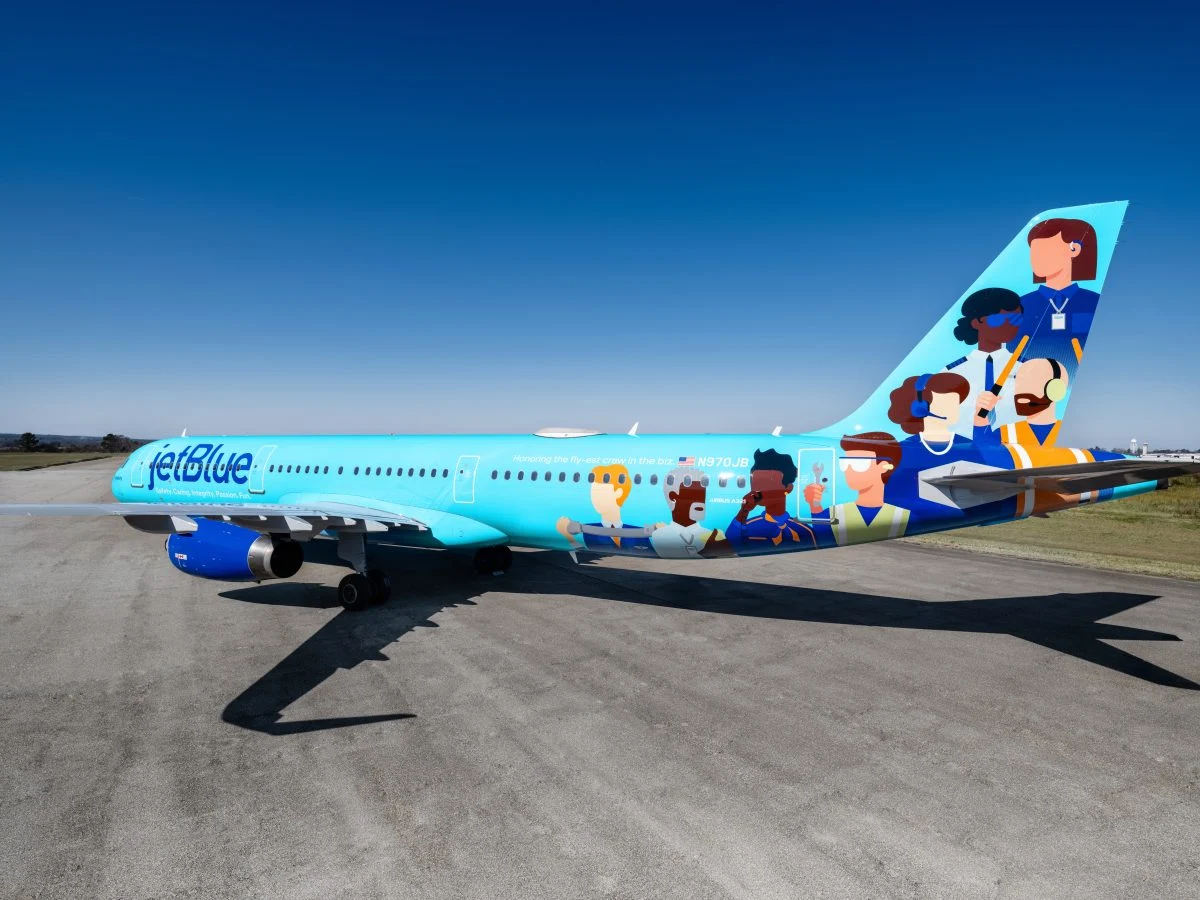
The cacophony surrounding U.S. airline consolidation, once a dominant theme in industry discussions, appears to have muted considerably, replaced by a new chorus of skepticism from the very executives once thought to be potential players. This shift was starkly evident at the recent Bernstein investor conference, a key annual forum where airline CEOs typically offer insights into strategic directions. Instead of fueling merger speculation, top executives poured cold water on the idea, suggesting that the era of significant airline takeovers might be drawing to a close, at least for the foreseeable future. The most pointed remarks came from United Airlines CEO Scott Kirby, who characterized the economics of acquiring JetBlue Airways as "mathematically close to impossible," a statement that reverberated through the investment community and airline boardrooms alike.
Southwest Airlines CEO Bob Jordan echoed a similar sentiment, downplaying the likelihood of major dealmaking. However, Jordan’s remarks were notable for another reason: he hinted at a significant strategic evolution for Southwest, traditionally known for its no-frills, point-to-point model. His allusions to a future involving premium amenities such as airport lounges, expanded long-haul flying, and potentially even a first-class offering signal a profound departure from the airline’s long-held operational philosophy. These candid admissions from two of the industry’s most influential leaders reveal a rapidly shifting U.S. airline landscape, one where organic growth, strategic adjustments, and navigating regulatory headwinds are taking precedence over ambitious mergers and acquisitions.
The End of an Era? Consolidation Fatigue and Regulatory Scrutiny
For decades, the U.S. airline industry has undergone successive waves of consolidation, transforming a fragmented landscape into one dominated by a handful of major players. Following deregulation in 1978, the industry experienced significant financial instability, leading to numerous bankruptcies and a drive towards mergers aimed at achieving economies of scale, rationalizing networks, and enhancing pricing power. Landmark deals like Delta-Northwest (2008), United-Continental (2010), Southwest-AirTran (2011), and American-US Airways (2013) reshaped the competitive environment, reducing the number of legacy carriers from over a dozen to just four primary network airlines.
However, the tide began to turn with heightened antitrust scrutiny from the Department of Justice (DOJ). The Biden administration has adopted a particularly aggressive stance against consolidation across various sectors, viewing it as detrimental to competition and consumer welfare. This posture became acutely relevant to the airline industry with two high-profile challenges involving JetBlue.
First, in September 2021, the DOJ filed a lawsuit to block the Northeast Alliance (NEA) between American Airlines and JetBlue. The NEA, formed in July 2020, involved extensive codesharing and coordination of routes and schedules in the Northeast U.S., particularly from Boston and New York. The DOJ argued that this alliance constituted a de facto merger that would eliminate competition and harm consumers. In May 2023, a federal judge sided with the DOJ, ordering the dissolution of the NEA, a significant blow to both airlines’ strategic plans and JetBlue’s attempt to expand its presence in key markets.
Even more impactful was JetBlue’s pursuit of Spirit Airlines. Following a protracted bidding war with Frontier Airlines, JetBlue announced in July 2022 its intention to acquire Spirit for approximately $3.8 billion, aiming to create the fifth-largest airline in the U.S. JetBlue argued the merger would create a more robust challenger to the dominant "Big Four." However, the DOJ again intervened, filing an antitrust lawsuit in March 2023 to block the acquisition, asserting it would lead to higher fares and reduced choices, particularly for budget-conscious travelers. In January 2024, a federal judge once more sided with the DOJ, ruling against the merger. JetBlue and Spirit subsequently terminated their merger agreement in March 2024, with JetBlue agreeing to pay Spirit a termination fee.
These regulatory defeats have had a profound impact on the industry’s appetite for further consolidation. They sent a clear message that large-scale mergers face an extremely high bar for approval under the current administration, making potential acquirers wary of investing significant capital and resources into deals that are likely to be challenged and ultimately blocked.
JetBlue’s Conundrum: The "Mathematically Impossible" Equation
Scott Kirby’s assertion that buying JetBlue is "mathematically close to impossible" encapsulates a complex web of financial, operational, and strategic challenges. From a purely financial standpoint, an acquisition of JetBlue presents several hurdles:
- Valuation and Debt: JetBlue’s market capitalization, while fluctuating, has generally been under pressure due to its recent financial performance and strategic setbacks. As of recent filings, JetBlue’s enterprise value (market cap plus debt) makes it a significant undertaking. Any acquirer would inherit JetBlue’s substantial debt load, which stood at approximately $4.3 billion as of the end of 2023. Integrating this debt, especially for an airline with its own capital expenditure needs, would strain balance sheets.
- Profitability Challenges: JetBlue has struggled with consistent profitability in recent years. For the full year 2023, the airline reported a net loss of $310 million, following a $363 million loss in 2022. While the first quarter of 2024 showed an improvement, the path to sustained profitability remains challenging amidst high operating costs, competitive pressure, and its network adjustments post-NEA. An acquirer would be taking on an airline in a turnaround phase, requiring significant investment and time to integrate and optimize.
- Fleet Integration: JetBlue operates a predominantly Airbus fleet (A320 family and A220s), with a smaller presence of Embraer E190s being phased out. United, on the other hand, operates a dual fleet of Boeing and Airbus aircraft, but its narrowbody fleet is predominantly Boeing 737s. Integrating JetBlue’s Airbus fleet into a mostly Boeing narrowbody operation would incur immense costs related to pilot training, maintenance, spare parts, and operational standardization. This is a common hurdle in airline mergers, but the scale of JetBlue’s fleet relative to the potential benefits for United makes it particularly daunting.
- Network Overlap and Strategic Fit: While JetBlue offers valuable slots in constrained airports like New York JFK and Boston Logan, there is significant overlap with the networks of larger carriers. United already has a strong presence in these markets. An acquisition would necessitate rationalizing routes, potentially divesting assets, and navigating complex labor integration, all while facing intense regulatory scrutiny over market concentration.
- Labor Integration: Airline mergers are notoriously difficult due to the complexities of integrating different union contracts, seniority lists, and corporate cultures. JetBlue has a distinct culture and a mix of unionized and non-unionized workforces. Harmonizing these aspects with a large, heavily unionized legacy carrier like United would be a protracted and potentially disruptive process, often leading to years of post-merger integration challenges.
Given these factors, the "mathematics" for a potential acquirer simply do not add up to a compelling value proposition. The cost of acquisition, integration, and regulatory compliance, combined with JetBlue’s current financial state and fleet commonality issues, makes it an unappealing target for a large airline seeking accretive growth.
Southwest’s Strategic Evolution: Lounges, Long-Haul, and First Class?
Bob Jordan’s remarks at the Bernstein conference offered a fascinating glimpse into Southwest Airlines’ evolving strategy. For over five decades, Southwest has built its brand on a distinctive model: a single aircraft type (Boeing 737s), point-to-point flying, open seating, no baggage fees (initially), and a focus on low fares and operational simplicity. This model, pioneered by Herb Kelleher, made Southwest consistently profitable and a darling of the industry.
However, the market has changed dramatically. The traditional "Southwest effect" – where its entry into a market drove down fares – has diminished as legacy carriers have developed their own low-cost units and adapted their pricing strategies. In this new competitive landscape, Jordan’s hints at exploring new amenities signal a recognition that Southwest needs to differentiate itself beyond just low fares and friendly service.
The prospect of Southwest introducing:
- Lounges: This would be a radical departure. Airport lounges are a hallmark of legacy carriers, offering premium amenities and comfort to high-value customers, typically frequent flyers or those purchasing higher-fare tickets. Investing in lounge infrastructure would be a significant capital outlay and shift Southwest towards a more premium offering.
- Long-haul flying: While Southwest already operates some longer domestic routes, "long-haul" could imply transcontinental or even international expansion beyond its current network, potentially requiring different aircraft capabilities or a re-evaluation of its operational model.
- First Class: This would be the most profound change. Southwest’s open-seating, single-cabin configuration is central to its brand identity and operational efficiency. Introducing a distinct first-class cabin would necessitate a complete redesign of its aircraft interiors, a new fare structure, and a re-training of cabin crew, fundamentally altering the passenger experience and potentially alienating its traditional customer base.
These potential shifts suggest that Southwest is grappling with how to grow and remain competitive in a mature market. With its domestic network largely saturated and international expansion limited, the airline may be looking to extract more revenue from its existing customer base and attract a new segment of business and premium travelers who currently opt for legacy carriers. This strategy would align Southwest more closely with the "hybrid" model adopted by some other carriers, blending elements of low-cost operations with premium services. The challenge for Southwest will be to implement these changes without diluting its brand identity or alienating its loyal customer base, all while maintaining its renowned operational efficiency and low-cost structure.
Broader Implications for the U.S. Airline Industry
The collective sentiment from the Bernstein conference signals a potential pause, if not an outright end, to the cycle of major consolidation in the U.S. airline industry. This has several implications:
- Focus on Organic Growth: With external growth via mergers largely off the table, airlines will increasingly concentrate on organic strategies: optimizing existing networks, expanding into new markets with existing aircraft, enhancing customer experience, and improving operational efficiency. This could lead to more competitive innovations in service, technology, and route development.
- Intensified Competition: Without the prospect of reducing the number of major players, the existing competitive landscape among the "Big Four" (American, Delta, United, Southwest) and other significant carriers like Alaska Airlines and JetBlue will likely intensify. This could be beneficial for consumers in terms of pricing and service offerings, as airlines vie for market share.
- Strategic Differentiation: Airlines will need to find clearer ways to differentiate themselves. Southwest’s exploration of lounges and premium services is one example. Other carriers might focus on loyalty programs, specialized routes (e.g., international long-haul), or niche markets.
- Regulatory Power: The DOJ’s successful interventions against the NEA and the JetBlue-Spirit merger have established a powerful precedent. This reinforces the government’s role as a gatekeeper against market concentration, ensuring that future merger proposals will face an even higher level of scrutiny.
- JetBlue’s Independent Path: For JetBlue, the message is clear: its future lies as an independent entity. This necessitates a renewed focus on its standalone strategy, which CEO Joanna Geraghty has already outlined as "back to basics." This involves prioritizing profitability, debt reduction, and a disciplined approach to network planning, potentially retreating from unprofitable routes and focusing on its core markets. JetBlue’s recent performance has shown signs of stabilization, but the road to consistent profitability without a larger partner remains challenging.
A Look Ahead: JetBlue’s Strategy and the Market Response
JetBlue’s leadership has publicly committed to a standalone strategy following the termination of the Spirit merger. This involves a focus on improving operational reliability, enhancing the customer experience, and returning to sustained profitability. The airline has initiated a cost-cutting program aiming for $300 million in structural cost savings by 2024 and an additional $300 million in annual run-rate savings. It is also adjusting its network, cutting unprofitable routes and focusing on leisure-oriented destinations where its product can command a premium.
Analyst reactions to the Bernstein conference remarks were generally in line with the evolving market sentiment. Many have long viewed further U.S. airline consolidation as unlikely under the current regulatory environment. The explicit statements from Kirby and Jordan merely confirmed these suspicions, reinforcing the idea that airlines will need to innovate internally rather than grow externally. Investors are now keenly watching how JetBlue executes its "back to basics" strategy and how Southwest navigates its potential shift towards a more diversified service offering.
The current environment suggests a mature airline industry where major structural changes via M&A are highly improbable. Instead, the focus has shifted to internal optimization, strategic evolution, and navigating the complexities of an intensely competitive market under a watchful regulatory eye. The confessions at Bernstein were not just about JetBlue’s acquisition prospects, but a broader acknowledgment that the rules of the game have fundamentally changed for U.S. airlines.

 Chandra Hamzah
 Tatiana Tantri Indah Sari
 Budi Mulyono
 Anjar Salim