
 Budi Mulyono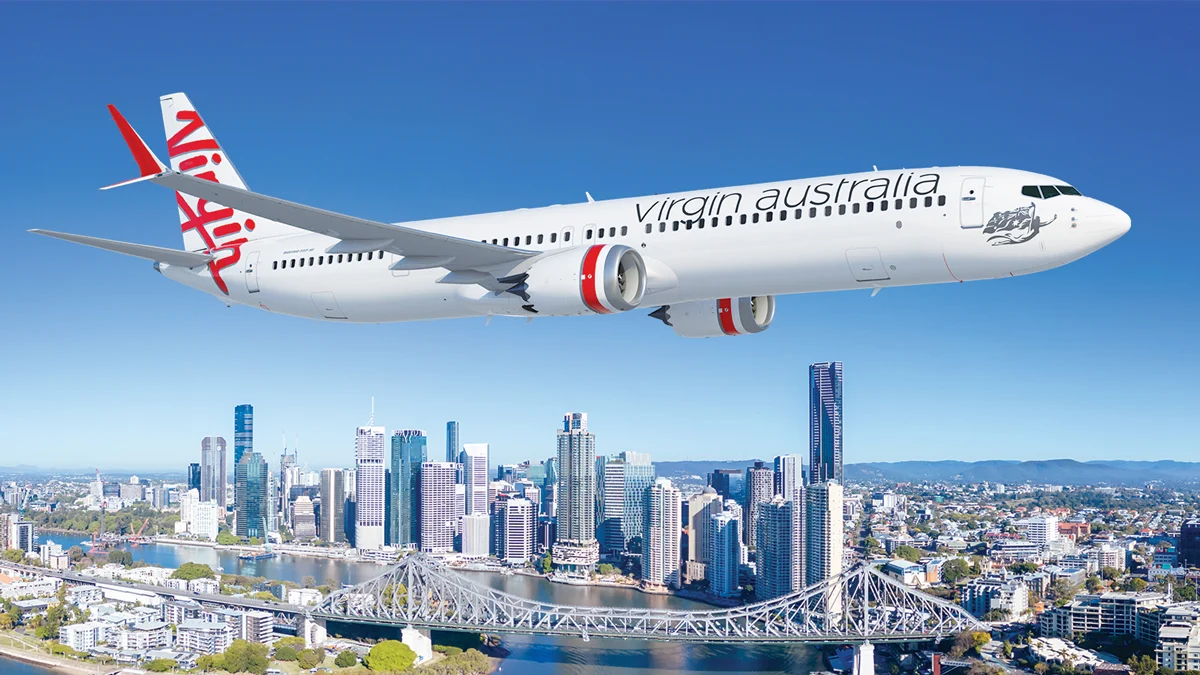
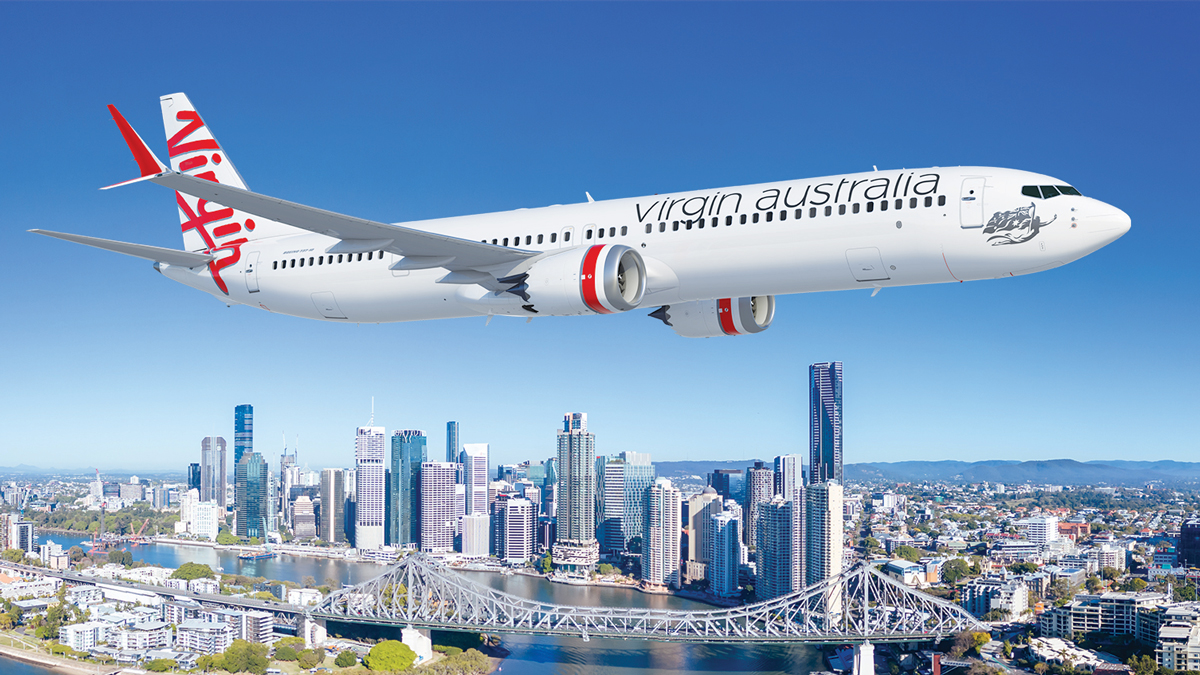
Virgin Australia has officially projected the arrival of its first Boeing 737-10 aircraft for the latter half of 2027, marking a significant milestone in the carrier’s long-term fleet renewal and modernization strategy. As the largest variant of the Boeing 737 MAX family, the 737-10 is poised to become the flagship of Virgin Australia’s narrow-body operations, offering increased seat capacity and improved operational flexibility across its domestic and short-haul international networks. The announcement provides a clearer timeline for the airline’s transition toward a more efficient, high-capacity fleet, even as the global aviation industry continues to navigate regulatory and supply chain challenges.
The 737-10 is designed to accommodate approximately 20 more passengers than the 737-8, which is currently the backbone of Virgin Australia’s modern fleet. This increase in density allows the airline to scale its operations on high-demand routes, such as the "Golden Triangle" connecting Sydney, Melbourne, and Brisbane, as well as longer transcontinental sectors like Perth to the East Coast. Furthermore, the additional seating capacity is expected to provide a competitive edge on leisure-heavy international routes to destinations such as Bali, Fiji, and Queenstown, where the ability to move larger volumes of passengers at a lower unit cost is critical to maintaining profitability.
Strategic Integration of the Boeing 737-10
Virgin Australia currently holds 10 firm orders for the Boeing 737-10. The decision to integrate this specific variant is rooted in the airline’s commitment to a single-type fleet strategy, which simplifies maintenance, crew training, and ground operations. By remaining within the 737 family, Virgin Australia avoids the significant capital expenditure and operational complexity associated with introducing an entirely new aircraft type from a different manufacturer.
The 737-10 offers a unique value proposition for Virgin Australia. It provides the capacity of a small wide-body or a large narrow-body while maintaining the commonality of the 737 platform. For an airline focused on efficiency under its current ownership by Bain Capital, the 737-10 represents a "growth without complexity" model. Pilots qualified on the 737-800 or the 737-8 can transition to the 737-10 with minimal additional training, and existing maintenance infrastructure can be utilized with few modifications.
Timeline of Fleet Renewal and Regulatory Milestones
The late-2027 delivery target reflects a realistic assessment of the current aerospace landscape. The Boeing 737-10 has not yet entered commercial service globally, as it remains in the midst of a rigorous certification process with the United States Federal Aviation Administration (FAA) and other international regulators. Boeing has faced intensified scrutiny over the last several years, leading to more stringent testing protocols for new variants.
Virgin Australia’s management has indicated that the 2027 timing is based on Boeing’s reported "positive progress" regarding these regulatory approvals. The chronology of Virgin Australia’s MAX program highlights a steady, albeit cautious, rollout:
- 2021–2023: Virgin Australia reconfirms its commitment to the MAX family following its restructuring and emergence from voluntary administration.
- July 2023: The airline welcomes its first Boeing 737-8, marking the beginning of the new era of fuel-efficient flying.
- 2024: The fleet of 737-8s grows to 19 aircraft, allowing for the retirement of older, less efficient 737-800 models.
- 2025–2026: A further seven 737-8s are scheduled for delivery, which will bring the total 737-8 fleet to 26 aircraft by the end of 2026.
- Late 2027: The anticipated arrival of the first 737-10, initiating the high-capacity phase of the fleet renewal.
Performance Data and Environmental Impact
A primary driver for the shift to the MAX family is the significant reduction in fuel consumption and carbon emissions. Virgin Australia has reported that its current fleet of 19 Boeing 737-8s has already resulted in a saving of approximately 30 million liters of fuel compared to the older-generation 737-800s. This fuel efficiency has translated into a reduction of more than 77,000 tonnes of CO2 emissions.
The 737-10 is expected to build upon these gains. Equipped with CFM International LEAP-1B engines and advanced technology winglets, the aircraft is roughly 20% more fuel-efficient per seat than the 737-800. For Virgin Australia, these metrics are not merely environmental; they are central to the airline’s "low-cost, high-value" business model. Lower fuel burn directly correlates to lower operating costs, allowing the airline to offer more competitive fares while insulating itself against the volatility of global jet fuel prices.
Competitive Landscape and Market Positioning
The announcement of the 737-10 delivery timeline comes at a pivotal moment for the Australian aviation market. Virgin Australia’s primary competitor, Qantas, is currently undergoing its own massive fleet overhaul, dubbed "Project Winton," which involves replacing its aging Boeing 737-800s with Airbus A321XLR and A220 aircraft.
While Qantas has opted for a multi-manufacturer approach, Virgin Australia’s loyalty to the Boeing 737 platform allows it to maintain a leaner operational structure. The 737-10 will compete directly with the Airbus A321neo in terms of capacity and range. By securing the 737-10, Virgin Australia ensures it can match the capacity of Qantas and Jetstar on high-traffic routes without sacrificing the benefits of fleet commonality.
Industry analysts suggest that the 2027 arrival of the 737-10 will also play a role in Virgin Australia’s long-rumored initial public offering (IPO). A modernized fleet with a clear growth trajectory and proven fuel efficiency makes the airline a more attractive proposition for potential investors. The 737-10 serves as a tangible symbol of the airline’s "Version 2.0" maturity—moving beyond the survival phase and into a phase of disciplined expansion.
Passenger Experience and Cabin Configuration
While the 737-10 is fundamentally an efficiency play, it also offers opportunities for Virgin Australia to refine its passenger experience. The airline has been progressively rolling out new cabin interiors across its MAX fleet, featuring larger overhead bins, redesigned seating, and in-seat power.
The additional fuselage length of the 737-10 provides the airline with several configuration options. It is likely that Virgin will maintain its two-class configuration, potentially increasing the number of Business Class seats or expanding its "Economy X" product, which offers extra legroom. The Boeing Sky Interior, standard on the MAX family, uses LED lighting and sculpted sidewalls to create a greater sense of space, a feature that will be particularly beneficial on the high-density 737-10.
Broader Implications for the Australian Aviation Sector
The delay in the 737-10’s arrival—shifting it into the late 2020s—highlights the ongoing challenges within the global aerospace supply chain. Airlines worldwide are grappling with delivery delays as Boeing and Airbus manage backlogs and regulatory hurdles. For Virgin Australia, the 2027 date suggests a conservative approach to scheduling, likely intended to avoid the mid-term disruptions that have plagued other carriers when new aircraft types fail to arrive on time.
Furthermore, the introduction of the 737-10 will have a ripple effect on the secondary aircraft market in Australia. As Virgin receives its new MAX aircraft, it will continue to phase out its older 737-800s. These aircraft may find new lives with regional carriers or cargo operators, or they may be returned to lessors, further shifting the age profile of the national fleet.
Conclusion
The confirmation of the late-2027 delivery for the Boeing 737-10 solidifies Virgin Australia’s path toward a more sustainable and economically viable future. While the aircraft is still several years away from touchdown on Australian runways, its eventual arrival will represent the culmination of a decade-long effort to transform the airline into a streamlined, competitive force.
By focusing on the 737-10’s superior seat-mile costs and environmental benefits, Virgin Australia is positioning itself to handle the projected growth in domestic and short-haul international travel. As the airline continues to receive its 737-8s over the next two years, the groundwork is being laid for the -10 to step in as the high-capacity workhorse of the fleet, ensuring that Virgin Australia remains a dominant player in the trans-Tasman and domestic skies for the next generation.



 Anjar Salim
 Lukman Taruna Persada Ramadan

 Chandra Hamzah