
 Budi Mulyono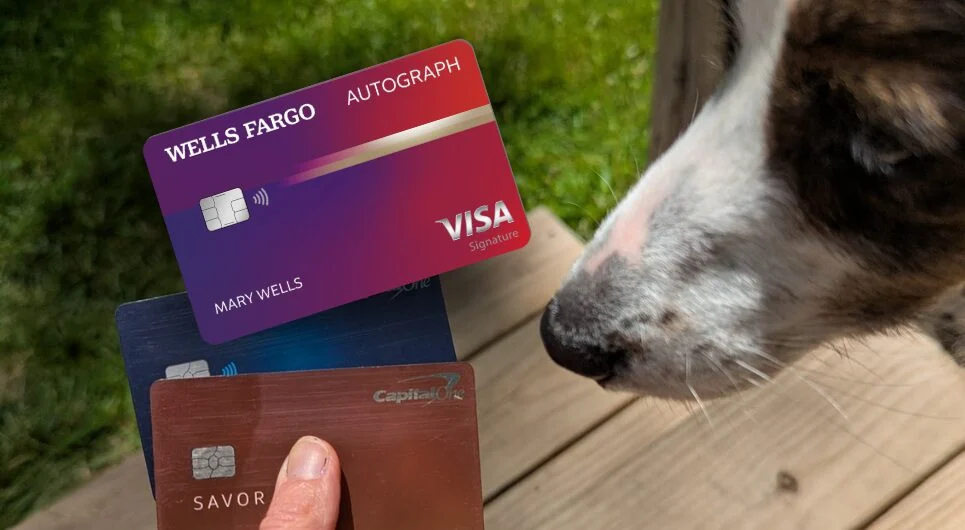
The landscape of consumer credit rewards is undergoing a significant transition as enthusiasts increasingly evaluate the long-term viability of no-annual-fee "ecosystems" against traditional premium card structures. For many years, the industry standard for travel rewards necessitated the payment of annual fees ranging from $95 to $695 to unlock transferable point currencies and high-multiplier earning categories. However, recent developments in the portfolios of issuers such as Capital One and Wells Fargo have enabled a "zero-dollar wallet" strategy that rivals the utility of mid-tier and premium products. This shift highlights a broader trend in the financial services sector where competition for "top-of-wallet" status is driving banks to offer increasingly aggressive rewards on entry-level, no-fee products.
The Foundation of the Zero-Dollar Rewards Strategy
The concept of a $0 annual fee wallet relies on the strategic pairing of cards within a single issuer’s ecosystem to convert standard cash-back rewards into transferable travel points. A primary example of this is the Capital One "duo," which typically consists of a cash-back card—such as the Savor or SavorOne—paired with a travel-centric card like the VentureOne or the Spark Miles Select (now branded as the VentureOne Business).
Under this framework, the Savor card provides a 3% return on high-frequency categories such as dining and groceries. While these rewards are technically earned as cash back, Capital One allows cardholders to move these earnings to a "Miles" earning account at a 1:1 ratio (e.g., $10.00 becomes 1,000 miles). These miles can then be transferred to over a dozen airline and hotel partners, including Air France-KLM Flying Blue, British Airways Executive Club, and Choice Privileges. This mechanism effectively turns a no-fee cash-back card into a high-yield travel rewards engine.
However, reliance on a limited number of cards often leaves gaps in a consumer’s spending profile. In the case of a basic Capital One $0 wallet, a significant deficiency exists in the gas and general travel categories. While the VentureOne Business card offers a flat 1.5X miles on all purchases, this represents a lower yield compared to the 3X or 4X multipliers often found on premium products. Furthermore, the reliance on issuer-specific travel portals to earn higher multipliers—such as 5X on hotels booked through Capital One Travel—often introduces friction, as portal pricing may exceed direct-booking rates, nullifying the value of the extra points earned.
Chronology of Portfolio Expansion and Issuer Resistance
The evolution of a rewards strategy often involves "testing the market" with mid-tier products before pivoting back to no-fee alternatives. A notable instance of this occurred with the attempted acquisition of the Citi Strata Premier℠ Card. Launched as a refresh of the legacy Citi Premier, the Strata Premier offers 3X points on gas, air travel, hotels, dining, and groceries for a $95 annual fee. For many consumers, this card serves as a "one-card solution" due to its broad 3X coverage and access to Citi ThankYou Rewards partners, most notably American Airlines, which maintains a unique and valuable relationship with Citi.
The timeline of recent credit maneuvers illustrates the hurdles consumers face:
- Phase One: Establishment of a baseline with Capital One, securing 3% on dining/groceries and 1.5X on "everything else."
- Phase Two: Identification of "leakage" in gas and travel spending, where 1.5X was deemed insufficient.
- Phase Three: Application for the Citi Strata Premier to bridge the gap.
- Phase Four: Unexpected denial by Citi, followed by a failed reconsideration attempt.
- Phase Five: Strategic pivot to the Wells Fargo Autograph℠ Card.
The denial by Citi reflects a tightening of credit standards observed across the banking industry in 2023 and 2024. As interest rates remained elevated, issuers became more selective, often citing "velocity" (the number of recent accounts opened) or "debt-to-income ratios" as reasons for rejection, even for applicants with high credit scores. This phenomenon, colloquially referred to in the rewards community as "the cold shoulder," has forced consumers to look toward emerging players in the transferable points space.
Data Analysis: The Rise of the Wells Fargo Ecosystem
The entry of Wells Fargo into the transferable rewards market has fundamentally altered the math for no-fee enthusiasts. Historically, Wells Fargo was viewed as a "cash-back only" issuer. However, the introduction of the "Autograph" series and the subsequent launch of transfer partners in early 2024 have positioned it as a direct competitor to the likes of Chase and American Express.
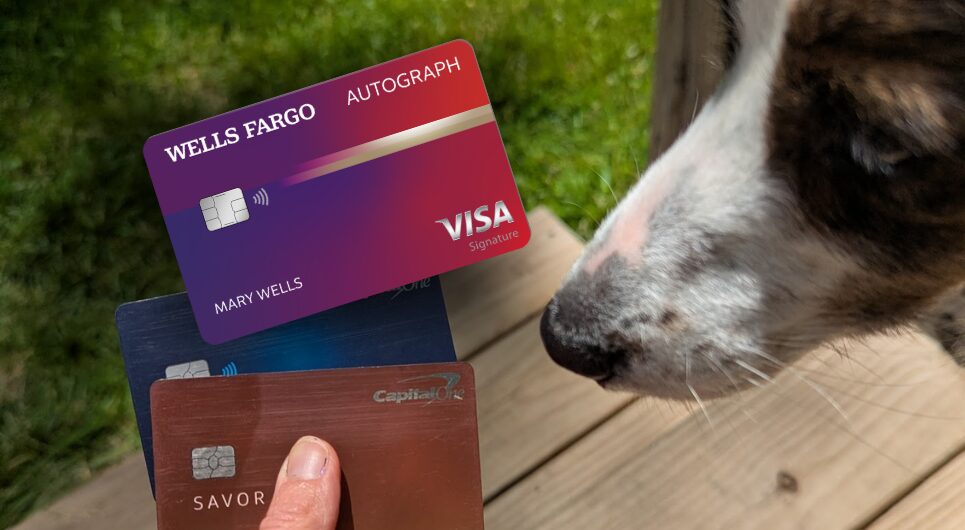
The Wells Fargo Autograph℠ Card is a $0 annual fee product that offers 3X points on:
- Dining
- Travel (including airfare, hotels, and cruises)
- Gas stations
- Transit (including subways and ride-shares)
- Popular streaming services
- Phone plans
When compared to the Citi Strata Premier, the Autograph card covers almost identical categories—excluding groceries—without the $95 annual fee. For a consumer spending $5,000 annually on gas and $5,000 on travel, the Autograph card generates 30,000 points. In a cash-back scenario, this is worth $300. In a transfer scenario, utilizing partners like Choice Privileges (where Wells Fargo points transfer at a 1:2 ratio), those 30,000 points could become 60,000 Choice points, potentially covering several nights of lodging in high-cost European or domestic markets.
Supporting data suggests that a "Wells Fargo Duo" may be the next evolution of the no-fee strategy. By adding the Wells Fargo Active Cash® Card, which earns a flat 2% cash back on all purchases, consumers can establish a high floor for their rewards. Similar to the Capital One model, cash back from the Active Cash can be moved to the Autograph account, effectively creating a 2X/3X transferable points ecosystem with zero carrying costs.
Official Responses and Industry Implications
While major banks rarely comment on individual credit decisions, industry analysts point to a "de-risking" trend among traditional "Big Three" issuers (Chase, Amex, Citi). In contrast, Wells Fargo has been aggressively pursuing market share in the credit card space to diversify its revenue streams following years of regulatory constraints. This divergence in issuer appetite has created a window of opportunity for consumers who find themselves "locked out" of the traditional premium ecosystems.
Financial analysts suggest that the "democratization" of travel rewards—moving them from $500-fee cards to $0-fee cards—is a response to a more price-sensitive consumer base. However, there is an inherent trade-off. Premium cards often include travel protections such as trip delay insurance, primary rental car coverage, and lounge access. No-fee cards, like the Wells Fargo Autograph, typically offer fewer "soft" benefits, focusing instead on pure earning power.
Broader Impact on Regional and Domestic Travel
The utility of a rewards currency is often dictated by the consumer’s geography. For travelers in the Appalachian region or those utilizing small local airports, the value of a currency like Citi’s ThankYou points is heightened by its partnership with American Airlines. When a consumer is denied access to such a currency, they must find alternative value.
The shift toward Wells Fargo and Capital One partners like Choice Privileges and Flying Blue (Air France/KLM) represents a pivot toward domestic utility. Choice Privileges, in particular, has a massive footprint in rural and suburban America, making it a pragmatic choice for travelers visiting state parks or regional attractions where luxury Hyatt or Marriott properties are non-existent.
Conclusion and Future Outlook
The strategic move toward a $0 annual fee wallet, anchored by the Wells Fargo Autograph and Capital One Savor series, demonstrates that premium travel is no longer gated by high entry costs. While the rejection from Citi highlights the volatility of the credit market, it also underscores the resilience of the "points and miles" community in finding alternative pathways to value.
The broader implications for the industry are clear: as no-fee cards continue to add transfer partners and high-multiplier categories, the pressure on premium cards to justify their annual fees will intensify. For the consumer, the "zero-dollar wallet" is no longer just a budget-friendly alternative; it is a sophisticated, competitive strategy that challenges the traditional hierarchy of consumer finance. The question remains whether issuers can sustain these high reward rates on no-fee products in the long term, or if a "correction" in the form of reduced multipliers or devalued transfer ratios is inevitable. For now, the "slow and steady" approach of building a diversified, low-cost portfolio appears to be the most viable path for the modern credit strategist.




 Anjar Salim

 Chandra Hamzah
 Tatiana Tantri Indah Sari
 Lukman Taruna Persada Ramadan