
 Chandra Hamzah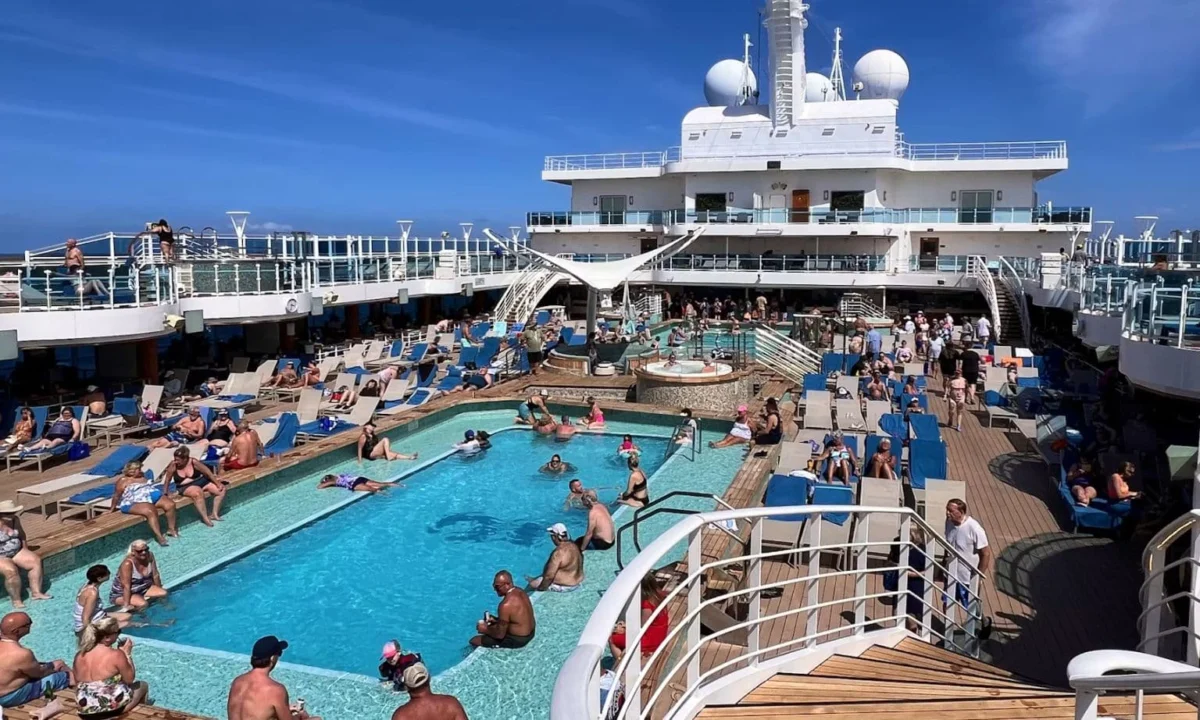
In an unprecedented legal victory that has sent ripples through the global travel industry, a German tourist has been awarded approximately €1,500 (around $1600 USD) in damages following a lawsuit over the pervasive issue of "chair hogging" at a resort in Greece. The ruling, which found the resort liable for failing to enforce its own policies against guests reserving sun loungers, could signal a new era of accountability for the cruise sector, where similar practices are a frequent source of passenger frustration. This legal precedent, originating from a European court, carries significant weight, particularly given Germany’s standing as a powerhouse in the cruise market, with over two million German passengers embarking on ocean voyages annually. The case highlights a growing dissatisfaction among travelers with perceived lax enforcement of established rules, potentially empowering passengers to seek redress when their vacation experiences are diminished by the inconsiderate actions of others.
The German tourist’s complaint stemmed from a resort holiday in 2024, where he and his family found themselves repeatedly unable to secure deck chairs by the pool. The issue, he argued, was the common practice of other guests arriving early in the morning, often before dawn, to place towels and personal belongings on loungers, thereby claiming them for the entire day, regardless of actual occupancy. This phenomenon, widely known as "chair hogging," is a recurring grievance on cruise ships, where limited deck space and a desire for prime poolside locations exacerbate the problem. Passengers often engage in the same practice, leaving towels on chairs for hours while they attend to other activities onboard or disembark for shore excursions.
The crux of the legal argument, and the element most likely to resonate with cruise lines, was the resort’s existing policy prohibiting such behavior. The German plaintiff successfully contended that while a policy was in place, it was not adequately enforced by the resort’s management. The court concurred, deeming the resort’s inaction a failure to provide the expected service, and awarded the tourist a refund equivalent to approximately 14% of his total trip cost. This financial penalty underscores the legal ramifications of failing to uphold advertised policies, moving beyond mere guest complaints to tangible financial consequences.
The implications for the cruise industry are substantial. Most major cruise lines, including Royal Caribbean, Carnival Cruise Line, Princess Cruises, and Celebrity Cruises, have explicit policies in place to address "chair hogging." These policies typically involve time limits, after which unoccupied loungers can be made available to other guests. For instance, Royal Caribbean has a 30-minute rule, stipulating that chairs left unattended for longer than half an hour may be cleared by deck attendants. Carnival Cruise Line operates with a slightly longer 40-minute window, while Princess and Celebrity adhere to the 30-minute guideline. The German court’s ruling suggests that passengers who experience a lack of enforcement of these rules may have grounds to pursue legal action, mirroring the successful claim against the Greek resort.
Enforcing such policies, however, presents a significant operational challenge for cruise lines. Crew members, particularly those working on deck by the pool areas, are often already stretched thin with numerous responsibilities, including guest safety, service, and general supervision. The task of monitoring loungers, identifying violations, and then physically removing personal items from unoccupied chairs can create awkward and potentially confrontational situations. Crew members may be hesitant to antagonize guests by confiscating their belongings, especially when the guests are not immediately present to defend their claim to the chair. This delicate balance between enforcing rules and maintaining guest satisfaction has long been a difficult tightrope for cruise operators to walk.
The German ruling, though not involving a colossal sum, serves as a potent warning. The fact that the judgment originated from Germany, a market with such a high volume of cruise passengers, amplifies its significance. Cruise lines operating in or catering to this market will be under increased scrutiny to demonstrate robust enforcement mechanisms. This could lead to more proactive and visible efforts to manage sun lounger availability, potentially involving more frequent announcements, clearer signage, and more assertive action by deck staff.
Recent developments offer a glimpse into how some cruise lines are responding to the pressure to enforce "chair hogging" policies more effectively. Norwegian Cruise Line (NCL) has garnered positive attention from passengers for its stringent approach. Reports from guests onboard NCL ships indicate that crew members begin actively managing unoccupied loungers from around 10 am. They reportedly place stickers on chairs that have been left unattended for an extended period. An hour later, if the chairs remain unoccupied, NCL crew members are said to remove the guests’ belongings, freeing up the loungers for others. This proactive strategy, involving clear communication and consistent action, appears to be meeting with approval from passengers who value equitable access to onboard amenities.
The broader implications of this German court decision extend beyond the immediate impact on cruise lines’ operational strategies. It empowers passengers to hold travel providers accountable for policies that directly affect their vacation experience. For years, "chair hogging" has been a low-level but persistent source of conflict and disappointment for many holidaymakers. This ruling provides a legal precedent that could encourage more passengers to voice their concerns and, if necessary, seek legal recourse.
Background and Chronology of the "Chair Hogging" Issue
The practice of reserving sun loungers, often referred to as "chair hogging" or "sunbed hogging," is not a new phenomenon. It has been a widely discussed issue in the travel industry for decades, particularly in destinations with high tourist density and limited public amenities, such as swimming pools and beaches. The advent of all-inclusive resorts and cruise holidays, which often feature extensive pool areas, has amplified the problem.
- Early 2000s onwards: Anecdotal evidence and online travel forums begin to highlight the issue of sun lounger reservation as a common complaint among vacationers. Early attempts by resorts and hotels to address the problem were often ad-hoc and met with limited success.
- Mid-2010s: With the growth of social media, complaints about "chair hogging" become more visible, leading to increased pressure on the travel industry to find effective solutions. Some travel companies begin to implement more formal policies, often with limited enforcement.
- Late 2010s – Early 2020s: The COVID-19 pandemic, with its emphasis on social distancing and capacity management, temporarily altered some aspects of pool deck usage. However, as travel rebounded, the "chair hogging" issue resurfaced with renewed intensity.
- 2024: The German tourist experiences the issue during his resort holiday in Greece, leading to his decision to pursue legal action.
- Post-2024 Ruling: The German court delivers its landmark verdict, awarding damages to the tourist and establishing a legal precedent for similar cases. This ruling begins to gain international attention, prompting discussions and potential policy reviews within the cruise industry.
Supporting Data and Industry Context
The cruise industry is a significant global market, with passenger numbers steadily increasing year on year prior to the pandemic, and showing strong recovery since. In 2023, approximately 32 million passengers sailed worldwide, with projections indicating continued growth. Germany consistently ranks among the top source markets for cruise passengers, underscoring the importance of rulings originating from German courts for the industry.
- German Cruise Market: Over 2 million Germans embark on ocean cruises annually, making it a crucial demographic for major cruise lines.
- Cruise Line Policies: A survey of major cruise line websites reveals that nearly all have policies regarding the reservation of sun loungers. These typically range from 30 to 45 minutes of unattended time before chairs can be cleared.
- Passenger Dissatisfaction: Online travel forums and customer feedback platforms frequently feature discussions and complaints related to "chair hogging" on cruise ships. This indicates a widespread and persistent issue affecting a significant portion of the passenger base.
Official Responses and Industry Analysis
While specific official statements from major cruise lines regarding the German ruling have not been widely publicized, industry analysts suggest that the decision will likely prompt a re-evaluation of enforcement strategies.
"This ruling is a wake-up call for the entire travel sector, and cruise lines are certainly paying attention," commented travel industry analyst, Sarah Jenkins. "For years, the ‘chair hogging’ issue has been a persistent thorn in the side of customer satisfaction. While cruise lines have policies in place, the perceived lack of consistent enforcement has led to frustration. This lawsuit demonstrates that there can be real financial and reputational consequences for failing to address these issues effectively."
Jenkins added, "The challenge for cruise lines lies in finding a balance. They need to enforce their policies to ensure fair access for all guests, but they also need to do so in a way that doesn’t create undue friction between crew and passengers. We might see more innovative solutions, perhaps involving technology like apps that allow guests to temporarily reserve chairs or more clearly defined ‘no-reservation’ zones."
The analysis of the implications suggests that cruise lines may need to invest more resources into training deck staff on enforcement procedures and empowering them to act decisively. This could involve clearer protocols for handling unattended items and a stronger commitment from management to support their crew’s actions. Furthermore, enhanced communication to passengers about the policies and the reasons behind them could also play a role in managing expectations and fostering a more cooperative environment.
What to Do If There’s Chair Hogging on Your Cruise?
While the German ruling provides a legal avenue, passengers experiencing "chair hogging" on their cruise have several immediate steps they can take:
- Familiarize Yourself with Cruise Line Policy: Before and during your cruise, review the ship’s daily program or the cruise line’s app for specific rules regarding the use of loungers.
- Politely Inform Crew: If you encounter a chair that has been clearly reserved for an extended period and is unoccupied, politely bring it to the attention of a nearby deck attendant or crew member.
- Document the Situation: If possible, discreetly note the time, location, and duration for which chairs are being reserved without occupancy. This can serve as evidence if you decide to lodge a formal complaint.
- Lodge a Formal Complaint: If the issue persists and crew intervention is ineffective, approach the Guest Services desk to lodge a formal complaint. It is advisable to do this in writing, detailing the specific instances.
- Seek Resolution at the End of the Cruise: If your concerns are not addressed during the voyage, you can escalate your complaint in writing to the cruise line’s customer relations department upon your return. Reference the specific policies and any previous attempts to resolve the issue onboard.
The German court’s decision is a significant development, potentially setting a precedent that encourages greater accountability within the travel industry regarding the management of shared amenities. As cruise lines navigate this new landscape, the focus will likely shift towards more rigorous and transparent enforcement of policies, aiming to enhance the vacation experience for all passengers and avoid the pitfalls of legal challenges.




 Budi Mulyono
 Anjar Salim
 Tatiana Tantri Indah Sari

 Lukman Taruna Persada Ramadan