
 Tatiana Tantri Indah Sari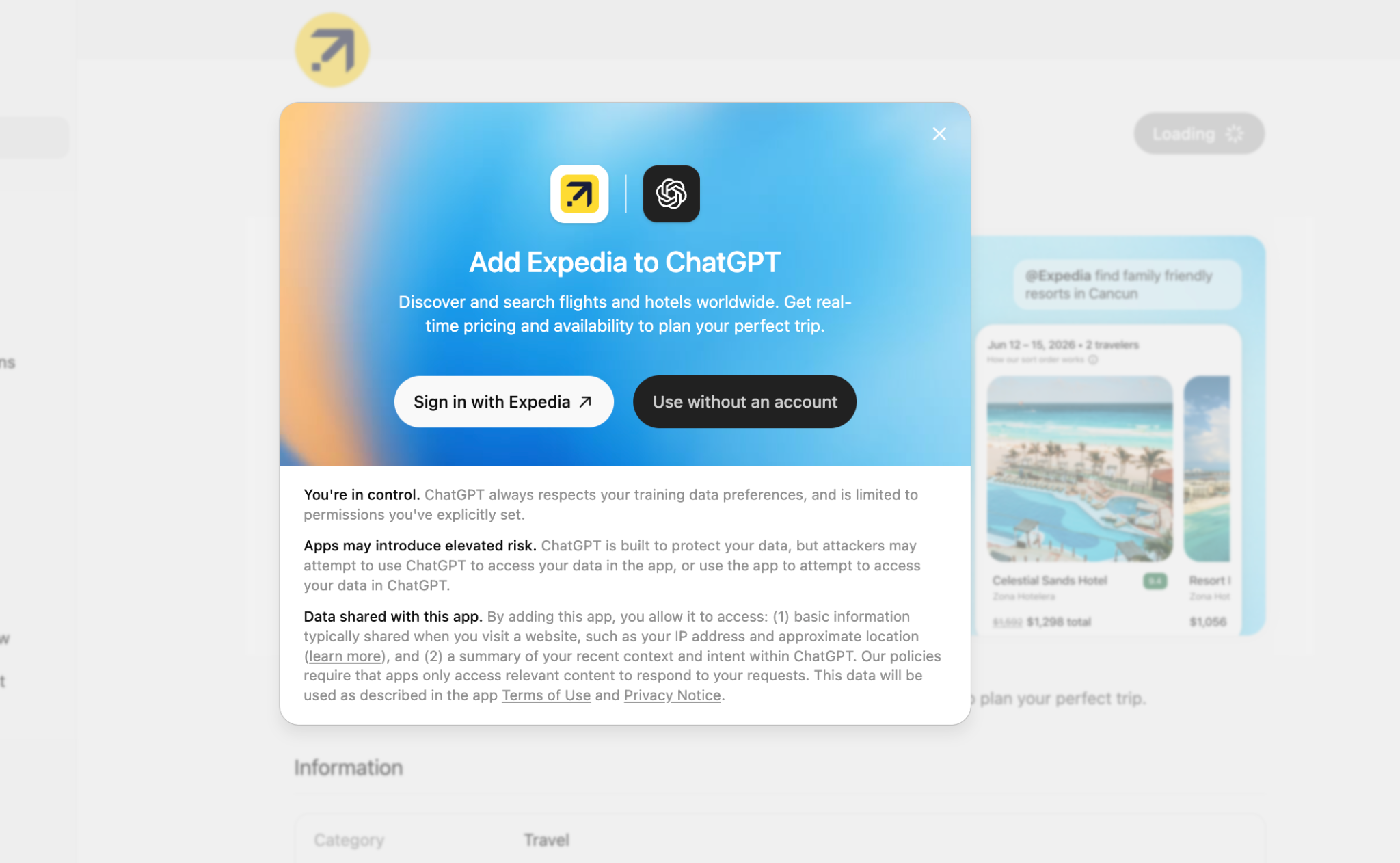
Travel applications integrated within artificial intelligence chatbots are now capable of returning branded results, displaying real-time prices, and facilitating direct booking through embedded buttons. This represents a significant leap forward in the digital travel landscape, promising unparalleled convenience for users. However, recent tests conducted by Skift, a leading travel industry intelligence platform, have uncovered a critical "catch": for these functionalities to work seamlessly, the user must first manually connect the relevant app, and subsequently, the AI chatbot itself must recognize its availability and proactively choose to utilize it. This two-pronged challenge currently presents substantial hurdles to widespread adoption and a truly frictionless user experience.
The initial step—the requirement for users to connect the app—emerges as a formidable barrier for the average individual who may not be familiar with the concept of integrating third-party applications within a chatbot interface. This friction point often stems from a lack of awareness, perceived technical complexity, or simply an additional cognitive load in a process designed for simplicity. The second step, wherein the chatbot must intelligently decide to invoke the connected app, is where the intended referral path can frequently falter, breaking the chain of what should be a straightforward transaction. Skift’s comprehensive testing revealed significant performance disparities between leading AI platforms in navigating these complexities.
The Promise and the Practicalities of AI-Powered Travel
The vision for AI-powered travel booking is compelling: a future where a user can simply articulate their travel desires in natural language – "Find me a five-day trip to Kyoto in October, with a budget of $2000, including flights and a boutique hotel near the historic district" – and the chatbot, leveraging integrated travel apps, instantaneously generates tailored options, complete with pricing and booking links. This concept moves beyond traditional search engines and online travel agencies (OTAs) by offering a conversational interface that aims to understand context, preferences, and nuances, thereby delivering a highly personalized travel planning experience.
Major travel companies, including industry behemoths like Booking.com, Expedia, and Viator, have recognized this transformative potential and have been swift to invest resources in developing and integrating their applications into prominent AI platforms. Their strategic calculus is clear: establish a presence in this burgeoning channel to capture market share, enhance customer engagement, and potentially redefine the customer journey. These companies are betting on the long-term shift towards conversational commerce, viewing AI chatbots not merely as a novelty but as a crucial future touchpoint for customer acquisition and retention.
However, Skift’s tests underscore that the reality of current implementation often falls short of this idealized vision. In direct comparisons, Claude, the AI developed by Anthropic, which refers to these integrations as ‘connectors,’ demonstrated superior handling of these functionalities. It consistently surfaced and utilized connected travel apps with remarkably little friction, suggesting a more robust and intuitive underlying architecture for tool invocation. In stark contrast, ChatGPT, developed by OpenAI, repeatedly bypassed or denied the use of connected travel applications, even when they were explicitly linked by the user. The Skift report noted that in many instances involving ChatGPT, the apps eventually functioned, but only after persistent and often laborious additional prompting from the user, indicating an inconsistent and less reliable integration experience.
A Brief Chronology of AI and Travel Integration
The journey towards integrating AI with travel services has been a rapid evolution, marked by several key milestones. The foundational breakthrough came with the widespread public release of large language models (LLMs) like OpenAI’s ChatGPT in late 2022. This event ignited a global fascination with generative AI, demonstrating its unprecedented capabilities in understanding and generating human-like text.
Following this initial explosion of interest, AI platforms quickly began exploring ways to extend their functionalities beyond mere text generation. The concept of "plugins" or "connectors" emerged as the next frontier in early 2023. OpenAI pioneered this by allowing third-party developers to create specialized tools that ChatGPT could invoke to perform specific tasks, such as fetching real-time data, making reservations, or executing complex calculations. This marked a pivotal moment, transforming chatbots from mere conversational agents into potential operating systems capable of interacting with the broader digital ecosystem.
Anthropic’s Claude, while entering the public consciousness slightly later, also developed its own robust system of "connectors," designed with a strong emphasis on reliability and safety in tool use. The parallel development of these capabilities across leading AI platforms signaled a clear industry trend: AI was not just for conversation, but for action.
The travel industry, historically an early adopter of digital innovation, swiftly recognized the implications. Major players like Booking Holdings (which owns Booking.com and Viator) and Expedia Group (which operates Expedia, Hotels.com, and Vrbo) began allocating significant resources to develop their own plugins and connectors. This strategic pivot was driven by the understanding that a new battleground for customer engagement was emerging, and being an early mover in this space could confer a substantial competitive advantage. The rush to integrate commenced in earnest throughout 2023, with many travel brands launching their initial versions of chatbot-compatible applications, setting the stage for the current phase of testing and refinement.
The Strategic Imperative: Why Travel Giants are Investing
The aggressive push by major travel companies into the AI chatbot ecosystem is underpinned by several compelling strategic imperatives, reflecting broader shifts in consumer behavior and technological capabilities. Firstly, AI chatbots represent a nascent yet potentially vast new customer acquisition channel. With millions, and potentially hundreds of millions, of active users on platforms like ChatGPT and Claude, the opportunity to directly engage potential travelers at the very start of their planning journey is immense. This bypasses traditional search engines and meta-search sites, offering a direct conduit to the consumer.
Secondly, the promise of hyper-personalization is a powerful draw. While existing online travel agencies (OTAs) offer some level of customization, AI chatbots, with their ability to process complex natural language queries and learn user preferences over time, could elevate personalization to an unprecedented degree. Imagine a chatbot that remembers your preferred airline, your dietary restrictions, your typical budget, and even your past travel interests, seamlessly integrating this knowledge into every recommendation. Industry reports consistently highlight personalization as a key driver of customer satisfaction and loyalty, with data suggesting that consumers are increasingly willing to pay more for tailored experiences.
Thirdly, the competitive landscape mandates participation. In an industry as competitive as travel, no major player can afford to ignore a potentially disruptive technology that competitors are embracing. The "fear of missing out" (FOMO) is a potent motivator, ensuring that companies allocate significant budgets to R&D and integration efforts in this space. Data from market research firms indicates that global investment in AI technologies by the travel and hospitality sector is projected to grow significantly, reaching billions of dollars annually in the coming years, underscoring the industry’s commitment.
Finally, the potential for operational efficiency and cost reduction also plays a role. While the current focus is on customer-facing booking, future iterations of AI in travel could automate more aspects of customer service, query resolution, and even dynamic pricing, leading to substantial savings and improved service delivery at scale. The global online travel market, valued at over $1 trillion pre-pandemic and steadily recovering, remains a highly attractive arena for technological innovation that promises even marginal gains in efficiency or market penetration.
Technical Underpinnings and User Experience Bottlenecks
The discrepancies observed in Skift’s tests between Claude and ChatGPT highlight critical differences in their underlying architectures and design philosophies regarding tool use. At the core, these integrations rely on Application Programming Interfaces (APIs), which are sets of definitions and protocols that allow different software applications to communicate with each other. Travel companies expose their inventory, pricing, and booking functionalities through these APIs, which AI platforms then attempt to access.
The challenge lies not just in the API connection itself, but in the AI’s "reasoning engine"—its ability to understand when a specific user query warrants the invocation of a particular connected app. Claude’s superior performance suggests a more sophisticated or more reliably engineered system for this "tool-use" capability. It appears to be better at parsing user intent and making an autonomous decision to call upon a connector without explicit direction. This could involve more advanced prompt engineering techniques, better contextual understanding algorithms, or a more streamlined internal workflow for handling external tools.
ChatGPT’s struggles, requiring "added prompting," indicate that its tool-use mechanism might be more susceptible to ambiguities in user input, or perhaps its decision-making process for invoking plugins is more conservative or less developed. This could be due to a variety of factors, including the complexity of its general-purpose architecture, the way plugins are prioritized, or simply the sheer volume of different plugins it needs to manage.
From a user experience (UX) perspective, the current model presents significant bottlenecks. The "discovery problem" is paramount: how do users even know which travel apps are available for connection within their preferred chatbot, and how do they perform the connection? Without a prominent "app store" or a highly intuitive onboarding process, many users will remain unaware of these capabilities. Furthermore, if the connected apps are unreliable or require excessive prompting, as seen with ChatGPT, users will quickly lose trust and revert to traditional booking methods. This inconsistency directly impacts the perceived utility and value proposition of AI-powered travel.
Industry Reactions and Expert Commentary
While no direct official statements regarding the Skift tests were immediately available from OpenAI or Anthropic, industry analysts generally agree that these findings reflect the nascent stage of AI-travel integration. Executives from leading AI platforms have consistently emphasized their ongoing commitment to refining their tool-use capabilities, acknowledging that reliability and intuitiveness are paramount for widespread adoption. They are likely to view such test results as valuable feedback for iterative development, focusing on improving the AI’s ability to seamlessly integrate and invoke third-party services. The overarching goal for these platform developers is to establish their chatbots as indispensable hubs for a multitude of digital services, and robust travel integration is a key component of that vision.
Similarly, major travel companies, while not directly commenting on specific chatbot performance, have publicly reiterated their strategic commitment to exploring and optimizing new distribution channels. "We are in an era of rapid technological evolution, and we are committed to being at the forefront of how consumers discover and book travel," an executive from a prominent travel group might state, emphasizing the long-term potential over current teething problems. These companies understand that the current friction points are part of the early adoption curve and are likely to continue investing in improving their integrations, recognizing that a truly seamless AI-powered booking experience could fundamentally alter customer behavior.
Travel industry analysts, reflecting on the Skift findings, often point to the delicate balance between technological innovation and user readiness. "This is an exciting, albeit early, phase," noted one analyst specializing in travel technology. "The core capability of AI to connect with booking engines is proven, but the user experience layer—both for connecting the apps and for the AI intelligently using them—still requires significant optimization. User expectations, especially for a technology as hyped as AI, need to be managed carefully." They emphasize that the market is in a learning phase, with both technology providers and end-users adapting to new paradigms.
Broader Implications and The Road Ahead
The ongoing integration of travel apps into AI chatbots carries profound implications for the entire travel ecosystem, promising to reshape how travel is planned, booked, and experienced. Should the current technical and user experience hurdles be overcome, these AI agents could fundamentally disrupt the traditional travel booking funnel. They could diminish the reliance on conventional search engines for initial discovery and potentially challenge the intermediary role of online travel agencies by offering a more direct, conversational path to booking. This would intensify competition, pushing all players to innovate further in personalization and seamless service delivery.
Data privacy and security concerns will also loom larger as more personal travel preferences and booking details are processed by AI platforms. Robust safeguards, transparent data handling policies, and clear user consent mechanisms will be critical for building trust and ensuring the ethical deployment of these technologies. Furthermore, the monetization models for these new channels are still evolving. How will AI platforms and travel companies share revenue from bookings facilitated through these integrations? Affiliate fees, subscription models, or entirely new transactional frameworks could emerge.
Looking ahead, the vision is of a "super app" future where AI chatbots evolve into central hubs for not just travel, but a myriad of daily services, all accessible through natural language. For travel, this would mean a genuinely intuitive and proactive travel assistant that anticipates needs, offers relevant suggestions, and executes bookings with minimal user effort. Imagine an AI that not only books your flight but also proactively monitors for better deals, suggests local experiences based on your real-time location and interests, and manages your entire itinerary, all without needing to open multiple apps.
To reach this idealized future, continued collaboration between AI platform developers and travel companies is essential. There is a pressing need for improved API standardization, more intuitive user interfaces for app discovery and connection, and, crucially, more advanced AI reasoning capabilities that reliably invoke the right tools at the right time. The journey from promise to practical ubiquity for AI-powered travel apps is well underway, but Skift’s findings serve as a vital reminder that significant work remains to be done to truly bridge the gap and deliver on the technology’s full potential. The travel industry, in its perpetual quest for efficiency and customer delight, watches closely as these AI agents learn and adapt, gradually moving closer to becoming the indispensable travel companions of tomorrow.




 Anjar Salim
 Chandra Hamzah
 Budi Mulyono
 Lukman Taruna Persada Ramadan
