
 Gabriela Annisa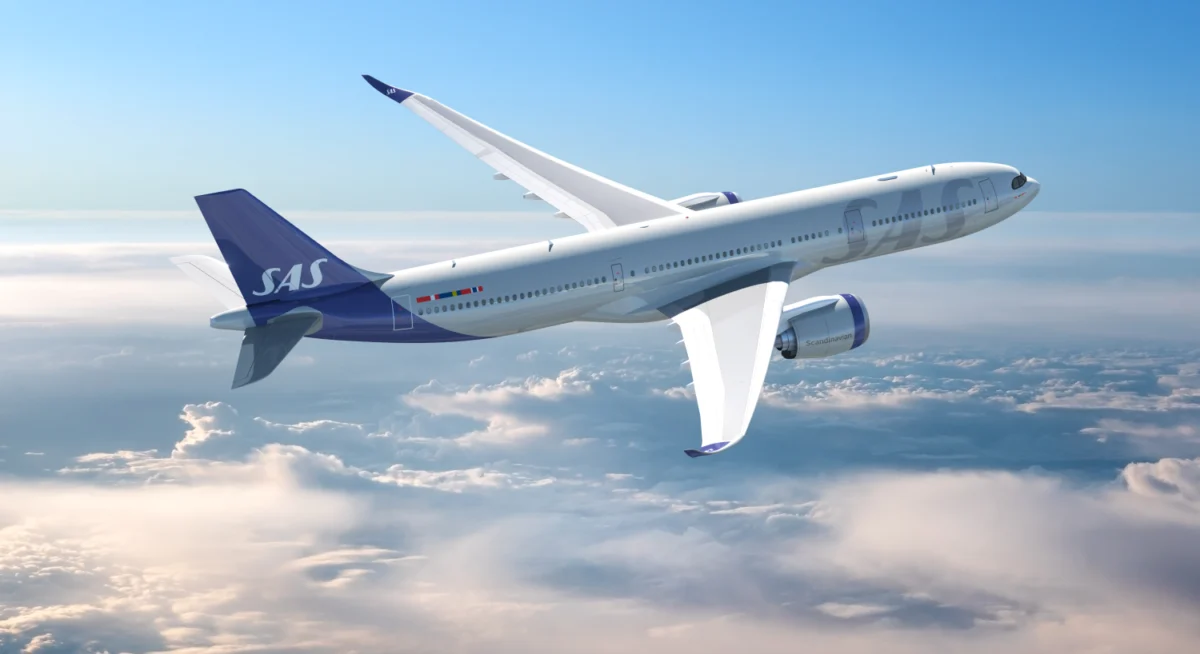
The future trajectory of SAS Scandinavian Airlines is set for a dramatic reorientation following the announcement of a significant investment from the Air France-KLM Group, a move that underscores an ambitious strategic vision for the struggling carrier and, more specifically, a pronounced focus on its Copenhagen hub as a key Northern European gateway. This pivotal investment, part of a broader recapitalization plan, is poised to reshape the competitive landscape of Nordic aviation and firmly integrate SAS into the SkyTeam alliance, marking a definitive departure from its long-standing affiliation with Star Alliance.
The Genesis of a Strategic Alliance: SAS’s Recapitalization and Air France-KLM’s Entry
SAS Scandinavian Airlines has navigated a tumultuous period marked by severe financial challenges, exacerbated by the global aviation downturn during the COVID-19 pandemic and intense regional competition. In July 2022, the airline initiated voluntary Chapter 11 bankruptcy proceedings in the United States, a crucial step in its comprehensive restructuring plan dubbed "SAS Forward." This process aimed to streamline operations, reduce costs, and attract new equity investment to ensure the airline’s long-term viability. The restructuring sought to convert approximately SEK 20 billion (around €1.7 billion) of debt into equity and raise an additional SEK 9.5 billion (€800 million) in new equity.
After a rigorous bidding process, a consortium led by Air France-KLM emerged as the winning bidder in October 2023. This consortium includes the Danish state, investment firm Castlelake, and Lind Invest, a Danish investment company. The deal stipulates that Air France-KLM will become a significant new shareholder in SAS, initially acquiring a 19.9% stake, with an option to increase its shareholding at a later stage, subject to certain conditions and regulatory approvals. The total capital injection from the consortium is expected to be approximately SEK 13.2 billion (around €1.1 billion), comprising SEK 6 billion in new equity and SEK 7.2 billion in convertible debt. This financial lifeline is critical for SAS to emerge from Chapter 11 and stabilize its operations.
For Air France-KLM, this investment represents a strategic coup, offering a valuable foothold in the attractive Scandinavian market, an area previously dominated by Star Alliance carriers and fragmented by low-cost competition. The group’s stated ambition is to reinforce its position in Europe and enhance connectivity, leveraging SAS’s established network and brand reputation in the Nordics.
Copenhagen: The Jewel in SAS’s Crown and Air France-KLM’s Northern European Gateway
Central to the renewed strategy for SAS under its new ownership structure is the elevation of Copenhagen Airport (CPH) as a primary hub. CPH has historically served as SAS’s most important intercontinental gateway, offering strong connectivity to North America and Asia. Its geographical location at the crossroads of Northern Europe makes it an ideal transit point for passengers traveling between the Nordics, continental Europe, and long-haul destinations.
Industry analysts suggest that Air France-KLM’s investment is not merely about rescuing a distressed airline but strategically acquiring a valuable network and hub asset. Copenhagen’s potential to serve as a feeder into Air France-KLM’s established hubs in Paris (Charles de Gaulle) and Amsterdam (Schiphol) is immense. By channeling Scandinavian traffic through CPH and then onto Paris or Amsterdam, Air France-KLM can significantly bolster its own long-haul routes and increase load factors. Conversely, SAS can benefit from enhanced access to Air France-KLM’s extensive global network, offering its passengers a wider array of destinations.
Prior to the pandemic, Copenhagen Airport consistently ranked among the busiest airports in Northern Europe, handling over 30 million passengers annually. While traffic volumes have been recovering, the new investment is expected to catalyze a robust resurgence and expansion. Plans for CPH under the new ownership likely involve increased flight frequencies, the introduction of new routes, and potentially further infrastructure development to accommodate projected growth. This strategic emphasis aligns with CPH’s own long-term expansion plans, including increasing terminal capacity and optimizing runway operations to handle up to 40 million passengers per year.
Fleet Modernization and Network Expansion: The Widebody Imperative
The commitment to developing Copenhagen as a robust hub necessitates a corresponding investment in SAS’s fleet, particularly its widebody aircraft. The original news snippet highlighted a new widebody order, prompting questions about its justification. This order, likely part of SAS’s ongoing fleet modernization and simplification strategy, is crucial for supporting expanded long-haul operations from Copenhagen.
SAS currently operates a fleet of Airbus A330s and A350s for its long-haul routes. The A350s, in particular, are modern, fuel-efficient aircraft well-suited for intercontinental travel. Any new widebody orders or commitments would likely aim to either replace older A330s with more efficient models or expand the long-haul fleet to serve new or increased frequencies on existing routes from CPH. For instance, increased service to key North American cities like New York, Chicago, and Los Angeles, or the potential reintroduction of routes to Asia, would require additional widebody capacity.
From Air France-KLM’s perspective, a modernized and sufficiently sized SAS widebody fleet operating out of Copenhagen allows for greater synergy. It could enable code-sharing agreements on long-haul routes, optimizing schedules and potentially freeing up Air France or KLM widebody capacity for other strategic routes. The strategic deployment of these aircraft from CPH would solidify its role as a bridge between the Nordics and the global network of SkyTeam.
The Alliance Shift: From Star to SkyTeam
One of the most significant implications of Air France-KLM’s investment is SAS’s planned departure from Star Alliance and its imminent move to SkyTeam. SAS has been a founding member of Star Alliance since its inception in 1997, making this transition a momentous shift in global airline alliances. The move is expected to take place in 2024, following the completion of the restructuring process and regulatory approvals.
This alliance change will have profound effects. For SAS passengers, it means a new set of partner airlines for earning and redeeming miles, lounge access, and seamless connections. Instead of Lufthansa, United, and Singapore Airlines, SAS passengers will now connect with carriers like Air France, KLM, Delta Air Lines, and Korean Air. This shift will particularly impact long-haul travelers from Scandinavia, redirecting their primary connecting points from traditional Star Alliance hubs like Frankfurt, Munich, and London Heathrow (via Star Alliance partners) to Paris, Amsterdam, and potentially other SkyTeam hubs.
For Star Alliance, the departure of a founding member and a key player in the Nordic market represents a significant loss, potentially weakening its presence in the region. Competitors like Lufthansa Group, which has a strong presence in the Nordics through its own operations and partnerships (e.g., with Widerøe), may seek to capitalize on this void.
For SkyTeam, gaining SAS is a major victory, instantly strengthening its network in Northern Europe. It provides direct access to the lucrative Scandinavian market and integrates SAS’s robust regional network, which covers secondary cities across Norway, Sweden, and Denmark. This enhances SkyTeam’s competitive offering against both Star Alliance and Oneworld in a strategically important part of the world.
Reshaping the Nordic Competitive Landscape
The Air France-KLM investment in SAS will undoubtedly recalibrate the competitive dynamics in the Nordic aviation market. Historically, the region has been characterized by intense competition from budget carriers like Norwegian Air Shuttle and Ryanair, as well as established players such as Finnair (a Oneworld member with a strong Asian focus via Helsinki) and Icelandair (a key transatlantic bridge). The Lufthansa Group has also been actively expanding its presence.
With SAS firmly integrated into the Air France-KLM orbit and SkyTeam, the Nordic market will see a more consolidated and powerful full-service airline offering. This could lead to:
- Increased competition on key routes: Air France-KLM and SAS may pool resources and optimize schedules to offer more attractive options than competitors.
- Network rationalization: Some overlapping routes might be streamlined, while new, strategically important routes could be introduced.
- Impact on pricing: Increased coordination could lead to more stable pricing structures, though budget carriers will continue to exert downward pressure.
- Loyalty program shifts: Passengers will be compelled to choose between loyalty to Star Alliance, SkyTeam, or Oneworld, influencing their travel patterns.
Statements and Industry Reactions
While specific statements from the deal’s finalization are yet to fully emerge, logical inferences can be made.
SAS CEO (Anko van der Werff): Would likely emphasize the "new chapter" for SAS, highlighting financial stability, enhanced connectivity through SkyTeam, and a renewed focus on customer experience. He would stress that the "SAS Forward" plan has successfully secured the airline’s long-term future.
Air France-KLM CEO (Benjamin Smith): Would articulate the strategic importance of the investment, focusing on market expansion, strengthening Air France-KLM’s European network, and the significant synergies expected from integrating SAS into the group. He would likely praise SAS’s brand and network value.
Danish Government Representatives: Would express satisfaction at securing the future of SAS, emphasizing its importance for national connectivity, jobs, and the Danish economy. They might also highlight the role of Copenhagen Airport as a key international gateway.
Copenhagen Airport Management: Would likely welcome the investment, anticipating increased traffic, new routes, and enhanced hub operations. They would reiterate their commitment to supporting SAS’s growth and CPH’s role as a leading European airport.
Industry Analysts: Would generally view the deal as positive for SAS, providing much-needed capital and a clear strategic direction. However, they would also point to the significant challenges of integrating SAS into a new alliance and group, managing cultural differences, and competing effectively in a dynamic market.
Challenges and Opportunities Ahead
While the investment offers a lifeline, the path forward for SAS is not without its challenges. The successful integration into SkyTeam, harmonization of IT systems, loyalty programs, and operational procedures with Air France-KLM will require meticulous planning and execution. Labor relations, a historical point of contention for SAS, will also need careful management during this transitional phase. Furthermore, the highly competitive nature of the Nordic market means SAS must continually innovate and differentiate its offerings.
However, the opportunities are substantial. With a strengthened balance sheet, a clear strategic partner, and a renewed focus on its key hub, SAS is positioned to reclaim its stature as a leading carrier in Northern Europe. The synergies with Air France-KLM offer potential for cost savings, revenue growth through expanded networks, and a more compelling value proposition for passengers. The strategic development of Copenhagen Airport as a critical connecting hub within the SkyTeam network stands to benefit not only SAS and Air France-KLM but also the wider regional economy through increased tourism and business travel.
In conclusion, Air France-KLM’s investment in SAS Scandinavian Airlines is far more than a financial rescue; it is a strategic repositioning that promises to fundamentally alter SAS’s operational model, its alliance affiliations, and its core hub strategy. The revitalization of SAS, with Copenhagen at its heart, represents a bold move to create a formidable Northern European aviation powerhouse within the SkyTeam global network, setting the stage for a new era of connectivity and competition in the region.



 Anjar Salim
 Chandra Hamzah
 Tatiana Tantri Indah Sari
 Budi Mulyono
 Lukman Taruna Persada Ramadan
