
 Tatiana Tantri Indah Sari
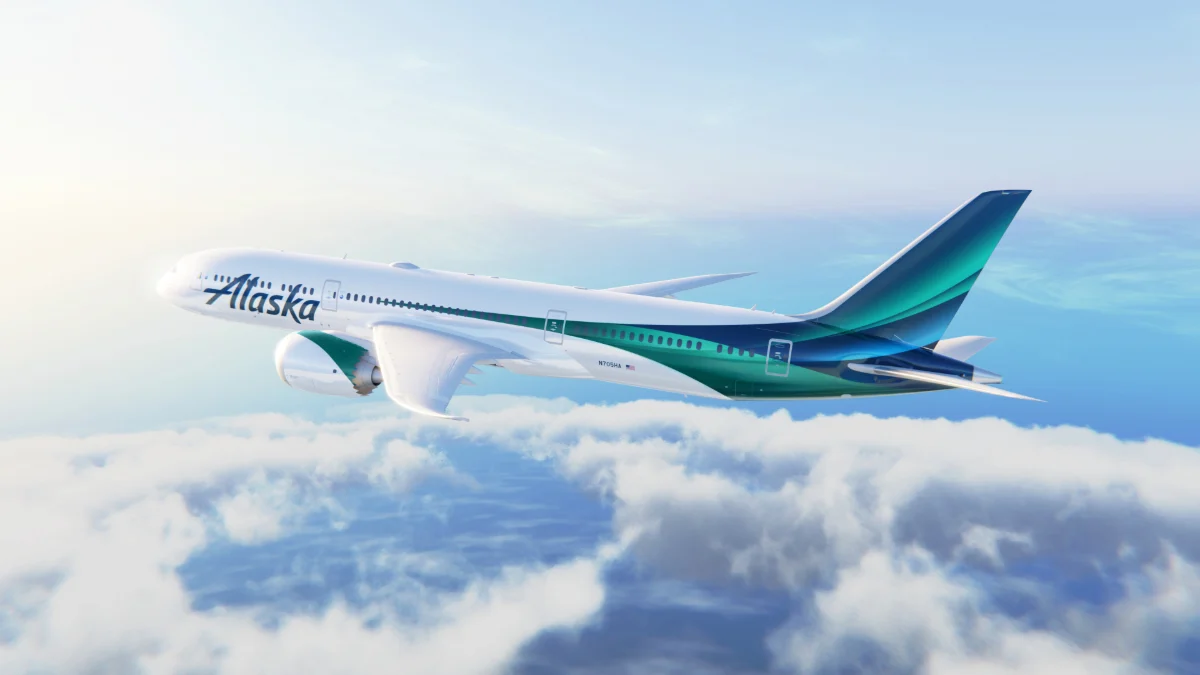
Alaska Airlines is doubling down on the lucrative luxury travel segment, announcing a sweeping expansion of its premium seating offerings across its widebody and narrowbody fleets. The strategic pivot, revealed on Tuesday, reflects a growing industry consensus that high-spending travelers will remain the primary engine of profitability for commercial aviation, even as carriers grapple with persistent macroeconomic headwinds, soaring fuel expenses, and shifting consumer spending habits.
Under the newly unveiled fleet strategy, the Seattle-headquartered carrier will introduce dedicated premium economy seating and fully enclosed business class suites. These luxury configurations are slated for its long-haul Boeing 787 Dreamliner fleet, as well as select transcontinental routes operated by the yet-to-be-certified Boeing 737 Max 10 aircraft. This move signals a definitive evolution for a carrier historically recognized as a regional West Coast powerhouse, positioning Alaska to compete directly with legacy network carriers on lucrative domestic transoceanic and long-haul international corridors.
The decision to elevate its cabin hard product underscores a broader, deliberate transformation within the airline. Following its landmark acquisition of Hawaiian Airlines in late 2024, Alaska Airlines has aggressively charted a course toward establishing itself as a full-service, global carrier. Leveraging its primary hub at Seattle-Tacoma International Airport alongside newly integrated operational nodes in the Pacific, the airline has steadily expanded its footprint across the Pacific and Atlantic. Already operating a slate of international flights connecting the Pacific Northwest to major business and leisure destinations in Europe and Asia, the introduction of standardized international business class suites earlier this year marked the conceptual foundation of this high-end network strategy.
Yet, this ambitious upward trajectory unfolds against a backdrop of acute financial strain. Alaska Airlines has felt the pinch of volatile global energy markets more acutely than many of its domestic competitors, largely due to its concentrated operational network along the West Coast, where localized jet fuel premiums often run higher. During a revealing earnings call in July, Alaska Airlines Chief Executive Officer Ben Minicucci candidly addressed investors, noting that surging fuel expenditures had entirely erased the carrier’s operating profits during the first half of the fiscal year. The severity of these cost pressures prompted leadership to suspend forward-looking financial guidance for 2026, forcing a delicate balancing act between funding long-term strategic growth and maintaining near-term fiscal discipline.
Strategic Evolution: The Post-Merger Landscape
The genesis of Alaska’s modern premium pivot is inextricably linked to its corporate consolidation moves. For decades, Alaska Airlines cultivated a fiercely loyal customer base through a hybrid business model—offering reliable, customer-centric service with a robust domestic network, while relying on a web of global airline partnerships rather than its own metal to fly passengers across oceans.
The shifting dynamics of post-pandemic travel demand, however, permanently altered the economics of commercial aviation. While budget and economy-tier demand experienced intense pricing pressure due to capacity normalization and inflation, premium cabin demand surged unabated. Corporate travelers and affluent leisure tourists proved remarkably resilient, consistently booking business class and premium economy seats at high fare classes.
Recognizing that organic growth alone would not yield the scale needed to capture a meaningful share of the international corporate travel market, Alaska pursued and finalized its acquisition of Hawaiian Airlines in 2024. The merger immediately imbued the combined entity with widebody operational capabilities, valuable international traffic rights, and an established bridge to the Asia-Pacific region. Integrating Hawaiian’s operational expertise with Alaska’s dense domestic feed network created a structural framework capable of supporting scheduled long-haul services.
By committing to a uniform luxury retrofit for its Boeing 787 Dreamliners, Alaska is signaling to the global travel market that it is no longer merely a domestic connector, but a formidable international competitor. The newly announced seats are designed to match or exceed the standards set by global alliance heavyweights, incorporating direct aisle access, sliding privacy doors in business class, enhanced recline angles, and dedicated amenity kits tailored to the modern high-yield passenger.
Financial Realities: Fuel Volatility and Margin Pressures
While the long-term vision of a premium-heavy global network is compelling to investors, the immediate financial ledger presents significant challenges. Commercial aviation is fundamentally a margin-sensitive business, and fuel historically accounts for between 20% and 30% of an airline’s total operating expenses.
For Alaska Airlines, geographic concentration has historically been both a blessing and a curse. While its dominance across Washington, Oregon, California, and Alaska ensures high local market share, it also exposes the airline to regional cost anomalies. West Coast refineries have faced regulatory shifts, capacity constraints, and periodic supply chain disruptions, resulting in jet fuel crack spreads—the difference between crude oil and jet fuel prices—that frequently outpace the national average.
When CEO Ben Minicucci reported to Wall Street analysts in July that spiking fuel costs had completely neutralized the carrier’s profitability for the first six months of the year, it sent a sobering signal to the markets. In response to the unpredictability of energy futures and geopolitical friction affecting global oil supplies, executive leadership took the rare step of suspending financial guidance for 2026. This suspension does not necessarily indicate a lack of operational stability; rather, it reflects a prudent acknowledgment that forecasting macroeconomic variables like fuel and inflation over a multi-year horizon remains exceedingly difficult in the current economic climate.
Despite these headwinds, management’s decision to press forward with cabin modifications rather than scaling back capital expenditures highlights a core financial hypothesis: premium revenue is the most reliable hedge against inflation and rising operational costs. By capturing higher yield per square foot of aircraft cabin space, airlines can offset lower load factors or inflated unit costs (CASM). Alaska’s bet is that the capital deployed to install 787 suites and transcontinental premium economy seats will yield outsized returns by attracting corporate account contracts that historically eluded the carrier.
Fleet Integration and the Transcontinental Strategy
A critical element of Alaska’s new premium rollout involves its narrowbody fleet, specifically the deployment of enhanced seating on select transcontinental routes utilizing the Boeing 737 Max 10.
The aviation industry has closely monitored Alaska’s relationship with Boeing, particularly following regulatory scrutiny and delivery delays associated with the Max family of aircraft. The 737 Max 10, the largest variant of Boeing’s single-aisle lineup, is central to Alaska’s domestic growth and efficiency plans. By equipping these aircraft with superior premium seating options for coast-to-coast journeys—such as flights from Seattle and San Francisco to New York, Boston, and Washington, D.C.—Alaska aims to capture the lucrative business traffic that frequently flows between tech and financial hubs.
Transcontinental routes have long been the battleground for legacy network carriers like Delta Air Lines, United Airlines, and American Airlines, all of which deploy widebody or heavily modified narrowbody aircraft featuring lie-flat seats and dedicated premium economy cabins on coast-to-coast runs. Historically, Alaska offered its traditional "First Class" product on these routes—essentially an upgraded domestic recliner seat. While comfortable for a five-hour flight, it fell short of the true lie-flat suites offered by competitors.
By introducing proper premium economy and enhanced business-class-style comfort on the 737 Max 10, Alaska bridges this competitive gap. This operational enhancement allows corporate travel managers to book end-to-end itineraries on Alaska without compromising the cabin experience for executives accustomed to legacy transcontinental products. Furthermore, the operational flexibility of narrowbody aircraft allows the airline to test demand and adjust frequencies with lower financial risk than deploying widebody aircraft on domestic transcontinental segments.
Industry Implications and Competitive Dynamics
Alaska Airlines’ strategic pivot mirrors a broader secular trend transforming the global airline industry. Over the past decade, major carriers have steadily reallocated interior real estate away from high-density economy seating in favor of segmented, revenue-optimized cabins. Concepts like "Basic Economy" at the bottom and "Business Suites" at the top have squeezed the traditional standard economy experience while maximizing yields from consumers willing to pay for comfort, priority boarding, and extra legroom.
For West Coast travelers, Alaska’s evolution introduces heightened competition. Delta Air Lines has invested heavily in building a formidable hub at Seattle-Tacoma International Airport, directly challenging Alaska in its home market. United Airlines and American Airlines also maintain strong premium offerings out of San Francisco and Los Angeles. By upgrading its 787s and 737 Max 10s, Alaska is signaling that it will fiercely defend its turf while simultaneously encroaching on the traditional long-haul territory of its major alliance partners and rivals.
Industry analysts note that while the capital expenditure required to retrofit aircraft cabins is substantial, the return on investment can materialize rapidly if premium demand remains robust. Business travel volume, while still hovering slightly below pre-pandemic baseline metrics in terms of sheer trip frequency, has seen average ticket prices rise significantly. Corporate clients are increasingly prioritizing schedule convenience, direct routing, and premium onboard amenities, making high-end hard products an essential prerequisite for winning lucrative corporate travel accounts.
However, risks remain. A broader macroeconomic slowdown or a contraction in corporate earnings could disproportionately impact premium cabin yields, leaving carriers with high fixed costs and expensive cabin retrofits. Moreover, ongoing supply chain bottlenecks affecting aircraft manufacturers and interior component suppliers mean that delivery and installation timelines can experience friction, potentially delaying the realization of projected revenues.
Looking Ahead: Executing the Vision
As Alaska Airlines navigates the remainder of the decade, the successful execution of its premium seating strategy and integration of Hawaiian Airlines will serve as the primary litmus test for management.
The airline’s ability to weather the storm of volatile fuel prices will depend heavily on its capacity management, hedging strategies, and the speed at which the newly retrofitted aircraft can be deployed onto high-yielding routes. If high-spend travelers continue to prioritize premium experiences at current volumes, Alaska’s bold bet could successfully insulate its bottom line against rising operational expenses and redefine its identity on the global stage.
Ultimately, the announcement marks the end of an era for Alaska Airlines as a purely regional domestic carrier. By marrying the expanded geographical reach of its Hawaiian acquisition with a top-tier global product offering, the airline is positioning itself to capture a larger share of the international travel market. Whether this high-stakes transformation can simultaneously overcome short-term fuel cost pressures and deliver sustainable long-term margins will be one of the most closely watched narratives in commercial aviation over the coming years.




 Gabriela Annisa

 Lukman Taruna Persada Ramadan

 Anjar Salim

 Dwi Wanna
