
 Tatiana Tantri Indah Sari
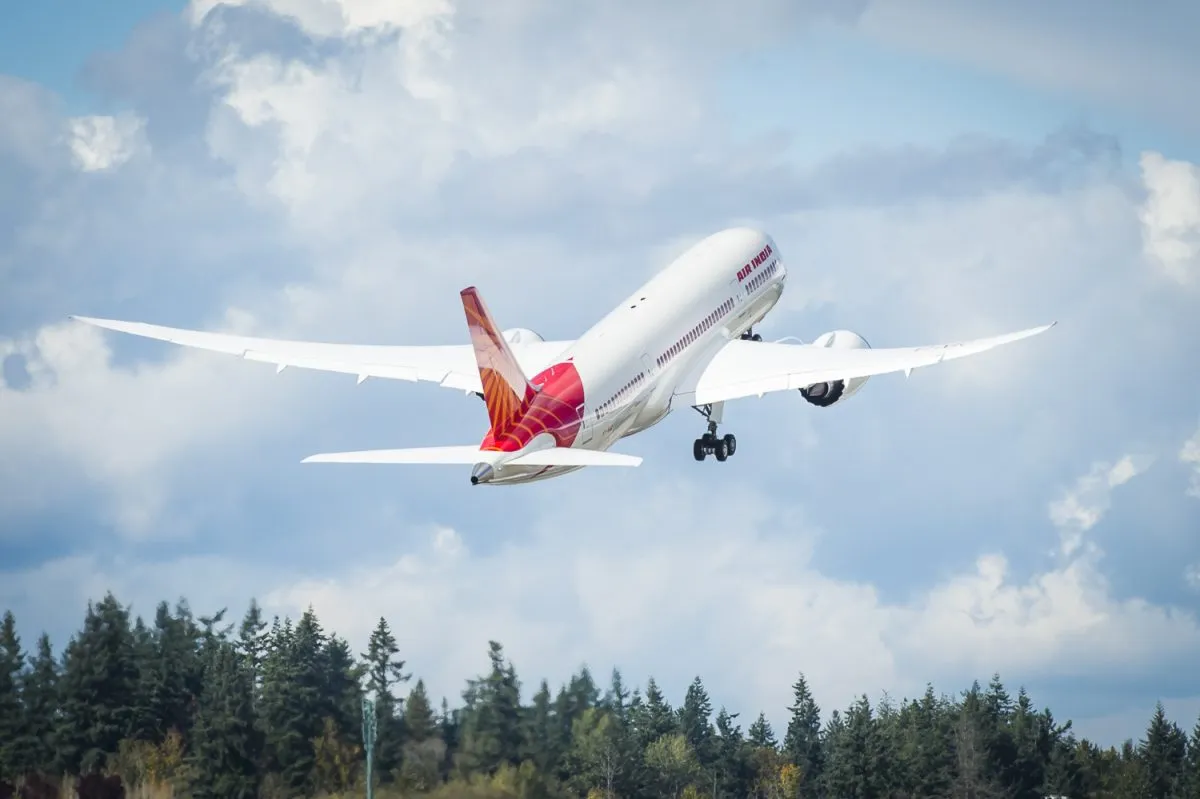
Air India has spent the past four years executing an aggressive expansion strategy focused on increasing its market footprint, acquiring aircraft, and consolidating operations. Now, under the incoming leadership of veteran aviation executive Tewolde Gebremariam, the carrier is pivoting toward operational excellence, service quality, and long-term financial sustainability.
Gebremariam outlined this strategic shift during his inaugural company-wide town hall meeting on Monday, addressing thousands of employees across the airline’s domestic and international networks. While he is yet to formally assume the role of Chief Executive Officer and Managing Director pending standard regulatory approvals—a mandatory requirement in India for foreign nationals leading domestic carriers, similar to the process navigated by his predecessor Campbell Wilson in 2022—Gebremariam’s early messaging signals a definitive new era for India’s premier international airline.
The transition marks a turning point for Air India, which has undergone monumental structural changes since returning to the private ownership of the Tata Group. With the heavy lifting of fleet acquisition and corporate consolidation largely complete, the incoming leadership team faces the intricate challenge of transforming scale into profitability.
The Tata Era: Four Years of Rapid Rebuilding and Fleet Modernization
To understand the mandate before Gebremariam, it is necessary to examine the transformative trajectory of Air India since January 2022, when the Tata Group officially regained ownership of the carrier from the Government of India nearly 70 years after its nationalization.
Upon privatization, the Tata Group inherited an airline plagued by legacy issues, aging aircraft, high debt, and fragmented operational units. Under the leadership of Campbell Wilson, the airline embarked on an aggressive multi-year transformation program designed to restore its status as a world-class global carrier.
A cornerstone of this turnaround was the staggering order for 470 aircraft placed with industry giants Airbus and Boeing in early 2023. Valued at tens of billions of dollars, the order comprised widebody and narrowbody aircraft intended to radically modernize the fleet, enhance fuel efficiency, and open new non-stop international routes to North America, Europe, and the Asia-Pacific region.
Simultaneously, Air India poured resources into passenger-facing upgrades. The airline launched a comprehensive multi-million-dollar interior retrofit program for its legacy Boeing 777 and 787 Dreamliner fleets, introducing state-of-the-art cabin products, modern in-flight entertainment systems, and upgraded premium seating. Concurrently, the carrier invested heavily in technological infrastructure, migrating legacy systems to modern cloud-based platforms to improve operational reliability, revenue management, and digital customer touchpoints.
Corporate Consolidation: Mergers and Brand Unification
Beyond physical assets, the past four years have been defined by complex corporate restructuring. The Tata Group sought to streamline its aviation portfolio by consolidating its various airline holdings under a unified operational umbrella.
The most monumental milestone in this consolidation strategy was the mega-merger of Vistara—a joint venture between Tata Sons and Singapore Airlines—into Air India. The integration, which received regulatory clearance and was finalized after months of meticulous planning, positioned Air India as the sole full-service international carrier within the Tata group.
Furthermore, the low-cost carrier segment underwent rationalization, with Air India Express absorbing AIX Connect (formerly AirAsia India) to create a powerful, unified low-cost subsidiary. This dual-brand strategy allowed the Tata Group to clearly demarcate its full-service and budget offerings, mirroring the operational models of leading global airline holding groups.
By the time Wilson’s tenure prepared to transition, Air India possessed a vastly expanded footprint, a modernizing fleet, and an integrated corporate structure. However, this rapid growth came with considerable financial investments, integration pains, and operational complexities.
Entering the Gebremariam Era: A Focus on Quality and Margins
It is against this backdrop of heavy capital expenditure and massive structural overhaul that Tewolde Gebremariam steps up to the helm. Widely recognized in the global aviation community for his successful, multi-decade tenure leading Ethiopian Airlines—where he transformed the carrier into Africa’s largest, most profitable, and most respected aviation group—Gebremariam brings a reputation for rigorous operational discipline and strategic patience.
During Monday’s town hall, Gebremariam emphasized that while expansion was the necessary first phase of Air India’s renaissance, the next phase must prioritize commercial viability, operational precision, and service delivery. According to attendees who spoke on the condition of anonymity, the incoming CEO stressed that scale alone does not guarantee success in the fiercely competitive international aviation market.
"Air India has spent the past four years getting bigger," industry analysts note. "Its incoming CEO Tewolde Gebremariam now wants to make sure it gets better, and more profitable."
This strategic pivot addresses lingering customer service challenges that have accompanied the airline’s rapid growth. While corporate restructuring and aircraft orders dominated headlines, passengers frequently voiced frustrations regarding consistency in service delivery, ground handling delays, and call center responsiveness. Gebremariam’s background suggests a renewed emphasis on training, punctuality, and the finer details of the passenger experience that define elite global carriers.
Regulatory Hurdle and Leadership Transition
The formal handover of executive responsibilities remains contingent upon standard regulatory clearances from Indian authorities. In accordance with Ministry of Civil Aviation guidelines, foreign nationals appointed to top executive positions at domestic carriers must undergo stringent security and background evaluations before assuming office.
This regulatory requirement is standard procedure and mirrors the process experienced by Campbell Wilson when he was appointed CEO in June 2022. Industry observers expect the approvals to be granted smoothly in the coming weeks, allowing Gebremariam to take the reins officially and begin implementing his long-term vision.
During the interim period, transition teams are ensuring a seamless handover of responsibilities, allowing Gebremariam to familiarize himself further with the nuances of the Indian aviation market, labor relations within the expanded workforce, and ongoing supplier negotiations.
Broader Implications for the Indian Aviation Market
Gebremariam’s appointment and strategic recalibration arrive at a critical juncture for Indian aviation. The country represents one of the fastest-growing aviation markets in the world, driven by a burgeoning middle class, rising disposable incomes, and ambitious infrastructure development that has seen the number of operational airports double over the past decade.
However, the market is also characterized by intense domestic competition—highlighted by the dominant market share of IndiGo and the aggressive expansion strategies of newer regional players—as well as volatile jet fuel prices and currency fluctuations. Furthermore, international legacy carriers continue to capture a significant share of lucrative outbound traffic from Indian travelers flying to Western and Asian hubs.
For Air India, shifting the focus from top-line expansion to bottom-line profitability is essential for proving the viability of the Tata Group’s long-term investment. Achieving sustained profitability will require optimizing newly integrated networks, maximizing aircraft utilization, controlling maintenance and operational costs, and capturing higher yields from business and premium leisure travelers.
If Gebremariam can successfully replicate the disciplined, profitable growth model he pioneered at Ethiopian Airlines within the complex ecosystem of modern Air India, the carrier could finally cement its position not just as a national icon of immense scale, but as a formidable, self-sustaining force in global commercial aviation.




 Diana Nuri Rohmawati

 Gabriela Annisa

 Lukman Taruna Persada Ramadan

 Anjar Salim
