
 Tatiana Tantri Indah Sari
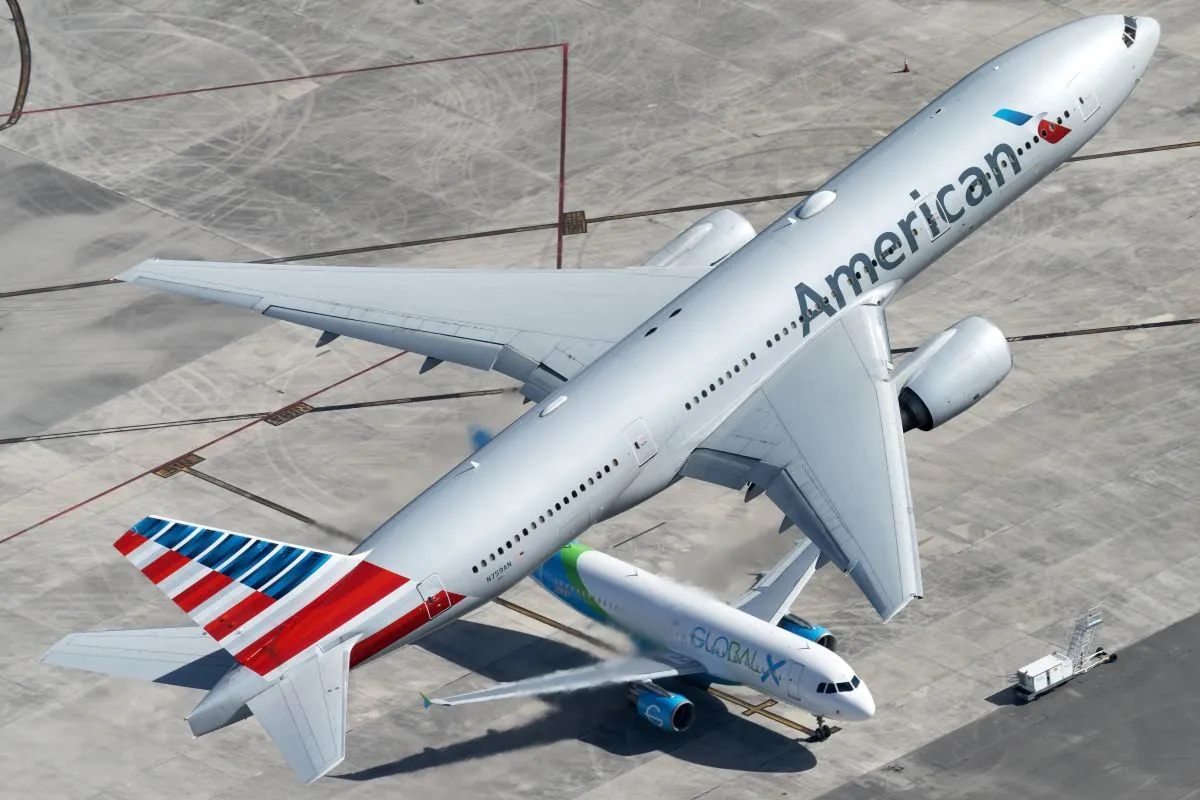
American Airlines is undergoing a significant transition within its executive ranks, marking a pivotal moment for the carrier’s commercial strategy. Brian Znotins, who has served as the airline’s top network planner and guided its route architecture through some of the most volatile periods in aviation history, is set to retire from the company. The departure was officially announced in an internal memo authored by Nat Pieper, American Airlines’ chief commercial officer, and reviewed by industry publication Skift.
Stepping into the crucial role of senior vice president of network planning is Nick Andersen, a seasoned aviation executive with nearly two decades of institutional experience within American Airlines and its predecessor, U.S. Airways. Andersen’s appointment, slated to take effect on November 1, signals a move toward internal continuity combined with fresh operational oversight as the airline navigates a competitive and rapidly shifting domestic and international travel landscape.
The leadership handoff arrives at a critical juncture for the Fort Worth, Texas-based carrier. Network planning is among the most sensitive and influential functions within any major airline, directly dictating fleet utilization, profitability, hub connectivity, and alliance partnerships. As American Airlines continues to recalibrate its post-pandemic network, optimize its hub-and-spoke system, and respond to fluctuating corporate and leisure demand patterns, the appointment of a new planning chief will shape the carrier’s strategic trajectory for the foreseeable future.
A Career-Defining Handover in Network Planning
Brian Znotins’ retirement marks the end of a notable tenure at the helm of American’s route network. During his time leading the network planning department, Znotins was tasked with managing the carrier’s extensive domestic footprint alongside its sprawling international joint ventures and long-haul operations. Network planners operate at the intersection of economics and logistics, constantly evaluating route profitability, scheduling frequencies, and capacity deployment against macroeconomic tailwinds and headwinds, including fuel price volatility, aircraft delivery delays, and shifting geopolitical landscapes.
The transition from Znotins to Andersen represents an internal elevation of a deeply experienced strategist. Nick Andersen has spent nearly 20 years entrenched in the operational and commercial machinery of American Airlines and U.S. Airways. Throughout his tenure, Andersen has cultivated a comprehensive understanding of airline economics by holding diverse leadership roles spanning network strategy, revenue management, pricing, day-to-day operations, fleet planning, flight profitability, and labor analysis.
According to Nat Pieper’s internal memo, Andersen’s multifaceted background makes him uniquely qualified to steer the network planning division into its next chapter. By possessing direct experience in how network decisions cascade into revenue management, crew scheduling, and fleet utilization, Andersen brings a holistic perspective to a role that requires constant balancing between commercial ambition and operational feasibility.
Organizational Restructuring and Interim Reporting Lines
In tandem with Andersen’s promotion, American Airlines is implementing structural adjustments within its commercial division to streamline oversight and maintain momentum. Pieper announced that following Andersen’s transition into the senior vice president role on November 1, the commercial planning and performance teams will temporarily report to Scott Chandler, the airline’s vice president of revenue management.
This reporting adjustment is designed to ensure seamless continuity as Andersen assumes his broader responsibilities. By aligning commercial planning and performance under Chandler’s purview during the interim period, American Airlines aims to maintain tight coordination between capacity deployment and pricing strategies. In the airline industry, revenue management and network planning are inextricably linked; while network planning determines where the aircraft fly and how many seats are offered, revenue management dictates the pricing architecture and yield optimization for those seats. Bridging these functions closely under experienced leadership allows the carrier to respond with agility to booking curves and market demand shifts.
The Broader Context: Leadership Evolution at American Airlines
The retirement of Brian Znotins and the elevation of Nick Andersen form part of a broader, ongoing evolution within American Airlines’ executive suite. Over the past several years, the carrier has systematically recalibrated its leadership team to address post-pandemic recovery metrics, operational reliability benchmarks, and long-term financial health.
When international travel ground to a halt in 2020 and subsequently underwent an uneven, demand-driven resurgence, legacy carriers were forced to rethink traditional network models. Business travel—historically the most lucrative segment for network airlines—recovered at a slower pace than leisure travel, prompting carriers like American to pivot toward visiting friends and relatives (VFR) traffic, sun-and-fun leisure destinations, and optimized domestic connectivity. Znotins and his team navigated these structural shifts, adjusting hub banks at major strongholds such as Dallas/Fort Worth International Airport (DFW) and Charlotte Douglas International Airport (CLT) to maximize connection efficiency.
As the industry enters a new phase characterized by normalized growth rates, persistent supply chain constraints impacting aircraft deliveries, and intense competition from ultra-low-cost and low-cost carriers, leadership continuity in commercial planning becomes paramount. Andersen’s two decades within the corporate ecosystem ensure that he understands the nuanced DNA of American’s network strategy, minimizing the friction often associated with external executive appointments.
Implications for Fleet, Schedule, and Competitive Strategy
The appointment of a new senior vice president of network planning carries significant implications for how American Airlines will manage its fleet and deploy capacity in the coming years. Network planners work hand in hand with fleet planning teams to determine aircraft orders, gauge retirements, and match gauge sizes—ranging from regional jets to widebody Boeing 777s and modern Airbus A321neos—to specific route demands.
Supply chain bottlenecks affecting major manufacturers like Boeing and Airbus have placed immense pressure on airline network planners globally. Delays in aircraft deliveries mean that airlines must maximize the utilization of their existing fleets while carefully pruning unprofitable routes or trimming frequencies on marginal paths. Andersen’s extensive background in fleet planning and flight profitability positions him to manage these constraints effectively, ensuring that American’s capital allocation aligns with return-on-invested-capital (ROIC) objectives.
Furthermore, American’s domestic and international partnerships, including its ongoing domestic alliances and Oneworld integration, rely heavily on sophisticated network coordination. Maintaining robust feed into key hubs while capitalizing on profitable point-to-point opportunities requires analytical rigor and cross-departmental collaboration—traits that Andersen has demonstrated across his various roles in pricing, revenue management, and labor analysis.
Looking Ahead: The Road to November 1
With the transition timeline set, Nick Andersen will officially step into his new capacity on November 1. Until then, the network planning and commercial teams are expected to execute ongoing schedule adjustments for the upcoming winter and spring seasons under the collaborative oversight of Znotins, Pieper, and Chandler.
Industry analysts will be closely watching how American Airlines’ network strategy evolves under Andersen’s guidance. While radical shifts in the carrier’s core hub-and-spoke philosophy are unlikely given his deep internal roots, subtle optimizations in gauge deployment, seasonal frequency adjustments, and international partnership coordination are expected. As American continues to vie for market dominance in the U.S. domestic market and key transatlantic corridors, the transition of its network leadership represents a foundational step in securing long-term commercial resilience.




 Gabriela Annisa

 Lukman Taruna Persada Ramadan

 Anjar Salim

 Dwi Wanna
