
 Budi Mulyono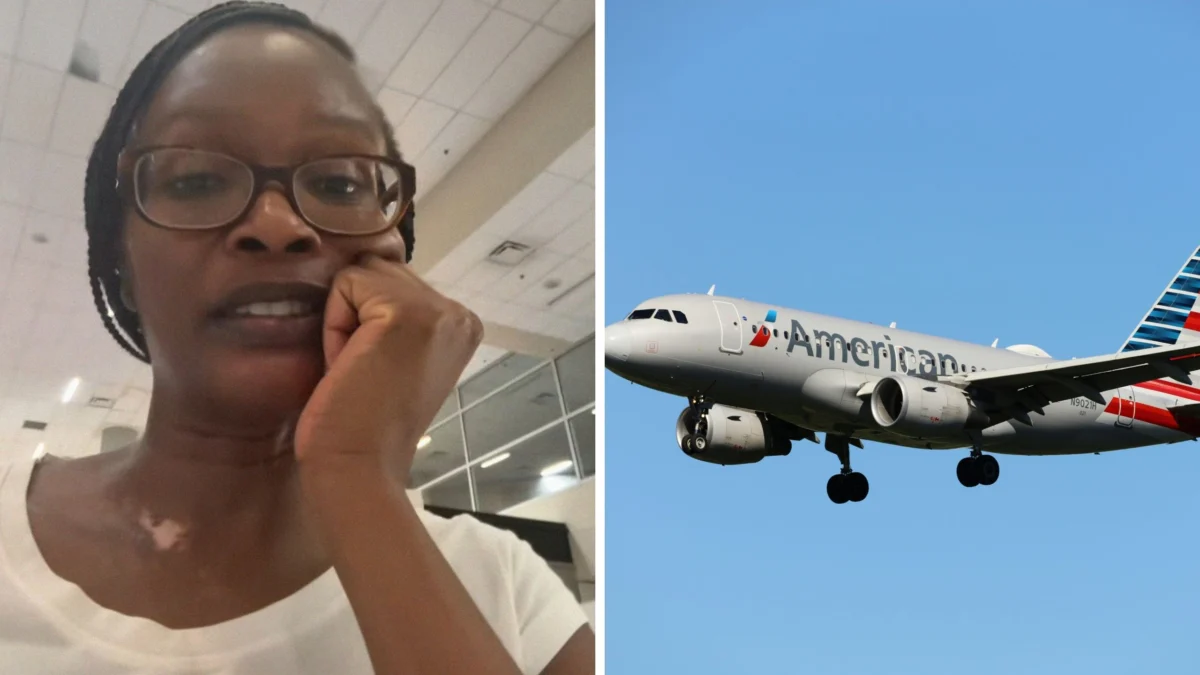
A viral incident involving a high-profile medical professional has cast a renewed spotlight on the complex and often opaque boarding priority policies of major U.S. air carriers. Dr. SFlyer MD, an anesthesia and critical care physician who maintains a significant educational presence on TikTok, recently shared a detailed account of being placed on a standby list for a flight she had booked more than a month in advance. The incident, which has garnered over 162,000 views, highlights a critical but frequently misunderstood aspect of the modern travel industry: the 24-hour check-in window and its role in determining passenger priority on oversold flights.

The physician’s experience began with a standard business travel booking. Despite securing her ticket weeks ahead of her scheduled departure, Dr. SFlyer MD discovered upon arrival at the airport that her confirmed status had been downgraded to standby. According to her account, airline staff informed her that because she had failed to check in exactly 24 hours before departure, she had been deprioritized in favor of passengers who had completed the digital check-in process earlier. This administrative technicality effectively stripped her of a guaranteed seat on a flight she required for her professional duties.

The Logistics of the Incident and Airport Protocol
The conflict escalated when Dr. SFlyer MD attempted to utilize her airport amenities. Having cleared security, she proceeded to the Capital One Lounge, a premium facility typically accessible to specific credit card holders or those willing to pay a $125 daily entry fee. However, lounge policy requires guests to present a valid boarding pass with a confirmed seat assignment. Because the physician had been placed on standby, she lacked a seat number, leading to her being denied entry to the lounge.

In her video testimony, Dr. SFlyer MD expressed significant frustration, noting that she had arrived early specifically to eat dinner before her flight. "How do you buy a ticket a month ago to go to work and they just put you on standby?" she questioned. She further noted that in her extensive history flying with United Airlines, she had never encountered a similar penalty for a late check-in. The experience led her to compare the legacy carrier’s service to that of ultra-low-cost carriers like Spirit or Frontier, which are more commonly associated with strict adherence to procedural technicalities.
Adding a layer of complexity to the interaction, the physician reported that airline staff suggested her "bad attitude" regarding the standby status could further jeopardize her chances of boarding. In the aviation industry, "refusal to transport" is a powerful tool held by gate agents and flight crews, allowing them to deny boarding to passengers deemed disruptive or uncooperative, regardless of their ticket status.
The Regulatory Framework of Overbooking and Bumping
To understand the physician’s predicament, one must examine the legal and economic framework of the American aviation industry. Airlines in the United States are legally permitted to sell more tickets than there are seats on an aircraft. This practice, known as overbooking, is an algorithmic strategy designed to hedge against "no-shows"—passengers who book flights but fail to arrive. According to the Department of Transportation (DOT), overbooking is not illegal and is considered a standard business practice to ensure flights depart at maximum capacity.

When a flight is oversold and more passengers arrive than the aircraft can accommodate, the airline must follow a specific protocol. The DOT requires airlines to first seek volunteers who are willing to give up their seats in exchange for compensation, such as travel vouchers, cash, or meal tickets. These are known as Voluntary Denied Boardings (VDB).

If an insufficient number of volunteers come forward, the airline resorts to Involuntary Denied Boarding (IDB), commonly referred to as "bumping." It is during this phase that the "check-in order" becomes a decisive factor. Most airline "Contracts of Carriage"—the legal agreement between the passenger and the carrier—stipulate that boarding priority is determined by several factors, including:

- Frequent Flyer Status: High-tier elite members are rarely bumped.
- Fare Class: Passengers in premium cabins or those who paid full-fare economy tickets are prioritized.
- Check-in Time: When all other factors are equal, the passenger who checked in last is often the first to be moved to the standby list or bumped entirely.
Comparative Data: American Airlines vs. Industry Peers
The physician’s claim that this "never happened" with United Airlines highlights a perceived difference in how carriers manage their oversold inventory. Data from the DOT’s Air Travel Consumer Reports provide a clearer picture of these trends. In recent years, legacy carriers have made efforts to reduce involuntary bumping to avoid public relations crises.

According to 2023 industry data, American Airlines has historically maintained a higher rate of involuntary denied boardings compared to some of its peers like Delta Air Lines, which has famously reduced its IDB rate to near zero through aggressive voucher offers to volunteers. In the first half of 2023, American Airlines reported an IDB rate of approximately 0.58 per 10,000 passengers, whereas United Airlines sat slightly lower in certain quarters. While these numbers seem small, they represent thousands of passengers annually who, like Dr. SFlyer MD, find themselves without a seat despite holding a confirmed reservation.

Financial Implications and Passenger Rights
The Department of Transportation has established strict compensation limits for passengers who are involuntarily bumped from a flight. If an airline cannot get a passenger to their destination within one hour of their original arrival time, the passenger is entitled to compensation.
- Short Delays: If the substitute transportation arrives between one and two hours after the original arrival time (one to four hours for international flights), the airline must pay 200% of the one-way fare, capped at $775.
- Long Delays: If the delay exceeds two hours (four hours internationally) or if the airline does not make substitute travel arrangements, the compensation jumps to 400% of the one-way fare, capped at $1,550.
However, there is a significant loophole: if a passenger is placed on standby and eventually makes it onto the flight, or if the airline can get them to their destination within an hour of the original time, no compensation is legally required. Furthermore, if a passenger fails to comply with the airline’s check-in deadline—which for American Airlines is typically 45 minutes for domestic flights and 90 minutes for international, though the 24-hour window is the "priority" marker—they may forfeit their right to compensation entirely.

The Digital Transformation of the Check-In Process
The shift toward mobile apps and digital notifications has fundamentally changed the "first-come, first-served" nature of air travel. In the past, boarding priority was often determined by who arrived at the airport gate first. Today, the race begins the second the 24-hour check-in window opens.

For many travelers, particularly those in high-stress professions like medicine, the 24-hour check-in notification can easily be missed. For the airline, however, the digital check-in serves as a data point. When a passenger fails to check in early, the airline’s revenue management software may flag that seat as "potentially available," allowing the carrier to accommodate a last-minute high-fare flyer or a standby passenger from an earlier delayed flight.

This automation of priority has led to a disconnect between consumer expectations and corporate reality. As one commenter on Dr. SFlyer MD’s post noted, "Buying the ticket isn’t enough?" From a legal standpoint, the answer is often no. The purchase of a ticket is a contract for transportation from Point A to Point B, but it does not always guarantee a specific seat on a specific aircraft at a specific time, as outlined in the fine print of the Contract of Carriage.

Broader Impact on Consumer Trust and Corporate Policy
The backlash from incidents like this often forces airlines to re-evaluate their communication strategies. While American Airlines did not provide a formal response to the physician’s specific case, the company has recently implemented changes to other aspects of its service to improve passenger experience. For instance, the carrier recently automated its meal voucher system for delayed passengers, allowing agents to issue digital vouchers to an entire flight simultaneously rather than processing them individually.

Despite these incremental improvements, the core issue of overbooking remains a point of contention. Consumer advocacy groups argue that the current compensation caps do not sufficiently penalize airlines for overbooking, especially when the disruption affects critical workers or travelers attending major life events.

The physician’s viral video serves as a cautionary tale for the modern traveler. In an era of optimized cabin loads and algorithmic seat management, the traditional "confirmed reservation" is only the first step. The secondary step—checking in the moment the 24-hour window opens—has become a mandatory ritual for anyone wishing to ensure their seat remains their own.

Chronology of a Modern Boarding Conflict
The timeline of Dr. SFlyer MD’s travel highlights the pitfalls of the current system:

- 30 Days Prior: Ticket purchased and confirmed for work-related travel.
- 24 Hours Prior: The check-in window opens. The passenger does not check in immediately.
- Day of Travel: Passenger arrives at the airport and experiences technical difficulties with the mobile check-in app.
- Security Clearance: Passenger passes through TSA, assuming the ticket issues are minor.
- Lounge Arrival: Entry is denied due to lack of a seat assignment.
- Gate Interaction: Staff confirms the standby status due to an oversold flight and late check-in priority.
- Resolution: The passenger is left in a state of uncertainty, highlighting the fragility of confirmed bookings in a high-demand travel market.
As air travel demand continues to reach record highs, the friction between airline efficiency and passenger rights is likely to persist. For Dr. SFlyer MD and the thousands who viewed her story, the incident is a reminder that in the eyes of the airline’s software, a month-old reservation can be superseded by a 24-hour-old digital check-in.




 Anjar Salim
 Chandra Hamzah
 Tatiana Tantri Indah Sari
 Lukman Taruna Persada Ramadan
