
 Budi Mulyono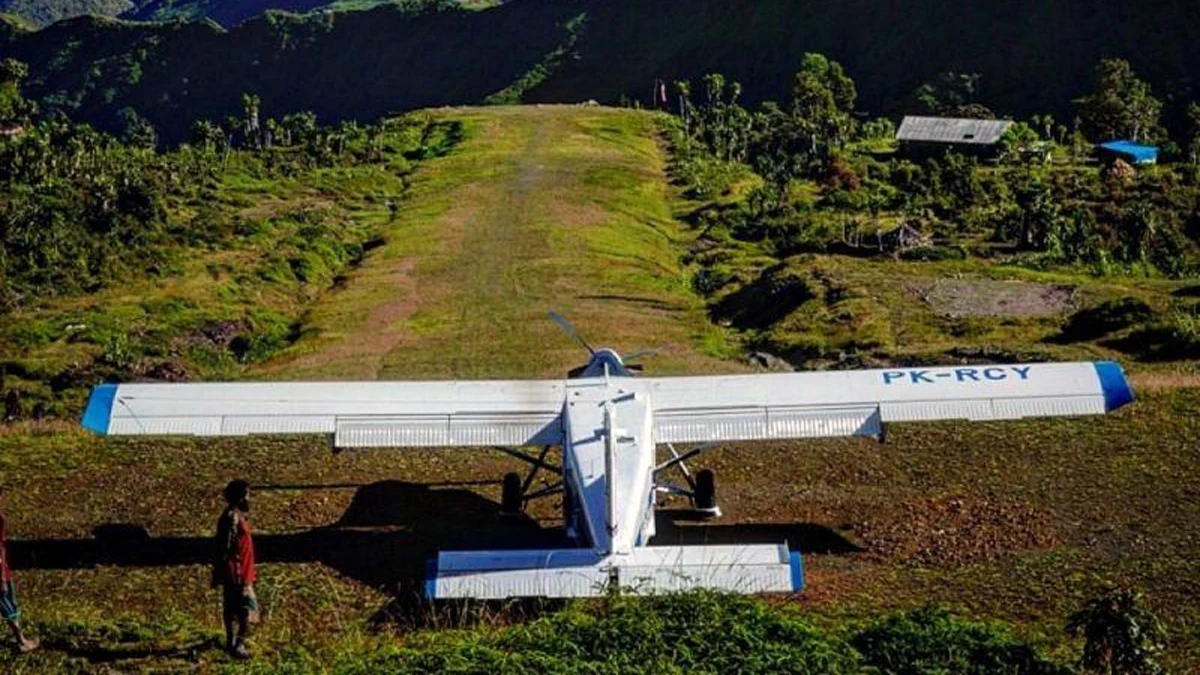
The death of Captain Nicholas F. Gosselin, an American pilot operating in the volatile highlands of Papua, Indonesia, has sent shockwaves through the international aviation and humanitarian communities. Captain Gosselin was killed on July 2, 2026, when his aircraft was intercepted and set ablaze by separatist fighters shortly after landing at a remote airstrip in the Yahukimo Regency. The incident, claimed by the West Papua National Liberation Army (TPNPB), marks a significant escalation in the targeting of civilian aviation assets within the region and underscores the deteriorating security situation in Indonesia’s easternmost provinces.
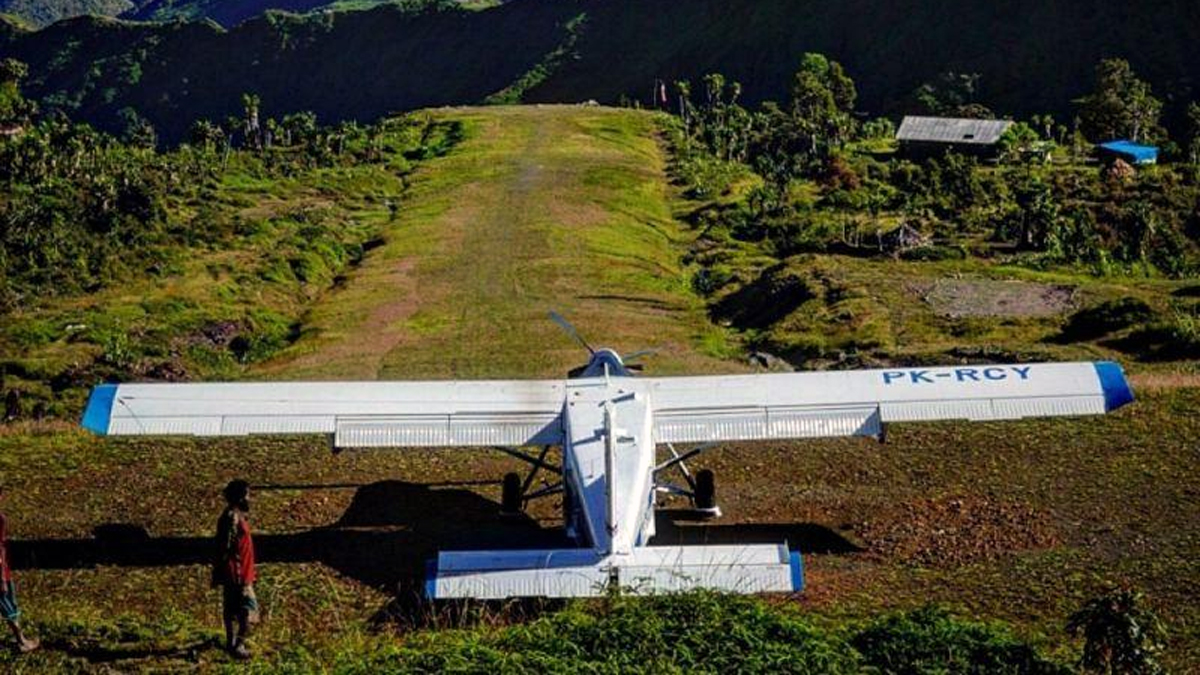
Operating for Associated Mission Aviation (AMA), a veteran provider of aerial lifelines to the region’s isolated communities, Captain Gosselin was piloting a Pilatus PC-6/B2-H4 Turbo Porter, registered as PK-RCY. The flight had departed from the regional hub of Wamena, bound for the Ipdeheik airstrip in the village of Balinggama. On board were seven local Papuan passengers, including three women and a child. While the passengers were reportedly released unharmed, the pilot was executed, and the Swiss-made utility aircraft—a vital piece of infrastructure for the highland communities—was reduced to a charred skeleton on the runway.
Chronology of the Attack
The mission began as a routine logistics and passenger flight, a staple of life in a region where road infrastructure is virtually non-existent. At approximately 10:00 AM local time, Captain Gosselin departed Wamena, the largest town in the Indonesian Papuan highlands, situated in the Baliem Valley. The flight to Balinggama, located in the rugged terrain of the Yahukimo Regency, was expected to be brief, navigating the treacherous mountain passes that define the area.
Upon landing at the Ipdeheik airstrip, a short, unpaved runway carved into a mountain slope, communication between the aircraft and aviation authorities in Wamena was abruptly severed. Witnesses and local reports indicate that as the aircraft came to a halt and the engine began its shutdown cycle, armed members of the TPNPB emerged from the surrounding forest. The separatist group, which has been engaged in a decades-long insurgency against Indonesian rule, surrounded the aircraft and forced the occupants to disembark.
While the seven passengers were led away from the plane, Captain Gosselin was reportedly confronted by the fighters. According to a statement later released by TPNPB spokesperson Sebby Sambom, the group targeted the flight under the suspicion that it was being used to transport Indonesian military (TNI) personnel or supplies under the guise of a civilian mission. Despite the absence of military personnel on the flight manifesto, the militants proceeded to kill Gosselin. Following the execution, the attackers doused the Pilatus Porter in fuel and set it on fire, ensuring the total destruction of the airframe before retreating back into the dense jungle.
Technical Context: The Role of the Pilatus PC-6 Porter
The loss of PK-RCY is not merely a financial blow to Associated Mission Aviation but a logistical catastrophe for the Balinggama community. The Pilatus PC-6 Porter, often referred to as the "Jeep of the Air," is a legendary Short Take-Off and Landing (STOL) aircraft. Its design allows it to operate in conditions that would be impossible for almost any other fixed-wing aircraft.
In the Papuan highlands, where airstrips are often less than 300 meters long, positioned on steep inclines, and frequently plagued by crosswinds and low visibility, the PC-6 is irreplaceable. The aircraft’s ability to carry up to 1,500 kilograms of cargo or nine passengers into "postage stamp" runways makes it the backbone of the region’s supply chain. AMA utilizes these aircraft to transport everything from basic foodstuffs, such as rice and cooking oil, to critical medical supplies, vaccines, and construction materials.
For the residents of Yahukimo, the arrival of an AMA flight often represents the only access to emergency medical evacuations (medevacs). With the destruction of PK-RCY and the subsequent suspension of flights to the area due to security concerns, thousands of villagers are now effectively cut off from the outside world, facing a total blackout of essential services and emergency support.
The Insurgency and the Aviation Dilemma
The killing of Captain Gosselin is the latest in a series of high-profile attacks on foreign pilots in West Papua, reflecting a tactical shift by the TPNPB. The group seeks to internationalize their struggle for independence by targeting foreign nationals and disrupting the infrastructure that links the highlands to the Indonesian state.
The conflict itself dates back to the 1960s. West Papua, a former Dutch colony, was incorporated into Indonesia following the 1969 "Act of Free Choice," a United Nations-sponsored vote that many Papuans and international observers have long criticized as fraudulent. Since then, a low-level but persistent insurgency has simmered. In recent years, the violence has intensified as the Indonesian government has ramped up infrastructure projects, such as the Trans-Papua Highway, which separatists view as a tool for military mobilization and resource extraction rather than community development.
Aviation has become a central point of contention in this struggle. The TPNPB has issued repeated "war zone" warnings, cautioning civilian pilots against flying into areas where Indonesian security forces are active. They allege that the Indonesian military frequently charters civilian aircraft from companies like Susi Air and AMA to move troops and intelligence officers into rebel-held territories. While these airlines maintain that they operate strictly for humanitarian and commercial purposes, the "dual-use" nature of the airstrips—which serve both villagers and nearby military outposts—places pilots in an impossible and often fatal position.

Historical Precedents of Pilot Targeting
The tragedy in Yahukimo follows a grim pattern of incidents involving international flight crews in the region:
- Phillip Mehrtens (2023–2024): In February 2023, New Zealand pilot Phillip Mehrtens was kidnapped by TPNPB fighters led by Egianus Kogoya after landing a Susi Air plane in the Nduga Regency. Mehrtens was held hostage in the jungle for over 19 months, becoming a central figure in a tense international standoff before his eventual release in September 2024.
- Glen Malcolm Conning (August 2024): Only weeks before the release of Mehrtens, another New Zealander, helicopter pilot Glen Malcolm Conning, was killed shortly after landing in the Mimika Regency. His aircraft was also burned, and his passengers—four health workers—were spared.
The death of Nicholas Gosselin confirms that the release of Mehrtens did not signal a softening of the TPNPB’s stance. Instead, it appears the group has doubled down on its policy of using violence against aviation personnel to enforce their territorial claims.
Official Responses and Investigatory Challenges
The Indonesian National Armed Forces (TNI) and the National Police (Polri) have condemned the attack, labeling it a "senseless act of terrorism" against a humanitarian worker. A spokesperson for the Cartenz Peace Task Force, the specialized unit tasked with handling the Papuan insurgency, stated that security forces are attempting to recover Captain Gosselin’s remains and secure the Balinggama area.
However, the recovery operation faces immense geographical and tactical hurdles. The Ipdeheik airstrip is located in a deep valley surrounded by peaks exceeding 3,000 meters. There are no roads leading to the site; every piece of equipment and every soldier must be flown in by helicopter. Furthermore, the TPNPB often uses such sites for ambushes, knowing that the military must rely on predictable aerial corridors to reach the scene. Poor weather conditions, common in the highlands, have further delayed the deployment of investigative teams.
The United States Embassy in Jakarta has not yet issued a detailed statement regarding the death of the American citizen, though sources indicate that consular officials are working closely with Indonesian authorities to facilitate the repatriation of the body. The incident is expected to prompt a fresh round of travel warnings and may lead to increased pressure from Washington on Jakarta to find a political rather than purely military solution to the Papuan conflict.
Broader Implications for the Region
The long-term implications of this attack are profound. For the aviation industry, the "Papua run" has always been considered one of the most dangerous assignments in the world due to the weather and terrain. The added layer of targeted executions makes the recruitment of experienced foreign pilots—who make up a significant portion of the workforce in Papua—increasingly difficult.
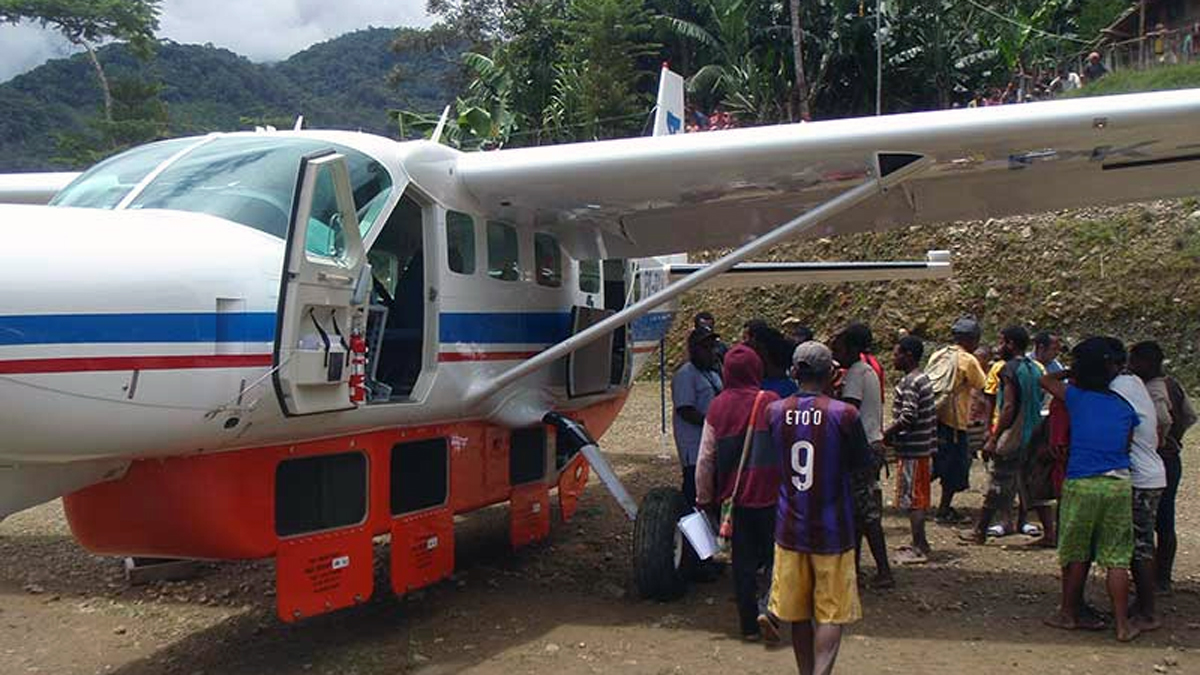
Insurance premiums for operators in the region are expected to skyrocket, and several carriers have already announced a temporary suspension of flights to "red zone" regencies, including Yahukimo, Nduga, and Intan Jaya. This "aviation blockade" will inevitably lead to a humanitarian crisis. Prices for basic goods in the highlands, already three to four times higher than in Java, are likely to surge further, and the lack of medical transport will almost certainly result in preventable deaths among the local population.
Furthermore, the killing of Captain Gosselin complicates the international narrative surrounding the West Papuan independence movement. While many international human rights groups sympathize with the Papuan people’s desire for self-determination, the execution of non-combatant humanitarian pilots risks alienating global support and focusing international attention on the TPNPB’s militant tactics rather than their political grievances.
As the smoke clears from the Ipdeheik airstrip, the tragedy serves as a stark reminder of the cost of an unresolved conflict. For the pilots who continue to fly these routes, every landing is now a gamble not just against the elements, but against a political firestorm that shows no signs of abating.




 Anjar Salim
 Chandra Hamzah
 Tatiana Tantri Indah Sari
 Lukman Taruna Persada Ramadan
