
 Budi Mulyono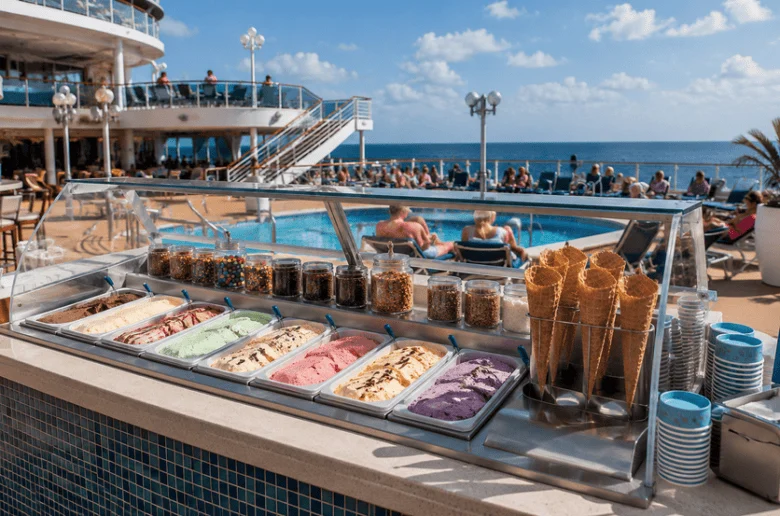
The persistent urban legend suggesting that cruise ships host impromptu ice cream parties to clear freezer space for deceased passengers has circulated within travel circles for decades. This narrative posits a morbid logistical necessity: that when the onboard morgue reaches capacity, the culinary department must distribute perishable frozen goods to repurpose industrial freezers for body storage. However, industry experts and maritime professionals have moved to definitively debunk this claim, clarifying that such a practice would not only be a gross violation of international health and safety standards but is also entirely unnecessary given the sophisticated infrastructure of modern cruise vessels.
The myth gained renewed attention following insights shared by a seasoned maritime professional known as Lucy, who operates the "Cruising as Crew" social media platforms. With over a decade of experience in the cruise industry and a repository of more than 500 informative videos regarding shipboard life, Lucy addressed the "ice cream social" rumor as a complete fabrication. She emphasized that while the concept of a cruise line prioritizing freezer space over dignity might seem plausible to a cynical public, the reality is governed by strict legal mandates and rigorous health protocols that forbid the commingling of biological remains with food supplies.
The Regulatory Framework and Onboard Infrastructure
Cruise ships are essentially floating cities, and like any municipality with a population ranging from 2,000 to over 8,000 people, they must be equipped to handle the full spectrum of human experience, including medical emergencies and natural deaths. Under international maritime law and the guidelines set forth by health organizations such as the Centers for Disease Control and Prevention (CDC) in the United States, cruise ships are required to maintain dedicated morgue facilities.
These morgues are specialized refrigerated units located on the lower decks of the ship, typically in "I-95," the main crew thoroughfare that runs the length of the vessel far from passenger view. These facilities are designed to hold between three and ten bodies, depending on the size of the ship. They are maintained at specific temperatures to preserve remains until the vessel reaches a port where the deceased can be repatriated.
The suggestion that food freezers would be used as an overflow is contradicted by the Hazard Analysis and Critical Control Point (HACCP) regulations, which govern food safety on a global scale. A cruise line found to be storing human remains in food-service areas would face catastrophic legal consequences, the immediate revocation of health certificates, and permanent brand damage. As Lucy noted in her professional assessment, the Food and Beverage (F&B) department is entirely siloed from medical and morgue operations, ensuring that no overlap occurs between culinary storage and the management of decedents.
The Chronology of an Onboard Mortality
When a death occurs at sea, it triggers a highly choreographed series of events designed to maintain the dignity of the deceased, support the grieving family, and minimize distress among the remaining passengers. This process begins the moment a medical emergency is reported.
Phase One: The Medical Emergency Codes
The first indication of a serious event is often a coded announcement over the ship’s public address system. While these codes vary slightly by cruise line (such as Royal Caribbean, Carnival, or Norwegian), "Code Alpha" is a common term used to signal a medical emergency. This alert summons the medical team and stretcher bearers to a specific location. If the situation is life-threatening, such as a cardiac arrest, the code "Operation Bright Star" may be utilized.
A critical, albeit somber, part of this protocol involves the ship’s technical crew. When "Operation Bright Star" is announced, the ventilation officer is alerted to begin cooling the morgue facilities. This ensures that if the medical team is unable to resuscitate the patient, the specialized storage unit is at the required temperature immediately upon the confirmation of death.
Phase Two: Confirmation and "Operation Rising Star"
Once a physician has officially confirmed a death and the Captain has been notified, the protocol shifts from life-saving to management. A specific code, often "Operation Rising Star," is used among senior staff to indicate that a death has occurred. This announcement is never made ship-wide; it is restricted to internal communications between the medical department, the bridge, and the guest care team.
Phase Three: Discreet Transportation
The movement of the deceased is handled with extreme discretion. Crew members utilize service elevators and back-of-house corridors to transport the body to the morgue. This operation is typically timed or routed to ensure that passengers enjoying the ship’s amenities are unaware of the event. The goal is to allow the voyage to continue without casting a pall over the vacation experience of the thousands of other guests on board.
Statistical Realities of Mortality at Sea
While the cruise industry does not always publish comprehensive mortality statistics, independent analyses and historical data provide a clear picture of the frequency of these events. With an aging demographic frequently choosing cruising as a primary mode of travel—often referred to as the "Silver Tsunami"—natural deaths are an inevitable reality of the business.
Estimates suggest that approximately one death occurs for every 150,000 passengers. Given that the Cruise Lines International Association (CLIA) projected nearly 31 million passengers for the recent year, this equates to roughly 200 deaths annually across the global fleet. Most of these incidents involve natural causes, such as heart failure or stroke, among elderly passengers. Because of this predictability, cruise lines are not surprised by deaths; they are prepared for them. The infrastructure of the ship is built with these statistics in mind, making the "overflow into the ice cream freezer" scenario a logistical impossibility.
Support Systems: The Guest Care Team
One of the most critical components of the cruise line’s response is the activation of the Guest Care Team. This is a group of crew members specifically trained in grief counseling, logistics, and crisis management.
Immediately following a death, a member of this team is assigned to the family or traveling companions of the deceased. This "care officer" remains with the family for the duration of the cruise, assisting with:
- Communication: Acting as a liaison between the family and the ship’s Captain and medical staff.
- Logistics: Coordinating with the family’s travel insurance provider to manage the repatriation of remains.
- Legal Documentation: Helping the family navigate the complex paperwork required by the ship’s flag state and the port authorities.
- Emotional Support: Providing a constant point of contact for individuals who are often in a state of shock in a foreign environment.
Legal and Jurisdictional Implications
A death on a cruise ship is a complex legal event involving multiple jurisdictions. The "Flag State" (the country where the ship is registered, such as the Bahamas, Malta, or Panama) has primary jurisdiction over the investigation. However, the "Port State" (the country where the ship next docks) also has a role.
If a cruise ship is heading to a United States port, federal law requires that every death—regardless of cause—be reported to the CDC immediately. If the death is suspicious or involves potential criminal activity, the Federal Bureau of Investigation (FBI) and the U.S. Coast Guard are notified. In such cases, the cabin where the death occurred is treated as a crime scene and sealed until law enforcement can board the vessel.
The involvement of these high-level agencies further underscores the absurdity of the ice cream myth. The level of scrutiny applied to shipboard deaths by international and federal authorities ensures that every aspect of the decedent’s handling is documented and follows legal standards.
The Persistence of Maritime Myths
The "ice cream party" myth survives because it fits the mold of a "just believable enough" travel story. It plays on the public’s fascination with the hidden workings of massive cruise ships and the dark humor often associated with institutional logistics. Similar to the myths about "secret jails" (which are actually small holding cells) or "clandestine burials at sea" (which are highly regulated and rare), the ice cream story simplifies a complex professional procedure into a digestible, albeit macabre, anecdote.
In reality, the cruise industry relies on a philosophy of "The Show Must Go On." While the medical and guest care teams manage a tragedy in the lower decks, the upper decks continue with trivia nights, theater performances, and poolside activities. This is not a sign of callousness, but rather a commitment to the thousands of other passengers who have invested in a vacation.
Conclusion: A Matter of Professionalism
The modern cruise ship is a marvel of engineering and organizational management. The procedures for handling medical emergencies and deaths are refined, compassionate, and strictly regulated. The existence of dedicated morgues, coded communication systems, and specialized care teams demonstrates that the industry is well-equipped to handle the realities of human mortality without resorting to the violation of health codes.
For travelers, the debunking of this myth serves as a reminder of the professionalism inherent in maritime operations. If a passenger is ever invited to an unexpected ice cream social or a "Grand Buffet," they can be assured that the event is a gesture of hospitality or a celebration of the voyage, rather than a desperate attempt to manage a logistical crisis. In the world of high-seas travel, ice cream is a treat, not a tool for body management. The reality of how deaths are handled is far more clinical, quiet, and respectful than the internet rumors suggest.




 Anjar Salim
 Chandra Hamzah
 Tatiana Tantri Indah Sari
 Lukman Taruna Persada Ramadan
