Walid Sujud Trenggono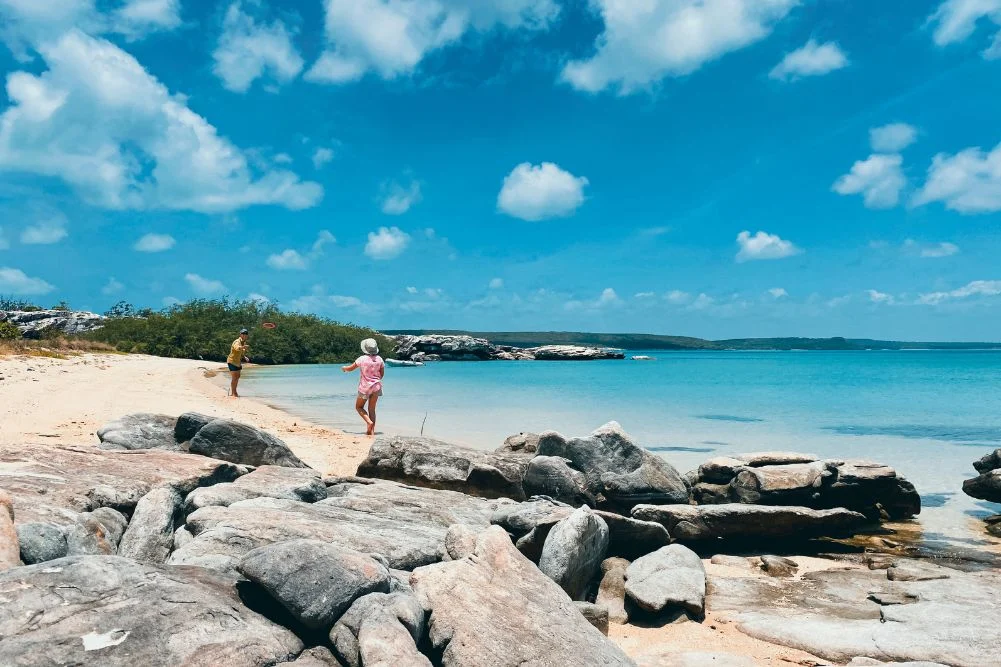
The Gove Peninsula, situated on the northeastern tip of the Northern Territory’s Arnhem Land, represents one of Australia’s most significant intersections of Indigenous heritage and international maritime history. At Garanhan, a site characterized by crumbling bauxite paths and turquoise coastal vistas, the landscape serves as a living museum of the pre-colonial era. This region, specifically the area around Nhulunbuy, holds the Wurrwurrwuy stone arrangements, a collection of pictorial storytelling that documents a sophisticated trading relationship between the Yolngu people and Makassan seafarers from present-day Indonesia. Unlike the traditional narrative of Australian isolation prior to 1788, the Gove Peninsula provides empirical evidence of a robust, centuries-old international economy that shaped the social and technological fabric of Northern Australia.
A Chronology of International Exchange: The Makassan Trade
The historical record suggests that the relationship between the Yolngu people and the Makassan fleet began as early as the mid-17th century, with some estimates dating the first arrivals to 1640. These seafarers traveled from the port of Makassar in Sulawesi, navigating the northwesterly monsoon winds in December to reach the Australian coastline. Their primary objective was the harvest of trepang, or sea cucumber, a delicacy highly prized in Chinese markets for its culinary and medicinal properties.
This maritime industry represented Australia’s first modern export trade. The Makassan fleet was substantial, often consisting of up to 60 perahu (wooden sailing vessels) and carrying over 1,000 crew members. Upon arrival, the Makassans established seasonal camps, such as the one at Garanhan, where they processed the trepang by boiling and drying it.
The interactions between the visiting sailors and the local Lamamirri (Yolngu) people were defined by a formal system of negotiation and mutual benefit. In exchange for the right to fish in local waters, the Makassans provided the Yolngu with iron tools, including knives and axes, as well as dugout canoes, tobacco, and cloth. This exchange fundamentally altered Yolngu hunting and fishing practices. The introduction of the dugout canoe, for instance, allowed for more efficient hunting of large marine animals like dugongs and sea turtles. The legacy of this era is still visible today in the family lineages of the region; many Yolngu men joined the Makassan fleet on their return journeys to Indonesia, leading to a deep-seated cultural and genetic link across the Arafura Sea.
The Wurrwurrwuy Stone Arrangements: History Set in Stone
The Wurrwurrwuy stone arrangements, located approximately 38 kilometers southeast of Nhulunbuy, serve as a permanent archaeological record of this contact. Constructed by Yolngu elders in the late 19th century, these arrangements use local stones to depict the various elements of the Makassan trade. The site features intricate outlines of perahu with their distinctive tri-masted rigging, dugout canoes, and fish traps.
Perhaps most significant are the depictions of the land-based infrastructure used by the Makassans. The stone works include outlines of the stone fireplaces used for boiling trepang and the floor plans of the houses the visitors built. Historians, including Campbell Macknight, have noted that these arrangements were not merely artistic; they were a deliberate effort to preserve the history of the trade for future generations.
In the 1960s, clan leader Mungurrawuy Yunupingu—a prominent artist and the father of celebrated activists and musicians Galarrwuy and Mandawuy Yunupingu—emphasized the importance of these sites. His testimony linked the stone arrangements to his own father’s voyages to Makassar, highlighting the continuity of oral and visual history in Yolngu culture. The site remains one of the few places in Australia where pre-colonial international relations are documented from an Indigenous perspective.
The Role of Art in Yolngu Law and Sovereignty
The cultural heart of the Gove Peninsula is Yirrkala, home to the Buku-Larrnggay Mulka Centre. This institution serves as a gallery, museum, and community hub, playing a critical role in the preservation of Yolngu law (Rom) and language. For the Yolngu, art is inextricably linked to land ownership and ancestral history.
The museum houses "The Church Panels," two significant ochre-on-masonite works created in 1962. These panels were produced by elders of the Yirritja and Dhuwa moieties—the two primary social and ceremonial divisions of Yolngu society. At a time when the Australian government was beginning to grant mining leases on Indigenous land without consultation, these panels were placed in the local Methodist church as a public assertion of Yolngu sovereignty and custodianship. Though they were later discarded by church authorities, they were eventually rescued and now stand as a testament to the community’s early land rights movement.
Beyond historical artifacts, the center is a hub for traditional crafts, particularly the weaving of gunga (pandanus leaves). Traditionally, these fibers were used to create nganiyal, conical mats used as baby shelters and protection against insects. In the modern era, these techniques have evolved into a vibrant contemporary art form, with weavers using natural dyes to create intricate baskets and wall hangings that are sold globally.
Environmental Stewardship and the Bremer Island Ecosystem
The Gove Peninsula’s cultural significance is matched by its ecological importance. Nearby Bremer Island, known as Dhambaliya, is a primary example of Indigenous-managed conservation and sustainable tourism. The island is largely uninhabited, save for a small family outstation and the Banubanu Beach Retreat, a solar-powered, off-grid facility that limits its environmental footprint.
The waters surrounding Bremer Island are critical habitats for marine life. The region supports four species of sea turtles: green, flatback, hawksbill, and olive ridley. These species use the island’s white sand beaches as nesting grounds, a process that remains largely undisturbed by human activity.
Furthermore, the East Bremer Islets have been designated as the Higginson Important Bird Area (IBA). This site supports globally significant populations of bridled and roseate terns. It also serves as the only known breeding site for common noddies in the Northern Territory. The management of these lands by the Dhimurru Aboriginal Corporation ensures that tourism is balanced with the protection of these vulnerable species, utilizing a permit system to regulate visitor numbers and ensure ecological integrity.
Socio-Economic Context and Modern Community Life
Nhulunbuy itself was established in the early 1970s primarily as a mining town to service the local bauxite mine and alumina refinery. However, as the global economy shifts, the town has increasingly looked toward cultural tourism and sustainable development. The monthly community markets at the Surf Life Saving Club represent the social fabric of the town, where local artisans, musicians, and residents gather on the shores of Melville Bay.
The regional economy is increasingly supported by Indigenous-owned enterprises. From the Yanawal Units in Nhulunbuy to the Banubanu Beach Retreat on Bremer Island, Yolngu-owned businesses are providing employment and ensuring that the economic benefits of tourism remain within the community. This shift toward self-determination is a key component of the region’s long-term stability.
Regional Access and Travel Logistics
Accessing the Gove Peninsula requires significant planning due to its remote location. Nhulunbuy is situated approximately 1,042 kilometers by road from Darwin, much of which involves the unsealed Central Arnhem Road. During the wet season (December to April), road access is frequently cut off by flooding, making air travel the primary link to the outside world.
Air North and Qantas operate direct flights from Darwin and Cairns to Gove Airport, with fares typically starting at $300 each way. For those traveling by land or water, the Dhimurru Aboriginal Corporation mandates a visitor access permit. These permits, priced at $39 for adults for a three-day pass, are essential for visiting designated recreation areas, including the Wurrwurrwuy stone arrangements and various coastal campsites.
Implications for Australian History and Tourism
The Gove Peninsula stands as a challenge to the traditional "discovery" narrative of Australian history. The evidence at Garanhan and the continued cultural practices at Yirrkala demonstrate that Northern Australia has been part of a globalized network for centuries.
For the tourism industry, the region offers a model of high-value, low-impact cultural engagement. By prioritizing Indigenous ownership and environmental conservation, the Gove Peninsula provides a blueprint for how remote regions can preserve their heritage while participating in the modern economy. The enduring presence of the Wurrwurrwuy stones, the vibrancy of the Buku-Larrnggay Mulka Art Centre, and the pristine wilderness of Bremer Island collectively affirm the Gove Peninsula as a site of profound national and international importance.


 Chandra Hamzah
 Gabriela Annisa
 Tatiana Tantri Indah Sari
 Budi Mulyono
 Anjar Salim