
 Walid Sujud Trenggono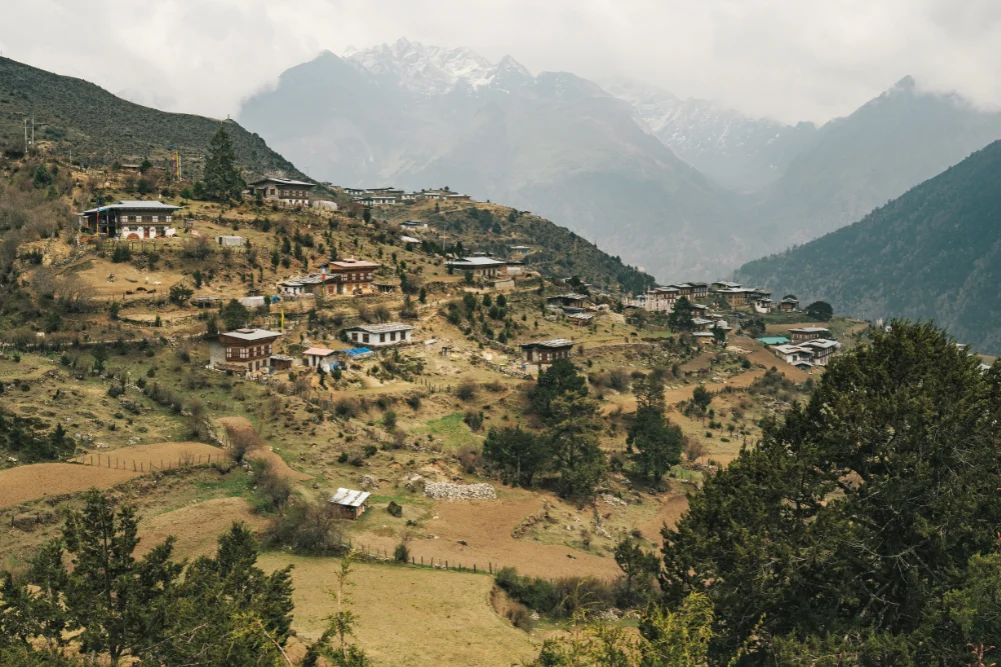
The phenomenon of professional burnout and "digital fatigue" has become a defining characteristic of the 21st-century workforce, prompting an increasing number of individuals to seek radical resets in environments that prioritize holistic wellbeing over economic output. For one such traveler, a mother managing two businesses and the pressures of solo parenting, the breaking point arrived not through a singular crisis, but through the cumulative weight of "half-presence"—a state of being perpetually distracted by digital connectivity and professional obligations. This realization prompted a journey to the Kingdom of Bhutan, a nation that has historically positioned itself as a global outlier by measuring success through Gross National Happiness (GNH) rather than Gross Domestic Product (GDP).
Bhutan, a landlocked Himalayan kingdom situated between the geopolitical giants of China and India, remains one of the world’s most enigmatic destinations. With a population of approximately 760,000, the country has maintained a policy of "High Value, Low Volume" tourism since it first opened its borders to foreigners in 1974. This strategy is designed to protect the nation’s unique cultural heritage and pristine environment from the negative impacts of mass tourism. Bhutan is notably the world’s first carbon-negative country, with its constitution mandating that at least 60% of its land remain under forest cover in perpetuity. Currently, forests blanket approximately 70% of the territory, serving as a vital carbon sink for the region.
The Philosophical Foundation of Gross National Happiness
Central to the Bhutanese identity is the philosophy of Gross National Happiness, a term coined in 1972 by the Fourth King, Jigme Singye Wangchuck. Unlike traditional economic metrics, GNH is built upon four pillars: sustainable and equitable socio-economic development, environmental conservation, preservation and promotion of culture, and good governance. These pillars are further subdivided into nine domains, including psychological wellbeing, health, time use, and community vitality.
In 2022, the GNH Index findings revealed that 93.6% of the Bhutanese population reported feeling "narrowly, moderately, or deeply happy," with nearly half the population (48.1%) falling into the "moderately or deeply happy" categories. This data suggests that the state’s focus on free healthcare, free education, and the preservation of traditional social structures has created a resilient framework for collective wellbeing. For the modern traveler, this environment offers a stark contrast to the consumption-driven dissatisfaction prevalent in Western societies.
Chronology of a High-Altitude Reset
The journey into the "Land of the Thunder Dragon" begins at Paro International Airport, widely considered one of the most challenging landings in the world. Surrounded by 18,000-foot peaks, only a small number of pilots are certified to navigate the approach. The arrival experience sets the tone for the visit; passengers frequently report a sense of immediate stillness upon disembarking, as the absence of commercial billboards and the presence of traditional Bhutanese architecture provide an immediate visual departure from globalized norms.
The first phase of a traditional immersive itinerary often involves a transition into the monastic life. The Dodedrak Monastery, a 12th-century institution, serves as a primary site for those seeking psychological decompression. Reaching the monastery requires a significant physical investment—a steep trek that can take upwards of two hours for those unaccustomed to the altitude. The monastery functions not just as a religious site but as a communal hub where dozens of monks, adorned in traditional burgundy robes, engage in daily rituals. The atmospheric presence of butter lamps and the rhythmic chanting of ancient scriptures are cited by observers as catalysts for a physiological shift, lowering heart rates and encouraging a "slowed breath" that contrasts with the "bullet-train tempo" of urban life.
Isolation and Community: The Case of Laya Village
To understand the depth of Bhutanese contentment, one must travel beyond the urban centers of Thimphu and Paro to the remote highlands. Laya, situated at an elevation of 3,800 meters, remains one of the highest and most remote inhabited settlements on Earth. Inaccessible by motor vehicles, the village requires a multi-day hike or a strenuous pony trek to reach.
The village is home to the Layap people, an indigenous community of approximately 1,600 residents with distinct Tibetan roots. The Layaps maintain a unique cultural identity, evidenced by their conical bamboo hats and yak-wool garments. In Laya, the concept of "enough-ness" is a lived reality rather than a theoretical goal. Am Pem, a village elder and recent widow, reflects the local sentiment regarding prosperity: "To be happy, don’t be greedy. Make the most of what you have. In our village, if we have enough rice to eat, then we are happy."
The biennial Bumkor Festival in Laya offers a rare glimpse into the community’s social cohesion. During this event, sacred texts are carried in a procession through the village to ensure a bountiful harvest and communal protection. The festival emphasizes the "joy of moving together," a stark contrast to the social isolation often reported in highly developed nations. Pema Wangchuk, a local guide, notes that the hospitality extended to guests is a reflection of the village’s collective survival strategy: "When a family builds a house, the whole village comes to help, knowing that kindness will always be returned."
Traditional Medicine and Environmental Therapy
Bhutanese wellbeing is also deeply rooted in "Sowa Rigpa," the traditional Himalayan science of healing. This is perhaps most visible at the Gasa hot springs (Gasa Tsachhu), where locals and visitors alike gather to soak in mineral-rich waters believed to possess curative properties. According to 13th-century legends, the saint Drubthob Terkhungpa consecrated these springs, and they remain a vital part of the national healthcare fabric.
Unlike the luxury spa experiences found in Europe or North America, the Gasa springs are communal and egalitarian. It is common to see students, farmers, and government officials sharing the same pools. Scientific research into "forest bathing" and mountain therapy supports the Bhutanese intuition that time spent in these environments lowers cortisol levels and resets the nervous system. The kingdom’s refusal to install traffic lights—even in the capital city—and the implementation of a 20km/h speed limit in many areas further reinforce a national commitment to a slower, more deliberate pace of life.
Policy Analysis: The Cost of Happiness
While Bhutan’s model is often romanticized, it is supported by rigorous and sometimes controversial policy decisions. To maintain its "High Value, Low Volume" tourism model, the government recently revised its Sustainable Development Fee (SDF). Visitors are currently required to pay a daily fee (approximately $100 USD per night for adults, following a recent reduction from $200) which goes directly toward funding free education, healthcare, and infrastructure projects.
This "tourist tax" ensures that the industry remains sustainable and that the benefits of tourism are distributed across the population. Critics have argued that this makes Bhutan an "elitist" destination, but the Bhutanese government maintains that the fee is essential for protecting the environment and preventing the "over-tourism" seen in neighboring Himalayan regions like Nepal.
Furthermore, the Bhutanese approach to mortality offers a psychological framework for resilience. Citizens are encouraged to contemplate death five times a day. In Bhutanese Buddhist philosophy, the awareness of impermanence is not viewed as morbid but as a tool for productivity and presence. By accepting the fleeting nature of life, individuals are encouraged to let go of trivial stresses and focus on meaningful contributions to their community.
Broader Impact and Global Implications
The lessons derived from the Bhutanese experience have significant implications for the global conversation on mental health. As developed nations grapple with an epidemic of loneliness and burnout, the Bhutanese emphasis on "community as glue" and "nature as medicine" provides a compelling alternative to individualistic, pharmaceutical-heavy interventions.
For the traveler returning from Bhutan, the challenge lies in integrating these lessons into a fast-paced environment. While the structural realities of Western life—overflowing inboxes, consumerist pressures, and digital demands—remain unchanged, the internal shift toward "enough-ness" serves as a psychological buffer. The Bhutanese experience suggests that wellbeing is not a destination to be reached through a brief escape, but a daily practice of presence, community engagement, and environmental stewardship.
As Bhutan continues to modernize, introducing 5G internet and expanding its global footprint, the world watches to see if the kingdom can maintain its "happiness first" mandate. For now, it remains a rare sanctuary where the measure of a nation is found not in its treasury, but in the contentment of its people and the health of its forests. For those seeking a way back from the brink of burnout, Bhutan offers more than a vacation; it offers a profound reimagining of what it means to live a successful life.



 Anjar Salim
 Chandra Hamzah
 Tatiana Tantri Indah Sari
 Budi Mulyono
 Lukman Taruna Persada Ramadan
