Chandra Hamzah
In a significant public relations and customer service challenge, Carnival Cruise Line is grappling with the fallout from a widespread system glitch that inadvertently offered deeply discounted fares to a large number of its customers. The incident, which occurred following a planned IT maintenance project over the past weekend, saw prices plummet to unprecedented lows, sparking a frenzy of bookings. While Carnival has begun cancelling these reservations, citing them as "far below any reasonable promotional fare," disgruntled customers, particularly in Australia and the United States, are expressing their frustration and demanding clarity and fairness.
The Glitch and the Frenzy
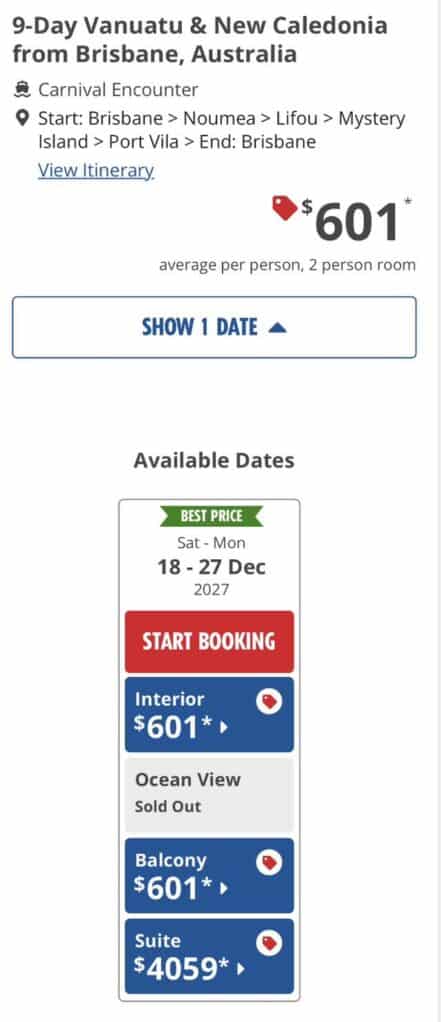
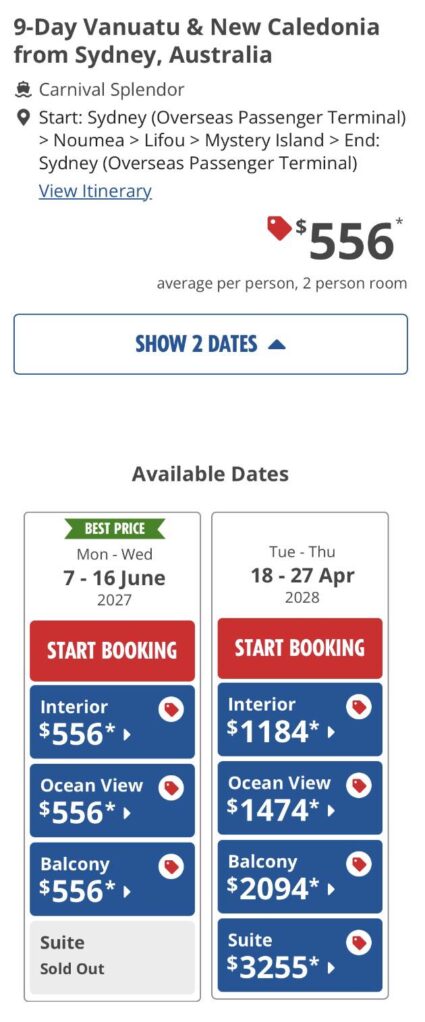
The anomaly emerged after Carnival undertook scheduled IT maintenance. During this period, a significant number of customers reported seeing and successfully booking cruises at extraordinarily low prices. For Australian travelers, these fares reportedly dropped as low as approximately AUD $50 per night. Similarly, American guests also reported securing deals that were drastically reduced from standard pricing. The bookings were confirmed via email, leading many to believe they had secured incredible travel bargains.
Examples of the deeply discounted offers that circulated included:
- A 14-day Fiji cruise from Sydney, with prices starting as low as $758 for an interior cabin, equating to roughly $54 per night.
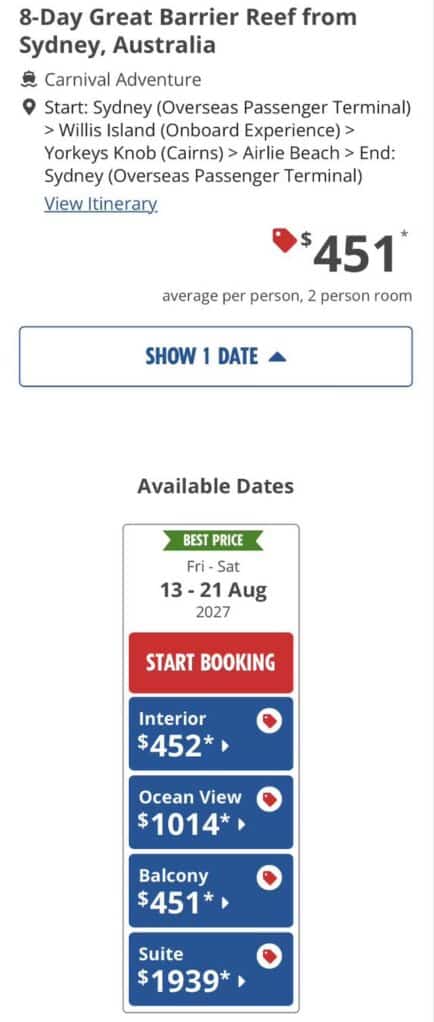
- An eight-day Great Barrier Reef cruise from Australia, with fares beginning at $452, approximately $56 per night.
- A 10-day South Pacific cruise, also originating from Australia, with advertised prices from $554, or around $55 per night.
These prices were particularly appealing as they were significantly lower than typical promotional fares, even during major sales events. The VIFP (Very Important Fun Person) club members, Carnival’s loyalty program, were among the first to notice and capitalize on these unexpected deals. The rapid booking of these heavily discounted cabins quickly exhausted availability, further intensifying the sense of urgency and excitement among those who managed to secure a reservation.
The Unraveling: Cancellations and Customer Discontent
The initial excitement, however, was short-lived. Carnival has since begun to systematically cancel these bookings. Reports indicate that customers have been receiving emails stating that the fares were a result of an "accident" and that the reservations would not be honored. The company’s official communication, seen in emails shared by affected cruisers, states: "Following a planned IT maintenance project this past weekend, some guests saw a random display of prices that were far below any reasonable promotional fare. The reservation you made was one of them."
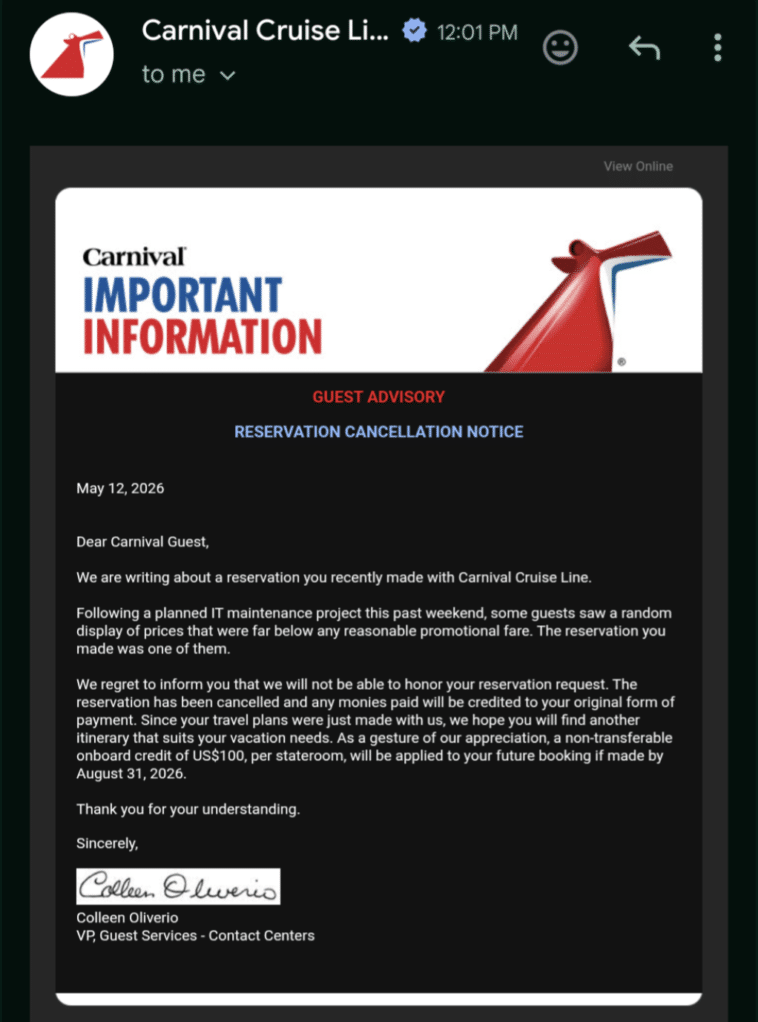
The email continues to inform the customer: "We regret to inform you that we will not be able to honor your reservation request. The reservation has been cancelled and any monies paid will be credited to your original form of payment."
To mitigate some of the negative sentiment, Carnival is offering a "gesture of appreciation": a non-transferable onboard credit of US$100 per stateroom, applicable to future bookings made by August 31, 2026. However, this offer has done little to quell the widespread disappointment and anger.
A Timeline of Events
- Past Weekend: Carnival undertakes planned IT maintenance. During this period, a system glitch causes erroneous, deeply discounted fares to be displayed on the company’s website and sent to customers.
- Immediately Following Maintenance: Savvy customers, particularly in Australia and the US, identify and book these exceptionally low-priced cruises in large numbers. Many receive booking confirmations via email.
- Days Following Bookings: Carnival begins to issue cancellation notices to customers whose bookings were affected by the glitch. These emails cite the fares as being "far below any reasonable promotional fare" and confirm the cancellation of reservations, with refunds promised.
- Customer Reactions Emerge: Screenshots of cancellation emails and frustrated posts begin to proliferate across social media platforms and online forums, including Reddit. Customers express disbelief, anger, and concern over the cancellations, especially those who had already made non-refundable ancillary bookings, such as flights.
- Ongoing Uncertainty: As of the latest updates, many Australian cruisers remain uncertain about the fate of their bookings, with conflicting reports from customer service representatives adding to the confusion. Carnival’s official statement has been delayed, exacerbating anxieties.
The Ripple Effect: Ancillary Bookings and Damaged Trust
The most significant point of contention for many affected customers is the financial and logistical impact of these cancellations, especially for those who had already made further arrangements. One cruiser, who booked a balcony cabin for what they believed was a birthday treat, shared their predicament on Reddit: "I booked myself a little trip as a birthday present to myself. Found a great deal! Paid in full for a balcony & booked flights, only to get this email today. Now the same cruise is selling interior rooms for twice what I paid."
This sentiment is echoed by many who had booked flights, pre-cruise hotel stays, or other travel components based on the confirmed cruise reservations. The prospect of losing money on these non-refundable bookings, coupled with the cancellation of their intended holiday, has led to accusations of unfair business practices.
"Cancelling a paid reservation just because they sold it at a discount shouldn’t be legal. Absolutely ridiculous," the Reddit user continued, encapsulating the frustration of many. The lack of a swift and clear resolution from Carnival is further compounding the issue, leaving customers in a state of limbo.
Carnival’s Position and the "Reasonable Fare" Clause
Carnival’s communication clearly labels the erroneous prices as "far below any reasonable promotional fare." This statement implies that while the company acknowledges the existence of the glitch, it views the booked prices as so anomalous that honoring them would be commercially unsustainable and potentially set an untenable precedent. The company’s decision to cancel and refund suggests a prioritization of financial integrity over customer goodwill in this specific instance, a strategy that is proving to be a public relations minefield.
The inclusion of a US$100 onboard credit, while intended as a conciliatory gesture, is perceived by many as insufficient compensation for the inconvenience, potential financial loss from ancillary bookings, and the disappointment of having a highly anticipated vacation canceled. The two-year validity window for this credit also suggests Carnival’s hope for a long-term resolution, but it does little to address the immediate concerns of those impacted.
Legal and Ethical Considerations
The legal standing of a company in such situations can be complex. Generally, if a contract (the booking confirmation) is formed based on a clear error (a system glitch), the company may have grounds to void the contract. However, consumer protection laws in many jurisdictions aim to safeguard consumers against misleading or unfair practices. The question of whether Carnival’s actions constitute an unfair practice will likely depend on specific consumer protection legislation and how a court might interpret the circumstances.
From an ethical standpoint, many argue that a company of Carnival’s size and reputation should have robust systems in place to prevent such widespread errors. Furthermore, the handling of the situation – particularly the delay in providing a clear statement and the conflicting information from customer service – has been criticized as inadequate. The perception among many is that Carnival is prioritizing its bottom line over the trust and loyalty of its customers.
Broader Industry Implications and Customer Loyalty
This incident raises broader questions for the travel industry regarding the management of online pricing and the handling of systemic errors. Such glitches, while rare, can have significant consequences for customer trust and brand reputation. For Carnival, a brand built on providing enjoyable vacation experiences, this situation presents a critical test of its customer service ethos.
The long-term implications could include:
- Erosion of Customer Loyalty: Customers who feel unfairly treated may seek alternative cruise lines for future bookings.
- Increased Scrutiny of Pricing Systems: The incident may prompt other travel companies to review and enhance their own pricing and booking systems.
- Potential for Legal Challenges: Depending on the jurisdiction and the scale of losses incurred by customers, there could be legal challenges.
- Damage to Brand Image: Negative publicity can impact consumer perception and future booking trends.
Carnival’s response moving forward will be crucial. A more transparent and potentially more generous compensation strategy, beyond the current onboard credit, might be necessary to rebuild trust and mitigate the damage to its brand. The company is now in a precarious position, needing to balance its business interests with the expectations of a customer base that felt it had secured an extraordinary, albeit accidental, deal. The coming days and weeks will reveal how effectively Carnival navigates this challenging public relations crisis.

 Gabriela Annisa
 Tatiana Tantri Indah Sari
 Budi Mulyono
 Anjar Salim