
 Tatiana Tantri Indah Sari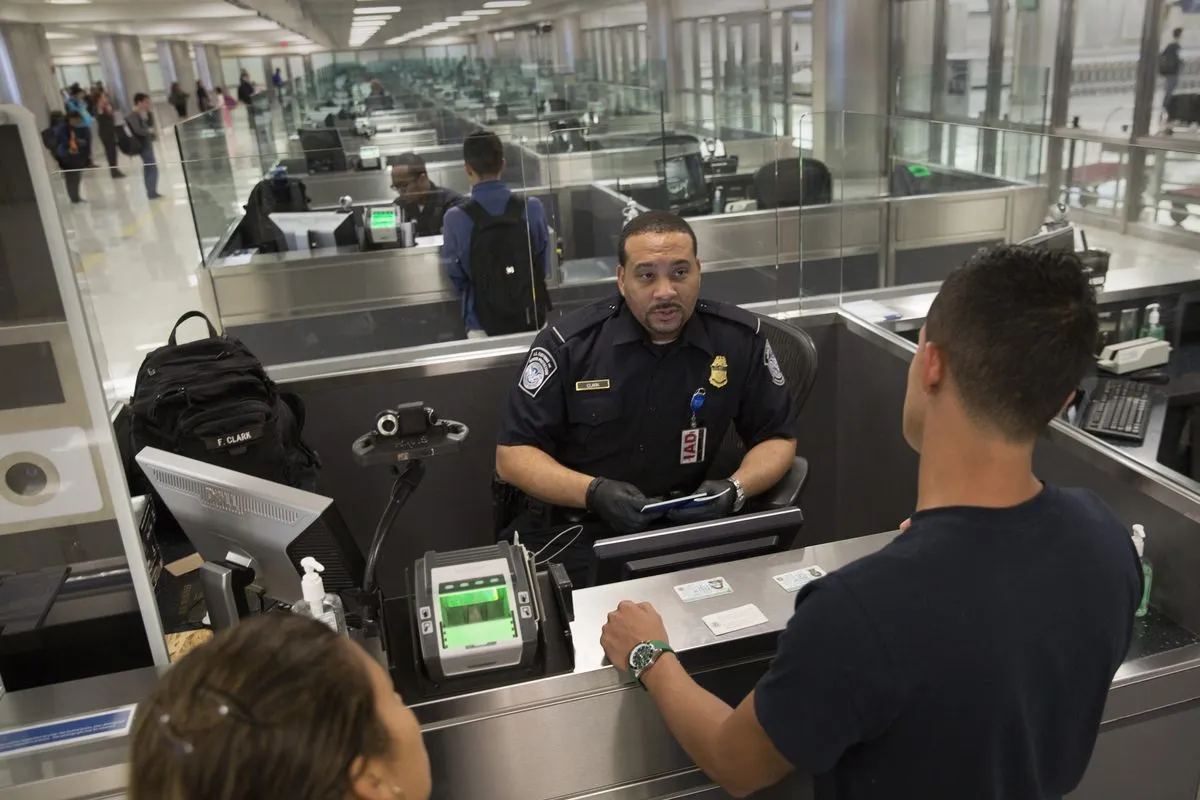
U.S. Customs and Border Protection (CBP) is moving to soften its controversial proposal for more stringent social media vetting of international travelers, acknowledging significant feedback and concerns regarding the extensive collection of personal data. The agency, which initially sought to mandate five years’ worth of social media information from all tourists applying for the Electronic System for Travel Authorization (ESTA), is now expected to detail a revised approach later in the fall, potentially scaling back the requirement to target only "certain populations" based on specific risk assessments.
The initial proposed rule, announced in December, stirred considerable debate among privacy advocates, civil liberties organizations, and elements of the travel industry. It aimed to enhance national security screening by allowing border authorities to scrutinize online activities of individuals seeking entry into the United States under the Visa Waiver Program (VWP), which facilitates visa-free travel for citizens of 40 participating countries. The VWP is a cornerstone of U.S. tourism and business travel, enabling millions of eligible visitors to enter the country for tourism or business stays of up to 90 days without obtaining a traditional visa.
The Genesis of the Proposal and Public Outcry
The December proposal outlined a requirement for ESTA applicants to provide social media identifiers, including usernames and platform names, for any platforms used within the preceding five years. This information was intended to be an optional field on the ESTA application form, but its inclusion immediately raised alarms. Critics argued that even an "optional" field could become de facto mandatory, with applicants fearing that refusal to provide information might lead to delays or denials of their travel authorization. The stated rationale behind the proposal was to provide an additional layer of intelligence for identifying potential threats to national security, a persistent concern for U.S. authorities since the September 11, 2001, terrorist attacks.
The public comment period for the proposed rule saw a deluge of submissions, predominantly expressing apprehension. Matt Davies, an executive director at CBP’s office of field operations, confirmed the agency’s engagement with this feedback. "We’re working through incorporating feedback from the comments we’ve received to adjust the proposal," Davies stated. He explicitly acknowledged the widespread concerns, adding, "We understand that there are concerns about and collecting the extensive amount of data we originally outlined from all travelers under the ESTA, the Visa Waiver Program." This statement signals a significant shift in the agency’s approach, indicating a retreat from the universal application of the stringent vetting.
Towards a Risk-Based Approach: Nuance and New Challenges
The envisioned adjustment suggests a move towards a more targeted, risk-based assessment, wherein additional social media questions would only be posed to "certain populations." While the specifics of what constitutes these "certain populations" or how "risk assessment" would be defined remain undisclosed, such a methodology could involve identifying individuals based on factors such as their travel history, previous interactions with law enforcement, or intelligence-driven alerts. This approach, while potentially alleviating some broad privacy concerns, introduces new complexities and potential criticisms, particularly regarding the criteria for targeting and the risk of profiling.
The challenge for CBP will be to articulate clear, transparent, and non-discriminatory criteria for applying enhanced vetting. Civil liberties advocates often raise concerns that "risk-based" approaches can inadvertently lead to discriminatory practices based on nationality, ethnicity, religion, or even algorithmic biases. Defining what constitutes a "high-risk" traveler without resorting to broad generalizations or creating a system prone to error will be crucial for the revised proposal’s acceptance.
Historical Context: Evolving Border Security in the Digital Age
The debate over social media vetting is not an isolated incident but rather a continuation of a long-standing tension between national security imperatives and privacy rights in the digital age. Post-9/11, U.S. border security policies underwent a dramatic transformation, with a heightened focus on intelligence gathering and data analysis. Measures such as the collection of Passenger Name Record (PNR) data, Advance Passenger Information System (APIS), and the implementation of biometric screenings became standard.
The push for social media scrutiny emerged as online platforms became central to communication and, unfortunately, also to the propagation of extremist ideologies and coordination of illicit activities. Previous administrations have explored various ways to leverage publicly available social media information for vetting. For instance, in 2016, a rule was implemented allowing CBP to request social media identifiers as an optional field on the I-94 arrival/departure record for non-immigrant visitors. Similarly, visa application forms (DS-160 and DS-260) were updated to request social media information, making it mandatory for nearly all visa applicants in 2019. These measures, too, faced strong opposition from civil liberties groups, who argued they constituted an invasive form of digital surveillance.
The current ESTA proposal extends this trend, reflecting a desire to apply similar levels of scrutiny to the millions of travelers entering under the VWP, a program often seen as having less stringent vetting than traditional visa processes.
Reactions from Stakeholders: A Spectrum of Concerns
The initial proposal drew sharp criticism from a diverse array of stakeholders:
-
Privacy and Civil Liberties Advocates: Organizations like the American Civil Liberties Union (ACLU) and the Electronic Frontier Foundation (EFF) vehemently opposed the measure. They argued that collecting five years of social media data constitutes a massive, unwarranted invasion of privacy. Concerns included:
- Chilling Effect: Travelers might self-censor their online speech, fearing that innocuous posts could be misinterpreted by border agents.
- Lack of Due Process: Non-citizens at the border have limited Fourth Amendment protections, making them vulnerable to extensive searches without probable cause.
- Potential for Discrimination: Social media analysis could be biased, leading to unfair targeting based on ethnicity, religion, or political views expressed online.
- Effectiveness: Doubts were raised about the actual efficacy of such a broad data collection in identifying genuine threats, given the volume of data and the potential for misinterpretation or false positives.
- Data Security: Concerns about how such a vast trove of sensitive personal data would be stored, protected, and shared.
-
Travel Industry: Industry groups, including the U.S. Travel Association, voiced worries about the potential economic impact. They argued that overly intrusive vetting requirements could deter international visitors, particularly from key VWP countries. The U.S. relies heavily on international tourism, which contributes billions of dollars to the economy and supports millions of jobs. An estimated 23 million international visitors entered the U.S. via ESTA in 2023. Any measure that creates friction or uncertainty in the travel process could significantly impact these numbers. The industry’s message was clear: security is paramount, but it must be balanced with facilitation to avoid undermining economic recovery and growth.
-
International Allies and Foreign Governments: While not explicitly quoted in the original snippet, such proposals often elicit concerns from VWP partner countries, particularly European Union members. These nations uphold strong data privacy laws (like GDPR) and frequently express apprehension about the U.S. government’s collection and retention of their citizens’ data. Reciprocity concerns also arise, where foreign governments might consider implementing similar measures for U.S. citizens traveling abroad, potentially complicating international travel.
The Mechanics of ESTA and the Visa Waiver Program
The VWP, established in 1986, allows citizens of 40 countries to travel to the United States for tourism or business for stays of 90 days or less without obtaining a visa. To utilize the VWP, eligible travelers must first obtain an approved ESTA, an automated system that determines the eligibility of visitors to travel to the U.S. under the VWP. The ESTA application collects biographical data, passport information, and answers to eligibility questions related to criminal history, health, and security. It is typically valid for two years or until the applicant’s passport expires, whichever comes first.
The program is critical for facilitating legitimate travel and fostering economic ties. In 2023, approximately 23 million international visitors entered the U.S. using ESTA. The efficiency and relative ease of the ESTA application process are key to its success and popularity, and any move to complicate it significantly could undermine its core purpose.
Technological Feasibility and Effectiveness Debates
Beyond privacy concerns, questions have also been raised about the practical efficacy and technological feasibility of analyzing vast quantities of social media data for security vetting. The sheer volume of content generated by millions of users across multiple platforms presents an immense challenge for human analysts. While artificial intelligence and machine learning tools could assist, their use introduces new risks:
- Contextual Misinterpretation: Algorithms often struggle with nuance, sarcasm, slang, and cultural context, leading to misinterpretations of posts.
- False Positives/Negatives: Such systems can generate a high number of false positives (flagging innocent travelers) or false negatives (missing genuine threats).
- Gaming the System: Individuals with malicious intent could easily create sanitized online profiles or use encrypted communication channels, rendering public social media checks ineffective.
The debate centers on whether the significant investment in resources and the potential erosion of privacy rights would yield a commensurate increase in security. Many experts argue that traditional intelligence gathering, law enforcement cooperation, and targeted investigations remain more effective than broad, dragnet-style data collection.
Looking Ahead: The Fall Proposal and Beyond
CBP’s anticipated announcement in the fall will be closely scrutinized. The agency faces the difficult task of balancing robust national security with the need to facilitate legitimate travel and uphold privacy norms. The revised proposal is likely to outline:
- Specific Criteria for "Certain Populations": How will individuals be identified for enhanced social media scrutiny? Will it be based on travel patterns, previous visa denials, specific intelligence, or something else?
- Scope of Data Collection: Will it still be five years? Will it be limited to specific platforms?
- Data Handling and Retention Policies: How will the collected data be stored, accessed, shared, and for how long?
- Appeals Process: What recourse will travelers have if they are denied an ESTA based on social media analysis?
The new proposal will undoubtedly trigger another round of public and expert commentary. The dialogue will continue to shape U.S. border policy in an era where digital footprints are an inescapable part of life, and the line between public information and private data becomes increasingly blurred. The ultimate outcome will reflect a critical policy choice: how far the U.S. government is willing to go in its pursuit of security, and what trade-offs it deems acceptable in terms of privacy, civil liberties, and economic impact.




 Anjar Salim
 Chandra Hamzah
 Budi Mulyono
 Lukman Taruna Persada Ramadan
