
 Tatiana Tantri Indah Sari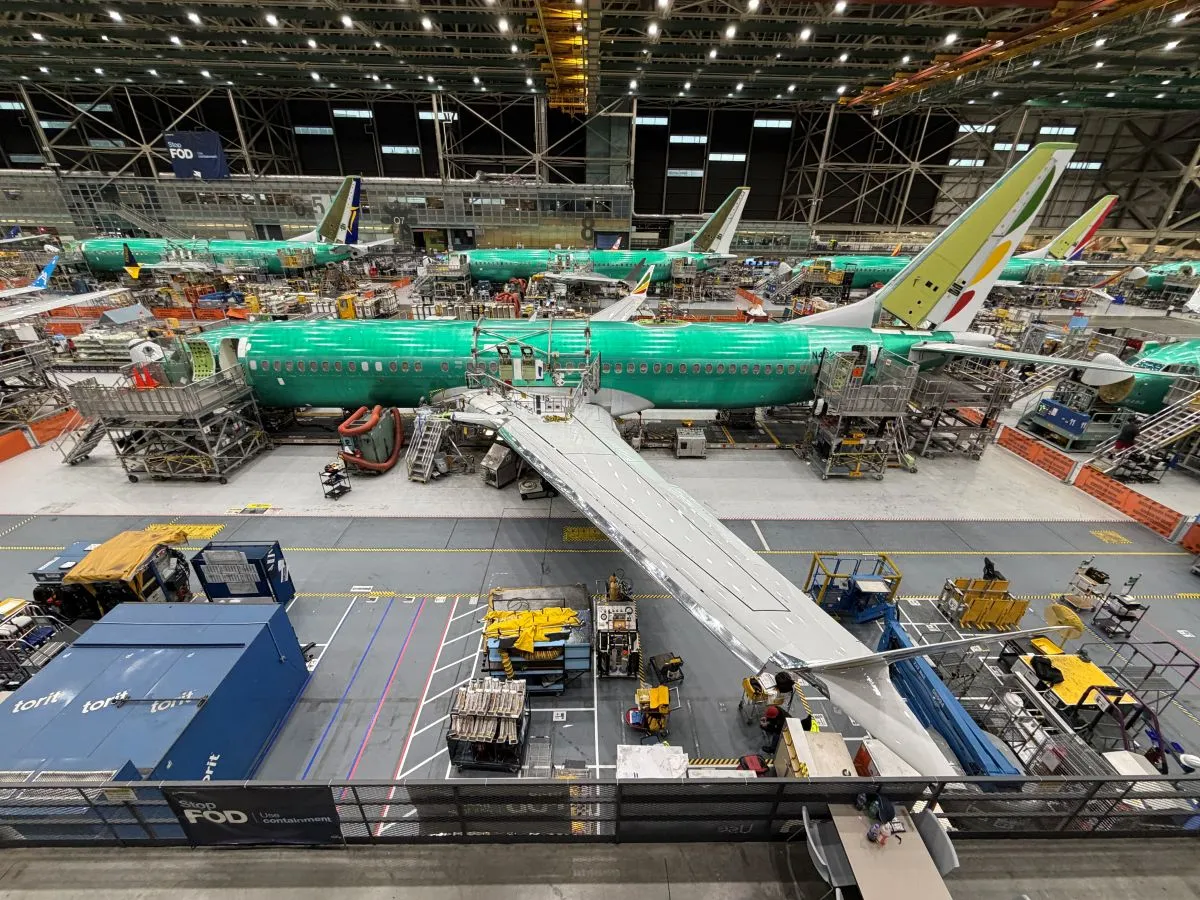
President Donald Trump announced on a recent Thursday that China is set to place a substantial order for 200 aircraft from Boeing, a development poised to mark a significant breakthrough for the American aerospace giant. Speaking in an interview with Fox News’ Sean Hannity, President Trump revealed the agreement, attributing it to his discussions with Chinese President Xi Jinping. "One thing he agreed to was he’s gonna order 200 jets. That’s a big thing, Boeings," Trump stated, emphasizing the magnitude of the deal for the U.S. manufacturer. While the specific types of jets were not disclosed during the interview, President Trump further elaborated on the scale of the commitment, noting that Boeing CEO Kelly Ortberg—referring to a figure who was CEO of Rockwell Collins, later acquired by Boeing, rather than Boeing’s CEO at the time, Dennis Muilenburg—had initially "wanted 150, he got 200" jets. This announcement, coming after a period of intense trade friction, represents a major potential victory for Boeing, which has faced significant headwinds in the lucrative Chinese market for nearly a decade due to escalating trade tensions between the United States and China. As of the immediate aftermath of the interview, neither the White House nor Boeing had issued an official statement in response to inquiries, leaving many details to be confirmed.
The Announcement and its Immediate Context
President Trump’s revelation came during a highly anticipated interview, where he often discussed his administration’s foreign policy and trade negotiations. The casual manner in which such a significant commercial deal was unveiled underscored the high-stakes nature of U.S.-China economic relations and the personal role President Trump often played in their progression. The mention of 200 aircraft immediately captured global attention, given the colossal value such an order would represent for Boeing and the broader U.S. export economy. For context, commercial aircraft deals of this magnitude typically involve billions of dollars, securing thousands of jobs across Boeing’s manufacturing facilities and its extensive supply chain.
The specific timing of this announcement, although an unspecified "Thursday," would have likely coincided with periods of either heightened trade negotiations or a deliberate effort to signal de-escalation. During the peak of the U.S.-China trade war, which officially began with tariffs imposed in 2018, direct engagement and potential large-scale purchases were often used as diplomatic tools to ease tensions or demonstrate commitment to ongoing talks. This type of "goodwill gesture" purchase from China has historically been a feature of bilateral relations, often timed with high-level visits or trade delegations.
Boeing’s Stance in the Crucial Chinese Market
China represents one of the most critical and fastest-growing markets for commercial aviation globally. Its burgeoning middle class, expanding tourism, and robust economic growth have fueled an insatiable demand for air travel, leading to continuous fleet expansion by Chinese airlines. Historically, Boeing and its European rival, Airbus, have fiercely competed for dominance in this market, often splitting orders roughly evenly. Boeing has long projected that China will need more than 8,000 new airplanes over the next two decades, valued at over $1.2 trillion, making it an indispensable market for the company’s long-term health and production outlook.
Before the trade tensions intensified, Boeing had a significant presence in China, with its aircraft comprising a substantial portion of the fleets operated by major Chinese carriers like Air China, China Eastern, and China Southern. The 737 series, particularly the Next-Generation 737s, were workhorses for domestic routes, while the 787 Dreamliner and 777 wide-body jets served the rapidly expanding international routes. The prospect of being "shut out" from this market, as President Trump alluded, has been a grave concern for Boeing, impacting its order book, production rates, and overall financial performance.
The Shadow of Trade Tensions: A Decade of Disruption
The assertion that Boeing has been "shut out of the Chinese market for nearly a decade due to trade tensions" highlights the profound impact of the U.S.-China trade war on American businesses. While direct trade tensions, marked by tit-for-tat tariffs, escalated primarily from 2018, the underlying friction over intellectual property, market access, and state subsidies had been simmering for years prior. For Boeing, this meant that even as Chinese demand for aircraft continued unabated, new large orders from Chinese airlines largely dried up or were diverted to Airbus.
From 2018 onwards, China increasingly used its economic leverage in the aerospace sector as a bargaining chip. While existing orders for Boeing aircraft continued to be delivered, new, substantial commitments for future purchases were notably absent. This strategic pause by Beijing was a clear signal of its displeasure with U.S. trade policies and served as a powerful tool in the broader geopolitical contest. During this period, Airbus often benefited, securing several large orders from China, underscoring the direct competitive pressure Boeing faced. The "decade" reference, while perhaps an overstatement for the period of complete shutout, effectively conveys the protracted and challenging environment Boeing navigated due to geopolitical friction.
Potential Scope and Economic Implications of a 200-Jet Order
While President Trump did not specify the types of aircraft, an order of 200 jets would almost certainly be a mix of single-aisle and wide-body aircraft. The Boeing 737 MAX, the workhorse of many airlines, would be a strong candidate for a significant portion of such an order, especially if the announcement came after the global groundings were lifted or were nearing resolution. A single-aisle jet like the 737 MAX typically costs between $100 million and $130 million per unit at list price, though airlines usually negotiate significant discounts.
Assuming a blend of 737 MAXs and some wide-body aircraft like the 787 Dreamliner (list price around $250-300 million) or the 777 (list price around $300-400 million), the total value of such an order could easily exceed $20 billion, even with substantial discounts. This represents a colossal injection of capital and work for Boeing.
Economically, such an order would have far-reaching positive implications for the United States:
- Job Creation: Boeing’s production supports hundreds of thousands of jobs across its own workforce and its extensive network of suppliers in all 50 U.S. states. A major order like this would help secure and potentially create manufacturing jobs.
- Export Revenue: It would significantly boost U.S. export figures, helping to reduce the trade deficit with China, a key objective of the Trump administration.
- Supply Chain Stability: The predictability of large orders helps stabilize Boeing’s supply chain, benefiting numerous smaller and medium-sized enterprises involved in aircraft component manufacturing.
- Research and Development: Revenues from aircraft sales support ongoing investment in aerospace research and development, maintaining U.S. leadership in aviation technology.
Reactions and Official Silence
The initial lack of immediate response from the White House and Boeing is typical for sensitive, high-value commercial and political announcements. Both parties would likely prefer to finalize the intricate details of such a complex deal before making formal statements. Boeing, in particular, would need to navigate the nuances of confirming a deal that carries significant geopolitical weight, often waiting for Chinese official announcements or signing ceremonies.
However, the industry’s reaction, even without official confirmation, would be one of cautious optimism. Aerospace analysts would view this as a powerful signal that China is willing to re-engage with Boeing on major purchases, potentially easing the pressure on Boeing’s order book and providing a much-needed boost to investor confidence. Unions representing Boeing workers would likely welcome the news, seeing it as a step towards securing jobs and long-term production stability. For the U.S. government, such a deal would be touted as a direct outcome of aggressive trade negotiations and a validation of their strategy.
Strategic Implications for Boeing and U.S.-China Relations
This prospective order carries immense strategic significance for Boeing. It would not only provide a substantial boost to its backlog but also signal a crucial step towards regaining full access to the Chinese market. For a company that relies heavily on international sales, re-establishing a robust relationship with Chinese customers is paramount, especially given the global challenges faced by the aviation industry. If a significant portion of the order included the 737 MAX, it would also represent a powerful vote of confidence in the aircraft’s safety and future, particularly important after the extended global grounding following two fatal crashes.
From a broader geopolitical perspective, the deal would be a tangible sign of de-escalation in U.S.-China trade relations. Large commercial purchases, particularly of high-value manufactured goods like aircraft, have historically been a common feature of U.S.-China trade agreements or efforts to improve diplomatic ties. Such an order could be interpreted as a goodwill gesture from Beijing, aimed at creating a more conducive environment for future negotiations, potentially paving the way for further trade concessions or an easing of tariffs. It underscores the interconnectedness of global commerce and geopolitics, where economic deals are often intertwined with diplomatic objectives.
Challenges and Future Outlook
Despite the promising nature of President Trump’s announcement, significant challenges and complexities remain. The specifics of the order – including aircraft types, delivery schedules, and financing arrangements – would need to be thoroughly vetted. Furthermore, the broader U.S.-China relationship continues to be fraught with challenges beyond trade, including technological competition, human rights concerns, and geopolitical rivalry in regions like the South China Sea. A single aircraft order, while significant, may not fundamentally alter the underlying structural issues that fuel bilateral tensions.
Moreover, the competitive landscape remains intense. Airbus continues to make inroads in China, establishing local assembly lines and strengthening its relationships with Chinese airlines and suppliers. Boeing will need to work diligently to rebuild trust and re-establish its dominant market position in the face of ongoing competition and potential future geopolitical shifts.
In conclusion, the prospective order of 200 Boeing jets by China, as announced by President Trump, represents a pivotal moment in both Boeing’s trajectory and the complex U.S.-China trade relationship. It signals a potential thaw in what has been a protracted period of tension and offers a much-needed boost to the American aerospace industry. While details are yet to be officially confirmed, the announcement itself underscores the critical role that high-value trade plays in international diplomacy and the enduring importance of the Chinese market for global manufacturers. The world will be watching closely for further developments, as this deal could set a precedent for future engagement between the two economic superpowers.



 Anjar Salim
 Chandra Hamzah
 Gabriela Annisa
 Susilo Edi Turonggo
 Walid Sujud Trenggono