
 Budi Mulyono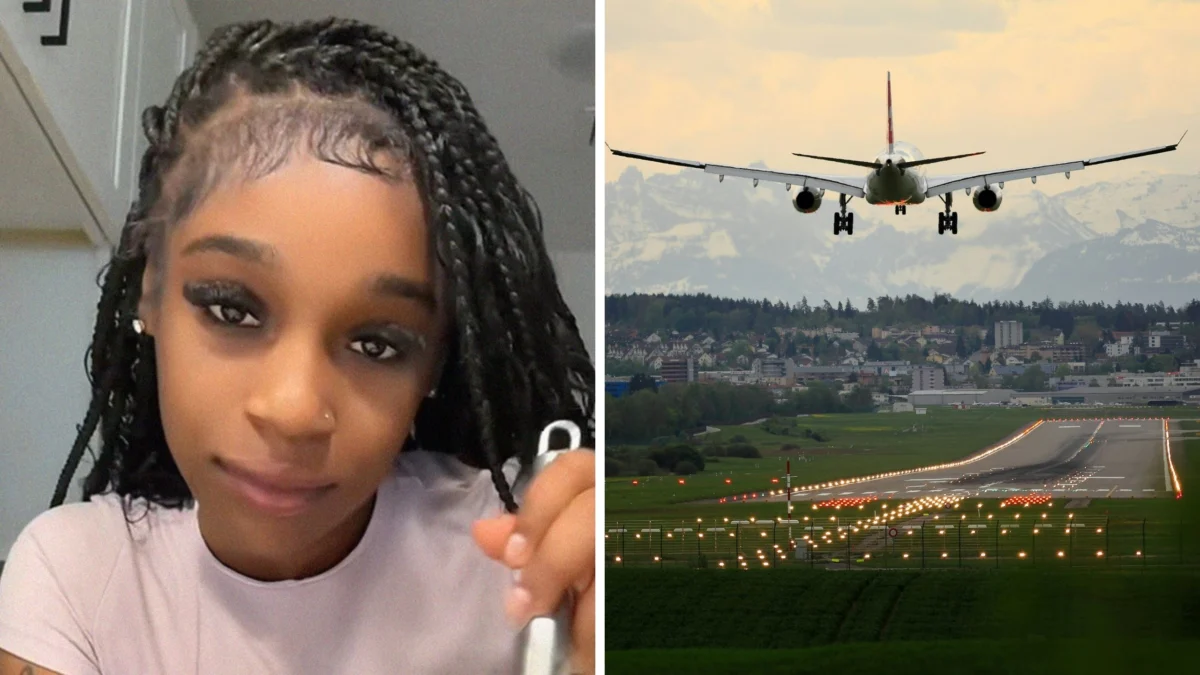
The intersection of corporate branding, international sports, and global politics recently converged in a viral social media moment that has highlighted the complexities of modern air travel. A TikTok video posted by traveler Naya Ariel, known as @50kdiary, has ignited a widespread discussion regarding the psychological and perceived safety implications of flying on aircraft adorned with highly visible nationalistic branding. The video, which features an aircraft sporting a prominent "Team USA" livery, has garnered over 5.3 million views, revealing a significant divide between official marketing intentions and passenger perceptions in an increasingly polarized global climate.

The aircraft in question is part of a specialized fleet operated by Delta Air Lines, the official airline of Team USA. The specific livery depicted is dedicated to the Milan 2026 Winter Olympics, a design that features a premium cabin layout and a bold, unmistakable "Team USA" inscription along the fuselage. While intended to celebrate American athletic achievement and the airline’s long-standing partnership with the United States Olympic & Paralympic Committee (USOPC), the branding prompted Ariel to express concern that the conspicuous design could inadvertently transform the aircraft and its passengers into a "target" during international transit.

The Evolution of the Delta and Team USA Partnership
Delta Air Lines has maintained a foundational relationship with the U.S. Olympic movement for nearly three decades. The partnership began in earnest during the 1996 Centennial Olympic Games in Atlanta, Delta’s primary hub and corporate headquarters. This collaboration was viewed as a natural fit, aligning one of the world’s largest carriers with the premier international sporting event. The relationship continued through the 2002 Salt Lake City Winter Games and has recently been solidified through a multi-year agreement that extends to the Los Angeles 2028 Summer Olympics.
As the official carrier, Delta is tasked with transporting thousands of athletes, coaches, and staff to training sites and competitive venues worldwide. To commemorate this role, the airline frequently commissions custom liveries. These "rolling billboards" are typically applied to long-haul, high-capacity aircraft, such as the Airbus A330-900neo and the Airbus A350-900, which serve major international gateways. The Milan 2026 livery, which Ariel encountered, was slated for commercial service to integrate these high-spec aircraft into the broader passenger network, allowing regular travelers to experience the premium amenities often reserved for elite athletes.

Viral Sentiment and the "Target" Narrative
The reaction to Ariel’s video highlights a growing trend of "travel anxiety" fueled by real-time geopolitical developments. In the comments section of the post, which served as a microcosm of public sentiment, users expressed a mixture of humor and genuine apprehension. Many commenters joked about the possibility of the flight being diverted for military purposes or the passengers being "drafted" into service. References to ongoing tensions in the Middle East, particularly involving Iran, were frequent, with some users suggesting they would have canceled their tickets rather than fly on such a conspicuous aircraft.
One commenter noted, "My mind wanders a lot on the plane. That’s why I just go to sleep," while others expressed concern over Ariel’s lack of subsequent updates, jokingly suggesting she had been "snatched up" by government officials. While much of this discourse was clearly satirical, it underscores a deeper, more serious undercurrent: the fear that national branding on commercial vessels removes the perceived "neutrality" of civilian travel.
Geopolitical Context and the Perception of Risk
The apprehension expressed by passengers is not entirely without historical or contemporary context. Commercial aviation has, at various times, been caught in the crossfire of international disputes. The mention of Iran in the social media discourse is particularly relevant given the volatile nature of U.S.-Iran relations over the past several decades.
In the current climate, reports of ceasefire deals and shifting diplomatic threats often dominate the news cycle. For example, recent reports of a two-week ceasefire deal between Washington and Tehran—negotiated to de-escalate threats to "whole civilizations"—have created a buoyant yet fragile atmosphere in global markets. When passengers see "Team USA" emblazoned on their transport, their immediate mental association may not be with the spirit of the Olympic Games, but rather with the geopolitical weight of the nation the branding represents.
This psychological phenomenon suggests that while specialized liveries are intended to evoke pride, they can also evoke a sense of vulnerability in regions where the U.S. presence is a point of contention. From a security standpoint, however, aviation experts maintain that there is no empirical evidence to suggest that a branded aircraft is at higher risk of a targeted attack than a standard commercial flight. International aviation security protocols, overseen by bodies such as the International Civil Aviation Organization (ICAO) and the Transportation Security Administration (TSA), are uniform across fleets regardless of paint schemes.

Technical Specifications of the Olympic Fleet
The aircraft that sparked the debate is an engineering and design marvel. Delta’s Team USA aircraft are often equipped with the "Delta One" suite, the airline’s most luxurious cabin offering, featuring full height-sliding doors for privacy and lie-flat seats. The Milan 2026 aircraft specifically was designed to showcase a "best-in-class" experience, reflecting the high standards expected by world-class athletes.

The livery itself is applied using specialized, lightweight aerospace paint and decals that must withstand extreme temperature fluctuations and high-altitude radiation. The application process for such a design can take over a week and involves hundreds of man-hours to ensure the graphics do not interfere with the aircraft’s aerodynamics or sensor arrays. Despite the bold aesthetics, the aircraft remains a standard commercial unit, adhering to the same rigorous maintenance schedules and safety inspections as the rest of Delta’s nearly 1,000-plane fleet.
Official Responses and Industry Standards
In response to inquiries regarding the safety of branded aircraft, Delta Air Lines and industry analysts emphasize that safety is the paramount priority. While Delta has not issued a specific statement regarding Ariel’s viral video, the airline’s press portal frequently highlights its commitment to global security and its rigorous coordination with international law enforcement agencies.
Aviation security analysts point out that the "Team USA" livery is actually a common practice globally. Many national carriers, such as Emirates, Lufthansa, and British Airways, frequently paint their aircraft in "Olympic colors" or other nationalistic themes to coincide with major events. These liveries are generally viewed by the industry as high-value marketing assets that increase brand loyalty and visibility. The "target" theory, while popular on social media, does not align with the tactical realities of modern aviation security, which focuses more on passenger screening and cargo integrity than on the external appearance of the fuselage.
The Broader Impact on Airline Branding Strategy
The incident raises significant questions for airline marketing departments. As social media allows for the rapid dissemination of passenger concerns—however unfounded they may be—airlines must weigh the promotional benefits of special liveries against potential passenger discomfort.

For Delta, the partnership with Team USA is a cornerstone of its brand identity, projecting an image of reliability, excellence, and national pride. However, the viral nature of Ariel’s concern suggests that in an era of 24-hour news cycles and global instability, branding that was once seen as purely celebratory may now be viewed through a more cautious lens.

Furthermore, the "Team USA" livery serves as a reminder of the shifting role of airlines as cultural ambassadors. When a plane lands in a foreign capital, it is often the first physical representation of its home country that locals see. In stable regions, this is a positive marketing touchpoint; in unstable regions, it becomes a statement of presence.

Conclusion: Navigating the New Normal in Air Travel
As the 2026 Milan Winter Olympics and the 2028 Los Angeles Games approach, Delta Air Lines is likely to continue its rollout of Team USA-themed aircraft. These planes will continue to serve commercial routes, offering regular passengers a glimpse into the world of elite sports travel. While the viral discourse sparked by Naya Ariel’s TikTok highlights a modern anxiety regarding national identity and safety, the aviation industry remains steadfast in its assessment that branding does not compromise security.

The episode serves as a case study in the power of social media to reshape corporate narratives. What was designed as a tribute to athletic prowess became, for a moment, a focal point for geopolitical unease. Moving forward, the challenge for global carriers will be to maintain their celebratory partnerships while addressing the psychological comfort of a diverse and globally-aware passenger base. For now, the "Team USA" aircraft remains a symbol of American ambition, flying at 35,000 feet, regardless of the debates taking place on the ground.


 Lukman Taruna Persada Ramadan
 Chandra Hamzah
 Gabriela Annisa
 Tatiana Tantri Indah Sari