
 Anjar Salim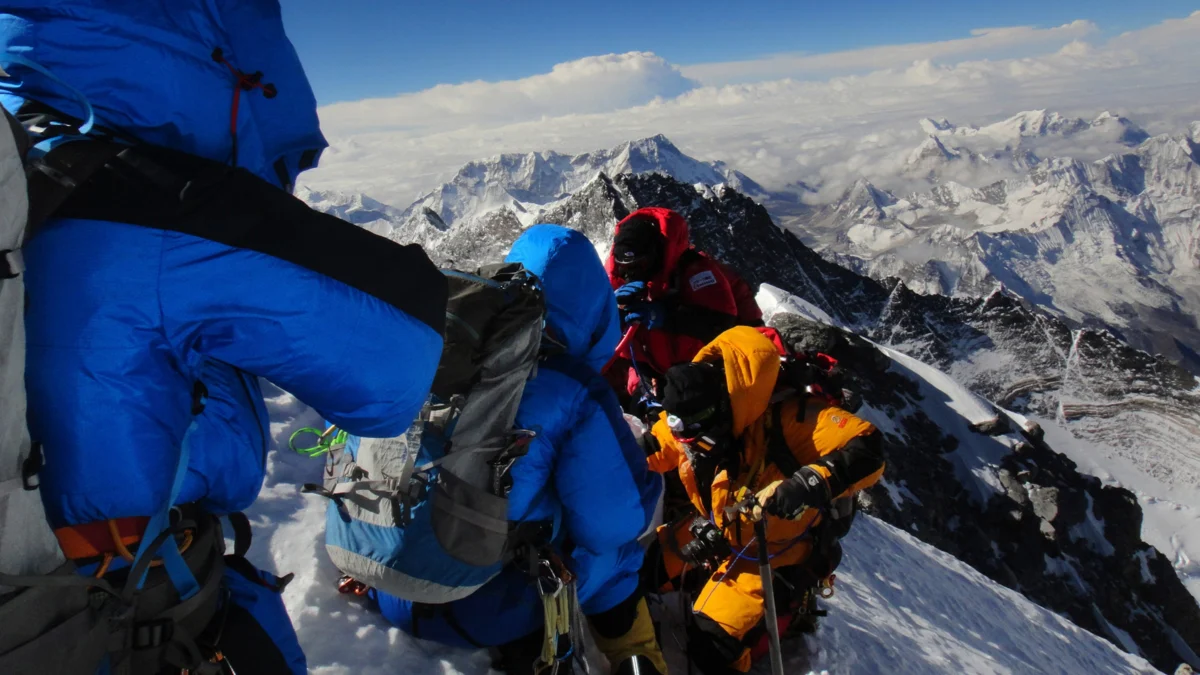
The 2026 mountaineering season on Mount Everest has entered its most critical phase as a record-breaking number of climbers prepare for their final ascent to the world’s highest peak. Following a series of early-season delays caused by inclement weather and heavy snowfall, the specialized team of Sherpas responsible for fixing the safety ropes to the summit is nearing the completion of their task. As of May 12, the fixing team had successfully established lines up to The Balcony, a vital staging area located on the southeast ridge at an elevation of 27,700 feet. Officials expect the ropes to reach the 29,032-foot summit by May 13, a timeline that mirrors the 2025 season despite the initial logistical setbacks.
This year, the Government of Nepal’s Department of Tourism issued an unprecedented 492 permits for Mount Everest, the highest number in the history of the mountain. This surge in participation has created a logistical bottleneck at the higher camps. Currently, hundreds of climbers, supported by a nearly equal number of high-altitude workers, are positioned at Camp II (21,000 feet) and Camp III (23,000 feet). These teams are waiting for the final confirmation of the rope-fixing completion to begin the first major summit push of the year.
Logistical Challenges and the Congestion Crisis
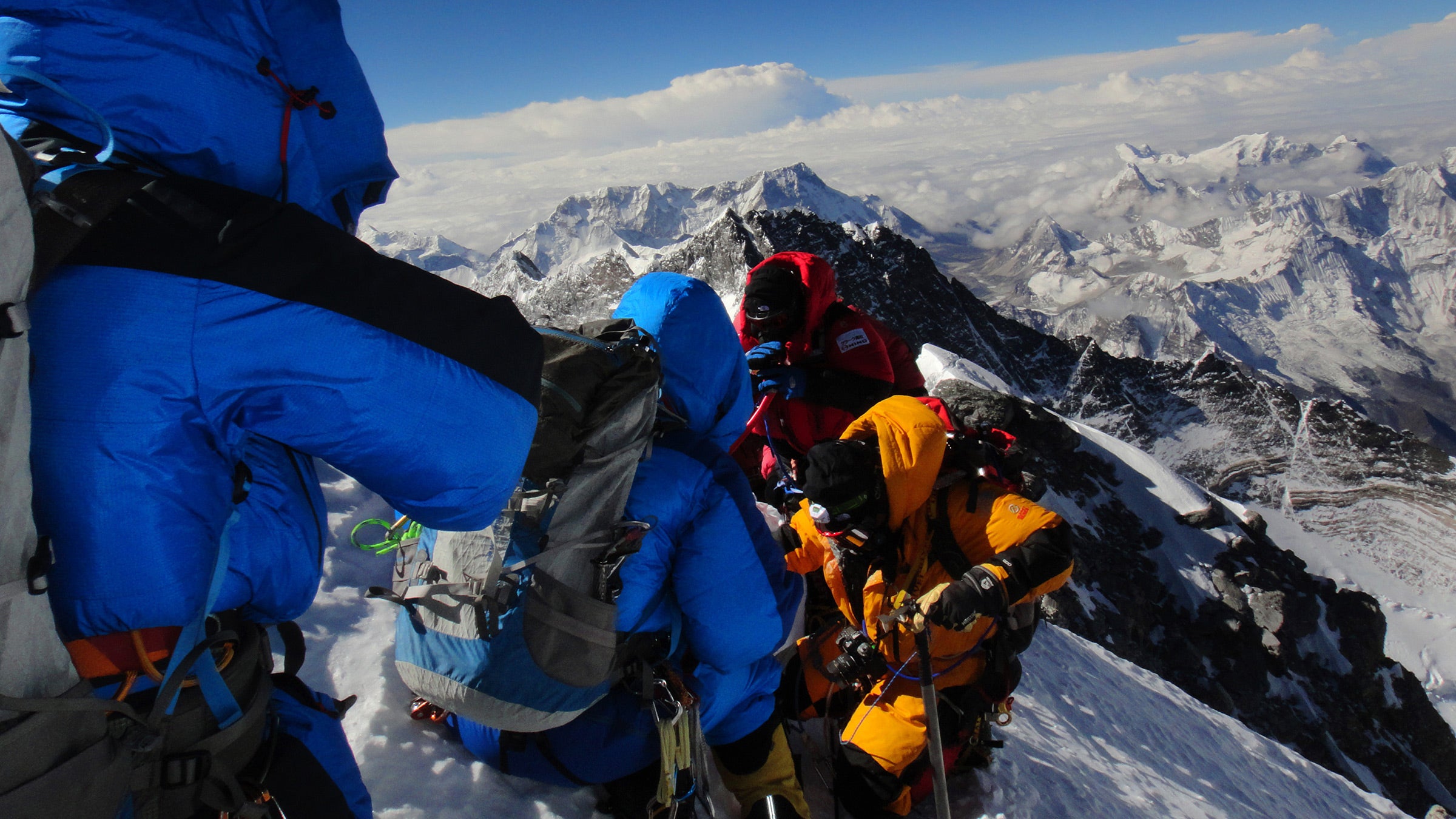
The record number of permits has reignited concerns regarding overcrowding in the "Death Zone," the region above 26,000 feet where oxygen levels are insufficient to sustain human life for extended periods. Professional guides have expressed concerns to observers that the narrow ridges and technical sections, such as the Hillary Step, could see dangerous queues.
Current weather forecasts indicate a primary window of stable conditions over the next 48 to 72 hours, which is expected to draw the majority of the "first wave" of climbers. However, some expedition leaders have opted for a more conservative strategy. These teams remain at Base Camp, eyeing a second projected weather window around May 17. By staggering their attempts, these groups hope to avoid the "conga lines" that have historically contributed to exhaustion-related fatalities on the descent.
The economic implications of this record season are significant for Nepal. With permit fees for foreign climbers set at approximately $11,000 each, the government has generated over $5.4 million in direct revenue from Everest permits alone this year. This does not include the millions more injected into the local economy through trekking services, logistics, and the employment of thousands of porters and guides in the Khumbu region.
A Historic Solo Achievement on Lhotse
While the majority of the headlines focus on the commercial traffic on Everest, the mountaineering community has been captivated by a remarkable feat on the neighboring peak, Lhotse (27,940 feet). On May 12, Polish ski mountaineer Bartek Ziemski completed a daring solo ascent and subsequent ski descent of the world’s fourth-highest mountain.
Ziemski’s approach stood in stark contrast to the supported expeditions dominating the region. He departed Camp IV at 1:00 A.M. on May 12, climbing entirely alone without the use of supplemental oxygen, Sherpa support, or the established fixed ropes. Breaking trail through fresh snow, he reached the summit shortly after noon. Ziemski then transitioned to his skis, navigating the treacherous Lhotse Face and the Khumbu Icefall. He arrived back at Base Camp at 4:30 P.M., completing a round-trip that would typically take several days for a standard expedition.
According to data from the Himalayan Database, Ziemski is the first individual to successfully ski Lhotse without the aid of supplemental oxygen. This marks his eighth successful descent of an 8,000-meter peak. Despite the gravity of his achievement, Ziemski remained modest, noting that he intends to attempt a similar feat on Everest in the coming days, citing the financial necessity of utilizing his existing permits.
Tragedy and the Human Cost of the High Peaks
The season’s triumphs have been tempered by the loss of life. On the evening of May 11, the climbing community mourned the death of Phura Gyalzen Sherpa, a 20-year-old high-altitude worker. Phura Gyalzen fell on the Lhotse Face, just below Camp III at an altitude of 23,600 feet. Reports indicate that he had unclipped from the safety ropes at the time of the accident, a common but dangerous practice among experienced workers looking to move more quickly between camps.
Phura Gyalzen’s death carries a heavy symbolic weight for the Sherpa community. He was the grandson of the legendary Ang Rita Sherpa, famously known as "the Snow Leopard." Ang Rita was a pioneer of Himalayan climbing, holding the record for ten successful ascents of Mount Everest without supplemental oxygen. The loss of his grandson highlights the persistent dangers faced by the local workers who provide the essential infrastructure for commercial climbing.
The incident has prompted renewed discussions regarding safety protocols for high-altitude workers. While clients are strictly monitored, Sherpas often carry heavy loads and perform technical tasks under extreme fatigue, increasing the margin for error.
Environmental Volatility: Avalanches and Climate Change
The physical environment of the mountain remains unpredictable. On May 10, heavy snowfall triggered a series of avalanches in the Western Cwm and near Camp I. One significant slide struck the camp of the expedition operator Summit Force. While several tents and essential supplies were buried or destroyed, no injuries or fatalities were reported.
Pastemba Sherpa, an 11-time Everest summiteer, documented the aftermath on social media, emphasizing the narrow escape of his team. These events serve as a reminder of the 2014 and 2015 seasons, where massive avalanches led to catastrophic loss of life and the premature closure of the mountain.
Glaciologists and climate scientists have noted that the Khumbu Glacier is thinning at an accelerated rate. This instability makes the Khumbu Icefall—a shifting labyrinth of ice towers and crevasses—increasingly dangerous. The "Icefall Doctors," the elite team of Sherpas who maintain the route through this section, have had to work double shifts this year to re-establish ladders and ropes displaced by glacial movement.
Operational Tensions and the Politics of the Peak
The 2026 season has also been characterized by internal friction between private expedition companies and the official governing bodies. Tensions surfaced early when the Sagarmatha Pollution Control Committee (SPCC) and the Expedition Operations Association of Nepal (EOAN) struggled to find a safe passage through the Icefall.
Mingma G, a renowned guide and manager of Imagine Nepal, challenged the official consensus by sending an independent scouting team to find an alternative route. Although his specific route was not adopted, his public criticism forced a faster resolution to the bottleneck.
The debate has now shifted to the final rope-fixing duties. Traditionally, a coalition of the largest outfitters handles the final push to the summit. However, delays led Mingma G to threaten to take over the fixing duties independently to ensure his clients could utilize the first weather window. This prompted Seven Summit Treks, the mountain’s largest operator, to deploy additional resources to accelerate the process.
This friction reflects a broader shift in Everest management, where large, well-funded private companies are increasingly exerting influence over the traditional regulatory structures.
Broader Implications and the Future of Everest
As the first wave of climbers moves toward the summit, the 2026 season stands as a microcosm of the modern Everest experience: a blend of cutting-edge athletic achievement, commercial expansion, and inherent risk. The record 492 permits suggest that the global appetite for Everest remains undiminished, despite rising costs and the known dangers of overcrowding.
However, the death of Phura Gyalzen Sherpa and the solo success of Bartek Ziemski highlight the two extremes of the mountain. On one hand, Everest is a commercialized "highway" where safety is managed through massive infrastructure; on the other, it remains a frontier for elite alpinism and a workplace where local families continue to pay a disproportionate price in blood and toil.
The coming week will be decisive. If the weather holds and the rope-fixing team succeeds, the world will likely see hundreds of new summiteers. Yet, the sheer volume of people on the mountain means that the margin for error is slimmer than ever. Mountaineering experts and officials will be watching closely, hoping that the 2026 season concludes without the mass-casualty events that have marred previous high-traffic years.
The implications of this season will likely influence future policy, with calls for stricter permit caps or higher experience requirements for climbers gaining traction among international mountaineering bodies. For now, the focus remains on the summit, as the fixing team prepares to hammer the final anchors into the roof of the world.




 Chandra Hamzah
 Tatiana Tantri Indah Sari
 Budi Mulyono
 Lukman Taruna Persada Ramadan