
 Budi Mulyono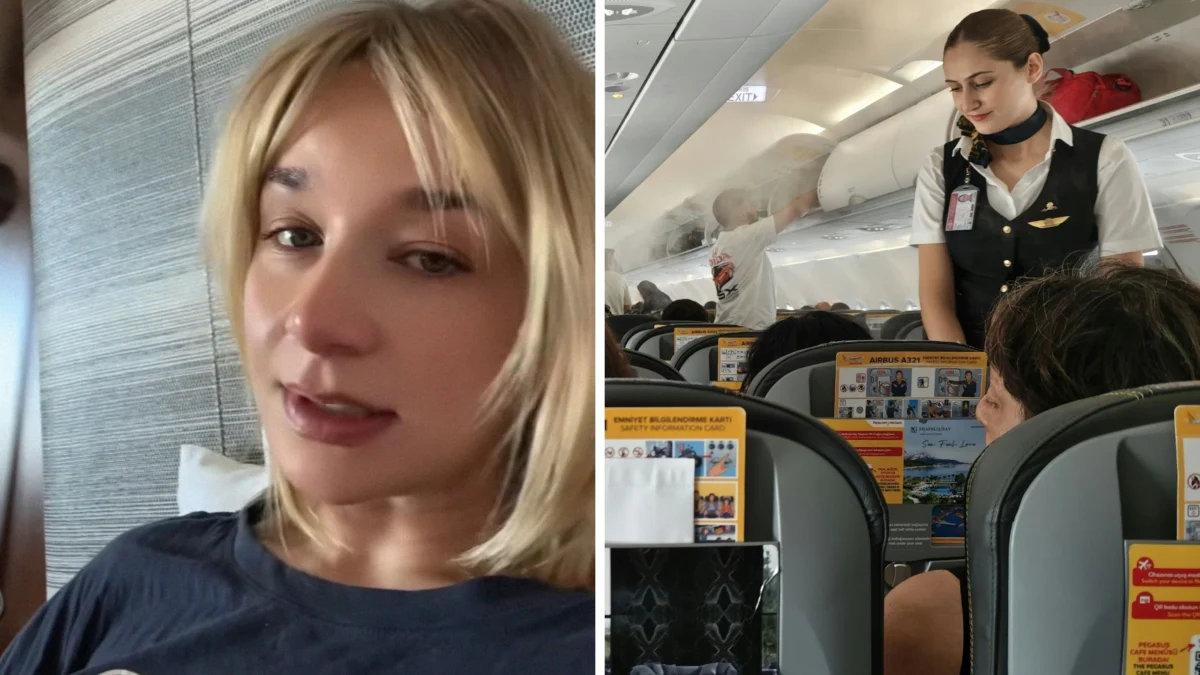
The aviation industry is increasingly grappling with a new frontier of passenger management as mental health crises and behavioral dependencies intersect with the high-stress environment of commercial air travel. A Detroit-based flight attendant, Madeleine Battle, recently documented a significant in-flight disturbance involving a 19-year-old male passenger whose extreme emotional distress was ultimately attributed not to traditional triggers like fear of flying or alcohol, but to the sudden loss of access to his smartphone. The incident, which required the intervention of a medical professional and a reorganization of the cabin seating, has reignited discussions regarding digital dependency among young adults and the evolving responsibilities of airline cabin crews in managing psychological emergencies.
The Sequence of Events: From Safety Demonstration to Medical Alert
The incident occurred shortly after the conclusion of the standard pre-flight safety demonstration. According to Battle’s detailed account, the first indication of a problem was the sound of "hysterical sobbing" emanating from the main cabin. Upon investigating, Battle identified a 19-year-old male seated in an aisle seat who appeared to be in the throes of a panic attack. At this early stage, the passenger communicated that he suffered from severe claustrophobia, a common ailment in the aviation sector that crews are trained to handle with routine protocols.
In an effort to de-escalate the situation, Battle provided the passenger with water and noise-canceling headphones, suggesting he utilize the in-flight entertainment system to distract himself from the confines of the aircraft. While the passenger initially expressed gratitude, the stabilization was short-lived. Moments after Battle stepped away, the passenger’s behavior escalated into what she described as a violent physical and vocal outburst. The individual began screaming, crying, and kicking his legs against the seat in front of him, creating a significant disturbance for nearby travelers and raising concerns about the safety of the flight.
Recognizing that the situation was surpassing the threshold of a standard anxiety attack, the crew initiated a series of tactical maneuvers. They located the passenger’s family members, who were seated in a different section of the aircraft, and requested their assistance. To minimize the impact on other passengers and provide the young man with more physical space, the crew relocated him to an empty row at the rear of the plane. However, as the passenger’s distress intensified, the crew followed standard emergency procedures and issued a call for any medical professionals on board. A doctor responded to the call and began assessing the passenger for potential physiological or neurological distress.
The Diagnosis: Digital Withdrawal and the Snapchat Fix
The nature of the crisis remained ambiguous until the passenger’s father, who had been traveling in the first-class cabin, arrived at the rear of the aircraft. The father’s intervention provided the necessary context that the medical professional and the crew lacked. He handed his own smartphone to his son, instructing him to use the device, access Snapchat, and communicate with friends to "feel better."
The transformation in the passenger’s demeanor was described by Battle as "immediate" and "profound." Upon gaining access to the digital interface, the 19-year-old’s physical symptoms of distress vanished, and he became a "completely new person." The father later explained to the crew that his son struggled with obsessive-compulsive disorder (OCD), depression, and anxiety, but had successfully completed several flights in the recent past without incident. The critical variable in this specific journey was that the young man had dropped his personal phone in water while on vacation the previous day.
"He’s having a breakdown because these kids are so addicted to their phones," the father reportedly told the crew. "He hasn’t had a phone for a day, and he’s losing his mind. Like, he is having withdrawals right now."
The fragility of this recovery was tested when the father’s phone eventually locked. Because the son did not know the passcode, he immediately relapsed into a state of "freaking out," necessitating Battle to return to the first-class cabin to retrieve the code from the father. Battle compared the dynamic to a substance dependency, likening the phone to a "fix" required by an addict to maintain basic emotional equilibrium.
Statistical Context: The Rise of Digital Dependency and Screen-Related Depression
The incident on the Detroit-based flight is not an isolated anomaly but rather a visible manifestation of a broader public health trend. Recent data suggests that the psychological ties between young adults and their mobile devices have moved beyond convenience into the realm of behavioral addiction.
A 2025 study released by the Centers for Disease Control and Prevention (CDC) highlighted a stark correlation between heavy screen usage and mental health markers. The study found that teenagers and young adults who spend more than five hours a day on screens are twice as likely to exhibit symptoms of clinical depression compared to those with lower usage rates. Furthermore, research published in the American Journal of Health Research in early 2025 posits that digital addiction mirrors the neurological pathways of traditional substance abuse. The research identifies five key indicators of digital dependency: preoccupation, loss of control, escalation of use, withdrawal-like irritability, and persistence of use despite clear social or physical harm.
The phenomenon of "Nomophobia"—an abbreviation for "no mobile phone phobia"—is increasingly recognized by psychologists as a legitimate anxiety disorder. For individuals with pre-existing conditions such as OCD or autism, a smartphone often serves as a "digital tether" or a primary coping mechanism for sensory regulation. When this tether is severed, the resulting "spiral," as described by some neurodivergent observers, can lead to the type of total behavioral collapse witnessed by the flight crew.
Aviation Safety and the Unruly Passenger Epidemic
For the airline industry, such incidents represent a complicating factor in the ongoing struggle to maintain cabin safety. The Federal Aviation Administration (FAA) reported 2,096 cases of unruly passengers in 2024, a figure that continues a high-plateau trend following the post-pandemic surge in air travel incidents.
Historically, unruly passenger reports were dominated by incidents involving alcohol intoxication or disputes over airline policies. However, the FAA and airline labor unions have noted a shift toward mental health-related crises. The Detroit incident underscores the difficulty flight attendants face when distinguishing between a passenger who is intentionally disruptive and one who is undergoing a legitimate psychological emergency.
In response to these evolving challenges, the United States Congress introduced the Mental Health in Aviation Act of 2025. This legislation aims to implement recommendations from the FAA Reauthorization Act of 2024, focusing on better training for crew members to identify and de-escalate mental health crises. The act also explores the possibility of providing more robust psychological support resources for both passengers and the crew members who must manage these high-tension events at 30,000 feet.
Societal and Ethical Implications
The public reaction to the flight attendant’s account has been divided between alarm and empathy. Some observers view the incident as a "dystopian" indicator of a generation unable to function without constant digital stimulation. Comments from parents and educators on social media platforms reflect a growing concern that the long-term neurological impact of "dopamine-loop" applications like Snapchat and TikTok is only beginning to be understood.
Conversely, some members of the neurodivergent community have pointed out that for individuals with certain disabilities, a smartphone is more than an entertainment device; it is an essential tool for navigating a world that often feels overwhelming. For these individuals, the loss of a phone is not a matter of "boredom" but the loss of a primary tool for emotional regulation and communication.
From a journalistic and analytical perspective, the incident raises several critical questions for the future of the travel industry:
- Training Requirements: Should flight attendant training move beyond basic first aid to include specialized psychiatric de-escalation for digital-related withdrawals?
- Airline Liability: How do airlines balance the medical needs of a passenger in crisis with the safety and comfort of the other 200 passengers on board?
- The Role of Technology: As airlines continue to invest in in-flight Wi-Fi and digital services, are they inadvertently reinforcing dependencies that could lead to safety risks if the technology fails?
Conclusion
The Detroit flight incident serves as a case study in the complexities of modern air travel. What began as a routine flight ended with a medical professional and a cabin crew managing a behavioral crisis triggered by the absence of a smartphone. As digital addiction becomes more prevalent and its links to mental health conditions like OCD and anxiety become clearer, the aviation industry must adapt its protocols.
The story shared by Madeleine Battle provides a "glimpse into a dystopian future" where the line between technology and biological necessity becomes increasingly blurred. For the FAA, airlines, and health professionals, the task ahead involves developing a comprehensive strategy to manage a flying public that is more connected—yet perhaps more psychologically fragile—than ever before. The Mental Health in Aviation Act of 2025 may provide the legislative framework, but the real-world application will continue to play out in the aisles of commercial aircraft, where crew members like Battle remain on the front lines of a changing societal landscape.




 Anjar Salim
 Chandra Hamzah
 Tatiana Tantri Indah Sari

