
 Lukman Taruna Persada Ramadan

Modern commercial aviation has increasingly prioritized efficiency, density, and cost-reduction over the experiential romance of travel. Amid recurring operational disruptions, tightened cabin configurations, and reduced amenities, passengers frequently view air transit as an exercise in endurance rather than an enjoyable component of an itinerary. While global flag carriers focus on hub-and-spoke standardization and maximizing seat-mile revenue, a distinct tier of specialized regional operators and boutique airlines has emerged to reclaim the journey as a core element of exploration.
These niche carriers operate in specialized ecosystems where infrastructure limitations prohibit mass commercial flight. By utilizing specialized aircraft—ranging from rugged bush planes navigating African savannahs to semi-private turboprops landing on cliffside Caribbean runways—these airlines reposition transportation as an immersive destination experience. Industry data underscores a growing consumer shift toward experiential travel, with high-net-worth individuals and adventurous tourists increasingly seeking out-of-the-way destinations accessible only via specialized air networks.
Air Excel: Navigating the East African Bush

Established in 1997, Air Excel has built its operations around the logistical demands of Tanzania’s premier wildlife reserves. Headquartered in Arusha—the recognized safari capital situated at the base of Mount Meru—the carrier provides scheduled regional flights and private charters connecting the country’s northern safari circuit with coastal destinations such as Zanzibar.
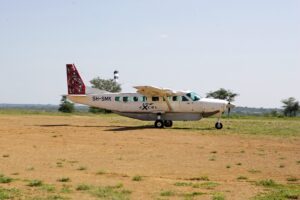
The operational reality of bush flying requires specialized fleet management. Air Excel primarily utilizes turboprop aircraft capable of landing on unpaved airstrips carved directly into the Serengeti and the slopes of Mount Kilimanjaro. From an aviation perspective, these low-altitude flights offer passengers an aerial survey of migratory wildlife corridors, providing a topographical perspective of the East African ecosystem that remains invisible from ground-level all-terrain vehicles.
Tourism authorities in Tanzania note that regional carriers like Air Excel serve as critical economic lifelines for remote conservation areas. By streamlining transit between international entry points like Kilimanjaro International Airport and isolated tented camps, these operators reduce overland transit times from multi-day vehicular treks to brief, scenic flights. This efficiency supports low-impact, high-value tourism models favored by conservationists aiming to minimize vehicular traffic within sensitive ecological zones.
Calm Air: Bridging Canada’s Isolated Northern Tundra
Operating in some of the most inhospitable airspace in North America, Calm Air serves as a vital transportation link for remote communities throughout northern Manitoba and the Kivalliq region of Nunavut. The carrier’s history dates back to the 1950s when founders Arnold and Gail Morberg established a fishing camp on Black Lake in northern Saskatchewan. Recognizing the necessity for reliable transport in regions devoid of permanent road infrastructure, the operation evolved into a formal charter service, acquiring its commercial license in 1962 and initiating operations in Churchill, Manitoba, in 1975.
Today, Calm Air remains the primary commercial carrier connecting southern hubs like Winnipeg with Churchill, widely designated as the Polar Bear Capital of the World. The airline’s route network is essential for both regional commerce and the burgeoning sub-Arctic tourism sector, which peaks annually during the autumn polar bear migration and the winter aurora borealis viewing season.
Aviation analysts highlight that northern carriers face severe operational hurdles, including extreme sub-zero temperatures, shifting ice formations, and unpredictable meteorological events. Despite these challenges, Calm Air maintains strict reliability metrics to ensure that remote settlements receive necessary medical supplies, perishable goods, and passenger transport year-round. For travelers, securing a seat on these flights is a mandatory prerequisite for accessing isolated wilderness lodges and tundra buggy expeditions managed by outfitters such as Frontiers North.
Sichuan Airlines: Integrating Conservation with Commercial Aviation

Founded in 1986 and headquartered in Chengdu, Sichuan Airlines operates a fleet of more than 180 aircraft, serving as a major regional carrier in Western China with an expanding international network. Beyond standard commercial operations, the airline has distinguished itself through its branding and conservation partnership with the Chengdu Research Base of Giant Panda Breeding.
The centerpiece of this initiative is the carrier’s designated "Panda Route," notably operated by widebody aircraft such as the Airbus A350-900. The exteriors of these aircraft feature large-scale panda liveries, while cabin interiors incorporate themed headrests, safety briefings, and packaging designed to raise awareness for endangered species protection. The airline’s official mascot, a cartoon representation of an adopted female panda named 3U (or YouYou), greets passengers upon arrival at Chengdu Shuangliu International Airport.
Economically, Sichuan Airlines leverages its network to stimulate tourism throughout Western China—a region characterized by rugged terrain and rich biodiversity—while directly channeling corporate revenue into scientific research and habitat preservation. While the carrier maintains a strong domestic presence connecting major economic centers like Beijing and Shanghai, its international routes, including long-haul services to North America and Oceania, offer global travelers a distinct entry point into Sichuan province.
Tradewind Aviation: Redefining Luxury Commuter Travel

For travelers seeking to bypass the congestion of major commercial hubs, Tradewind Aviation offers a hybrid model bridging private jet charters and scheduled commuter flights. Operating primarily along the United States Eastern Seaboard and the Caribbean, the airline targets seasonal destinations such as Martha’s Vineyard and Nantucket during the summer, alongside Saint Barthélemy and Anguilla during the winter months.
Tradewind utilizes a specialized fleet consisting primarily of Swiss-built Pilatus PC-12 turboprops and Cessna Citation CJ3 jets. The operational model allows passengers to purchase individual seats on private-class aircraft, mitigating the substantial financial and environmental costs typically associated with dedicated private jet charters. By operating out of private FBOs (Fixed-Base Operators), the airline allows travelers to bypass standard TSA queues and terminal congestion, significantly reducing pre-flight processing times.
Industry observers note that the demand for semi-private aviation has accelerated post-pandemic, as travelers increasingly prioritize privacy, predictability, and time efficiency. Tradewind’s scheduled service to notoriously challenging airstrips—such as the famously steep descent into Gustaf III Airport in St. Barthélemy—requires specialized pilot training and aircraft capabilities, making the flight itself a celebrated component of the vacation experience.
Broader Implications for the Global Travel Sector

The prominence of specialized regional carriers like Air Excel, Calm Air, Sichuan Airlines, and Tradewind underscores a broader evolution in consumer preferences. Modern travelers increasingly reject homogenized transit experiences in favor of journeys that integrate seamlessly with the cultural or geographical identity of the destination.
As global aviation continues to navigate infrastructural bottlenecks at major mega-hubs, niche operators demonstrate the viability of decentralized, experience-driven transit models. By transforming necessary transportation into a memorable highlight of the itinerary, these airlines validate the premise that the journey can, and should, rival the destination itself.




 Gabriela Annisa

 Tatiana Tantri Indah Sari

 Anjar Salim


 Dwi Wanna
