
 Lukman Taruna Persada Ramadan
The modern aerospace industry represents one of the most capital-intensive, technologically sophisticated, and heavily regulated manufacturing sectors in existence. Transforming an initial engineering sketch into a fully certified commercial airliner or bespoke private jet requires a decade of planning, billions of dollars in capital investment, millions of lines of complex software code, and meticulous oversight by regulatory authorities such as the Federal Aviation Administration (FAA).
While contemporary aircraft manufacturing relies on hyper-precise computer-aided design (CAD) and globalized supply chains, the fundamental challenge remains identical to that faced by aviation pioneers: defying gravity safely, efficiently, and comfortably for thousands of hours of flight.
A Legacy of Speed: The Historical Evolution of Aircraft Development
The manufacturing, design, construction, and certification of aircraft have matured exponentially since December 17, 1903, when Wilbur and Orville Wright successfully attached a 12-horsepower engine to a fragile frame constructed of wood, wire, and muslin at Kitty Hawk, North Carolina. That historic initial flight lasted a mere 12 seconds and covered 120 feet—a distance shorter than the wingspan of the aircraft destined to revolutionize global aviation nearly seven decades later: the Boeing 747.
The mid-20th century marked a period of rapid industrial scaling. In 1966, Pan American World Airways placed a historic $525 million order for 25 Boeing jumbo jets, a gamble designed to make international air travel accessible to the general public. Joe Sutter, Boeing’s legendary chief engineer widely recognized as the "Father of the 747," presided over a workforce of 4,500 engineers, mechanics, and administrative personnel. Operating primarily with slide rules and physical blueprints, Sutter’s team—affectionately dubbed "The Incredibles"—successfully brought the world’s first widebody jumbo jet from concept to commercial launch in less than five years.
On January 22, 1970, Pan Am’s inaugural Boeing 747 commercial flight departed New York’s John F. Kennedy International Airport bound for London Heathrow Airport. Featuring an iconic upper-deck hump that housed the cockpit and additional passenger accommodations, the "Queen of the Skies" remained a staple of global aviation fleets for more than half a century. Just two years after the 747’s introduction, European manufacturer Airbus countered with the A300, the world’s first twin-engine widebody airliner, officially inaugurating the Golden Age of commercial air travel.

The Modern Engineering Pipeline: From Virtual Simulation to Physical Destruction
Executing the compressed development timelines achieved by Joe Sutter’s team in the 1960s is virtually impossible in the modern regulatory and technological environment. According to aviation analysts, developing an entirely new commercial or business aircraft today demands significantly more time, financial capital, and multidisciplinary resources due to stringent safety regulations, complex global supply chains, and extensive internal corporate governance.
Brian Foley, a New York-based aviation analyst and former flight test engineer who worked on the original Boeing 757 program in the early 1980s, notes that modern technology expedites certain design elements while drastically compounding others. "Creating an entirely new jetliner involves a massive multiphase engineering and regulatory timeline," Foley explains.
The multi-year manufacturing lifecycle typically follows a strict, phased progression:
- Conceptual and Preliminary Design Phase (Years 1–2): Engineers define core mission capabilities, aircraft size, aerodynamic profiles, and engine architectures.
- Detailed Design and Virtual Simulation (Years 2–5): Utilizing advanced computer-aided design software, engineers build digital twins of the aircraft to run thousands of hours of virtual simulations long before any physical metal is cut.
- Prototyping and Static Testing (Years 5–8): Manufacturers construct up to half a dozen physical prototypes dedicated entirely to rigorous structural and flight testing in coordination with the FAA.
During the physical testing phase, components are subjected to extreme simulated stresses. Engineers routinely test structural integrity by anchoring a prototype’s wings and bending them upward until they fracture, verifying that the physical framework can endure load thresholds far exceeding any conditions encountered during normal commercial operations. Similar stress tests simulate cabin pressurization cycles and continuous landing impacts expected over decades of active service.
The Pinnacle of Private Aviation: Precision Engineering and Ultra-Luxury Cabins
While commercial airliners transport hundreds of passengers on standardized routes, the private aviation sector operates under a unique set of commercial and engineering pressures. Building business jets that seat fewer than 20 passengers requires the same multidisciplinary rigor, supply chain coordination, and multi-year certification processes as larger airliners.
Scott Evans, director of flight operations at Gulfstream Aerospace, emphasizes that the human-machine interface dictates every millimeter of a modern private jet’s interior and exterior architecture. "From beginning to end, we study human factors to figure out what the human-machine interface needs," Evans states. "We have industrial designers who make our thoughts reality on screen down to the pixel. We have engineers designing for structural loads and increasing the differential pressure so that we can bring the cabin altitude down."
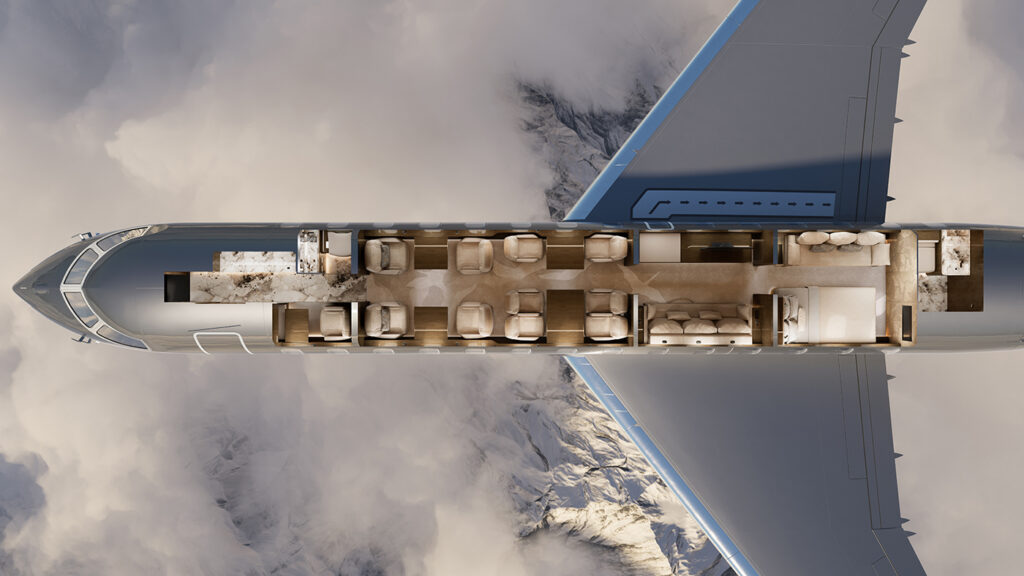
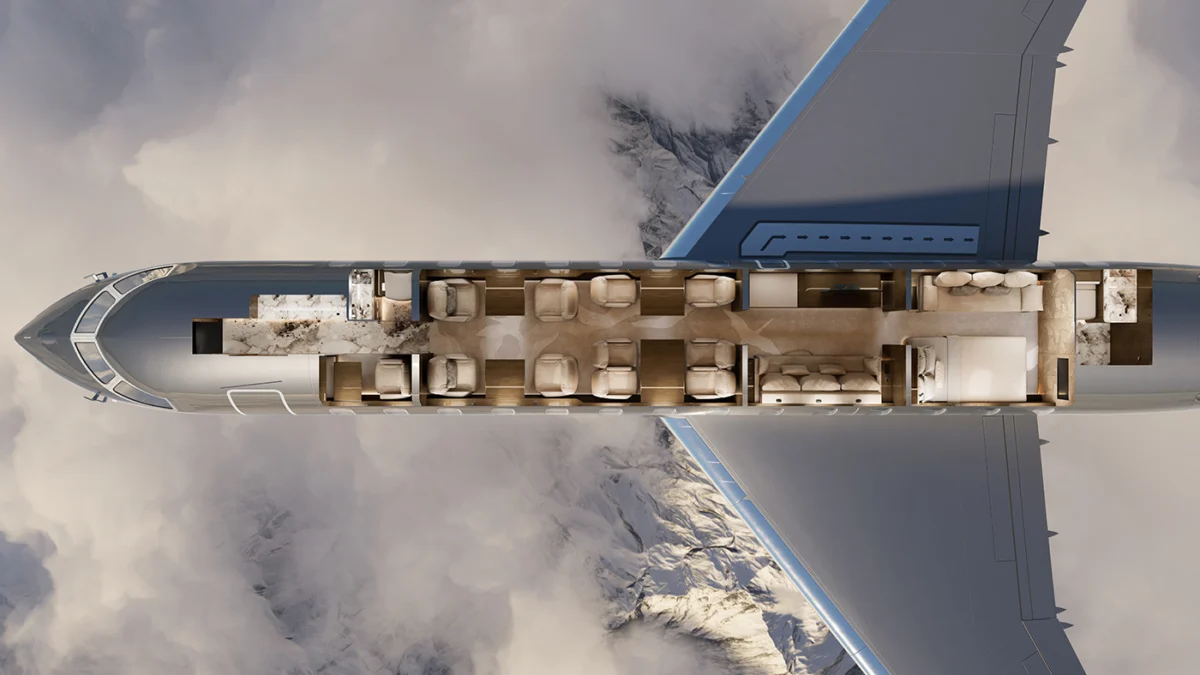
The level of meticulous attention devoted to ultra-long-range flagships—such as Gulfstream’s G700 and G800 or Bombardier’s Global 8000, which command price tags approaching $80 million—is extraordinary. Design teams must resolve thousands of minute mechanical and aesthetic details, ensuring that cabin drawers close seamlessly, switches engage with tactile precision, and lighting arrays adapt fluidly to passenger preferences.
"It’s the smallest details that matter," Evans notes. "Each one plays into a collective experience, so it’ll be drawers. It’ll be lights. It’ll be shades. It’ll be seats, bulkheads, veneers, flooring. We’ll go fly 1,000-plus hours to test any aspect that you’re going to feel, touch or experience."
Bespoke Customization and the Haute Couture of Flight
For ultra-high-net-worth individuals and corporate flight departments, the delivery of a certified airframe represents only the midpoint of the acquisition process. Manufacturers maintain dedicated interior design divisions to collaborate with clients on custom cabin configurations, a process that can extend delivery timelines by several months or even years.
Sarah Mespelt Larrañaga, a Los Angeles-based private jet designer who has delivered more than 100 aircraft to billionaire clients and corporate entities across Gulfstream, Dassault, Bombardier, Boeing, and Airbus platforms, manages these complex interior overhauls. "Planning, designing, ordering equipment—I try to be white-glove, advising the client in every aspect," Larrañaga explains. "The whole process from A to Z could be around a year."
High-profile custom completions often push engineering boundaries. Larrañaga’s past projects include a comprehensive interior and exterior refurbishment of a Gulfstream 450, which involved retrofitting the avionics suite for advanced entertainment systems, installing custom pink carpeting and bespoke lighting, and collaborating with industrial paint manufacturer PPG to formulate a proprietary exterior hue officially cataloged as "Paris Pink."
Furthermore, modern cabin refurbishments must address rapidly evolving technological demands. Whether refitting a Bombardier Challenger 300, a Gulfstream G650, or a widebody Boeing 767, designers report an exponential rise in client requests for high-speed satellite internet connectivity, such as SpaceX’s Starlink, enabling seamless video conferencing and corporate operations at 40,000 feet. Integrating these high-bandwidth systems frequently requires redesigning the aircraft’s centralized digital cabin management system to handle increased electrical loads and data transmission rates.

Market Competitiveness and Future Innovations
To maintain market share in an increasingly competitive luxury sector, aerospace manufacturers continually introduce technological and design innovations. Brazilian aerospace conglomerate Embraer—renowned for producing the Phenom 300, the world’s best-selling business jet—recently expanded its portfolio with the Praetor 600E. This super-midsize business jet incorporates advanced cabin technology, including a 42-inch 4K OLED "Smart Window" equipped with a curved touchscreen interface that manages video conferencing, media streaming, and real-time flight telemetry.
In a convergence of high fashion and aerospace engineering, Canadian manufacturer Bombardier unveiled a strategic collaboration with Lebanese fashion designer Elie Saab to produce an "haute couture" variant of the Global 8000. The aircraft features bespoke luxury appointments traditionally absent from aviation interiors, including an integrated walk-in wardrobe, a five-seat divan sofa, and an aviation-certified marble-finished shower facility.
As regulatory frameworks evolve, software integration deepens, and consumer expectations for connectivity and comfort expand, the aircraft manufacturing industry continues to balance heritage craftsmanship with cutting-edge engineering. Whether building high-capacity commercial transports or custom private flagships, the sector remains anchored by a foundational commitment to safety, precision, and the relentless pursuit of airborne innovation.




 Diana Nuri Rohmawati

 Gabriela Annisa

 Tatiana Tantri Indah Sari

 Anjar Salim

