
 Lukman Taruna Persada Ramadan
The global aviation landscape is undergoing a profound structural evolution, driven by high-stakes airline mergers, shifting alliance memberships, and high-profile privatizations that are steadily redrawing the competitive map for international carriers and frequent flyers alike. Airline alliances—complex cooperative frameworks that allow carriers to share resources, coordinate schedules, and expand route networks—have long served as the backbone of modern global mobility. By enabling passengers to seamlessly book multi-leg journeys across different carriers while earning and redeeming frequent-flyer miles within a unified ecosystem, these partnerships generate immense value for both airlines and travelers.
However, the delicate balance of power among the industry’s "Big Three" global blocs—Star Alliance, SkyTeam, and oneworld—is currently experiencing its most volatile period in decades. Recent developments, including the integration of new carriers, high-stakes bidding wars for national flag carriers, and the strategic blocking of alliance hopefuls, mean that frequent flyers must closely monitor these shifting alliances. A misstep in tracking these changes can lead to devalued points, unexpected ticketing hurdles, or missed opportunities to leverage accrued miles for dream destinations. Conversely, staying informed allows savvy travelers to capitalize on expanding networks and newly forged reciprocal loyalty perks.
The Expansion of the oneworld Alliance in the Asia-Pacific and North America
The oneworld alliance has aggressively pursued network expansion, welcoming significant new members to solidify its footprint in key global regions. On April 23, Hawaiian Airlines officially joined the oneworld roster, marking a milestone as the third U.S.-based carrier in the alliance, alongside American Airlines and Alaska Airlines. This integration establishes Honolulu as a vital new hub for oneworld, drastically improving connectivity to and across the Hawaiian Islands while offering transpacific travelers enhanced routing options.

Building on this momentum, oneworld signed a Memorandum of Understanding in June with Philippine Airlines, setting the stage for the carrier’s full integration by 2027. This upcoming addition will introduce 31 new destinations to the alliance’s global map, encompassing popular leisure hotspots across the Philippines such as Boracay, Palawan, and Tawi-Tawi. Furthermore, Philippine Airlines is proactively expanding its long-haul capabilities to support its entry into the alliance. In November 2026, the airline will launch non-stop flights connecting Manila (MNL) to Chicago O’Hare (ORD), complementing its existing U.S. gateways at Los Angeles (LAX) and San Francisco (SFO), with two additional North American destinations slated for future development.
Despite these successful expansions, oneworld’s growth has not been entirely frictionless. Taiwanese carrier STARLUX Airlines has faced persistent roadblocks in its bid to join the alliance. Industry reports indicate that oneworld founding member Cathay Pacific has systematically blocked STARLUX’s admission due to intense competitive pressures within the Taiwan aviation market. While Cathay Pacific and Philippine Airlines operate in overlapping geographic spheres, their lack of direct competition for premium long-haul business travelers allowed the latter’s accession to proceed unhindered. In contrast, the head-to-head rivalry between Cathay Pacific and STARLUX for high-yield passengers in Taipei creates a formidable barrier to entry, highlighting the delicate geopolitical and commercial dynamics that govern alliance admissions.
Star Alliance Restructures as ITA Airways Enters and Asiana Departs
While oneworld expands, Star Alliance—the world’s largest global airline grouping—is managing a complex wave of membership transitions that highlight the constant churn of international aviation partnerships. In April, Italian national carrier ITA Airways completed its transition from SkyTeam to become a full member of Star Alliance. This shift followed the successful acquisition of ITA Airways by the Lufthansa Group in February 2025, which paved the way for the successor to Alitalia to align its operations with Lufthansa and its transatlantic joint-venture partners.
Conversely, Star Alliance is bracing for a significant contraction with the impending departure of Asiana Airlines. Set to leave the alliance at the end of the year, Asiana’s exit is the direct result of its multi-year, highly scrutinized merger with Korean Air, a core member of SkyTeam. The consolidation process, which officially commenced in 2020, has taken years to navigate due to intense regulatory oversight and the sheer operational scale required to merge two major Asian carriers.
The financial and logistical implications of the Asiana-Korean Air integration are monumental. Approximately 80 aircraft, 90 international routes, and a loyal customer base of roughly 14 million frequent flyers will transition from Star Alliance to SkyTeam. For Star Alliance, the loss represents a severe blow to its presence in Northeast Asia, stripping the bloc of one of its primary regional hubs and leaving ANA as its sole remaining major anchor in the area. Meanwhile, SkyTeam secures a commanding, near-monopolistic grip on the vital South Korean aviation market.
For everyday travelers, the transition mandates urgent attention to rapidly approaching deadlines. Star Alliance has confirmed that award bookings on Asiana flights for travel scheduled after December 17, 2026—the official switchover date—will not be honored under legacy terms. Consequently, frequent flyers are racing to utilize existing Asiana miles or prepare for their conversion into Korean Air SKYPASS points, underscoring how alliance realignments can directly impact personal travel investments. This massive shift follows the high-profile defection of Scandinavian Airlines (SAS), which similarly abandoned Star Alliance for SkyTeam in September 2024 following a strategic capital injection from Air France-KLM.
The Battle for TAP Air Portugal and the Future of European Hubs
Perhaps the most consequential pending development on the alliance horizon is the partial privatization of TAP Air Portugal, the Portuguese national carrier. Following the withdrawal of International Airlines Group (IAG)—the parent company of British Airways and Iberia—from the bidding process, the Lufthansa Group and Air France-KLM emerged as the final two contenders vying for a 44.9 percent stake in the airline. Bids were officially submitted at the end of July, and while Portuguese Infrastructure Minister Miguel Pinto Luz initially indicated that a decisive announcement would be made in late August or early September, the final verdict remains pending.
The stakes for the global alliance network could hardly be higher. If the Lufthansa Group secures the winning bid, TAP Air Portugal is widely expected to remain within Star Alliance, preserving a crucial piece of the grouping’s European architecture. However, should Air France-KLM prevail, TAP is projected to defect to SkyTeam. Such a move would deal a devastating blow to Star Alliance, compounding the earlier losses of Scandinavian Airlines and Asiana.

At the center of this battle is Lisbon Airport (LIS), a strategically vital hub that serves as a geographic and commercial crossroads connecting Europe with North America, South America, and Africa. TAP’s expansive trans-Atlantic network and robust African routes have long complemented the operations of Star Alliance stablemates including Lufthansa, Swiss International Air Lines, Austrian Airlines, and Brussels Airlines.
Should Air France-KLM succeed, the conglomerate plans to integrate TAP Air Portugal into its existing transatlantic joint venture, which prominently features Delta Air Lines. Delta CEO Ed Bastian publicly endorsed the Air France-KLM bid, asserting that the partnership "would enhance trans-Atlantic travel options and Portugal’s role as an enhanced business and leisure destination." In response, Lufthansa has countered by offering to integrate TAP directly into its established joint venture with United Airlines and Air Canada. A victory for Air France-KLM threatens to dethrone Star Alliance from its long-held position as the preeminent global airline bloc, though Star Alliance leadership could respond by aggressively courting nonaligned carriers in South America and Africa to patch the resulting network gaps.
Deepening Domestic Ties: The Blue Sky Partnership Between United and JetBlue
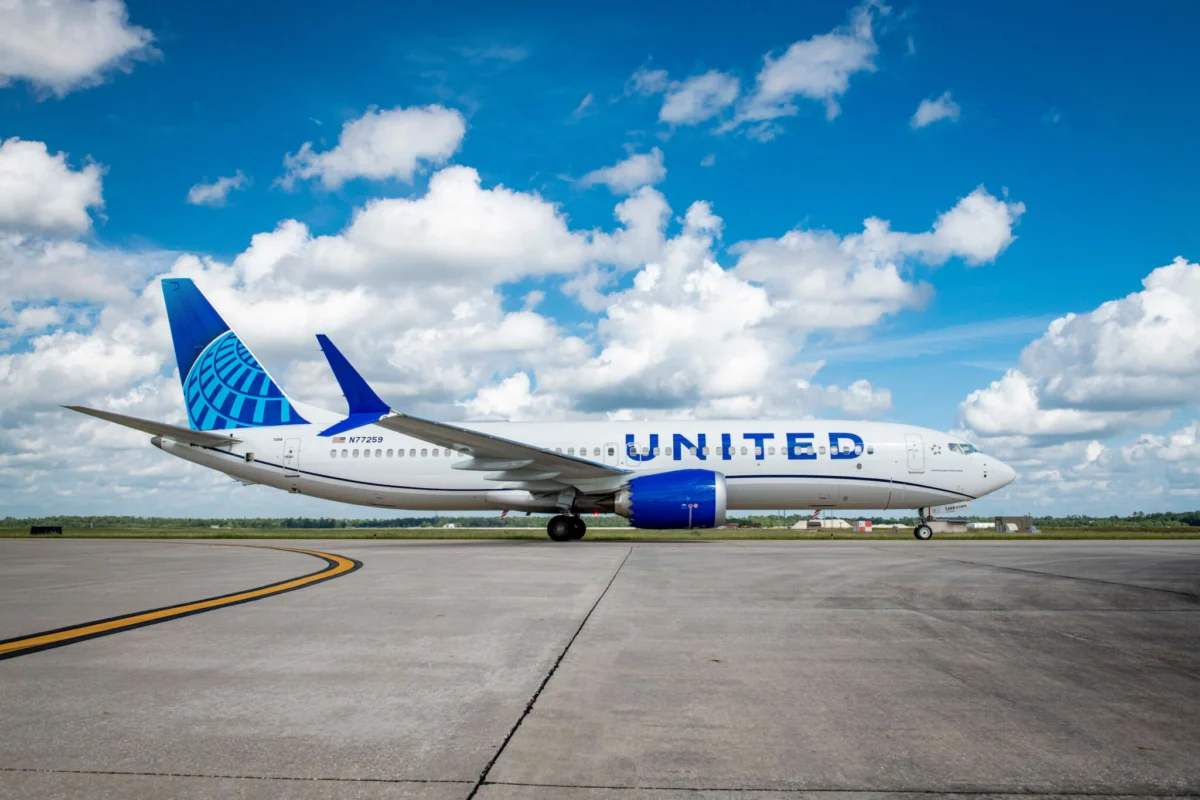
While traditional global alliances continue to reconfigure, innovative bilateral partnerships are reshaping the domestic and transatlantic landscape without the rigid legal formalities of formal alliance membership. A prime example is the deepening cooperation between United Airlines and JetBlue through their expanding Blue Sky Partnership.
Originally launched in May 2025, the relationship has evolved to function much like an alliance, offering eligible frequent flyers reciprocal loyalty perks, tier benefits, and seamless earning and redemption capabilities across both carriers’ domestic and international networks. "With more ways to earn and redeem, more destinations to explore across both airline networks and, now, reciprocal benefits, Blue Sky delivers unmatched value for our most loyal customers," said Ed Pouthier, vice president of Loyalty and Personalization at JetBlue, in a recent corporate statement. "We’re elevating the travel experience by bringing seamless, meaningful perks to life across both airlines."
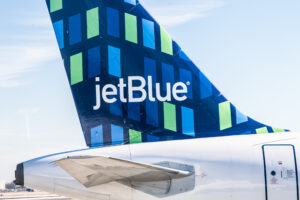
This strategic arrangement allows JetBlue to preserve its independent status as the largest unaligned carrier in the United States while securing valuable operational synergies. For United Airlines, a founding member of Star Alliance, the partnership grants strategic access to highly coveted slots at New York’s John F. Kennedy International Airport (JFK) slated for 2027. Although both airlines have repeatedly emphasized that no corporate merger is planned, the deepening integration far exceeds a standard codeshare agreement. For frequent flyers loyal to JetBlue or Star Alliance carriers, the arrangement yields expanded destination access and enhanced flexibility.
Broader Strategic Implications for the Aviation Industry and Travelers
The convergence of mega-mergers, government privatizations, and aggressive bilateral tie-ups signals a period of profound turbulence and strategic realignment for the global aviation sector. As airlines strive to capture high-yield leisure and business traffic in a post-pandemic operating environment, the traditional lines dividing alliance blocs are becoming increasingly fluid.
For the modern traveler, navigating this shifting terrain requires heightened vigilance. Monitoring regulatory approvals, airline acquisitions, and official alliance transition dates is no longer a niche hobby for aviation enthusiasts, but a practical necessity to protect the value of accumulated frequent-flyer currencies. As the decision on TAP Air Portugal approaches and other nonaligned carriers weigh their options, the global alliance map stands on the precipice of a historic transformation, promising a vastly different competitive landscape for the years ahead.




 Gabriela Annisa

 Tatiana Tantri Indah Sari

 Anjar Salim


 Dwi Wanna
