
 Lukman Taruna Persada Ramadan
The global cruise industry has officially shattered previous attendance records, welcoming a historic 37.2 million passengers in 2025, according to the State of the Cruise Industry Report released by the Cruise Lines International Association (CLIA). This remarkable milestone represents a significant rebound and expansion from previous decades, fueled by a fundamental shift in consumer preferences. Modern travelers are increasingly moving away from standardized, high-density mass-market sailings in favor of ambitious, bucket-list itineraries that emphasize remote geographies, cultural immersion, and active exploration.
Industry analysts attribute this surge to pent-up demand for experiential travel following years of restricted global mobility. Today’s cruisers are demonstrating a willingness to invest in longer, more exotic, and specialized voyages. Whether navigating narrow polar waterways, cycling through ancient Mediterranean archipelagos, or exploring heritage sites along historic rivers, passengers are prioritizing journeys that offer deep educational value and extraordinary geographical access. Below is a comprehensive examination of the premier itineraries defining this new era of high-end, adventurous cruising.
Cycling Croatia: Active Exploration Along the Adriatic Coast
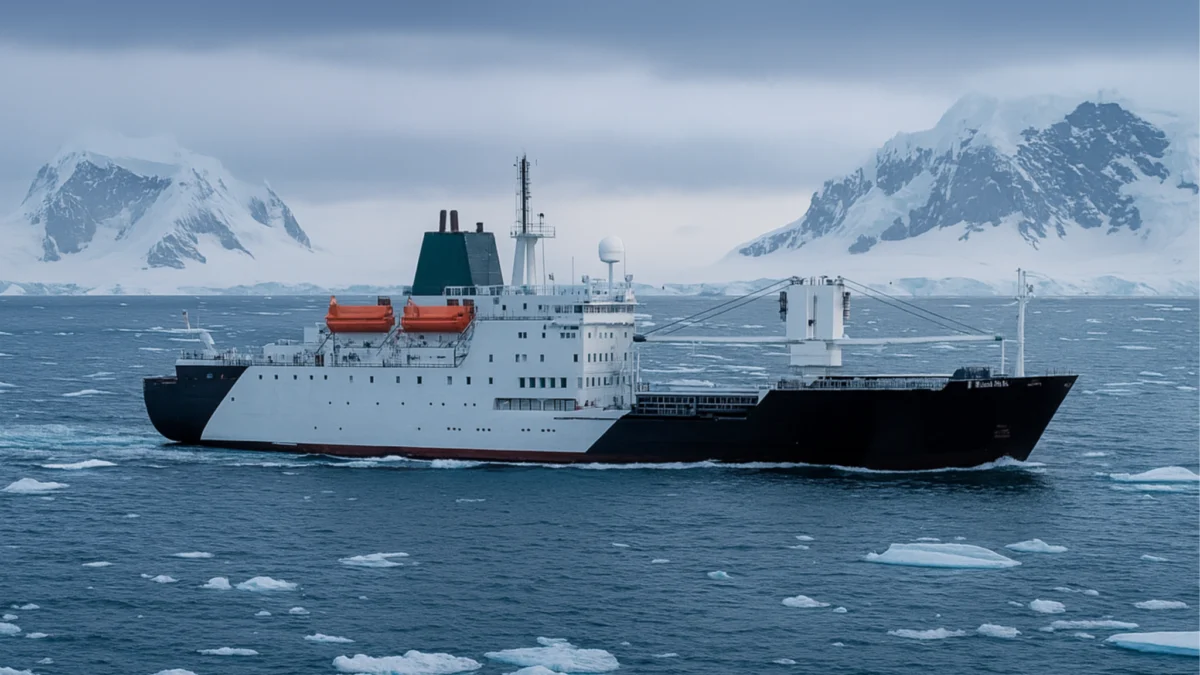
For athletic travelers seeking an intimate maritime and land-based hybrid journey, small-ship cruising has evolved to meet active lifestyle demands. Sail Croatia operates a specialized seven-day itinerary aboard the luxury small ship MS Princeza Diana, accommodating fewer than 40 passengers to ensure an exclusive and low-impact travel experience.

The voyage commences in the historic Dalmatian port of Split before navigating to the island of Brač. Cyclists traverse challenging terrain from Milna to Bobovišča, encountering pristine turquoise waters and traditional cafe culture. Subsequent days feature hill climbs in Bol, panoramic views of Hvar, and culinary interludes featuring traditional peka and regional wines. The itinerary bridges centuries of European history, taking riders through Stari Grad—one of Croatia’s oldest settlements, established in 385 B.C.—as well as the medieval architecture of Korčula, traditionally recognized as the birthplace of Marco Polo.
Environmental and regional authorities have praised small-ship operations for dispersing tourism revenue to lesser-known islands like Mljet and Makarska without overwhelming local infrastructure. The journey concludes back in Split, allowing passengers to tour the sprawling ruins of the Roman Diocletian’s Palace before returning home.
Antarctic Dual-Vessel Expeditions: Pushing the Boundaries of Polar Travel
Polar tourism has undergone a radical transformation, with operators designing multi-vessel systems to access environments previously deemed impenetrable for traditional cruise ships. Terra Nova Expeditions has introduced a 20-day Antarctic program utilizing a combination of the expedition ship St. Helena and the intimate polar yacht Icebird.
The expedition initiates in Ushuaia, Argentina, with a crossing of the turbulent Drake Passage aboard the St. Helena. Equipped with modern scientific laboratories, observation lounges, and wellness facilities, the primary vessel serves as a floating research and lecture base. Upon reaching the Antarctic Peninsula, passengers transfer to the Icebird for a six-day navigation of remote, narrow waterways, utilizing Zodiac watercraft for close-range exploration of glaciers, icebergs, and marine wildlife, including humpback whales, minke whales, leopard seals, and colonies of penguins.
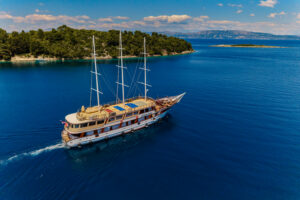
Environmental regulators and polar conservation groups closely monitor these expeditions to ensure adherence to strict International Association of Antarctica Tour Operators (IAATO) guidelines. By employing smaller yachts for sensitive coastal approaches, operators minimize ecological footprints while maximizing observational access to sites such as Brown Bluff and Paulet Island.
Mediterranean Grand Voyages: Slow Travel Across Forty-Eight Ports
As travelers increasingly embrace extended sabbaticals and retirement travel, ultra-luxury lines are responding with unprecedented long-duration deployments. Silversea Cruises has positioned its Silver Dawn vessel at the forefront of this trend with a comprehensive 60-day Grand Mediterranean voyage encompassing 48 ports across 12 countries.
Departing from Lisbon, the itinerary traverses the Western Mediterranean, the Adriatic Sea, and the Greek Isles, calling at major cultural hubs including Istanbul, Dubrovnik, Gibraltar, Barcelona, and Casablanca. Rather than relying solely on standard sightseeing, the voyage integrates specialized experiential programming, such as the Sea and Land Taste (S.A.L.T.) culinary initiative, which connects passengers with local agricultural traditions through winery visits and live cooking demonstrations. Furthermore, exclusive cultural events, such as private evening concerts hosted within the ancient ruins of Ephesus in Türkiye, represent a growing industry trend toward bespoke, after-hours site access.
Economic impact assessments of extended cruise deployments indicate substantial financial contributions to regional Mediterranean economies. By distributing passenger traffic across a two-month timeframe and incorporating lesser-known ports alongside major capitals, cruise lines help mitigate seasonal overtourism while providing sustained economic support to local service providers.
Pearls of the Pacific: Connecting the Philippines and Japan
The Asia-Pacific region has witnessed a historic influx of international tourism, led by Japan’s record-breaking 42.7 million international visitors in 2025. Capitalizing on this momentum, Swan Hellenic operates the Pearls of the Pacific cruise aboard the SH Minerva, a 10-night itinerary linking Manila with various Japanese cultural and natural heritage sites.
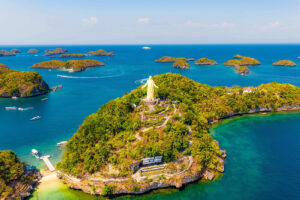
Beginning in the Philippines, the voyage explores the Hundred Islands National Park in the Lingayen Gulf and the UNESCO-listed 16th-century city of Vigan, renowned for its preserved Spanish colonial architecture and cobblestone streets. Crossing into Japanese waters, the itinerary highlights Miyakojima’s fringing coral reefs, the biodiversity of Kerama National Park on Zamami Island, and the historical collections of the Okinawa Prefectural Museum and Art Museum in Naha.
The journey concludes in Hiroshima, where passengers engage with the solemn history of the Hiroshima Peace Park and Museum. Cultural heritage experts emphasize that maritime routes in the Pacific offer a seamless method for travelers to experience cross-border historical narratives that might otherwise require complex multi-ticket flight arrangements.
Egyptian Encounters: Navigating the Nile Aboard Historic Steamships
Cultural heritage tourism along the Nile River continues to attract travelers seeking deep historical immersion combined with high-end hospitality. Extraordinary Journeys offers a custom-designed 14-day itinerary, Journey Through Egypt’s Ancient Wonders, which pairs land-based explorations in Cairo and Luxor with a river voyage aboard the SS Sudan.
Constructed in 1885 for the Egyptian royal family, the SS Sudan is the oldest operating steamboat on the Nile, retaining its authentic teak decks and Belle Époque interior styling. The itinerary begins with visits to the newly inaugurated Grand Egyptian Museum, the pyramids of Giza, and the medieval monuments of Islamic Cairo. Following a domestic flight to Luxor—frequently described as the world’s pre-eminent open-air museum—passengers tour the Valley of the Kings, the Temple of Hatshepsut, and the Karnak complex before embarking on the river voyage.
Along the Nile, the vessel stops at Edfu to view the remarkably preserved Temple of Horus, as well as Kom Ombo and Aswan, where travelers visit the Aswan High Dam and the Philae Temple complex. The journey concludes with excursions to Abu Simbel and Alexandria, reinforcing the itinerary’s comprehensive educational scope. Tourism economists note that high-value cultural tours play a vital role in supporting heritage site preservation and local artisan economies throughout Egypt.
Kimberley Expeditions: Immersive Coastal Cruising in Western Australia
Australia’s rugged northwest coast remains one of the last true frontiers for expedition cruising. Seabourn Cruise Line operates a 10-day Kimberley Expedition: Waterfalls & Wanjinas aboard the Seabourn Pursuit, departing from Darwin and navigating the remote tidal landscapes of Western Australia.
The itinerary emphasizes deep engagement with Indigenous Australian culture and dramatic natural phenomena. Utilizing onboard Zodiac watercraft, passengers navigate the narrow sandstone gorges of the King George River to witness the 250-foot King George Falls. Shore landings include visits to Jar Island to view ancient Gwion Gwion (Bradshaw) rock art, recognized among the oldest indigenous artworks in the world. Additional highlights include the marine biodiversity of Ashmore Reef Marine Park, the cultural interpretations at the Wandjina Gallery in Swift Bay, and the dramatic tidal movements at Montgomery Reef and Talbot Bay’s Horizontal Falls.
Local tourism boards and Indigenous land councils collaborate closely with expedition operators to ensure cultural protocols are respected, including traditional welcome ceremonies and educational seminars led by regional custodians. This collaborative framework ensures that remote coastal expeditions provide mutual economic and cultural benefits to the traditional owners of the Kimberley region.
Broader Industry Implications and Future Outlook
The diversification and expansion of global cruise itineraries highlight a mature industry responding to sophisticated consumer demands. According to CLIA projections, the upward trajectory of passenger volume is expected to continue as lines invest in sustainable technologies, ice-strengthened hulls, and small-ship architectures capable of accessing sensitive ecological and cultural zones without adverse environmental impacts.
By blending rigorous educational programming, active physical pursuits, and access to remote global destinations, modern cruise lines have successfully redefined the parameters of maritime travel. As the sector moves further into the latter half of the decade, the emphasis on experiential depth over mere passenger volume appears positioned to remain the defining characteristic of the global cruise market.



 Gabriela Annisa

 Tatiana Tantri Indah Sari

 Anjar Salim


 Dwi Wanna
