
 Budi Mulyono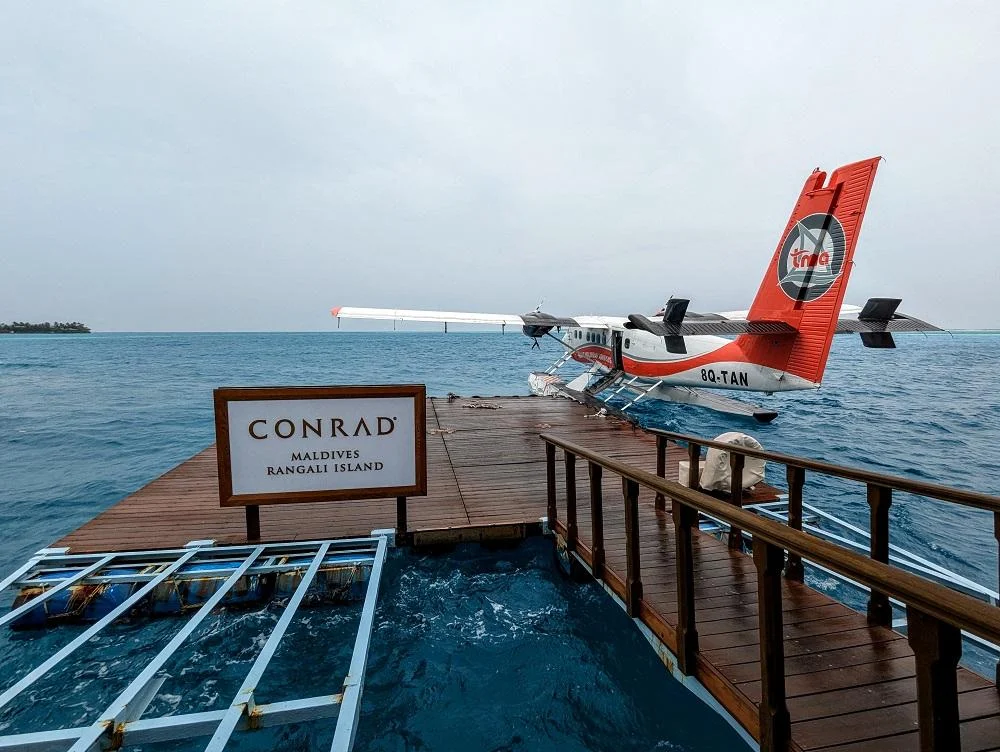
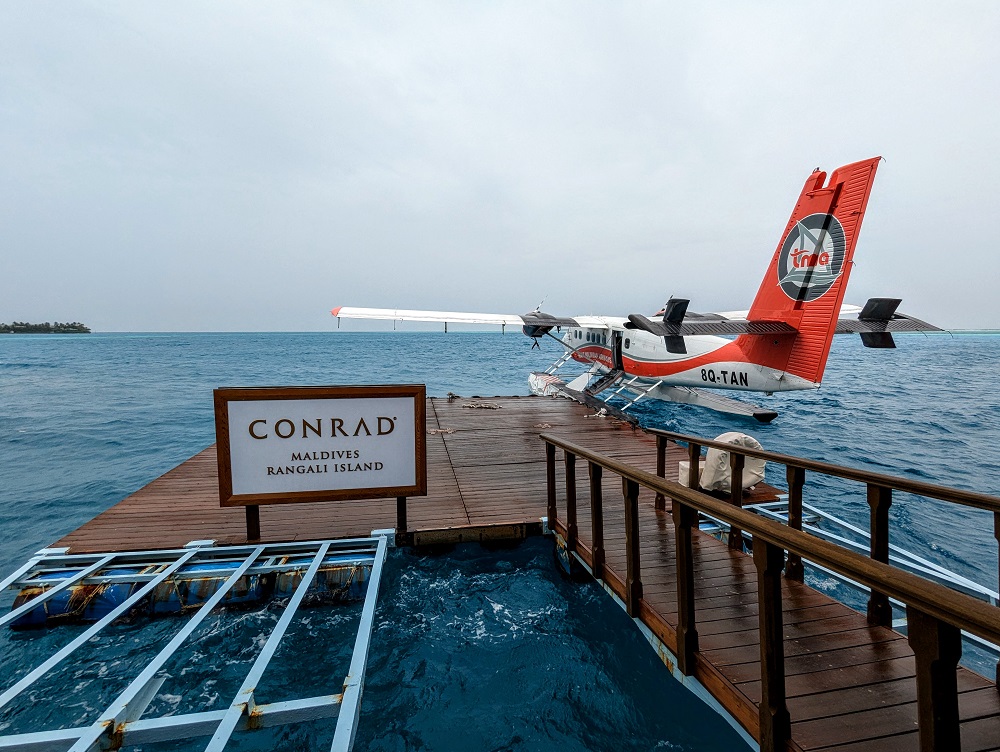
Hilton has officially reinstated a highly sought-after redemption option within its Hilton Experiences platform, allowing members to book round-trip seaplane transfers to the Conrad Maldives Rangali Island for 150,000 Hilton Honors points. This move represents a significant tactical shift for the loyalty program, as the cost for this specific "experience" had previously spiked to 269,500 points, a price point that many industry analysts and frequent flyers deemed a poor use of rewards. By returning the redemption cost to its previous 150,000-point level, Hilton is providing a tangible value proposition for travelers visiting one of the world’s most expensive destinations, effectively lowering the barrier to entry for the "last mile" of luxury travel in the Maldives.
The Maldives, an archipelago of nearly 1,200 coral islands, presents a unique logistical challenge for international tourists. While long-haul flights land at Velana International Airport (MLE) in Malé, the capital, most high-end resorts are located on private islands in distant atolls. For the Conrad Maldives Rangali Island, situated in the South Ari Atoll, a seaplane transfer is the standard and most efficient method of arrival. These transfers are operated by Trans Maldivian Airways (TMA), the world’s largest seaplane operator, and are traditionally billed directly to the guest’s hotel folio.
The Economics of Maldivian Resort Access
The cost of seaplane transfers in the Maldives has long been a point of contention for budget-conscious luxury travelers. Unlike airport shuttles or domestic flights in other regions, Maldivian seaplane transfers are a niche service with high operational overheads, including specialized aircraft maintenance, expensive aviation fuel, and the necessity of daylight-only operations. At the Conrad Maldives Rangali Island, the cash price for a round-trip seaplane transfer has historically hovered between $600 and $700 per adult, inclusive of taxes.
When Hilton Honors increased the redemption rate to 269,500 points per person, the mathematical value of the points plummeted. At a cash price of $675, a redemption of 269,500 points yielded a value of approximately 0.25 cents per point (cpp). This was significantly lower than the generally accepted "Reasonable Redemption Value" (RRV) for Hilton points, which most industry benchmarks place at roughly 0.4 to 0.5 cents per point. At that higher rate, members were essentially losing value by using points rather than paying cash.
The restoration of the 150,000-point rate changes the financial calculus. Based on a $675 cash fare, the 150,000-point redemption now offers a value of 0.45 cents per point. While this does not reach the heights of "outsized value" often seen with high-end room redemptions—where points can sometimes exceed 1.0 cpp—it aligns with the fair market value of the currency. For members who earn points through stay activity or credit card spend rather than purchasing them during sales, this redemption serves as an effective way to mitigate the high out-of-pocket costs associated with a Maldivian vacation.
Historical Context: From Devaluation to Restoration
The fluctuation in Hilton Honors’ "Experience" pricing reflects a broader trend in the travel loyalty industry over the past three years. Following the global resumption of travel in 2021 and 2022, many loyalty programs experienced "points inflation." As travelers emerged from lockdowns with high balances of unspent points, hotels and airlines adjusted redemption rates upward to manage their liabilities.
The Hilton Experiences platform, which offers everything from concert tickets to sporting events and specialized hotel amenities, was not immune to these adjustments. The seaplane transfer at the Conrad Maldives became a case study in this inflation when it nearly doubled in price. However, the recent decision to revert to the 150,000-point level suggests that the program may have reached a ceiling in terms of what members were willing to pay.
Loyalty program analysts suggest that the 269,500-point price likely led to a sharp decrease in redemptions. By lowering the cost, Hilton encourages members to "burn" their points on non-room rewards. This is beneficial for the hotel chain as it reduces the total number of points outstanding on their balance sheet while providing a service that guests perceive as a high-value perk.
The Role of Hilton Experiences in Loyalty Engagement
Hilton Honors has differentiated itself from competitors like Marriott Bonvoy and World of Hyatt by aggressively expanding its "Experiences" marketplace. While Marriott offers "Moments" and Hyatt focuses on "FIND" experiences, Hilton has leaned heavily into fixed-price redemptions for practical travel needs in addition to high-profile events.
The seaplane redemption is particularly notable because it covers a mandatory cost. For many travelers booking the Conrad Maldives on points—often utilizing the "5th Night Free" benefit or "Free Night Rewards" from credit cards—the seaplane transfer remains one of the few unavoidable cash expenses. By allowing points to cover this cost, Hilton enables a "true" points-based vacation where the out-of-pocket expenditure is limited to food, beverages, and spa services.
Logistical Considerations for the Conrad Maldives Rangali Island
The Conrad Maldives Rangali Island is a pioneer in the region, known for being the first international brand to arrive in the Maldives and for housing the world’s first undersea restaurant, Ithaa, and the first undersea villa, The Muraka. The resort is spread across two islands linked by a bridge, offering a diverse range of environments from the family-friendly main island to the quieter, adults-oriented Rangali Island.
Travelers opting for the seaplane redemption should be aware of the specific logistical parameters involved:
- The TMA Experience: Seaplanes depart from a dedicated terminal at Velana International Airport. Conrad Maldives maintains a private lounge for its guests, offering refreshments and comfortable seating while they wait for their flight assignment.
- Daylight Restrictions: Seaplanes in the Maldives only fly during daylight hours. Guests arriving on international flights after 3:30 PM local time are typically required to stay overnight in Malé before transferring to the resort the following morning.
- Weight Limits: Seaplanes have strict luggage weight limits (usually 20kg for checked bags and 5kg for carry-ons). Excess weight can result in additional fees, which are generally not covered by the point redemption.
- Booking Process: Unlike room bookings, which are instantaneous, Hilton Experiences redemptions for seaplanes often require a manual voucher redemption process. Travelers are advised to secure their experience well in advance of their stay to ensure seamless coordination with the resort’s transfer team.
The Broader Impact on the Luxury Travel Sector
The move by Hilton comes at a time when the Maldives is seeing increased competition from other luxury destinations and a surge in new resort openings. With brands like Ritz-Carlton, St. Regis, and Waldorf Astoria all vying for the same high-net-worth demographic, the "cost of arrival" has become a competitive lever.
For instance, the Waldorf Astoria Maldives Ithaafushi, a flagship Hilton property, utilizes a private yacht transfer instead of a seaplane due to its closer proximity to Malé. That transfer currently costs significantly more than the Conrad’s seaplane, often exceeding $900 per person. By making the Conrad’s transfer more accessible via points, Hilton may be steering point-wealthy travelers toward the Rangali Island property over its newer, more expensive sibling.
Furthermore, this restoration of value may signal a broader "normalization" of redemption rates across the industry. As the post-pandemic travel surge stabilizes, loyalty programs are finding it necessary to re-engage members who may have been alienated by aggressive devaluations.
Strategic Recommendations for Hilton Honors Members
For members of the Hilton Honors program, the 150,000-point seaplane redemption represents a solid, if not spectacular, use of rewards. Financial experts within the travel space suggest the following strategic considerations:
- Avoid Purchasing Points for Redemption: Hilton frequently sells points at a 100% bonus, bringing the cost down to 0.5 cents per point. At that rate, 150,000 points would cost $750. Given that the cash price of the seaplane is often lower than $750, purchasing points specifically for this redemption is not financially sound.
- Prioritize High-Value Room Nights: If a traveler has a limited balance of points, they should first prioritize booking the room itself. A standard room at the Conrad Maldives can cost 120,000 points per night, while cash rates can exceed $1,000. This yields nearly 0.9 cpp, nearly double the value of the seaplane redemption.
- Utilize for "Point-Rich" Accounts: For members with millions of points earned through business travel or large-scale credit card spend, using 150,000 points to save nearly $700 in "real money" is an excellent way to keep a vacation’s cash budget under control.
As the travel landscape continues to evolve, the return of the 150,000-point seaplane transfer stands as a rare example of a "revaluation" in favor of the consumer. It reinforces the Conrad Maldives Rangali Island’s position as a premier destination for loyalty enthusiasts and highlights the ongoing importance of the Hilton Experiences platform in the brand’s broader ecosystem. For those planning a bucket-list trip to the Indian Ocean, this update provides a welcome opportunity to reduce the significant costs of Maldivian island hopping.


 Anjar Salim
 Lukman Taruna Persada Ramadan
 Chandra Hamzah
 Tatiana Tantri Indah Sari