
 Tatiana Tantri Indah Sari
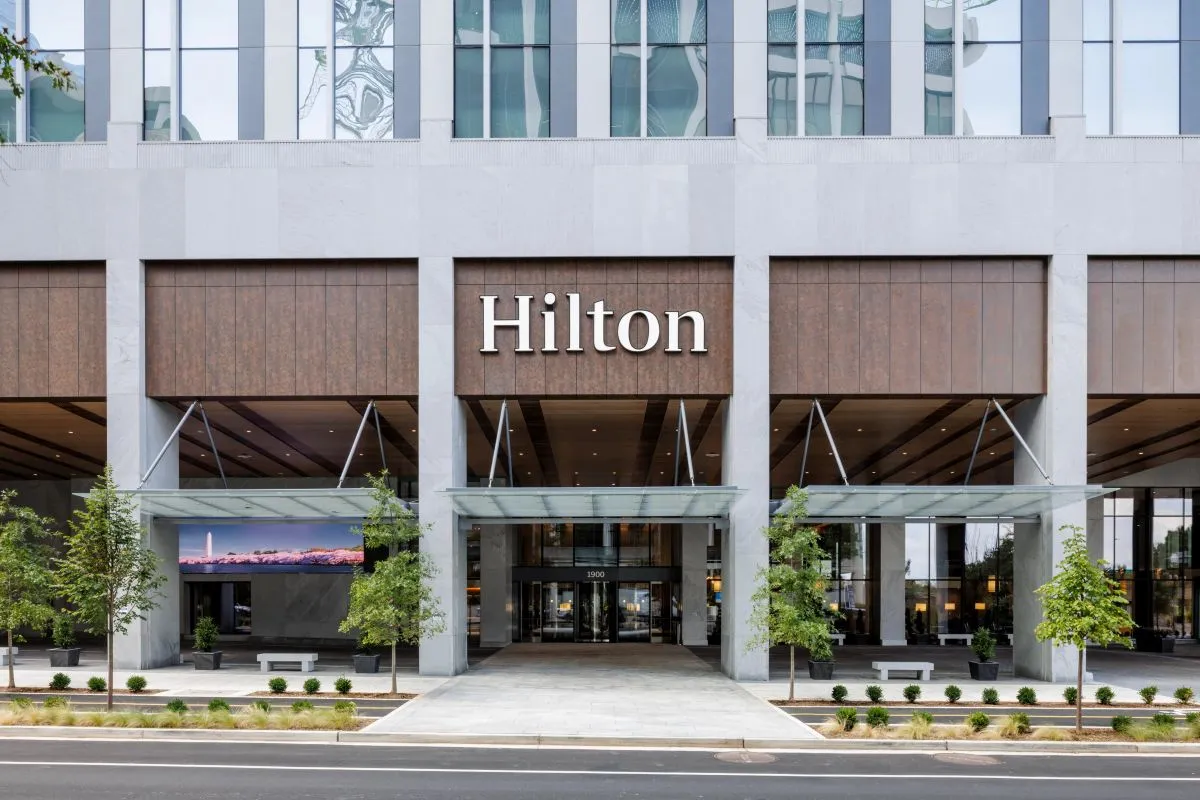
The rapid emergence of agentic artificial intelligence in the global travel sector has officially collided with legacy digital infrastructure, creating an unexpected battleground over how consumers search for and book hotel accommodations. Hilton, one of the world’s largest hospitality companies, finds itself at the center of a burgeoning debate regarding digital accessibility after financial analysts and media spot tests revealed significant friction when attempting to interact with the hotel chain’s booking engines through autonomous AI agents.
The controversy erupted following a research note published on Friday by BTIG analyst Jake Fuller, who informed clients that his research team had encountered substantial roadblocks while testing Meta’s personal AI assistant, Muse, across a wide array of hotel reservation queries. According to Fuller’s note, the AI agent was unable to successfully retrieve room rates from Hilton’s digital ecosystem, with the analyst explicitly stating that "Hilton blocked Muse," though specific technical details regarding the alleged blockade were omitted from the initial client communication.
This revelation immediately drew the attention of industry observers, technologists, and hospitality executives, casting a spotlight on the complex technical and strategic challenges that traditional hotel brands face as they navigate the transition from human-driven web browsing to automated, AI-mediated commerce. While hospitality companies have spent decades optimizing their direct-booking channels to capture high-margin reservations and bypass costly third-party online travel agencies (OTAs), the rise of artificial intelligence introduces a brand-new intermediary class that operates on entirely different programmatic rules.
Official Responses and Clarifications
In the wake of the BTIG research note, a representative for Hilton firmly pushed back against the assertion that the company had deliberately restricted or blocked Meta’s Muse, or any other major agentic AI assistant, from accessing its inventory and pricing data. In an official statement provided to industry media, the Hilton spokesperson maintained that the hospitality giant is actively embracing agentic artificial intelligence as an innovative medium to connect directly with modern consumers.
Hilton is embracing agentic AI as a new way to connect with guests directly and is accepting bookings from various agents, including Muse, the spokesperson emphasized. Furthermore, the company acknowledged the nascent stage of these technologies, noting that these tools are in their early days, and our commitment is to remain at the forefront of ensuring we are visible and available where agentic commerce is happening.
Despite these assurances, independent verification efforts conducted by trade publications have painted a more nuanced and technically complex picture of the current digital landscape. In follow-up spot tests performed by travel industry publication Skift, researchers attempting to utilize Meta’s Muse to secure hotel rates and availability encountered notable speed bumps not only on Hilton’s proprietary website, but also across the digital platforms of major hospitality competitors, including Marriott International and Hyatt Hotels Corporation.
These findings suggest that the friction experienced by analysts may not necessarily stem from an intentional corporate blockade, but rather from the inherent technical incompatibilities, security protocols, and bot-mitigation safeguards currently deployed across the hospitality sector.
The Chronology of Agentic AI in Travel
To understand the current friction between hotel websites and AI agents, it is essential to examine the rapid chronology of autonomous commerce and its integration into the consumer travel journey.
For decades, the evolution of travel booking has followed a predictable linear trajectory. The late 1990s and early 2000s marked the birth of online travel agencies such as Expedia and Booking.com, which aggregated flights and hotels into centralized databases. Following this, major hotel chains invested billions of dollars into proprietary websites and loyalty programs, launching aggressive "Book Direct" campaigns designed to encourage consumers to bypass OTAs and secure rooms directly through branded portals.
By the mid-2010s, conversational interfaces and chatbots emerged, though these early iterations were largely rule-based, clunky, and limited to answering basic frequently asked questions or managing simple reservation modifications. The paradigm shifted dramatically in late 2022 and throughout 2023 with the explosive mainstream adoption of generative artificial intelligence driven by advanced large language models.
By 2024 and 2025, technology behemoths—including Meta, OpenAI, Google, and Apple—began deploying "agentic" AI systems. Unlike traditional chatbots that merely converse with users, agentic AI systems possess the autonomy to execute multi-step tasks on behalf of a human operator, such as navigating web pages, filling out forms, processing payments, and completing end-to-end transactions across external platforms.
By early 2026, tech platforms began rolling out personal agents capable of handling complex lifestyle logistics, including vacation planning and lodging reservations. This rapid deployment caught many traditional industries off-guard, as digital infrastructure designed to protect enterprise websites from malicious web scrapers, automated scalpers, and fraudulent cyber bots began inadvertently flagging and blocking legitimate consumer-facing AI agents.
Technical Challenges and Bot Mitigation Protocols
The technical hurdles highlighted by the recent Muse testing sessions underscore a fundamental architectural conflict within modern web management. Major hotel corporations deploy sophisticated cybersecurity measures and anti-bot software—such as tools provided by Cloudflare, Akamai, and PerimeterX—to safeguard their digital properties. These defensive systems are specifically engineered to detect, challenge, and block automated scripts that attempt to harvest pricing data, execute unauthorized screen-scraping, or flood reservation systems with synthetic traffic.
When an AI agent like Meta’s Muse attempts to query a hotel’s website for real-time room availability, taxes, fees, and dynamic pricing structures, it frequently operates by sending programmatic requests that mimic or resemble automated scraping behavior. In the absence of established, standardized Application Programming Interfaces (APIs) dedicated to AI-to-business commerce, security gates designed to protect corporate servers often treat these AI queries as potential threats and issue access challenges, rate-limits, or outright blocks.
Industry technologists point out that resolving this friction requires a deliberate shift in how hospitality companies architect their digital interfaces. Rather than relying on defensive firewalls that lock out all non-human traffic, hotel brands must develop secure, reliable API pipelines specifically sanctioned for agentic AI consumption. This ensures that autonomous agents can retrieve accurate, real-time inventory and pricing without triggering enterprise security alarms.
Broader Industry Implications for Hospitality and Commerce
The complications surrounding Hilton and Meta’s Muse signal a profound transformation in how travel distribution will function over the coming decade. As consumers increasingly delegate complex planning and purchasing tasks to personal artificial intelligence assistants, the traditional battleground for consumer attention is shifting away from search engine optimization (SEO) and branded mobile apps toward algorithmic visibility.
In a traditional digital ecosystem, a hotel brand secures bookings by ranking high on Google search results or by enticing users to download its proprietary mobile application. In an agentic commerce ecosystem, however, the primary consumer-facing interface is no longer the human traveler browsing a web page, but rather an AI algorithm acting on the traveler’s behalf.
If an AI agent cannot easily access a hotel’s inventory, or if the booking process involves too many security friction points, the agent will simply bypass that specific brand and recommend a competitor whose digital infrastructure is more compatible with autonomous navigation. Consequently, hospitality executives face mounting pressure to future-proof their distribution strategies.
Market analysts note that brands that successfully integrate with agentic AI platforms stand to capture a significant share of emerging, high-intent booking traffic. Conversely, hospitality companies that lag in establishing clear pathways for AI-driven transactions risk diminished visibility as consumer behavior shifts away from traditional web browsers toward autonomous digital assistants.
Strategic Outlook and Future Roadmap
Looking ahead, industry stakeholders anticipate a period of rapid standardization and partnership development between major technology conglomerates and global hospitality leaders. Establishing secure, mutually beneficial frameworks will require close collaboration between AI developers—who must design agents that respect rate-limiting, data privacy, and terms of service—and hotel enterprises, which must modernize their digital architecture to accommodate machine-to-machine commerce.
While early spot tests have exposed noticeable technical speed bumps and conflicting accounts regarding accessibility, the overarching trajectory remains clear. Agentic artificial intelligence is no longer a futuristic concept confined to research laboratories; it is an active participant in consumer commerce. As Hilton and its industry peers continue to refine their digital strategies in response to these early market signals, the hospitality sector must adapt quickly to ensure seamless integration into the automated economy of the future.




 Gabriela Annisa

 Lukman Taruna Persada Ramadan

 Anjar Salim

 Dwi Wanna
