
 Tatiana Tantri Indah Sari
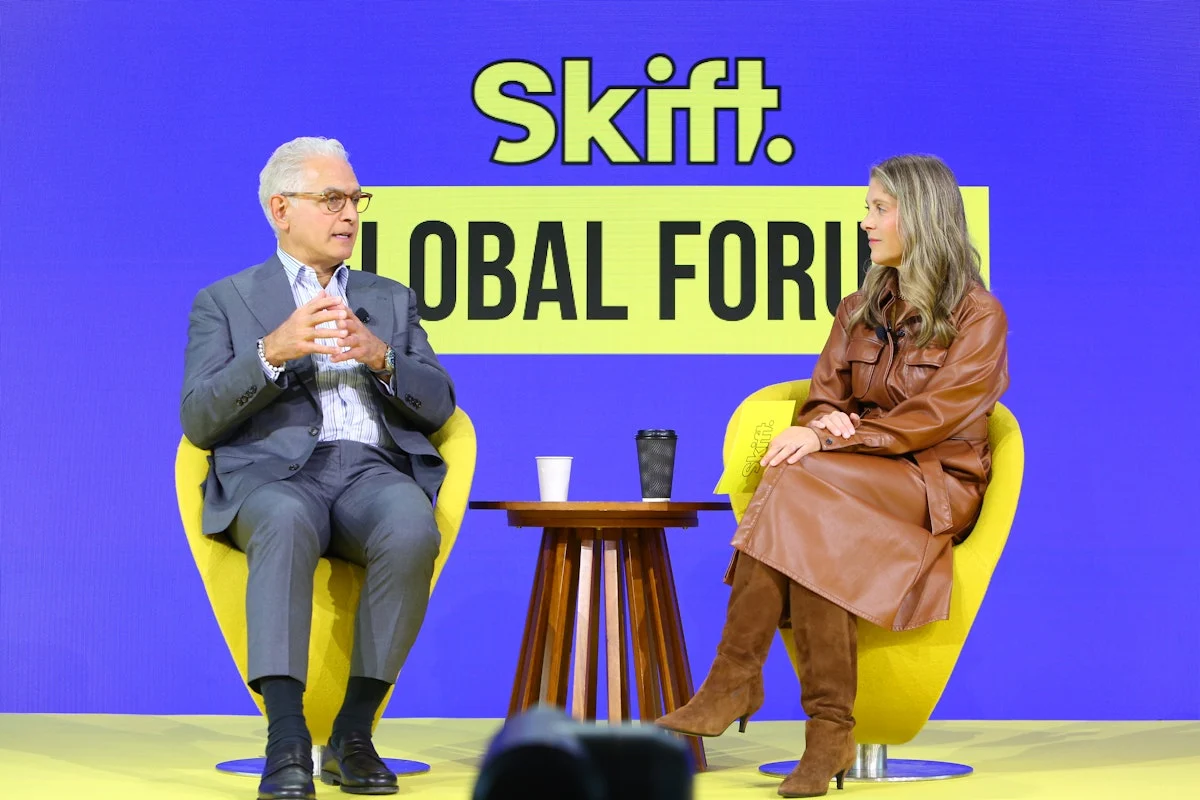
The modern hospitality industry is built on a delicate balancing act between property owners, franchise operators, and corporate brand standards. For decades, hotel conglomerates have preached the gospel of maximizing owner value, yet friction remains a constant undercurrent in hotel management. Major hotel chains frequently roll out sweeping technological upgrades, mandatory brand standard enhancements, and centralized system overhauls, often passing down substantial costs to franchise partners and independent property owners. However, a radically different philosophy was recently highlighted on the global stage when Hyatt Hotels Corporation Chairman, President, and CEO Mark Hoplamazian took part in a high-profile discussion moderated by Skift Editor-in-Chief Sarah Kopit at the Skift Global Forum.
Hoplamazian’s insights shed light on a deeply embedded corporate ethos that has quietly defined Hyatt for the vast majority of its history. For 67 of the company’s 70 years in existence, Hyatt has maintained a unique position as a significant owner of its own hotels. While many hospitality giants have transitioned into asset-light models entirely focused on management and franchising fees, Hyatt’s deep historical roots as a property owner continue to inform its strategic decision-making process. This foundational perspective profoundly alters how the corporation approaches major capital expenditures, technological investments, and relationships with property owners worldwide.
The centerpiece of Hoplamazian’s discussion at the Skift Global Forum centered on a monumental technological feat: the simultaneous replacement of all four core hotel operating systems across Hyatt’s global portfolio. In the complex landscape of enterprise technology, upgrading a single property management system (PMS) is widely regarded as a high-risk, high-stress endeavor fraught with potential downtime, operational friction, and unexpected expenses. Attempting to overhaul four core operating systems concurrently is an enterprise risk that most hospitality executives would avoid at all costs. Yet, Hyatt not only executed this massive modernization initiative, but it also achieved a staggering 40 percent cost savings on the property management system component alone.
Even more remarkable than the technological execution was the financial structuring of the upgrade. In an industry where corporate headquarters routinely pass down technology fees, software licensing costs, and implementation bills to hotel owners, Hyatt absorbed the entire financial burden internally. Highlighting this unprecedented approach during the forum, Hoplamazian emphasized the company’s commitment to its partners by stating that Hyatt completed the massive infrastructure overhaul without sending a bill for even one penny to any of its property owners.
The Evolution of Asset Management and Corporate Philosophy in Hospitality
To understand the weight of Hoplamazian’s statements, one must examine the broader historical context of hotel asset management. In the latter half of the twentieth century, hotel companies commonly owned and operated the physical real estate bearing their brand names. This asset-heavy model provided companies with direct control over the guest experience and property maintenance, but it also exposed them to significant financial volatility tied to real estate cycles, economic downturns, and high capital expenditure requirements.
As public markets began favoring predictable, high-margin revenue streams, a massive shift swept across the global hospitality sector. Major hotel chains rapidly divested their real estate holdings, pivoting aggressively toward asset-light franchising and management contract models. By shedding physical properties, these corporations transformed themselves into brand marketing and loyalty program machines, generating lucrative fees based on gross room revenues rather than net operating income. While this strategy successfully unlocked shareholder value and fueled rapid global expansion, it also introduced a widening disconnect between corporate executives and property owners.
Franchise partners frequently voice frustration regarding corporate mandates that require expensive property renovations, mandatory brand standard upgrades, and integration with proprietary software suites. These capital calls can strain owner profitability, particularly during periods of macroeconomic uncertainty, rising interest rates, and inflationary pressures on labor and supplies. Against this backdrop, Hyatt’s historical identity as a former major hotel owner creates an institutional empathy that permeates its corporate culture. By retaining a nuanced understanding of the daily operational realities and capital constraints faced by hotel owners, Hyatt’s leadership team evaluates corporate decisions through the lens of partnership rather than purely extractive fee generation.

The Technical Triumph: Upgrading Core Operations Without Disruption
Executing a simultaneous replacement of four core hotel operating systems is a monumental engineering and logistical challenge. Modern hotels rely on an intricate digital ecosystem to manage everything from guest reservations, check-ins, and housekeeping to loyalty point redemptions, payment processing, and revenue management. A failure or glitch in any of these interconnected systems can bring daily hotel operations to a grinding halt, resulting in lost revenue, frustrated guests, and stressed staff members.
When Hyatt decided to modernize its technological infrastructure, the corporation opted for a holistic, synchronized replacement strategy rather than a piecemeal rollout. Upgrading the property management system while simultaneously modernizing ancillary operational systems allowed Hyatt to eliminate legacy data silos and streamline digital workflows across its entire global portfolio. More importantly, achieving a 40 percent reduction in property management system costs demonstrates a high degree of operational efficiency and strategic vendor negotiation.
In the corporate world, absorbing the full cost of such a massive enterprise software deployment is a rare strategic gamble. Software implementations of this scale frequently suffer from budget overruns, scope creep, and delayed timelines. By insulating property owners from these financial shocks, Hyatt achieved multiple strategic objectives simultaneously:
- Strengthened trust and loyalty among hotel owners and franchise partners.
- Ensured 100 percent compliance and rapid adoption across all properties without pushback or delays.
- Protected owner profitability, enabling them to reinvest capital into local property improvements and staff development.
- Standardized global operations, creating a unified technological foundation for future innovations.
Industry analysts have noted that companies willing to invest heavily on behalf of their owners ultimately cultivate a fundamentally different, more resilient kind of customer and partner loyalty. When owners feel supported by their parent brand, they are more likely to reinvest in their properties, expand their portfolios with the brand, and deliver exceptional hospitality experiences to guests.
Industry Implications and Future Outlook
The strategic approach outlined by Mark Hoplamazian at the Skift Global Forum offers a compelling blueprint for the future of hospitality management. As travelers demand increasingly seamless, personalized, and digitally integrated experiences, hotel brands face mounting pressure to modernize their technology stacks. However, the traditional playbook of passing these costs down the line is encountering growing resistance from property owners who are already navigating compressed operating margins.
Hyatt’s ability to self-fund a massive technological overhaul signals a potential shift in how hotel brands compete for property owners and franchise developers. In an increasingly crowded marketplace where multiple global brands vie for the same real estate and management contracts, tangible proof of owner support serves as a powerful differentiator. Owners who have experienced friction and unexpected capital calls from other major conglomerates may find Hyatt’s partner-centric philosophy highly attractive.
Furthermore, the successful execution of this tech modernization project positions Hyatt to capitalize on emerging trends in artificial intelligence, data analytics, and hyper-personalized guest engagement. With all properties operating on a unified, cost-efficient, and modernized system architecture, Hyatt can deploy new digital features and guest-facing applications rapidly across its entire ecosystem without encountering the technical debt that plagues legacy software systems.
As the hospitality industry continues to evolve in the wake of post-pandemic recovery and shifting economic landscapes, leadership philosophies will remain a critical determinant of long-term success. Mark Hoplamazian’s emphasis on shared financial responsibility and foundational owner empathy demonstrates that respecting the economic realities of property ownership is not just a nostalgic nod to the past, but a smart, forward-looking business strategy for the future.




 Gabriela Annisa

 Lukman Taruna Persada Ramadan

 Anjar Salim

 Dwi Wanna
