
 Budi Mulyono
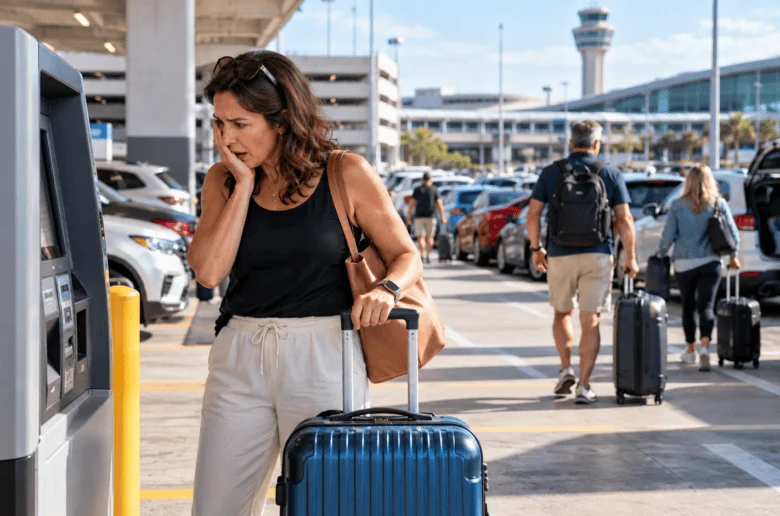
The cost of travel logistics continues to place a heavy financial burden on consumers, with airport and cruise port parking emerging as a significant yet frequently overlooked expense. In an economic landscape where inflation has elevated the baseline costs of everyday goods, fuel, and lodging, transportation infrastructure fees add hundreds of dollars to the total price of a vacation before the traveler even departs. Official on-site parking garages at major transportation hubs routinely exceed $30 to $45 per day, prompting a growing number of travelers to seek out off-site alternatives, utilize third-party comparison aggregators, and reevaluate traditional transit planning.
Understanding the financial mechanics of travel parking requires an examination of how these rates are structured, how off-site facilities operate, and what hidden pitfalls travelers encounter when opting for bargain solutions.
The Escalating Costs of Official On-Site Parking
For decades, parking directly at an airport terminal or a cruise terminal was viewed primarily as a convenience fee—a minor premium paid for proximity and the ability to walk straight from the vehicle to the check-in counter. However, pricing over recent years has transformed these lots into major revenue-generating assets for municipal authorities and port operators.
At major metropolitan hubs, daily rates have risen sharply. For instance, at Newark Liberty International Airport (EWR), official economy parking regularly ranges between $30 and $35 per day. Los Angeles International Airport (LAX) maintains similar economy rates, hovering around $35 daily, while Boston Logan International Airport (BOS) sees economy rates climb to approximately $37 per day. For a standard seven-day vacation, these figures mean travelers can expect to pay between $245 and $259 simply to store their vehicle in an unreserved outdoor economy lot, with terminal-adjacent garages costing significantly more.
The financial pressure is equally severe within the cruise industry. Major U.S. cruise embarkation points face high demand and constrained real estate, driving up daily rates. Port Canaveral averages around $20 per day, while PortMiami charges up to $35 daily. Facilities in the New York metropolitan area, such as the Brooklyn Cruise Terminal, can reach rates as high as $45 per day. Over a standard seven-day Caribbean cruise, parking at these premium ports can easily total $140 to $315—an amount that frequently rivals the baseline cost of the cruise fare itself.
Conversely, smaller regional airports often utilize different economic models to attract regional carriers and passengers. Facilities such as Lancaster Airport in Pennsylvania have historically maintained lower parking costs, with some regional fields offering free parking to incentivize local travel. Yet, for the millions of passengers utilizing high-volume international airports and major cruise terminals, financial relief must be found elsewhere.
The Rise of Off-Site Parking Alternatives
To mitigate these expenses, a robust private market of off-site parking facilities has emerged surrounding major transportation hubs. Operated by independent companies—such as The Parking Spot, WallyPark, and regional providers like Fast Park & Relax—these off-site lots typically position themselves a few miles away from airport perimeters and cruise terminals.

These private operators generally function by acquiring cheaper commercial land outside the high-rent airport zone, passing the savings on to consumers while providing complimentary shuttle services to transport passengers directly to their departure gates. For example, near Orlando International Airport (MCO), where official economy parking costs roughly $14 per day, off-site competitors often match or slightly undercut those base rates while offering promotional discounts, such as waived reservation fees for loyalty program members or introductory free-day offers for new sign-ups.
Beyond individual brand websites, third-party digital aggregators have transformed how consumers shop for these services. Platforms like Parkingnearairports.io compile real-time inventory from private lots, independent hotel parking structures, and off-site vendors across dozens of states. These aggregators allow travelers to filter by price, distance, and amenity, frequently revealing off-site rates that drop as low as $5 to $8 per day—even in high-cost markets like Miami, Baltimore, and Los Angeles.
Analytical Breakdown: Weighing Savings Against Logistics
While the headline savings of off-site parking can exceed 60% to 75% compared to official terminal garages, financial analysts and consumer advocates advise a thorough cost-benefit analysis before booking. The true economic value of an off-site parking space depends heavily on auxiliary variables, including transportation logistics, hidden fees, and time management.
- Shuttle Availability and Frequency: Many off-site lots include 24/7 shuttle service. However, frequency varies widely based on fleet size and time of day. A lot operating a single shuttle on a 45-minute rotation introduces significant delays compared to an airport’s automated transit system or continuous terminal shuttle buses.
- Supplemental Transportation Costs: Some ultra-budget off-site lots do not provide shuttle service. In these instances, travelers must factor in the cost of a rideshare service (such as Uber or Lyft) or a taxi from the off-site lot to the terminal and back. In major cities, a round-trip rideshare can easily cost $40 to $80, instantly erasing any savings achieved by choosing a cheaper parking lot.
- Taxes, Tolls, and Service Fees: Advertised daily rates frequently exclude local tourism taxes, airport access fees, and online reservation processing charges. A rate listed at $5.00 per day may inflate significantly once mandatory operational fees are appended at checkout.
Consumer Feedback and Operational Challenges
Industry watchdogs and consumer review forums highlight a distinct dichotomy in the off-site parking sector. While thousands of travelers utilize these services annually without incident, a notable volume of complaints centers on operational reliability during peak travel periods.
Common grievances documented on consumer protection platforms include prolonged wait times for return shuttles following late-night flight arrivals, communication breakdowns when contacting dispatchers during peak hours, and occasional vehicle security concerns in unpaved or poorly monitored peripheral lots. Travelers returning from exhausting multi-leg journeys frequently report spending upwards of an hour standing curbside waiting for a scheduled shuttle, underscoring the intangible value of convenience.
Airport authorities and consumer travel associations emphasize that while private operators maintain standard security measures—such as fenced perimeters, surveillance cameras, and lighting—they operate independently of airport police and port authority jurisdiction. Consequently, liability policies regarding vehicle damage, theft, or missed flights due to delayed lot shuttles are governed entirely by the private vendor’s terms of service.
Strategic Recommendations for Travelers
To navigate the complexities of travel parking efficiently, industry experts recommend a structured approach to pre-trip planning:
- Compare Total Door-to-Door Costs: Calculate the aggregate expense of the parking rate, reservation fees, taxes, and any necessary secondary ground transportation (rideshares or taxis) before selecting a facility.
- Verify Operational Hours: Confirm that the off-site lot’s shuttle hours align precisely with scheduled departure and arrival times, particularly for red-eye flights or late-arriving cruise vessels.
- Consult Independent Review Channels: Prioritize recent feedback on third-party review forums rather than relying solely on promotional material provided by booking aggregators. Focus specifically on recent comments regarding shuttle reliability and customer service responsiveness.
- Evaluate Cancellation Flexibility: Opt for facilities that offer flexible, refundable reservation policies in the event of flight cancellations, itinerary modifications, or unexpected weather delays.
By treating parking logistics as an essential component of trip budgeting rather than an afterthought, travelers can successfully insulate themselves against inflated terminal fees while safeguarding the reliability and peace of mind necessary for a seamless journey.



 Diana Nuri Rohmawati

 Gabriela Annisa

 Lukman Taruna Persada Ramadan

 Tatiana Tantri Indah Sari

 Anjar Salim

