
 Tatiana Tantri Indah Sari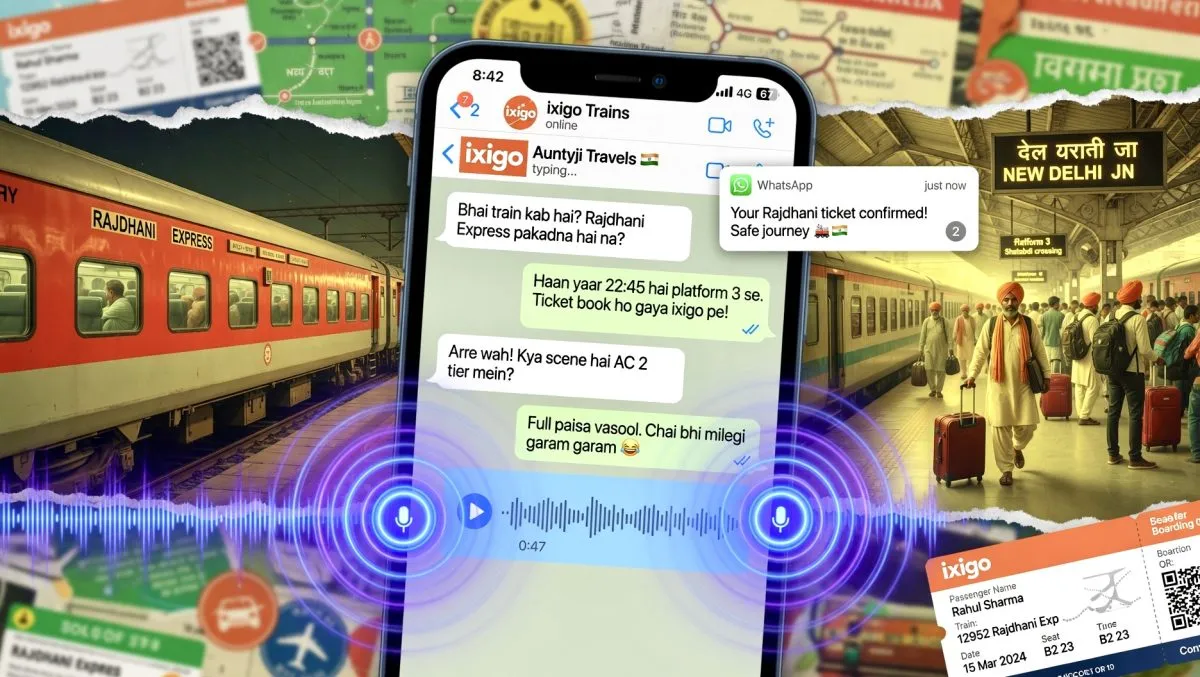
India is rapidly positioning itself as a global leader in the development and deployment of voice-first artificial intelligence solutions, particularly within the travel sector. This unique trajectory is driven by a confluence of factors: significant literacy gaps, unparalleled linguistic diversity, a burgeoning voice-first consumer behavior, and the strategic development of a sovereign AI stack. No other large travel market worldwide presents this specific combination of challenges and opportunities at such a profound scale, making India a critical testbed and innovator in this domain.
The recent strategic overhaul by Ixigo, India’s prominent Online Travel Agency (OTA) catering primarily to mass-market travelers in the train and bus segments, exemplifies this trend. Earlier this month, Ixigo relaunched its entire application under a new identity, "Ixigo Next," with a voice-native AI assistant named Tara at the core of its user interface. Tara is designed to process user queries not just in English and Hindi, but crucially, also in Hinglish – the code-mixed language that reflects the natural conversational style of a vast majority of Indian smartphone users. This initiative represents a significant leap in making digital travel services more accessible and intuitive for a diverse user base.
Ixigo’s "NewCo Inside OldCo" Strategy
Rajnish Kumar, Co-CEO of Ixigo, described the ambitious rebuild as a "NewCo inside OldCo" endeavor, highlighting the strategic decision to form a separate, dedicated team focused on reconstructing the application from the ground up, starting with the AI layer. This organizational model often facilitates agility, fosters innovation, and allows for a rapid iteration cycle, unencumbered by the legacy systems and processes of the established entity. Such a focused approach underscores the company’s commitment to integrating advanced AI as a foundational element rather than a mere add-on feature.
Aloke Bajpai, Co-founder of Ixigo, articulated the transformative potential of Ixigo Next and Tara in a LinkedIn post, labeling it "a global first" and a "Peace of Mind App for travellers." His assertion that the initial demo video "doesn’t even demonstrate 1% of what we can do for you" might, at first glance, appear as typical founder rhetoric. However, beneath the theatricality, it signals a deeply ambitious product strategy that, in its native AI integration and multi-lingual voice capabilities, arguably surpasses the incremental feature updates seen from global giants like Booking.com or Expedia in the current year. This positions Ixigo not just as a regional player but as an innovator setting a new standard for conversational travel interfaces.
The Broader Digital Landscape: India’s Unique Differentiators
The profound shift towards voice-first interactions in India is not an isolated phenomenon but rather a logical evolution within its unique digital ecosystem.
-
Addressing Literacy Gaps: Despite significant advancements in education, India still grapples with considerable literacy gaps, particularly in rural areas and among older demographics. Traditional text-based digital interfaces present a formidable barrier to entry for millions. Voice AI, by allowing users to interact in their spoken language, bypasses this obstacle, democratizing access to online services for a previously underserved population. This inclusive approach aligns with the broader national agenda of digital empowerment.
-
Navigating Linguistic Diversity: India is a mosaic of languages, with 22 official languages and hundreds of dialects. While English and Hindi serve as lingua francas, regional languages hold immense cultural and practical significance. Developing text-based interfaces for all these languages is an arduous, if not impossible, task. Voice AI, especially with advancements in natural language processing (NLP) for low-resource languages and code-mixing (like Hinglish, Tanglish, Banglish, etc.), offers a scalable solution to cater to this rich linguistic tapestry, enabling more personalized and natural interactions.
-
Pervasive Voice-First Consumer Behavior: The Indian consumer’s inclination towards voice interaction predates sophisticated AI. The widespread adoption of feature phones and early smartphones, often used by multiple family members, led to a natural preference for voice notes, voice calls, and simple voice commands. This behavior was further solidified by platforms like WhatsApp, where voice messaging became a default mode of communication for many. The success of India’s Unified Payments Interface (UPI) also saw early experiments with voice-activated payments, indicating a strong existing comfort level with voice as an interaction modality. This ingrained behavior provides a fertile ground for the rapid adoption of voice-first AI applications.
-
The Sovereign AI Stack and Digital Public Infrastructure (DPI): India’s ambitious "Digital India" initiative has fostered the creation of robust Digital Public Infrastructure (DPI) such as Aadhaar (digital identity), UPI (real-time payments), and ONDC (Open Network for Digital Commerce). Building upon this, the concept of a "sovereign AI stack" signifies India’s commitment to developing indigenous AI capabilities, tools, and platforms tailored to its unique needs and linguistic diversity. Initiatives like Bhashini, a national language translation mission, aim to bridge digital language barriers, creating an open ecosystem for AI development across Indian languages. This foundational layer provides the secure, scalable, and localized infrastructure necessary for large-scale voice AI deployments in critical sectors like travel.
Google’s Strategic Entry with Ask Maps
The global significance of India’s voice-first trajectory is further underscored by the actions of tech behemoths. Two months prior to Ixigo’s relaunch, in March, Google introduced "Ask Maps" – a conversational AI feature powered by its Gemini model. This integration allows users to interact with Google Maps using natural language queries, enabling more intuitive navigation, discovery of points of interest, and trip planning. While not exclusively voice-native from its inception, the direction of "Ask Maps" clearly aligns with the growing global trend towards conversational interfaces and Google’s strategic interest in tapping into India’s vast and diverse user base. Google’s investment in multi-lingual AI capabilities, particularly for Indian languages, has been significant, recognizing the market’s potential.
Chronology of Innovation
- Pre-2020: Early adoption of voice commands on smartphones, rise of voice messaging on platforms like WhatsApp, and initial government pushes for digital literacy and inclusion.
- 2020-2022: Accelerated growth of UPI and other DPIs, increasing smartphone penetration, and preliminary discussions around a national AI strategy and language missions like Bhashini.
- March [Current Year]: Google ships "Ask Maps," powered by Gemini, signaling a major move into conversational AI for location-based services, with a clear eye on markets like India.
- Early [Current Month]: Ixigo relaunches its core app as "Ixigo Next," with the voice-native AI assistant Tara, marking a groundbreaking integration of conversational AI at the heart of an OTA’s offering for the mass market.
Implications and Broader Impact
The rise of voice-first travel AI in India carries multifaceted implications for travelers, the industry, and the global AI landscape.
-
For Travelers: The most immediate impact is enhanced accessibility and convenience. Users who are less digitally literate, uncomfortable with typing in English, or prefer interacting in their native tongue will find travel planning significantly easier. This translates to a more inclusive digital economy, empowering millions to independently book tickets, inquire about schedules, and manage their travel. The "Peace of Mind" aspect, as coined by Ixigo, suggests a reduction in anxiety associated with complex digital interfaces, leading to more confident and independent travel experiences.
-
For the Online Travel Industry: For OTAs like Ixigo, this represents a significant competitive advantage and an opportunity for deeper market penetration. By lowering the entry barrier, they can onboard new user segments and capture a larger share of the burgeoning Indian travel market. The data generated from voice interactions will also provide invaluable insights into user preferences, pain points, and travel patterns, enabling hyper-personalized recommendations and dynamic pricing strategies. The "NewCo inside OldCo" model suggests that established players are willing to make radical structural changes to embrace this future. Other OTAs, both domestic and international, will undoubtedly be watching Ixigo’s progress closely, potentially spurring a wave of similar AI-driven innovations across the sector.
-
For AI Development and Global Innovation: India’s unique challenges are fostering innovative solutions that have global relevance. The development of robust NLP models for low-resource languages, the handling of code-mixing (Hinglish), and the creation of AI systems that function effectively in diverse socio-economic contexts are contributions that can inform AI development worldwide. India is effectively becoming a living laboratory for inclusive AI, demonstrating how technology can bridge digital divides rather than exacerbate them. The success of voice-first travel in India could provide a blueprint for other emerging markets with similar linguistic and literacy challenges.
Challenges and Future Outlook
Despite the immense potential, the path forward is not without challenges. Ensuring the accuracy and reliability of AI assistants across myriad dialects, addressing data privacy concerns related to voice recordings, and scaling the technology to serve hundreds of millions remain critical hurdles. User adoption beyond early adopters will also require sustained efforts in education and trust-building.
Looking ahead, the integration of voice-first AI with other aspects of India’s DPI, such as the ONDC, could create an even more seamless and comprehensive travel ecosystem. Imagine a scenario where Tara not only books your train ticket but also recommends local vendors for food and accommodation, all discoverable and transactable via a voice command. The continuous evolution of India’s sovereign AI stack, coupled with aggressive investment in research and development, promises an exciting future where voice becomes the primary interface for digital interaction, fundamentally reshaping how millions experience travel and access information. India’s journey in voice-first travel AI is not just about technological advancement; it’s about digital inclusion and empowering a billion voices.




 Chandra Hamzah
 Budi Mulyono
 Anjar Salim
