
 Tatiana Tantri Indah Sari
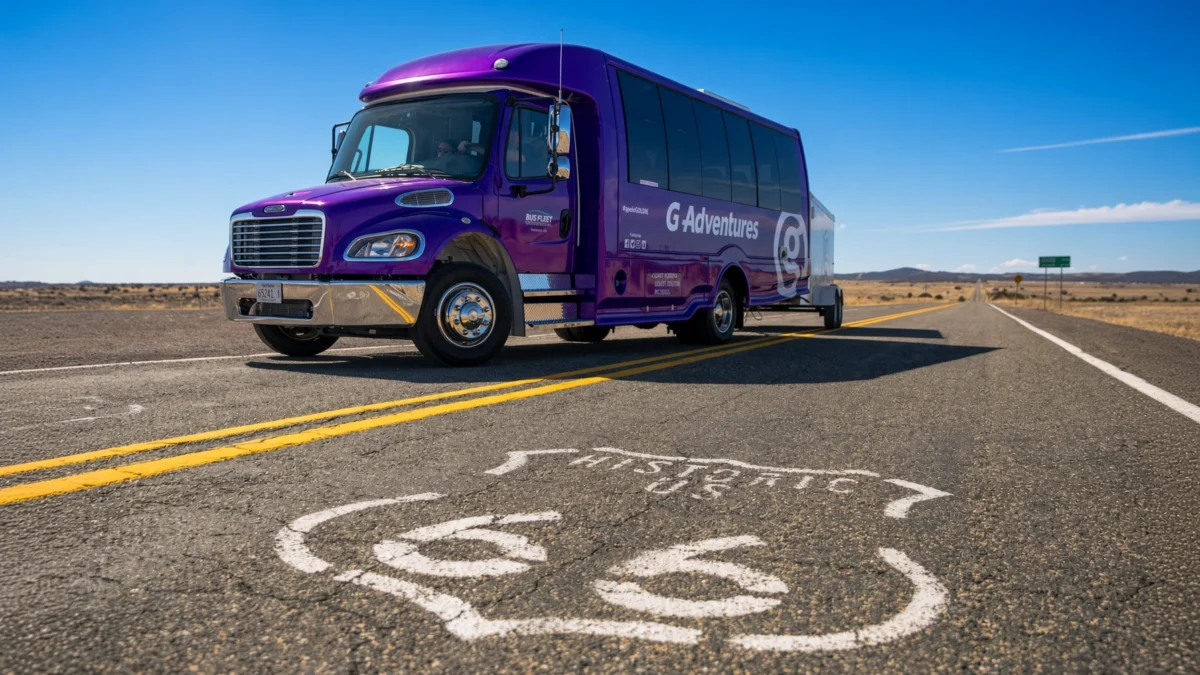
For more than thirty years, Bruce Poon Tip has remained an unmistakable architect of modern adventure travel, steering G Adventures from a modest Toronto-based startup in 1990 into a defining enterprise of community-based and small-group tourism. While Poon Tip cultivated a vibrant, highly visible founder persona—championing sustainable travel ethics and establishing the non-profit Planeterra Foundation—the inner financial machinations of his sprawling empire have historically remained shrouded in the discretion typical of privately held corporations. Today, however, rare corporate filings across international jurisdictions offer an unprecedented look at how this adventure tourism giant weathered the catastrophic disruptions of the COVID-19 pandemic and successfully engineered its post-crisis resurgence.
Although Poon Tip relinquished day-to-day operational control to focus on broader strategic horizons—transitioning into his current role as chairman of G Travel Community, the holding entity established in 2023, while Ben Perlo serves as CEO of G Adventures and Jeff Russill operates as CEO of G Travel Community—the enterprise he built continues to cast a massive shadow over the global travel landscape. Because G Adventures does not publish consolidated annual reports or publicly disclose its global financial statements in a singular ledger, industry analysts have long relied on fragmented data to evaluate the company’s fiscal health. Recent corporate filings sourced from the United Kingdom and Canada, however, pierce this veil of privacy, revealing a resilient balance sheet underscored by significant revenue generation, including UK-specific filings that capture a staggering $447 million in revenue streams.
Foundational Origins and the Rise of Community Tourism
The journey of G Adventures began in 1990 when a young Bruce Poon Tip, armed with a personal loan and a deep dissatisfaction with conventional, mass-market tourism, launched the company out of Toronto, Canada. Rejecting the sterile, isolated environments of large cruise liners and resort compounds, Poon Tip pioneered a travel model centered on grassroots immersion. The core philosophy was straightforward: travelers would explore destinations in small groups, utilizing local transportation, staying in locally owned accommodations, and eating at neighborhood establishments. This approach ensured that the economic benefits of tourism remained directly within the host communities rather than leaking out to multinational conglomerates.
As the enterprise expanded throughout the 1990s and 2000s, G Adventures formalised its commitment to social impact by founding Planeterra. The non-profit arm was designed to support social enterprises within destinations visited by G Adventures travelers, ranging from community-run cafes and artisan cooperatives to agricultural projects. By embedding philanthropy and local empowerment directly into the supply chain, Poon Tip differentiated G Adventures from its competitors, positioning the brand not merely as a tour operator, but as a vehicle for global social change. By the time the 2010s arrived, the company operated on every continent, serving hundreds of thousands of travelers annually and cementing its status as an undisputed market leader in the adventure travel sector.
The Pandemic Crucible and the 2023 Corporate Restructuring
Few industries were hit as swiftly or as devastatingly by the global health crisis as international tourism. When the COVID-19 pandemic paralyzed global mobility in early 2020, adventure travel operators faced an existential threat. With borders shuttered and trips canceled en masse, G Adventures was forced to navigate an unprecedented landscape of refunds, grounded operations, and plummeting revenues. Unlike publicly traded cruise lines or massive hotel chains that could tap into deep capital markets or secure massive government bailouts easily, private adventure operators had to rely on internal resilience, stakeholder negotiations, and strategic adaptability to survive.
Chronology of Key Corporate Developments
- 1990: Bruce Poon Tip founds G Adventures in Toronto, introducing a small-group, community-based travel model.
- 2003: The Planeterra Foundation is established to scale community tourism projects and maximize local economic impact.
- 2010–2019: Rapid global expansion solidifies G Adventures as a dominant force in international adventure and sustainable travel.
- 2020: The COVID-19 pandemic halts global tourism, testing the financial endurance of the privately held company.
- 2023: G Travel Community is established as a holding company, with Bruce Poon Tip named chairman, Ben Perlo taking the helm as CEO of G Adventures, and Jeff Russill stepping in as CEO of G Travel Community.
- Present: International corporate filings reveal robust financial metrics, including substantial revenue figures that illustrate a strong post-pandemic recovery.
The crisis prompted a fundamental internal reorganization. In 2023, the leadership structure evolved with the creation of G Travel Community as an overarching holding company. This move allowed for a more sophisticated corporate governance model, separating the overarching holding strategy from daily operations. Under this new structure, Ben Perlo directs the core operating engine of G Adventures as CEO, focusing on itinerary innovation, agency partnerships, and traveler experience, while Jeff Russill oversees the broader holding group as CEO of G Travel Community, managing strategic growth and corporate alignment. Meanwhile, Poon Tip transitioned into the chairman role, shifting his focus toward long-term vision, brand advocacy, and industry-wide sustainability initiatives.
Unlocking the Financials: Insights from UK and Canadian Filings
Assessing the financial performance of privately held tourism enterprises has always presented a challenge for market analysts and competitors alike. Without public shareholder disclosures, companies like G Adventures operate largely out of the public eye. However, regulatory requirements in specific jurisdictions mandate the public filing of financial statements for local subsidiaries, providing a window into the broader corporate picture.
Data extracted from recent UK corporate filings, supplemented by Canadian regulatory records, provide rare empirical evidence of the scale at which the enterprise operates. Most notably, the UK filings reference a remarkable $447 million in revenue, underscoring the massive transaction volume moving through its European and international channels. While this figure does not represent consolidated global earnings, it serves as a powerful indicator of the company’s market footprint and its robust capacity to generate commercial activity even in the wake of macroeconomic disruptions.
Industry observers note that these figures reflect a pent-up demand for experiential and sustainable travel following years of pandemic restrictions. As travelers shifted their preferences away from crowded destinations toward meaningful, nature-based, and culturally immersive journeys, G Adventures was strategically positioned to capture returning demand. The company’s ability to rebound with such financial vigor highlights the resilience of its underlying business model, which relies heavily on variable costs and local supplier networks rather than heavily leveraged, fixed-asset tourism infrastructure.
Implications and the Future of Private Adventure Travel
The emergence of these financial details and the successful structural transition under G Travel Community carry significant implications for the broader travel industry. First, it demonstrates the viability of the privately held model in navigating systemic global crises. While public corporations often face intense pressure from shareholders to deliver immediate quarterly profits—frequently leading to aggressive cost-cutting during downturns—private structures with visionary founders at the helm can often take a longer-term view, prioritizing brand integrity, community relationships, and staff retention over short-term financial expedience.
Furthermore, the scale evidenced by the UK filings reinforces the commercial maturity of the sustainable tourism sector. For years, critics dismissed community-based tourism and ethical travel initiatives as niche markets lacking the scale to compete with mass-market operators. The robust financial metrics associated with G Adventures prove that sustainable tourism can achieve massive global scale while maintaining its ethical commitments. By proving that profitability and community empowerment can coexist on a multi-hundred-million-dollar scale, the company has set a benchmark for other operators seeking to integrate purpose with profit.
As the travel industry continues to evolve in a post-pandemic era defined by shifting consumer values, climate considerations, and economic uncertainties, G Adventures enters its fourth decade under a refreshed leadership tier. With Ben Perlo driving operational execution, Jeff Russill managing holding strategies, and Bruce Poon Tip providing foundational guidance as chairman, the enterprise appears well-equipped to navigate future market shifts. The transparency offered by recent international filings not only demystifies the financial architecture of one of travel’s most iconic brands but also signals that the pioneer of small-group adventure tourism has successfully transitioned from a scrappy startup into a financially formidable global institution.




 Gabriela Annisa

 Lukman Taruna Persada Ramadan

 Anjar Salim

 Dwi Wanna
