
 Budi Mulyono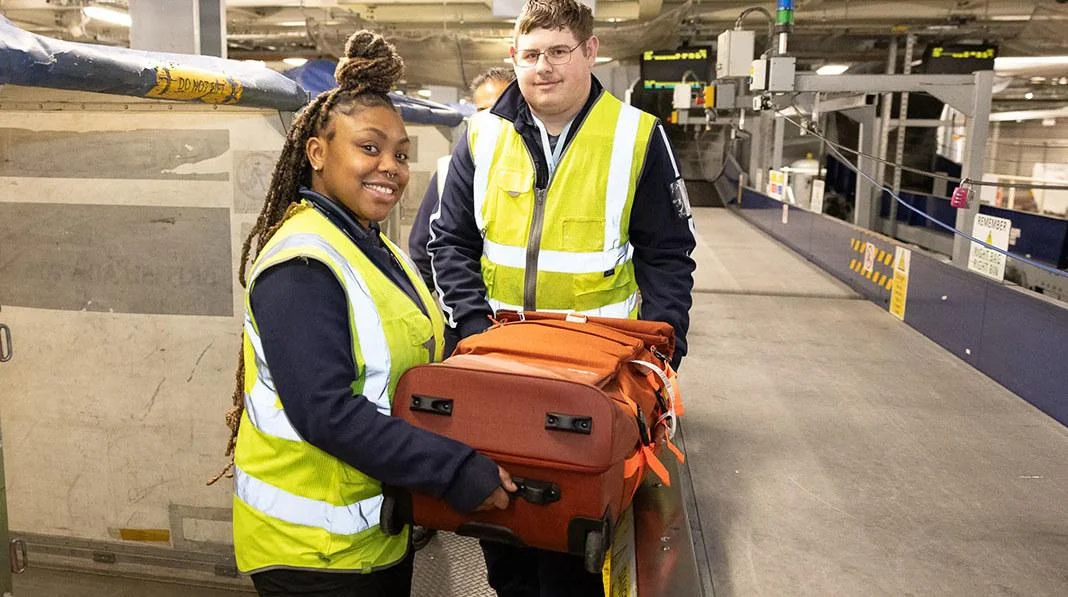
International Airlines Group (IAG), the multinational aviation holding company that operates flagship carriers including British Airways, Iberia, Aer Lingus, Vueling, and LEVEL, has announced a strategic investment in Verve Motion, a wearable robotics startup specializing in high-tech "exosuits." The move signals a major shift in how the aviation industry approaches the physical well-being of its ground crews, specifically baggage handlers and cargo operators who face high rates of musculoskeletal injuries. Through its venture capital arm, IAGi Ventures, the group aims to integrate cutting-edge soft-robotics technology into the grueling daily operations of airport ramps and baggage halls, potentially setting a new standard for occupational health in the aerospace sector.
The partnership involves not only financial backing but also a commitment to live operational trials. These trials will focus on the latest iteration of Verve Motion’s technology: an aviation-specific exosuit designed to provide targeted support for the shoulders and lower back. As airlines globally grapple with labor shortages and the rising costs of workplace injuries, the adoption of "human augmentation" technology represents a middle path between traditional manual labor and the long-term goal of full automation.
The Genesis of Verve Motion: From Harvard Labs to the Tarmac
Verve Motion was established in 2020 by Ignacio Galiana, a Spanish entrepreneur and robotics expert. The company’s foundations lie in over a decade of research conducted at the Wyss Institute for Biologically Inspired Engineering at Harvard University. Beginning in 2012, researchers at Harvard sought to create a "soft" alternative to the rigid, heavy exoskeletons often depicted in science fiction. Unlike the bulky metal frames used in heavy manufacturing or medical rehabilitation, Verve Motion’s technology focuses on "textile-based" robotics.
The resulting product, known as the SafeLift exosuit, functions more like a piece of high-tech apparel than a machine. It is worn like a backpack and uses a combination of sensors, onboard processing, and powerful yet lightweight actuators to assist the wearer’s movements. By detecting when a worker is bending or lifting, the suit provides a "power boost" that offloads weight from the muscles and joints, effectively making heavy objects feel lighter and reducing the metabolic cost of physical labor.
Since its launch, Verve Motion has successfully deployed its suits across various industrial sectors, most notably in third-party logistics (3PL) and retail distribution. The transition to aviation represents a significant scaling of the technology’s application, as airport environments present unique challenges, including extreme weather conditions, confined spaces within aircraft holds, and the high-speed requirements of "turnaround" windows.
The Economic and Physical Toll of Baggage Handling
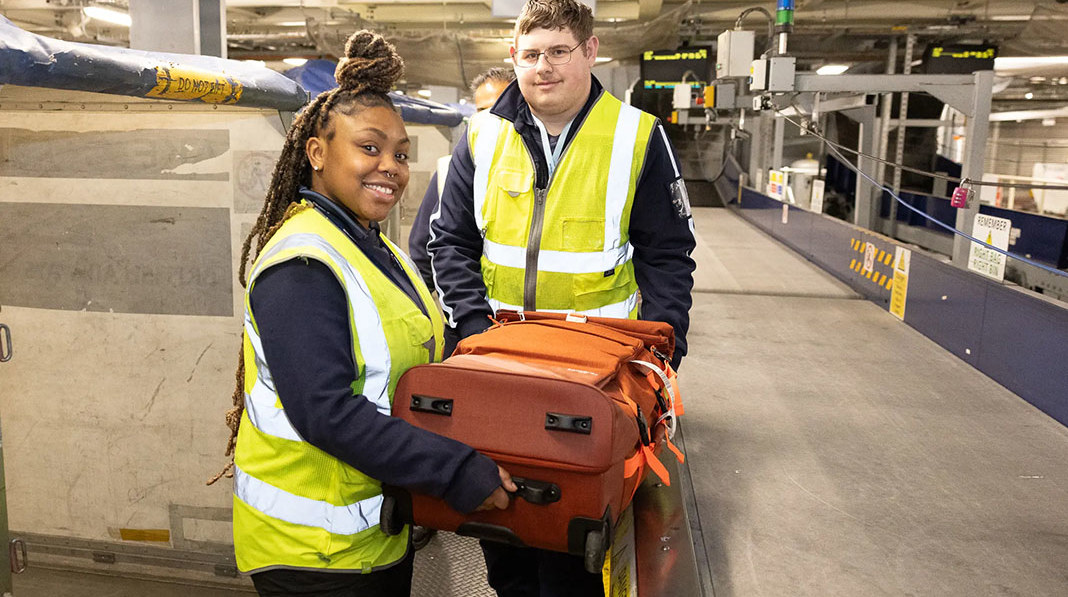
Baggage handling remains one of the most physically taxing roles in the aviation industry. Despite the increasing automation of check-in and sorting systems, the "last mile" of the process—loading suitcases from carts into the narrow holds of narrow-body aircraft—still relies almost entirely on human muscle. A typical baggage handler may lift several hundred bags per shift, with individual weights often reaching the 32-kilogram (70-pound) limit.
The repetitive nature of this work, combined with the awkward postures required to navigate low-ceilinged cargo compartments, leads to a disproportionately high rate of musculoskeletal disorders (MSDs). According to industry data, back, shoulder, and knee injuries are the primary causes of absenteeism and long-term disability among ground crews. For a massive conglomerate like IAG, which employs thousands of ground staff across its hubs in London Heathrow, Madrid Barajas, and Dublin, the financial implications of these injuries are substantial, encompassing medical costs, insurance premiums, and the operational disruption caused by staff shortages.
Proven Results: Supporting Data from the Logistics Sector
The decision by IAG to invest was driven largely by the empirical success Verve Motion has demonstrated in other sectors. In warehouse environments, where the physical demands mirror those of airport baggage halls, the data has been compelling.
At one major distribution center, a 12-month longitudinal study revealed that back and hip injuries plummeted by 61% following the introduction of Verve Motion suits. Furthermore, a comparative study conducted by a leading grocery chain provided a stark contrast between technologically augmented workers and their peers. The study found that employees equipped with the exosuits experienced a five-fold (5x) lower injury rate than those working without them.
Beyond injury prevention, the suits have been shown to reduce fatigue. By offloading up to 40% of the strain on the lower back during a lift, the technology allows workers to maintain a consistent pace throughout their shift without the diminishing returns of physical exhaustion. This increase in "operational stamina" is particularly attractive to airlines looking to optimize the efficiency of ground operations during peak travel periods.
Official Responses and Strategic Vision
The investment has been framed by IAG leadership as a core component of their broader innovation strategy. Nacho Tovar, IAG’s Group Innovation Director, emphasized that the partnership is about solving "real operational challenges" through applied technology.
"Verve Motion is exactly the kind of company we want to back through IAGi Ventures," Tovar stated. "Led by an outstanding Spanish entrepreneur, the team has developed a compelling solution with clear potential for aviation. This partnership gives us the opportunity to test and shape the technology in a live operating environment, helping us understand how it could improve the day-to-day experience of colleagues carrying out physically demanding work while also supporting more efficient operations."
For Verve Motion, the backing of a global aviation giant provides the necessary capital and "living laboratory" to refine their aviation-specific hardware. The trials will specifically investigate the efficacy of shoulder support, a critical need for baggage handlers who must often lift bags above chest height to stack them within aircraft holds.
A Chronology of Aviation Innovation in Ground Handling
The move by IAG is part of a broader, decade-long trend of airlines seeking to modernize the "below-wing" experience.
- 2012–2019: Early experimentation with rigid exoskeletons. Several airlines, including Delta and Air France-KLM, trialed heavy-duty frames. While effective at lifting, these were often criticized by workers for being too hot, heavy, and restrictive for the fast-paced airport environment.
- 2020: The founding of Verve Motion marks a shift toward "soft" robotics, prioritizing wearer comfort and mobility.
- 2021–2023: Rapid adoption of Verve Motion technology in the U.S. logistics sector, proving the commercial viability of the "backpack" form factor.
- 2024 (Early): Japan Airlines (JAL) announces trials of humanoid robots at Tokyo Haneda hub, signaling a more radical approach to automation.
- 2024 (Current): IAG announces its investment in Verve Motion, signaling a preference for "human-in-the-loop" augmentation rather than total replacement of the workforce.
Analysis: Human Augmentation vs. Full Automation
The aviation industry currently stands at a crossroads regarding the future of manual labor. On one side is the path taken by Japan Airlines, which is testing humanoid robots to load and unload cargo containers. This approach seeks to remove the human from the hazardous environment altogether. However, full automation faces significant hurdles, including the immense cost of robotic units, the complexity of handling irregularly shaped soft-sided luggage, and the safety concerns of having heavy robots operating in close proximity to multi-million dollar aircraft.
IAG’s investment in Verve Motion suggests a more pragmatic, immediate solution. By augmenting the human worker, the airline retains the flexibility, judgment, and adaptability of a person while mitigating the biological limitations of the human frame. This "cobot" (collaborative robot) philosophy is often easier to integrate into existing workflows and is generally better received by labor unions, as it focuses on worker longevity and safety rather than job displacement.
Broader Industry Implications and Future Outlook
If the trials at British Airways and Iberia prove successful, the implications for the global aviation industry are profound. The widespread adoption of exosuits could lead to a significant reduction in the industry’s "injury footprint," potentially lowering insurance premiums and improving staff retention in a historically high-turnover sector.
Furthermore, the technology could democratize the role of baggage handling. By reducing the raw physical strength required for the job, airlines could recruit from a more diverse talent pool, including older workers or individuals who might previously have been deterred by the physical intensity of the role.
As IAG moves forward with its trials, the focus will be on the "human factor"—how easily the suits can be donned and doffed, how they perform in the rain and heat of the tarmac, and whether the workers themselves feel a tangible benefit. If the results match the 61% injury reduction seen in warehouses, the "backpack robot" may soon become as common a sight at the airport as the high-visibility vest.
In the long term, IAG’s move may trigger a competitive arms race in ground-handling technology. As airlines look to recover from the financial volatility of the past few years, operational efficiency and workforce resilience have become paramount. The partnership with Verve Motion is a clear indication that the future of aviation is not just about what happens in the sky, but about the sophisticated technology supporting the people on the ground.




 Chandra Hamzah
 Tatiana Tantri Indah Sari
 Anjar Salim

