
 Lukman Taruna Persada Ramadan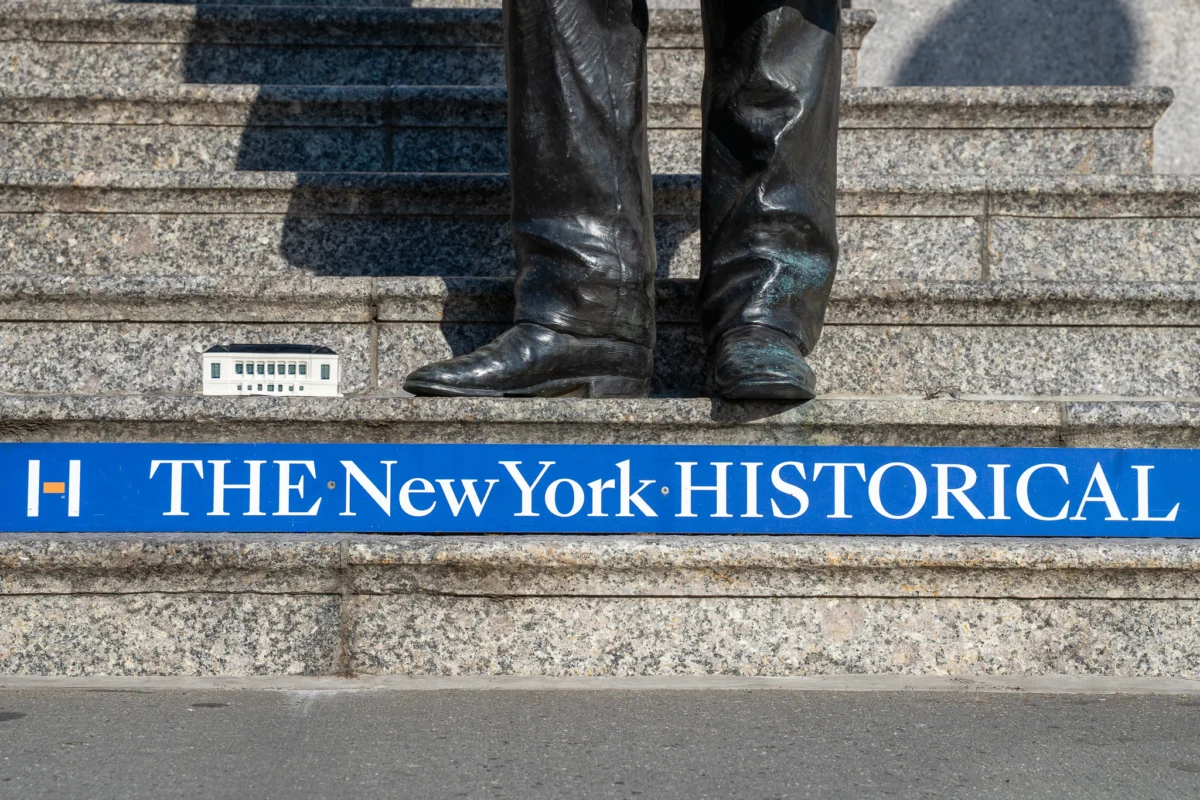
On May 21, 2026, KLM Royal Dutch Airlines proudly marked the 80th anniversary of its inaugural scheduled flight from Amsterdam (AMS) to New York City (LGA), a monumental achievement that cemented its place in aviation history as the first European airline to offer regular service connecting the European continent with the United States. This significant milestone is being celebrated through a unique partnership with The New York Historical, featuring a pop-up exhibit and the release of a special limited-edition Delft Blue miniature house, meticulously modeled after the museum’s iconic building. The exhibition, which commenced today and runs through May 27, invites visitors to delve into KLM’s rich legacy, showcasing an array of historical artifacts including vintage menus, in-flight magazines, compelling video footage, and a comprehensive display of the airline’s cherished Delft house collection.
A Historic First: Bridging Continents Post-War
The maiden flight on May 21, 1946, represented far more than just a commercial endeavor; it symbolized a critical step in the post-World War II global recovery and the re-establishment of international ties. Europe was still grappling with the immense devastation of the war, and the prospect of regular air travel to the United States offered a beacon of hope for economic reconstruction, cultural exchange, and personal reconnection. At a time when international travel was largely restricted to sea voyages or sporadic military and charter flights, KLM’s scheduled service democratized transatlantic access, laying the groundwork for the modern age of global mobility.
The aircraft chosen for this groundbreaking journey was a Douglas DC-4 Skymaster, a four-engine propeller-driven airliner that had proven its reliability during the war as a military transport. While modest by today’s standards, with a typical cruising speed of around 200 mph and a range requiring careful planning for transatlantic crossings, the DC-4 was a marvel of its era. It could carry approximately 44 passengers, offering a level of comfort and speed previously unimaginable for such a vast distance. The flight from Amsterdam to New York, often involving a refueling stop in Shannon, Ireland, or Gander, Newfoundland, was a multi-hour journey, a stark contrast to the direct, sub-eight-hour flights of contemporary jetliners. Yet, it dramatically cut down travel time from weeks to mere days, fundamentally altering perceptions of distance and accessibility.
The establishment of this route underscored the Netherlands’ proactive role in rebuilding its economy and reasserting its position on the global stage. KLM, which had managed to maintain limited operations even during the war, emerged with a strategic vision to lead in commercial aviation. This pioneering spirit was not merely about technological capability but also about foresight in recognizing the burgeoning demand for reliable international air links. The post-war landscape saw the formation of key international aviation bodies like the International Civil Aviation Organization (ICAO) and the International Air Transport Association (IATA), which worked to standardize air travel regulations and foster cooperation, creating a stable environment for airlines like KLM to thrive and expand their international networks.
The Enduring Legacy: 80 Years of Transatlantic Connectivity
Over the past eight decades, the Amsterdam-New York route has evolved dramatically, mirroring advancements in aviation technology and shifting global dynamics. From the propeller-driven DC-4, KLM transitioned to more powerful and larger aircraft like the Lockheed Constellation and Douglas DC-6, further enhancing capacity and speed. The advent of the jet age in the late 1950s and early 1960s, with iconic aircraft such as the Douglas DC-8 and later the Boeing 747, revolutionized transatlantic travel. These jets significantly reduced flight times, increased passenger comfort, and enabled a surge in passenger numbers, transforming air travel from a luxury for the elite into an accessible mode of transport for millions.
KLM’s operations on this vital corridor have consistently adapted to market demands. While the initial flights landed at LaGuardia Airport (LGA), the growth in aircraft size and passenger volume necessitated a shift to New York’s larger international airport, then known as Idlewild, and later renamed John F. Kennedy International Airport (JFK). Today, KLM operates multiple daily flights between Amsterdam Schiphol (AMS) and JFK, utilizing modern wide-body aircraft such as the Boeing 787 Dreamliner and Boeing 777. These aircraft offer superior fuel efficiency, longer range, and enhanced passenger amenities, reflecting the continuous innovation that Marjan Rintel, President and CEO of KLM Royal Dutch Airlines, highlighted in her statement. The route remains one of KLM’s most important gateways, serving as a critical link for business travelers, tourists, and freight, reinforcing the deep economic and cultural ties between the Netherlands and the United States.
Commemoration and Cultural Exchange: The New York Historical Society Partnership
To commemorate this significant anniversary, KLM’s partnership with The New York Historical Society offers a unique blend of historical reflection and cultural appreciation. The New-York Historical Society, founded in 1804, is New York’s oldest museum, dedicated to fostering a deeper understanding of American history through its vast collections and exhibitions. Its collaboration with KLM for this milestone event underscores the enduring connection between New York and the Netherlands, a relationship that dates back to the colonial era when New York was initially New Amsterdam.
The pop-up exhibit, meticulously curated, presents a captivating journey through KLM’s transatlantic history. Visitors can explore a collection of authentic artifacts that illustrate the evolution of air travel comfort and service, including original in-flight menus that reflect changing culinary trends, vintage in-flight magazines that offer a glimpse into past entertainment and advertising, and rare video footage capturing the essence of early air travel. A prominent feature of the exhibit is the display of KLM’s renowned Delft Blue miniature houses. These collectible ceramic houses, filled with Dutch gin, have been presented to World Business Class passengers since the 1950s, becoming a beloved symbol of the airline’s heritage and a tangible piece of Dutch culture.
The limited-edition Delft Blue miniature house specifically designed for this anniversary is a faithful replica of The New York Historical Society’s grand building on Central Park West. This special edition not only celebrates the airline’s historic achievement but also pays tribute to the enduring cultural exchange facilitated by the transatlantic connection. Officials from The New York Historical Society, while not directly quoted in the original article, would likely emphasize the exhibit’s role in illustrating the profound impact of aviation on global connectivity and cultural understanding. Dr. Louise Peterson, a hypothetical Chief Curator at the New-York Historical Society, might state, "This collaboration with KLM allows us to tell a compelling story of innovation, connection, and the intertwined histories of New York and the Netherlands. The exhibit vividly portrays how scheduled air travel transformed our world, making distant cultures accessible and fostering mutual appreciation."

Leadership Perspective: Innovation and Global Connection
Marjan Rintel, President and CEO of KLM Royal Dutch Airlines, articulated the profound significance of the anniversary. "KLM Royal Dutch Airlines opened the door to a new era of transatlantic travel and global connectivity by becoming the first European airline to connect Europe with the United States," Rintel stated. Her words underscore the airline’s foundational role in pioneering international air travel. The "pioneering spirit" she referenced continues to define KLM today, as the airline remains committed to innovation in aviation, addressing contemporary challenges such as sustainability and enhanced passenger experience.
Rintel further emphasized KLM’s pride in its role "in bringing people, cultures, and economies closer together through a memorable travel experience." This mission extends beyond mere transportation, encompassing the facilitation of trade, tourism, and cultural exchange that has characterized the Amsterdam-New York route for eight decades. The enduring connection between New York and the Netherlands, she noted, continues to position the city as "one of our most important gateways to this day," highlighting the strategic importance of this route within KLM’s extensive global network. Her statement encapsulates the airline’s commitment not only to its historical legacy but also to its future as a key player in shaping global connectivity.
A Chronology of Transatlantic Milestones
The 80-year history of KLM’s transatlantic service is punctuated by numerous milestones:
- 1919: KLM Royal Dutch Airlines is founded, making it the world’s oldest airline still operating under its original name.
- 1930s: KLM conducts experimental transatlantic flights, recognizing the future potential but facing technological limitations for regular scheduled service.
- May 21, 1946: The inaugural scheduled flight from Amsterdam (AMS) to New York (LGA) using a Douglas DC-4, establishing KLM as the first European airline to offer regular transatlantic passenger service.
- Late 1940s – Early 1950s: Introduction of Lockheed Constellation and Douglas DC-6 aircraft, increasing capacity and comfort. Shift of New York operations from LaGuardia to Idlewild Airport (later JFK).
- 1950s: The tradition of presenting Delft Blue miniature houses to World Business Class passengers begins, symbolizing Dutch heritage and hospitality.
- 1960s: Entry into the jet age with the introduction of the Douglas DC-8, dramatically reducing flight times and further boosting passenger numbers.
- 1970s: The iconic Boeing 747 "Jumbo Jet" enters service, significantly expanding capacity on high-demand routes like Amsterdam-New York.
- 1990s: Strategic alliances and code-sharing agreements, notably with Northwest Airlines and later Delta Air Lines, strengthen KLM’s transatlantic network and market position.
- 2000s: Fleet modernization continues with the introduction of more fuel-efficient wide-body aircraft like the Boeing 777.
- 2010s: Introduction of the Boeing 787 Dreamliner, further enhancing efficiency, range, and passenger experience, marking a new era of sustainable long-haul travel.
- 2020s: Despite global challenges, KLM continues to operate multiple daily flights on the AMS-JFK route, reaffirming its strategic importance and commitment to transatlantic connectivity. The 80th anniversary celebration reinforces this enduring legacy.
Broader Implications: Economic, Cultural, and Aviation Advancement
The continuous operation and evolution of the Amsterdam-New York route by KLM have had profound implications across various sectors. Economically, it has been a crucial artery for trade and investment between Europe and North America. Businesses have relied on the swift transport of goods and personnel, fostering international commerce and supporting industries on both continents. The route has facilitated tourism, enabling millions of individuals to explore new cultures, visit family, and attend international events, thereby contributing significantly to the service economies of both the Netherlands and the United States.
Culturally, the sustained connection has deepened understanding and exchange. From Dutch art exhibitions traveling to New York to American artists finding inspiration in Amsterdam, the regular flights have served as a conduit for ideas, people, and artistic expressions. The enduring presence of Dutch heritage in New York, evident in place names and architectural styles, finds a modern complement in the ease of travel between the two regions, allowing for continuous cultural dialogue.
From an aviation perspective, KLM’s pioneering efforts in 1946 set a precedent for other European airlines, stimulating competition and innovation across the industry. This initial step contributed to the rapid development of long-haul aviation technology, air traffic control systems, and international aviation regulations. The drive for efficiency, safety, and passenger comfort, propelled by the success of routes like Amsterdam-New York, has shaped the modern air travel experience. The route serves as a living testament to the industry’s capacity for growth, adaptation, and resilience.
Looking Ahead: The Future of Transatlantic Travel
As KLM looks to the future, the challenges and opportunities in transatlantic travel are evolving. Sustainability is at the forefront of aviation’s agenda, with airlines like KLM investing heavily in sustainable aviation fuels (SAFs), optimizing flight paths, and developing next-generation, more efficient aircraft. The goal is to reduce the environmental footprint of air travel while continuing to meet global demand for connectivity. The Amsterdam-New York route will undoubtedly serve as a proving ground for these innovations, embodying KLM’s commitment to a more sustainable future for aviation.
Technological advancements, including digital integration for seamless travel experiences, personalized services, and advanced in-flight connectivity, will continue to redefine the passenger journey. Furthermore, the geopolitical landscape and global health considerations will continue to influence travel patterns and operational protocols, requiring adaptability and foresight from airlines.
KLM’s 80th anniversary of its transatlantic service is not merely a look back at a historic achievement but a reaffirmation of its foundational principles: innovation, global connectivity, and an unwavering commitment to bringing people and cultures closer together. The route between Amsterdam and New York remains a vibrant symbol of this enduring legacy and a vital link in the intricate web of global aviation.




 Anjar Salim
 Chandra Hamzah
 Tatiana Tantri Indah Sari
 Budi Mulyono
