
 Budi Mulyono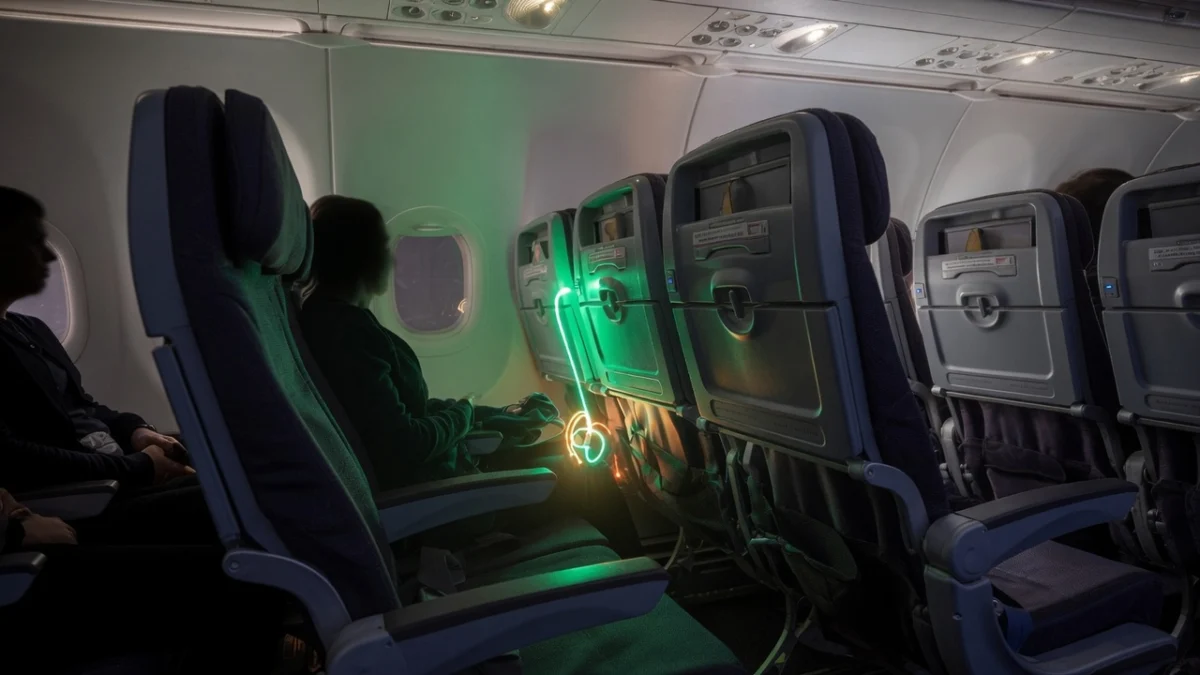
The sanctity of the quiet cabin environment was recently challenged during a long-haul redeye flight when a passenger in the economy section utilized a high-intensity, multi-colored LED charging cable. The device, which emitted a strobe-like sequence of red, green, and blue light, was draped over the seatback, effectively illuminating a significant portion of the darkened cabin during hours typically reserved for passenger rest. The incident, captured on video and circulated across social media platforms, has reignited discussions regarding the boundaries of personal electronic use in shared transit spaces and the responsibilities of airlines to mitigate visual disturbances.
Incident Overview and Immediate Public Reaction
The event took place on a late-night flight, a period characterized by dimmed cabin lights intended to facilitate sleep and align with the circadian rhythms of travelers crossing multiple time zones. According to visual evidence and passenger accounts, the charging cord did not merely provide a functional status indicator but featured a "rave-style" animation. The rapidly changing colors and high-frequency flickering created a strobe effect that was reportedly visible several rows away, causing significant annoyance to those in the immediate vicinity.
The footage of the incident first gained traction on Reddit within the "mildlyinfuriating" community, a forum dedicated to documenting social transgressions and inconveniences. Users expressed a mixture of disbelief and frustration, questioning the social awareness of a passenger who would deploy such a disruptive device in a darkened environment. Commenters characterized the behavior as a manifestation of "main character syndrome"—a term used to describe individuals who act as though their personal preferences supersede the comfort of those around them.
Satirical remarks highlighted the jarring nature of the lights, with some users suggesting the visual experience was missing only a high-decibel electronic dance music soundtrack to complete the "nightclub" atmosphere. However, beneath the humor lay a serious critique of modern travel culture, where the proliferation of cheap, flashy consumer electronics often clashes with the traditional norms of aviation etiquette.
A Recurring Pattern of Visual Disturbance
Research into the incident revealed that this was not an isolated occurrence. A similar event was documented approximately two and a half years ago, involving what appears to be the same model of "neon" charging cable. In that instance, a passenger recorded a woman using a six-foot glowing cord during a six-hour redeye flight. The recurrence of this specific issue suggests a growing market for "aesthetic" electronics that prioritize visual flair over functional discretion.
The devices in question are often sourced from international e-commerce platforms such as Temu or AliExpress, where low-cost peripherals are marketed with "RGB" (Red-Green-Blue) lighting features. While these products are popular among gaming enthusiasts and younger consumers for home use, their transition into the public sphere—particularly in high-density, low-light environments like airplane cabins—presents a new set of challenges for cabin crew and fellow passengers.
The Science of Light Pollution and Sleep Disruption
The impact of such lighting on a redeye flight extends beyond mere annoyance; it involves physiological consequences for other passengers. Sleep scientists emphasize that the human brain is highly sensitive to light fluctuations during the sleep cycle. Exposure to bright, rapidly changing colors—particularly blue light—inhibits the production of melatonin, the hormone responsible for regulating sleep.
In the confined space of an aircraft cabin, where passengers have limited ability to move away from a light source, a strobe effect can lead to:
- Sleep Fragmentation: Even if a passenger does not fully wake up, the light can shift them from deep sleep to lighter stages, reducing the restorative quality of the rest.
- Headaches and Eye Strain: For individuals prone to migraines or photosensitivity, flickering lights can trigger acute physical discomfort.
- Increased Stress Levels: The inability to control one’s environment, coupled with the persistent visual stimulus, can elevate cortisol levels, leading to increased irritability among the passenger manifest.
Aviation Regulations and the Role of Cabin Crew
While the Federal Aviation Administration (FAA) and other global regulatory bodies like EASA have stringent rules regarding the safety of electronic devices (focusing primarily on lithium-ion battery stability and electromagnetic interference), there is less specific regulation regarding "visual noise." However, airline "Conditions of Carriage" generally include clauses that allow crew members to intervene when a passenger’s behavior interferes with the comfort or safety of others.
In-flight disturbances are categorized under a broad spectrum of "unruly behavior." While a flashing light may seem minor compared to physical altercations, it falls under the category of "interference with the duties of a crew member" if the crew must spend time mediating disputes caused by the device.
Industry analysts suggest that as these devices become more common, airlines may need to update their pre-flight briefings. Just as passengers are instructed to use headphones for audio, there may soon be a requirement for "dark mode" or the masking of high-intensity lights on personal electronics during night flights.
Technical Implications and Safety Concerns
Beyond the visual disturbance, the use of uncertified, low-cost charging cables poses a potential safety risk. The aviation industry has seen a rise in "thermal runaway" events caused by substandard charging equipment and lithium-polymer batteries.
Many of the "rave-style" cables are manufactured without the rigorous quality control standards required by major electronics brands. The inclusion of internal LED strips and the circuitry required to animate them adds complexity to the cable, increasing the risk of:
- Overheating: Poorly insulated wires can become hot during high-speed charging.
- Short Circuits: Inexpensive components are more prone to failure, which could lead to smoke or fire in the cabin.
- Power Surges: These cables can potentially damage the aircraft’s in-seat power supply units (ISPUs), leading to costly repairs for the airline.
Flight attendants are trained to identify "acrid smells" or smoke, but a flashing light might mask the initial signs of a cable beginning to melt or smolder, as the visual distraction draws attention away from more subtle indicators of a malfunction.
The Psychology of Modern Passenger Behavior
The incident serves as a case study in the evolving sociology of air travel. In the post-pandemic era, airlines have reported a marked increase in incidents of non-compliance and social friction. Experts attribute this to a combination of factors, including reduced legroom in economy class, increased travel stress, and a diminishing sense of communal responsibility.
The "disco charger" incident highlights a lack of "situational awareness." In a professional journalistic analysis, this behavior can be viewed as an extension of the "digital bubble" phenomenon, where individuals become so engrossed in their personal technology that they lose sight of the physical environment and the people sharing it.
Recommendations for Future Policy
To prevent a surge in "neon nightmares," aviation experts and frequent flyer advocates suggest several proactive measures:
- Policy Clarification: Airlines should explicitly state that high-intensity or flashing electronic accessories are prohibited during "quiet hours" or dimmed-light phases of a flight.
- Crew Empowerment: Training programs should include protocols for addressing "passive-aggressive" disturbances like light pollution, allowing flight attendants to request that devices be unplugged or covered without waiting for a formal complaint.
- Hardware Standards: Encouraging the use of airline-approved or certified charging equipment could mitigate both the visual nuisance and the fire risk.
Conclusion: Balancing Innovation and Consideration
The "rave-style" charging cable incident on a recent redeye flight is more than a viral curiosity; it is a symptom of a broader shift in how public spaces are navigated in an age of personalized, flashy technology. While the passenger likely viewed the cord as a harmless personal accessory, its impact on the collective environment of a 200-person aircraft was significant.
As the industry moves forward, the challenge will be to maintain a cabin environment that respects the biological needs of passengers while accommodating the technological requirements of the modern traveler. For now, the consensus among the traveling public remains clear: the "party" in seat 34F is an unwelcome intrusion when the rest of the cabin is searching for sleep at 35,000 feet. The miracle, as noted by observers, remains the restraint shown by fellow passengers, but such restraint may be tested if airlines do not take formal steps to address the rise of visual disturbances in the sky.



 Anjar Salim
 Chandra Hamzah
 Tatiana Tantri Indah Sari
 Lukman Taruna Persada Ramadan
