
 Tatiana Tantri Indah Sari
The summer of 2026 will be remembered in the historical records not merely for its blistering temperatures, but as a catastrophic public health crisis that exposed the profound vulnerabilities of the European continent. According to two comprehensive, peer-reviewed studies slated for publication in Nature Health, extreme heat is estimated to have caused more than 50,000 excess deaths in European towns and cities during the peak summer months. The findings provide definitive scientific attribution, concluding that human-induced climate change is directly responsible for roughly two-thirds of these tragic fatalities.
The research, spearheaded by independent teams at Imperial College London and the London School of Hygiene & Tropical Medicine, analyzed epidemiological and meteorological data across 854 urban areas in 30 countries. This sweeping geographical scope encompassed all European Union member states alongside the United Kingdom, Norway, and Switzerland, collectively representing approximately 40 percent of the continent’s total population. As global greenhouse gas emissions continue to shatter records, these findings transform the abstract threat of global warming into an immediate, quantifiable humanitarian emergency on urban doorsteps.
Anatomy of an Unprecedented Urban Crisis
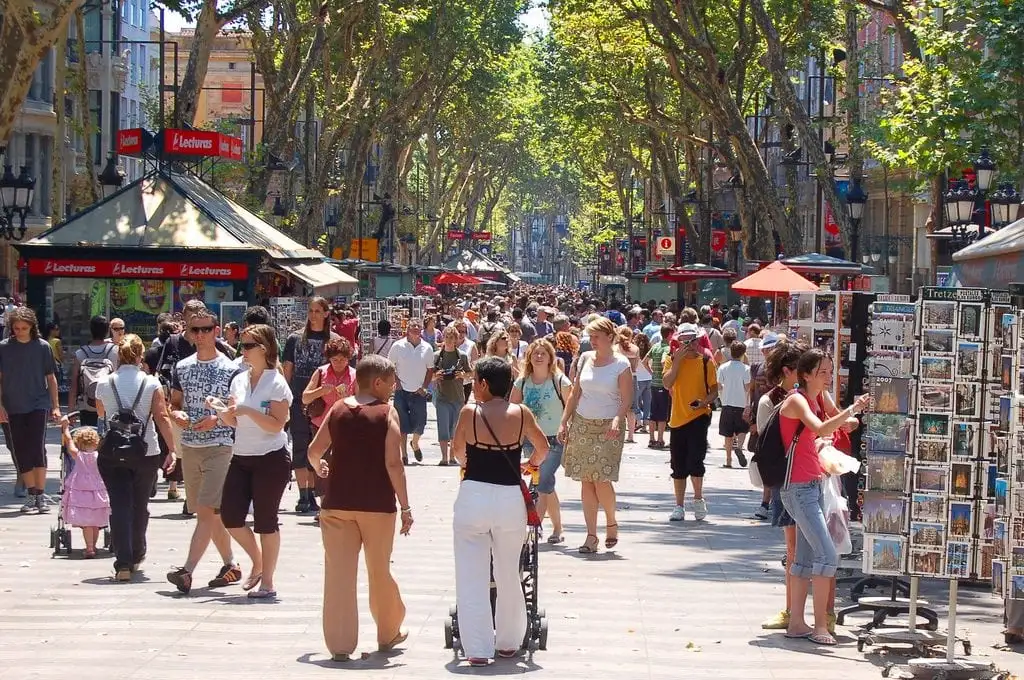
During the scorching months of June, July, and August 2026, major metropolitan areas and historic tourist destinations alike transformed into thermal traps. Cities traditionally celebrated for their open-air plazas, dense historic architecture, and vibrant street culture faced fierce criticism from urban planners, public health advocates, and distressed citizens. The primary grievances centered on a glaring lack of shaded public infrastructure and a widespread cultural and infrastructural resistance to mechanical air conditioning.
For decades, air conditioning has been viewed in many parts of Western and Northern Europe through a lens of environmental skepticism. Regarded by some policymakers and climate activists as an energy-intensive luxury that exacerbates carbon emissions and urban heat island effects, the widespread adoption of cooling technology has faced bureaucratic hurdles, high electricity tariffs, and cultural hesitation. However, the summer of 2026 fundamentally reframed the debate. What was once dismissed as a debate between carbon-conscious climate action and indoor comfort has hardened into a critical life-or-safety issue.
The research models deployed by epidemiologists at the London School of Hygiene & Tropical Medicine demonstrate that vulnerable populations—particularly the elderly, individuals with pre-existing cardiovascular and respiratory conditions, and residents of economically disadvantaged neighborhoods lacking green spaces—bore the brunt of the thermal onslaught. Without immediate infrastructural adaptation, urban centers across the continent risk becoming virtually uninhabitable during future summer seasons.
Methodology and Statistical Breakdown
The scale of the 2026 mortality crisis required a rigorous methodological approach to decouple normal seasonal heat fluctuations from the anthropogenic signal of climate change. The collaborative research efforts utilized advanced epidemiological modeling, combining high-resolution local weather station data, mortality registries, and attribution science frameworks pioneered over the past decade.
By running counterfactual climate models—simulating a world without the historical accumulation of greenhouse gases primarily driven by the burning of fossil fuels—the researchers were able to isolate the exact human contribution to the extreme temperatures. The results are stark: approximately 33,000 to 35,000 of the estimated 50,000-plus deaths can be directly attributed to the warming of the planet caused by human activity.
The remaining fatalities, while still driven by natural summer heatwaves, occurred within a baseline climate that has already been severely destabilized. The spatial distribution of the mortality burden revealed that Southern European nations—including Spain, Italy, and Greece—experienced the highest absolute numbers of excess deaths, mirroring historic heat patterns. However, Central and Western European cities, such as Paris, Berlin, and Brussels, registered the most alarming proportional spikes in mortality, largely because their building stocks and public health emergency systems were fundamentally unequipped for sustained temperatures soaring well above 40 degrees Celsius (104 degrees Fahrenheit).
Chronology of a Season on the Brink
To understand how the summer of 20th-century climate norms dissolved into the crisis of 2026, it is necessary to examine the cascading meteorological events that unfolded across the continent.
Late May to Early June: The Early Season Warning
The crisis began unusually early. A stubborn, high-pressure atmospheric ridge—colloquially dubbed a heat dome—became anchored over North Africa and the Iberian Peninsula in late May, rapidly pumping searing desert air northward. By the second week of June, temperatures in southern Spain and Portugal breached 43 degrees Celsius, shattering regional records by margins of two to three degrees. Municipal authorities activated initial heat-health alert protocols, but public awareness remained low as the astronomical start of summer was still weeks away.
Mid-July: The Continental Peak
By mid-July, the atmospheric blockage expanded aggressively, engulfing the Mediterranean basin, the Po Valley in Italy, and pushing deep into the heart of France and Germany. Urban heat island effects amplified the ambient temperatures, keeping nighttime lows trapped above 28 degrees Celsius in densely built environments. This lack of nocturnal cooling proved lethal for vulnerable populations whose bodies could not recover from daytime thermal stress. Hospitals in Rome, Madrid, and Marseille reported surge capacities akin to peak pandemic waves, as emergency rooms flooded with cases of heatstroke, severe dehydration, and exacerbated organ failures.
August: Exhaustion and Infrastructural Strain
As the heatwave persisted into August, compounding the duration of exposure, municipal systems began to fracture. Power grids in several urban centers flirted with blackouts due to unprecedented surges in domestic electrical demand driven by desperate residents attempting to run portable cooling units. Water restrictions were implemented in parts of Italy and France as agricultural and municipal reservoirs dwindled. It was during this grueling month that the cumulative excess mortality curve steepened dramatically, culminating in the final grim toll calculated by the Nature Health studies.
Official Responses and Institutional Reactions
The publication of the Imperial College London and London School of Hygiene & Tropical Medicine findings has sent shockwaves through European capitals, prompting swift, albeit belated, defensive reactions from political leaders and international organizations.
The European Commission responded with a formal statement acknowledging the gravity of the data, with health and environmental commissioners calling for an immediate overhaul of the bloc’s climate adaptation strategies. Brussels is currently drafting a binding Urban Resilience Directive, which would mandate member states to establish minimum thresholds of urban green canopy cover, cool-roof mandates, and subsidized public cooling centers in all cities with populations exceeding 100,000.
National governments have likewise found themselves on the defensive. In France, where the trauma of the deadly 2003 heatwave still lingers in the national consciousness, the Ministry of Health faced intense scrutiny over why the 2026 mortality figures reached such staggering heights despite two decades of supposed preparedness. In response, the French government announced a multi-billion-euro emergency fund dedicated to retrofitting public housing complexes with energy-efficient geothermal cooling systems and eliminating urban asphalt deserts.
Meanwhile, municipal leaders in tourism-dependent cities such as Seville, Athens, and Rome defended their historic architectures while conceding the urgent need for modernization. Mayors have increasingly embraced radical urban acupuncture—a planning strategy involving the rapid implementation of architectural shading sails, misting stations, and the wholesale removal of parking spaces to plant mature trees.
Implications for the Future of European Urban Living
The revelations from the upcoming Nature Health studies carry profound implications for the economic, social, and structural future of Europe. The debate over air conditioning is no longer ideological; it is a matter of basic human survival. However, experts caution against a purely mechanical solution. Simply plugging in millions of traditional, fossil-fuel-reliant air conditioning units risks creating a vicious feedback loop: higher electricity demand driven by coal and gas combustion pumps more greenhouse gases into the atmosphere, which in turn drives global temperatures higher and necessitates even more cooling.
Consequently, urban planners and building engineers are urging a paradigm shift toward passive survivability. This approach prioritizes deep architectural retrofits—such as exterior window shading, high-performance insulation, reflective cool roofs, and district-wide geothermal cooling networks that circulate cold water from deep underground aquifers through city buildings with minimal carbon footprints.
Furthermore, the economic toll of losing over 50,000 citizens in a single summer translates into billions of euros in lost productivity, strained healthcare expenditures, and irreversible social grief. The psychological impact on the European populace, increasingly aware that their summer seasons are fraught with mortal danger, is shifting consumer behavior, tourism patterns, and migration trends away from traditional southern hotspots toward more temperate northern latitudes.
As the scientific community prepares for the formal release of these watershed studies in Nature Health, the message to policymakers is unambiguous. The summer of 2026 is not an anomalous statistical outlier, but rather the new baseline of a warming world. Without unprecedented investments in climate adaptation, robust public health infrastructure, and aggressive global emissions mitigation, European cities face a grim trajectory where lethal heat summers become an accepted, tragic regularity of modern life.




 Gabriela Annisa

 Lukman Taruna Persada Ramadan

 Anjar Salim

 Dwi Wanna
