
 Chandra Hamzah
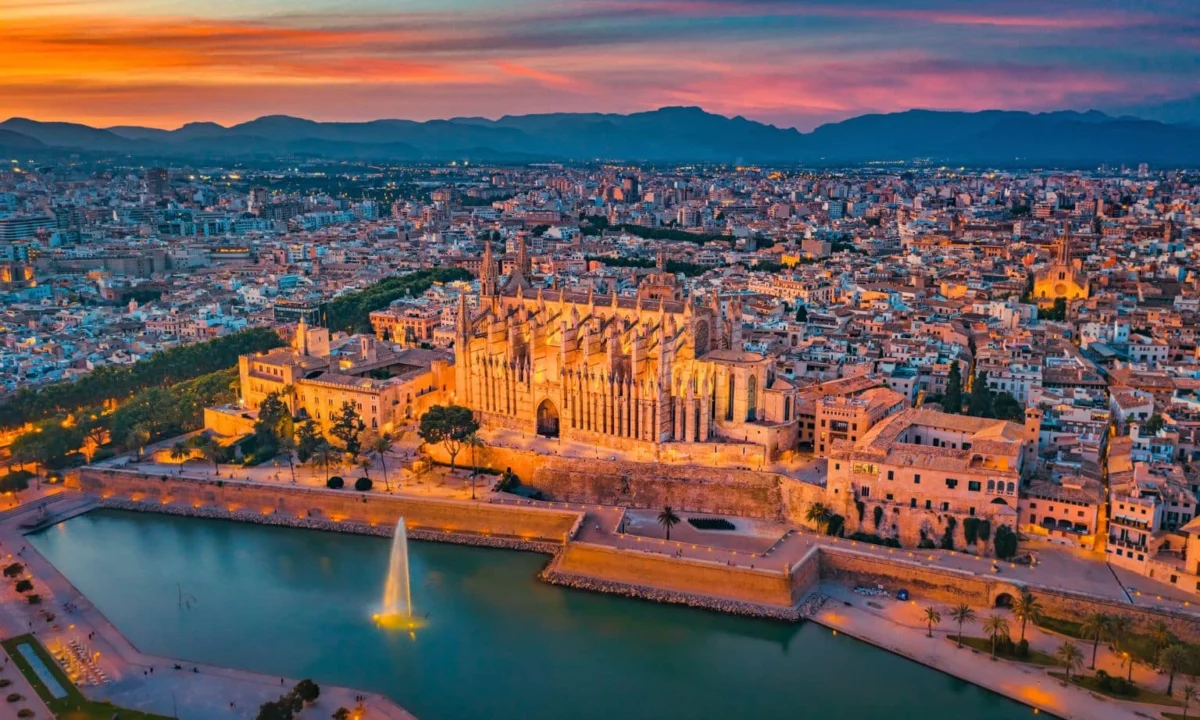
The government of Mallorca has officially entered into a formal memorandum of understanding with the Cruise Lines International Association (CLIA) to enforce rigorous new constraints on maritime tourism in the port of Palma. Under the terms of this regulatory framework, the daily capacity for cruise ship arrivals has been capped at three vessels per day. Furthermore, the total cumulative number of passengers permitted to disembark in the city on any given day is strictly limited to 7,500. This policy represents a significant shift in the management of one of the Mediterranean’s most frequented transit hubs and reflects a growing trend of municipal authorities attempting to regain control over the saturation of popular urban centers.
The Context of Mediterranean Tourism Saturation
Mallorca remains a juggernaut of the European tourism industry, consistently attracting upwards of 13 million visitors annually. While the island’s economy is deeply tethered to the hospitality sector, the sheer volume of human traffic has led to mounting tension between local residents and the tourism industry. Cruise passengers, while representing only a fraction of the total arrivals—approximately 1.4 million, or roughly nine percent of the total annual visitor count—have become the focal point of a heated debate regarding infrastructure strain, environmental impact, and the perceived "commodification" of the city center.
The decision to implement these caps follows years of localized protests in Palma, where citizens have argued that the sudden influx of thousands of day-trippers clogs the narrow streets of the historic center, creates unsustainable waste management challenges, and contributes to the rising cost of living for locals. The government’s move is essentially a balancing act: attempting to appease a vocal, concerned electorate while maintaining the economic throughput provided by the global cruise industry.
Chronology of the Regulatory Shift
The tension leading to this memorandum has been brewing for nearly a decade. Prior to the global health crisis of 2020, cruise traffic in the Mediterranean was on a trajectory of unchecked growth. The pandemic-induced halt in operations provided a temporary reprieve, allowing local governments to assess the environmental and social costs of high-density tourism.
Following the resumption of cruise operations in late 2021 and 2022, the surge in "revenge travel" exacerbated existing frustrations. By early 2023, the Balearic government began engaging in formal dialogues with port authorities and industry representatives. The resulting memorandum, finalized recently, is the culmination of these discussions, aimed at formalizing a "sustainable tourism" strategy. This agreement is expected to be reviewed annually to determine if the 7,500-passenger cap remains effective or if further adjustments are required to protect the city’s historic infrastructure.
Economic Perspectives and Industry Pushback
Despite the government’s insistence that these measures are essential for public order, the cruise industry has expressed skepticism regarding the efficacy of the policy. Alfredo Serrano, director of CLIA in Spain, has been vocal about the limitations of such measures, noting that they may represent a superficial solution to a much deeper structural problem.
"While cruise ship activity in Palma has fallen by 16 per cent compared to pre-pandemic levels, other tourism segments—namely land-based hotels and short-term rentals—have continued to grow," Serrano noted. "If only one sector is singled out for reduction, residents will hardly perceive any meaningful decrease in overall tourist pressure. We are looking at a policy that targets a very visible, easy-to-track group, while the broader, more pervasive issues of mass tourism remain unaddressed."
Serrano further emphasized that the economic contribution of the cruise sector is often misunderstood. While he acknowledges that a day-trip passenger’s spending profile differs from that of a hotel guest, he maintains that cruise passengers are vital contributors to the local service economy, particularly in the off-peak months.
The "Tourism Ecosystem" Argument
The industry perspective is further supported by Fernando Pacheco, CEO of MSC Cruises. Pacheco views the cruise industry as an integral component of a larger economic machine rather than an isolated entity. He posits that Palma serves two distinct, equally important roles: a port of call for short-term excursions and a port of embarkation for longer voyages.
"Cruise tourism is deeply connected to the local economy," Pacheco explained. "Our passengers use local transport, visit cultural attractions, shop in local businesses, and dine in local restaurants. Furthermore, many passengers choose to extend their stay in Mallorca before or after their cruise, which directly benefits the hotel sector and local service providers. Success is only possible when destinations, businesses, ports, and tour operators work together rather than in opposition."
Pacheco’s argument highlights the "multiplier effect" of cruise tourism, where the initial expenditure of a passenger filters through a network of local suppliers, maintenance crews, port workers, and retail staff. From the perspective of the cruise lines, analyzing only the per-head daily spend of a passenger fails to capture the long-term capital investments that cruise companies make in local port infrastructure and regional employment.
Broader European Trends: A Continent in Transition
Mallorca’s regulatory pivot is far from an isolated incident. Across Europe, a wave of "de-marketing" and restrictive policy-making is currently reshaping the tourism landscape. From Venice, Italy, which recently introduced an entry fee and restricted large ships from its historic lagoon, to Amsterdam’s aggressive efforts to curb cruise arrivals to reduce urban density, the message from European cities is clear: the era of unmanaged growth is ending.
In Amsterdam, local officials have moved to relocate cruise terminals further from the city center to decrease the foot traffic in the historic core. Similarly, in Dubrovnik, Croatia, authorities have implemented strict limits on the number of ships allowed to dock simultaneously to prevent the overcrowding of the ancient city walls. These measures are often characterized as "sustainable management" initiatives, designed to preserve the physical integrity of historical sites and improve the quality of life for local residents.
Analysis: Implications for the Future of Cruise Tourism
The implications of the Palma agreement extend beyond the Balearic Islands. By setting a hard cap, the government has established a precedent for "carrying capacity" management. This indicates a shift in how cities measure the success of tourism; it is no longer just about the total number of arrivals, but about the quality and manageability of that traffic.
However, the risk remains that such measures may lead to "displacement" rather than "reduction." If passengers are limited in Palma, cruise lines may simply redirect ships to other regional ports that have not yet implemented such restrictions, thereby shifting the burden of over-tourism to other, potentially less-prepared destinations.
Moreover, the economic data suggests that while the cruise industry provides a steady stream of revenue, it is highly sensitive to regulatory volatility. If more European ports follow the path of Palma and Venice, the cruise industry may be forced to redesign its itineraries significantly, potentially leading to increased costs for consumers and a move toward smaller, more boutique-style vessels that cater to higher-end, lower-volume markets.
Conclusion: The Path Toward Collaboration
The situation in Mallorca underscores a fundamental conflict in modern urban planning: the tension between the globalized tourism economy and the localized needs of residents. The memorandum of understanding between the Balearic government and CLIA is, at its core, an attempt to find a middle ground.
For the government, the deal provides a tangible policy win that addresses the visible impact of mass tourism. For the cruise industry, it provides a stable, if limited, regulatory environment that allows for long-term planning. Whether this compromise will be sufficient to alleviate the friction of over-tourism remains to be seen. As European cities continue to navigate the complexities of post-pandemic travel, the collaboration between private industry and public authorities will be the defining factor in determining whether these destinations can remain both vibrant tourist hubs and livable homes for their residents. The coming years will serve as a crucial testing ground for this model of sustainable, regulated maritime tourism.


 Gabriela Annisa

 Lukman Taruna Persada Ramadan

 Tatiana Tantri Indah Sari

 Anjar Salim


 Dwi Wanna
