
 Budi Mulyono
The landscape of modern personal finance has been increasingly dominated by the sophisticated optimization of credit card rewards, a sector colloquially known as the "miles and points" hobby, which presents significant cognitive and logistical hurdles for the average consumer. While the allure of subsidized luxury travel—particularly premium cabin international flights—continues to drive record-breaking credit card applications, a growing segment of the population finds the granular attention to detail required to maximize these systems to be at odds with daily lifestyle habits. Industry analysts suggest that the "learning curve" associated with maximizing return on spend (ROS) has become a barrier to entry, transforming what was once a simple loyalty incentive into a complex game of mathematical precision and digital management.
The Evolution of the Loyalty Ecosystem
The concept of travel loyalty has evolved significantly since American Airlines introduced the first frequent flyer program in 1981. What began as a straightforward mechanism to reward brand affinity has morphed into a multi-billion-dollar industry where banks, rather than airlines, are the primary purveyors of "currency." Today, the "transferable points" model—championed by institutions such as American Express, Chase, Capital One, and Wells Fargo—allows consumers to move points between various airline and hotel partners.
However, this flexibility comes with a high cost of complexity. To achieve a high "earn rate," consumers often maintain a "wallet" of multiple cards, each designated for specific spending categories such as groceries, dining, or transit. Data from consumer financial surveys indicate that while 84% of credit card holders have at least one rewards card, less than 15% believe they are maximizing their potential earnings. The friction between the desire for rewards and the reality of "scatter-brained" consumer behavior highlights a significant gap in the market’s current technological offerings.
The Friction of Multi-Card Optimization Strategies
A primary challenge for enthusiasts is the physical and mental management of a multi-card strategy. For instance, a common high-yield configuration involves utilizing the Wells Fargo Autograph℠ Card for 3X points on gas, dining, and travel, while pairing it with the Capital One Savor card for 3% back on groceries and the Capital One Spark Miles for a baseline "everywhere else" rate.

The logistical failure points in this strategy are numerous. Mobile wallet limitations often restrict the number of cards easily accessible for "tap-to-pay" transactions, and the physical constraints of phone-integrated card cases frequently force users to leave secondary cards at home. This leads to a "default card" behavior where consumers use whichever card is most accessible, sacrificing a potential 2% to 3% in rewards on every transaction. Furthermore, the nuances of merchant category codes (MCC) add another layer of difficulty; for example, major retailers like Walmart are frequently excluded from "grocery" categories, defaulting to a standard 1X return unless the consumer possesses a specific "catch-all" card.
To mitigate these losses, some consumers have begun automating their digital footprints. By assigning specific recurring payments—such as streaming services or utility bills—to specific cards within digital accounts, they ensure a baseline of optimization. Yet, "in the wild" purchases remain a significant source of "points leakage," where the cognitive load of remembering which card to use outweighs the perceived marginal benefit of the reward.
Technological Barriers in Shopping and Travel Portals
Beyond the point of sale, the "miles and points" ecosystem relies heavily on third-party intermediaries, specifically shopping and travel portals. Platforms like Rakuten and Capital One Shopping offer consumers the ability to earn additional rewards on top of their credit card points. However, these systems are prone to technical conflicts.
Recent reports from users indicate that browser extensions designed to save consumers money can actually sabotage their earnings. A common "rookie mistake" involves "coupon collision," where one extension (such as Capital One Shopping) automatically applies a discount code at checkout, thereby invalidating the tracking cookie for another service (such as Rakuten). This results in the forfeiture of significant sign-on bonuses and percentage-based rewards.
The travel portal experience is similarly fraught with challenges. While banks incentivize the use of their proprietary portals—such as the Capital One Business Travel portal—by offering 5X or 10X points, these platforms often fail to match the pricing found on the open market. Consumers are frequently forced to choose between earning points or saving immediate cash.

A notable entry in this space is the rise of discount travel sites like Super.com (formerly SnapTravel). Often appearing in Google Hotels search results, these platforms frequently undercut both official hotel rates and bank portal prices. For consumers who are not currently "chasing status" with a specific hotel brand like Marriott or Hyatt, the immediate cashback and lower cash rates offered by these third-party sites often provide a more tangible value proposition than the long-term accrual of transferable points.
The Psychology of Redemption Paralysis
The ultimate goal for most enthusiasts is the "high-value redemption," such as a business-class flight to Japan or Europe. However, the path to these redemptions is characterized by "redemption paralysis." Unlike cash-back rewards, which have a fixed value, the value of miles and points is highly volatile and depends on the user’s ability to find "award space."
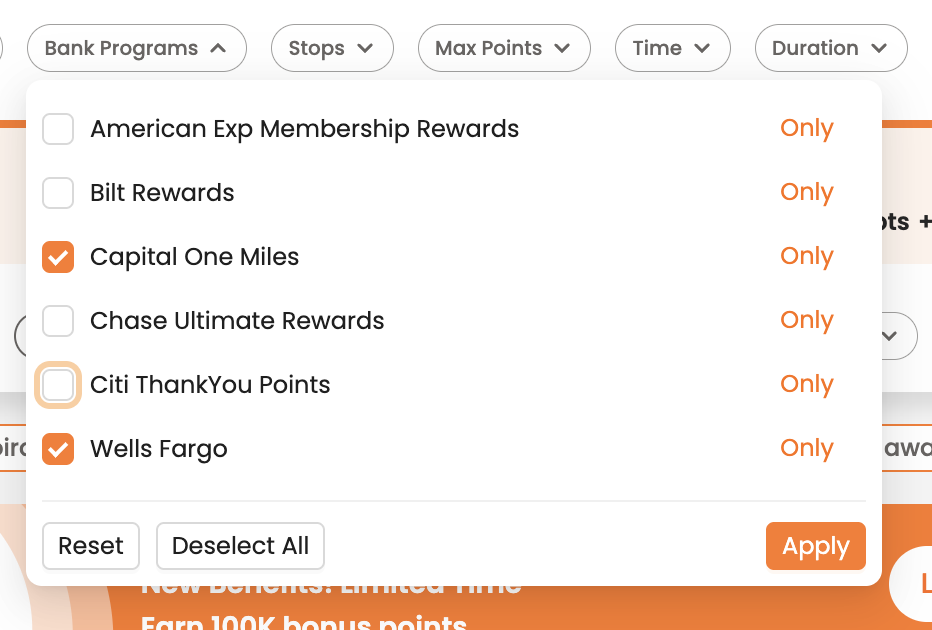
Many consumers find themselves in a state of perpetual accumulation, afraid to spend points for fear of not getting the "maximum" value. This is particularly prevalent among those planning high-cost trips to Japan, where a single business-class seat can require upwards of 60,000 to 90,000 points. The complexity of searching for these seats has led to the development of specialized award search tools like "Points Yeah" and "Roame.travel." These tools attempt to aggregate data across dozens of airline loyalty programs, allowing users to filter by bank program and cabin class.
Despite these tools, a significant portion of travelers continue to pay for hotels and regional travel with cash, saving their points for a "dream trip" that may be years away. This strategy carries the risk of "devaluation," where airlines increase the number of points required for a flight without notice, effectively eroding the consumer’s "savings" overnight.
Industry Implications and the Path Forward
The challenges faced by consumers in the rewards space have broader implications for the financial services industry. If the "learning curve" remains too steep, banks risk a backlash from consumers who feel the systems are intentionally designed to be "too hard to use."
Analysts suggest that the next phase of the loyalty industry will be defined by automation. We are already seeing the beginning of this with "card-linked offers" that do not require a portal click-through, and AI-driven apps that notify users which card to use based on their GPS location.
However, for the "art kid" attempting to navigate this "math class" hobby, the current reality remains one of manual effort and frequent errors. The industry’s reliance on "breakage"—the percentage of points that are earned but never redeemed—suggests that complexity may be a feature, not a bug, of the current system. As long as the most valuable redemptions require granular focus and technical savvy, the gap between the "points elite" and the "casual spender" will likely continue to widen.
Conclusion
The "miles and points" hobby represents a fascinating intersection of consumer psychology, financial technology, and travel logistics. While it offers the potential for significant lifestyle upgrades, the barriers to optimal participation are substantial. From the physical limitations of mobile wallets to the technical conflicts of browser extensions and the daunting task of award searches, the modern consumer must navigate a minefield of potential errors. For those willing to push past the learning curve, the rewards are undeniable; for others, the simplicity of a single cash-back card remains a compelling alternative to the high-stakes game of loyalty optimization. Whether the industry moves toward greater transparency or continues to reward those with the highest "attention to detail" remains a pivotal question for the future of consumer finance.




 Anjar Salim
 Chandra Hamzah
 Tatiana Tantri Indah Sari
 Lukman Taruna Persada Ramadan
