
 Tatiana Tantri Indah Sari
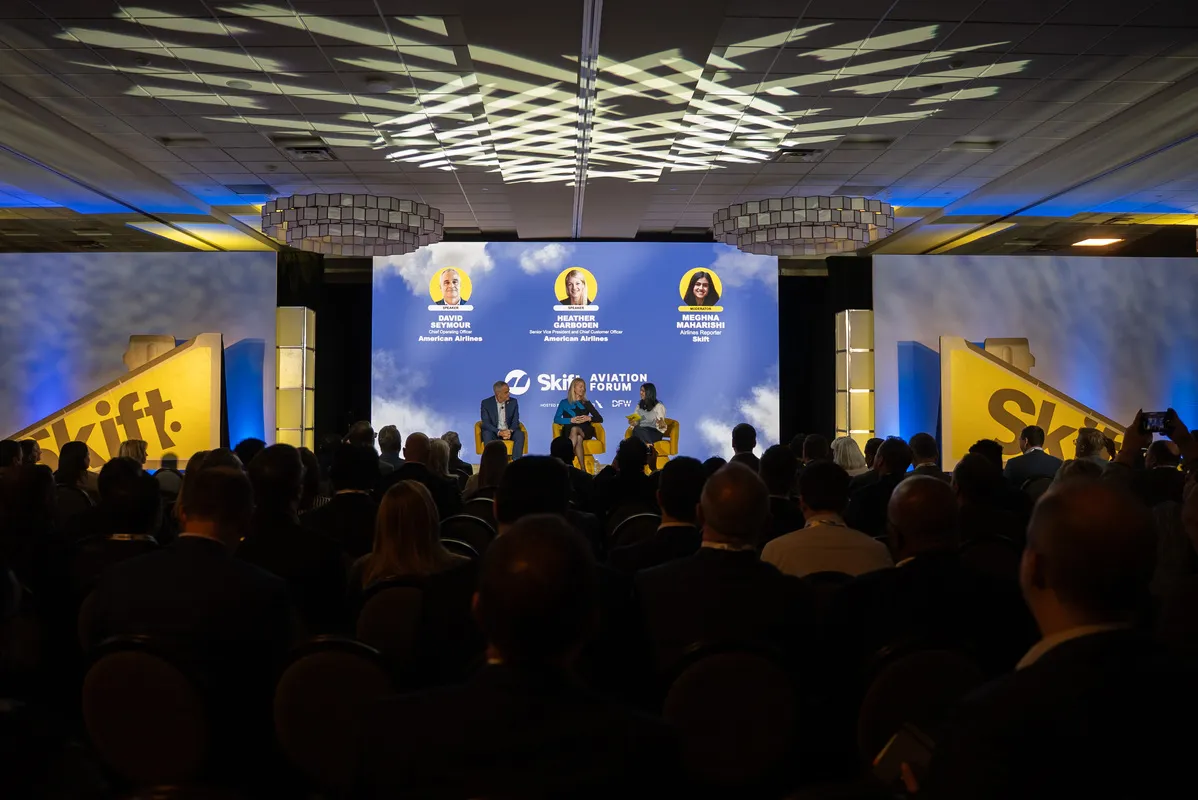
The global aviation industry stands at a critical juncture as carrier executives, manufacturers, labor leaders, and financial partners prepare to converge on New York City this November for the annual Skift Aviation Forum. The two-day premier industry event will kick off with opening talks and an evening reception at Apella by Alexandria on November 11, 2026, followed by the main conference on November 12 at the iconic TWA Hotel at JFK Airport. This year’s gathering takes place against a volatile backdrop of soaring operational expenditures, shifting consumer behaviors, and complex regulatory challenges that are fundamentally reshaping the economics of commercial flight.
Recent macroeconomic developments have exposed deep vulnerabilities across the aviation sector. Jet fuel prices surged dramatically, registering a staggering 102% increase year-over-year by mid-September. Despite record-breaking passenger revenues driven by pent-up travel demand, top-line earnings have proven insufficient to fully absorb these compounding cost pressures. The resulting financial damage, however, has been distributed unevenly throughout the industry. Ultra-low-cost carrier Spirit Airlines succumbed to the pressure, shutting down operations permanently in May following its second bankruptcy filing in a span of twelve years. In stark contrast, North America’s largest legacy and network carriers have maintained an optimistic financial posture, insulated by disciplined capacity management, lucrative loyalty program cash flows, and a resilient base of travelers willing to pay a premium for enhanced comfort and services.
Industry analysts attribute this widening performance gap to structural market leverage. With the single largest operational cost line—fuel—dictated by volatile geopolitical conflicts and global supply disruptions, airline profit margins increasingly rely on five critical external relationships largely outside management control: aircraft manufacturers, labor unions, premium consumers, airport authorities, and financial banking partners. The upcoming Skift Aviation Forum aims to place leaders from across these vital touchpoints onto a single stage to debate, analyze, and forecast the future trajectory of commercial aviation.
The Aircraft Manufacturer Bottleneck and Strategic Fleet Planning
At the heart of the current operational bottleneck lies a severe shortage of narrowbody delivery slots. Production constraints at major manufacturers mean that meaningful aircraft deliveries for popular models such as the Airbus A320neo and the Boeing 737 Max remain heavily backlogged, with availability scarce until roughly 2033. Similarly, widebody aircraft availability is projected to remain tightly constrained well into the mid-2030s. This acute scarcity was underscored at the Farnborough Airshow in July, where aircraft lessors stepped in to place the largest orders, effectively absorbing significant balance sheet risks that commercial airlines were increasingly hesitant to shoulder.
This manufacturing stalemate cuts both ways for airline operators. On one hand, the delivery delays act as an artificial ceiling on fleet expansion, severely restricting every carrier’s ability to aggressively scale up capacity. On the other hand, that very same capacity cap has inadvertently benefited the industry by keeping seat supply tight enough to support robust airfares even as fuel expenses climbed. Consequently, airline leadership is forced to make definitive fleet commitments stretching a decade into the future, all while aircraft lessors assume a larger share of the underlying capital expenditure.
Labor Pacts and Locked-In Operating Costs
Compounding the financial pressure of high fuel prices, commercial airlines are grappling with a permanent structural upward shift in labor costs. In May, United Airlines finalized a landmark agreement with its flight attendants, becoming the final member of the U.S. major airline quartet to successfully settle its primary cabin crew contract. The lucrative five-year labor pact features a cumulative 31% general pay increase, $741 million in retroactive compensation, and innovative provisions for boarding pay. The remaining three legacy U.S. carriers—Delta Air Lines, American Airlines, and Southwest Airlines—had previously established comparable baseline labor agreements.
Significantly, these substantial labor costs landed during the exact same fiscal window in which fuel expenditures doubled, creating an unprecedented cost-squeeze that airlines cannot hedge against. European airline supergroups are experiencing a remarkably similar financial compression, as rising labor demands and escalating airport fees coincide with high energy costs. Within modern financial planning, labor has decisively transformed into a fixed operational base that every capacity and revenue strategy must successfully clear before management can even factor in fuel expenses, baseline fares, or fleet acquisitions.
The Premium Traveler Phenomenon and Revenue Resilience
Amid escalating cost pressures, commercial airlines have found a vital financial cushion in the explosive growth of high-yield premium travel. Premium cabins generated an extraordinary $188 billion globally in 2024, accounting for approximately 24% of total worldwide passenger revenues. In the United States alone, premium seating capacity has expanded by an impressive 33% since 2020, significantly outpacing the 16% growth recorded in standard economy cabins. Notably, this sustained demand surge is increasingly being driven by self-funded leisure travelers rather than traditional corporate accounts.
Despite the immediate financial relief provided by premium upselling, market researchers warn of emerging risks on the horizon, most notably the threat of oversupply. If every competing carrier aggressively expands its premium cabin footprint simultaneously, market yields risk becoming diluted. Airline commercial executives now face the delicate strategic calculus of determining precisely how much aircraft real estate should be dedicated to premium configurations before the industry constructs more high-end capacity than consumer demand can sustainably absorb.
Airport Infrastructure and Ground-Level Competition
Airports continue to plan and invest on decade-long infrastructure horizons to accommodate long-term passenger growth, presenting both opportunities and cost burdens for carriers. For instance, Dallas Fort Worth International Airport is actively targeting a monumental milestone of 100 million annual passengers by 2030, anchored by the development of a brand-new Terminal F. While airlines will inevitably fly into this newly created capacity, they will simultaneously fund its construction through escalating landing fees and terminal-use charges.
Simultaneously, airports are increasingly expanding their own footprint in the lucrative premium passenger experience market. A prime example is found at São Paulo’s Guarulhos International Airport, where a fully private terminal operating independently of traditional airline oversight reached operational capacity rapidly, compelling commercial carriers to fundamentally alter their ground procedures and passenger accommodations. This evolving dynamic forces a critical industry question: who ultimately owns the premium traveler’s time on the ground, and who should bear the financial burden of the expansive terminals built to house them?
The Lucrative Financial Ecosystem of Co-Branded Credit Cards
For many major carriers, the most profitable seat in the modern aviation ecosystem is not located on an aircraft cabin, but rather inside a co-branded credit card agreement. Delta Air Lines reported collecting a staggering $8.2 billion from its financial partner American Express in 2025, translating to roughly 14% of the airline’s adjusted operating revenue. Operating margins for major co-brand card programs are widely estimated to run between 35% and 50%. International operations are mirroring this trend; outside the United States, IAG Loyalty is actively targeting more than €1 billion in operating profit, with over 80% of its revenue generated from external corporate partners purchasing Avios points.
However, this lucrative revenue stream remains inherently tied to regulatory variables. The financial stability of these co-branded ecosystems heavily depends on uncapped U.S. interchange fees—a revenue model that could be severely disrupted if proposed legislative measures, such as the Credit Card Competition Act, successfully pass into law. Airline finance chiefs are thus forced to evaluate how much of their overall corporate earnings should safely be tethered to banking partners and regulatory landscapes entirely outside their sphere of influence.
Consolidation, Independence, and the Path Forward
Beneath all five of these critical operational relationships sits a deeper, existential question for the global aviation sector: which carriers will remain independent entities five years from now? The industry is undergoing a steady wave of structural consolidation, and the airlines that successfully navigate this environment will look fundamentally different from those that entered it.
The upcoming Skift Aviation Forum in New York City is explicitly designed to bring both sides of these complex industry tables together under one roof. By placing airline commercial chiefs directly across from the leaders of influential labor unions, and pairing major carriers with the aerospace manufacturers designing their next-generation fleets, the event offers a comprehensive look at the competing forces shaping modern aviation. Additional sessions and a finalized speaker lineup featuring executives from Allegiant Air, Porter Airlines, the oneworld alliance, and Homage Ventures & Advisors will be released by organizers in the coming weeks.




 Diana Nuri Rohmawati

 Gabriela Annisa

 Lukman Taruna Persada Ramadan

 Anjar Salim
